
The rapid global transition towards electrification, particularly in the transportation and energy storage sectors, has positioned the li ion battery as a cornerstone technology. This surge in demand is inevitably followed by a parallel wave of battery retirement. When a li ion battery’s capacity degrades to approximately 70-80% of its initial value, it is typically deemed unfit for its primary application, leading to a massive and growing stream of spent li ion batteries. The effective recycling of these units is no longer an option but a critical imperative, driven by environmental protection, resource conservation, economic benefit, and energy security.
From an environmental standpoint, improper disposal of li ion batteries poses severe risks. The battery components, including toxic heavy metals (Ni, Co, Mn), flammable electrolytes, and corrosive materials, can leach into soil and groundwater, causing long-term ecological damage. Economically, the cathode is the most valuable component of a li ion battery, accounting for a significant portion of its cost and containing high concentrations of critical metals like lithium, cobalt, nickel, and manganese. Recovering these metals from spent batteries is far more energy-efficient and less environmentally damaging than primary ore extraction. For instance, recovering cobalt, nickel, lithium, and manganese from spent li ion batteries can save billions of kilograms of standard coal compared to virgin production, while simultaneously generating substantial economic value from what would otherwise be hazardous waste.
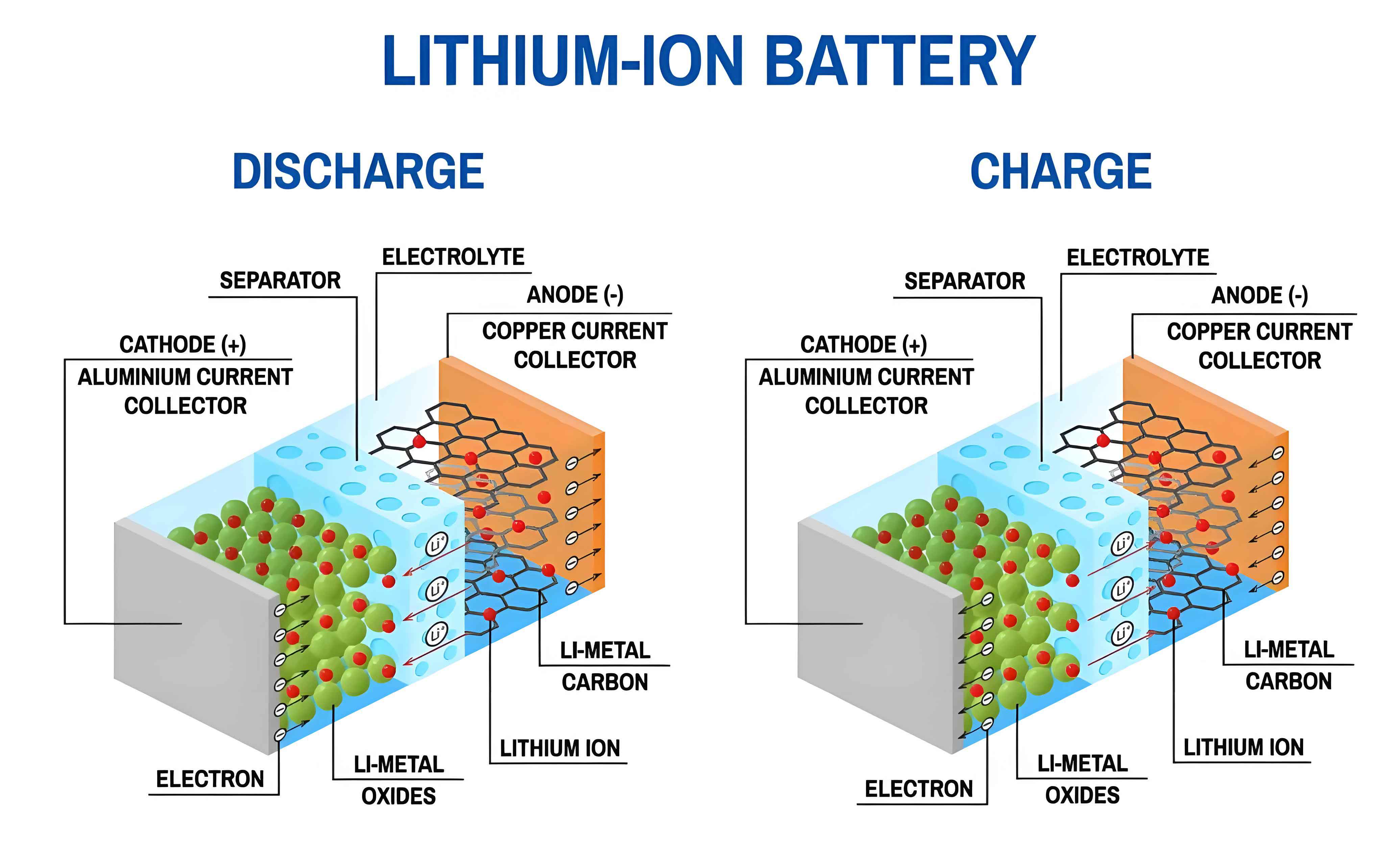
The core challenge and opportunity in recycling spent li ion batteries lie in the cathode materials. These materials are broadly classified into four major types based on their chemistry: Lithium Nickel Cobalt Manganese Oxide (NCM, or ternary), Lithium Iron Phosphate (LFP), Lithium Cobalt Oxide (LCO), and Lithium Manganese Oxide (LMO). Each type possesses distinct chemical structures, economic values, and associated recycling challenges. The predominant recycling methodologies can be categorized into pyrometallurgical (high-temperature) and hydrometallurgical (solution-based) processes, each with its own set of advantages and limitations. This article provides a comprehensive review of the current research status for recovering valuable metals from these four major cathode types of spent li ion batteries.
1. Essential Pretreatment of Spent Li Ion Batteries
Prior to any metal recovery process, spent li ion batteries must undergo rigorous pretreatment. The internal structure of a li ion battery is complex and tightly packed, making direct recovery inefficient. More importantly, batteries contain hazardous substances that can release toxic gases, cause fires, or create corrosive leachates if not handled properly. Pretreatment ensures safety, improves the efficiency of subsequent recycling steps, and concentrates the valuable cathode materials.
The standard pretreatment workflow typically involves several stages: State-of-Health assessment, safe discharge, mechanical disassembly, sorting of battery types, and physical/chemical separation. Physical methods, like crushing, sieving, and air classification, are used to liberate and separate the different components (plastic, metal casings, electrodes). The goal is to obtain a concentrated “black mass” powder containing the cathode and anode active materials. Chemical pretreatment often targets the removal of the polyvinylidene fluoride (PVDF) binder that glues the active material to the aluminum foil current collector. This can be achieved through thermal decomposition (calcination), dissolution in organic solvents like N-Methyl-2-pyrrolidone (NMP), or alkaline leaching with NaOH to dissolve the aluminum foil. The result is a purified cathode powder with a higher concentration of valuable metals and a larger surface area, which significantly enhances the kinetics and yield of the subsequent metal extraction processes. The potential environmental hazards of untreated battery components underscore the necessity of this step.
| Category | Main Ingredients | Potential Environmental Pollution |
|---|---|---|
| Positive Active Material | LiFePO4, LiCoO2, LiMn2O4, NCM | Heavy metal pollution (Ni, Co, Mn), alters ecological pH |
| Electrolyte | LiPF6, LiBF4 | Hydrolyzes to produce toxic HF, corrosive |
| Electrolyte Solvent | EC, DMC, EMC | Flammable, combustion produces CO/CO2 |
| Other (Binder, etc.) | PVDF, conductive carbon | Produces toxic gases upon thermal decomposition |
2. Recovery of Cathode Materials from Spent Li Ion Batteries
2.1 Recycling of Spent NCM (Ternary) Li Ion Batteries
NCM cathodes, with the general formula LiNixCoyMnzO2 (x+y+z=1), have become dominant in electric vehicle applications due to their high energy density. Their layered structure hosts valuable nickel, cobalt, and manganese, making their recovery economically compelling.
Pyrometallurgical Recovery: Pyrometallurgy involves high-temperature treatment to reduce and separate metals. A common approach is reductive smelting, where the cathode material is melted with a reducing agent (e.g., carbon, aluminum) and fluxing agents. The valuable metals (Co, Ni, Cu) are reduced to their metallic form and collected in an alloy phase, while lithium and manganese report to a slag phase. For example, using a CaO-Al2O3-SiO2-MgO slag system, recovery rates over 96% for Co and Ni have been achieved. A more innovative approach uses an FeO-SiO2-Al2O3 slag derived from waste copper slag, simplifying the process and achieving recoveries above 98% for Co and Ni. However, traditional smelting often loses lithium to the slag. Advanced methods employing an MnO-SiO2-Al2O3 slag system can concentrate lithium in a manganese-rich slag, from which it can be subsequently leached with acid, achieving co-recovery of Li and Mn with high efficiency (e.g., ~95% Li, ~80% Mn).
Reductive roasting, a lower-temperature alternative, uses carbon (often from the spent battery’s own anode) to selectively reduce the cathode oxides. In vacuum conditions, the reduction thermodynamics are more favorable. The key reactions during carbothermal reduction can be summarized as:
$$2LiMO_2 \rightarrow Li_2O + M_2O_3$$
$$M_2O_3 + 3CO \rightarrow 2M + 3CO_2$$
$$Li_2O + CO_2 \rightarrow Li_2CO_3$$
Where M represents Ni, Co, or Mn. The resulting mixture is then water-leached to recover soluble lithium compounds (like Li2CO3 or LiOH), leaving behind a solid residue enriched with Ni, Co, and Mn, which can be further processed by acid leaching or magnetic separation. This “priority lithium extraction” strategy prevents lithium loss during subsequent steps dedicated to transition metal recovery.
Hydrometallurgical Recovery: Hydrometallurgy is the most widely researched method, involving acid leaching followed by separation/purification of metals from the solution.
Inorganic Acid Leaching: Strong inorganic acids like H2SO4, HCl, and HNO3 are highly effective. A reducing agent (e.g., H2O2, Na2S2O5) is essential to reduce high-valence metals (Co3+, Ni3+, Mn4+) to more soluble lower states (Co2+, Ni2+, Mn2+). The leaching efficiency is generally very high (>95% for all metals) under optimized conditions of acid concentration, temperature, and solid/liquid ratio. The subsequent challenge is the complex separation of these closely related metal ions from the pregnant leach solution (PLS), typically achieved through sequential solvent extraction, precipitation, or crystallization steps.
| Cathode | Leaching Agent | Leaching Efficiency (%) |
|---|---|---|
| NCM | HCl + H2O2 | Li~99, Ni~99, Co~99, Mn~99 |
| H2SO4 + H2O2 | Li~98, Ni~98, Co~99, Mn~97 | |
| H2SO4 + Na2S2O5 | Li~99.8, Ni~97.4, Co~97.5 | |
| HNO3 + HCl | Li~71, Co~90, Ni~93 |
Organic Acid Leaching: To mitigate the corrosive and hazardous nature of mineral acids, organic acids such as citric acid, lactic acid, ascorbic acid, and oxalic acid have been explored as greener alternatives. These acids can act as both leaching agents and reducing agents. For instance, using lactic acid with H2O2, leaching efficiencies exceeding 97% for Li, Ni, Co, and Mn have been reported. Furthermore, the organic acid can sometimes serve as a chelating agent in a subsequent sol-gel process to directly resynthesize cathode material from the leachate, enabling a closed-loop process.
Bioleaching: This eco-friendly method employs microorganisms (e.g., Acidithiobacillus ferrooxidans, fungi like Aspergillus niger) to solubilize metals through their metabolic activity. While promising and producing minimal secondary waste, bioleaching is generally slower (days to weeks) and sensitive to operational conditions (pH, temperature, toxicity) compared to chemical methods, posing challenges for large-scale, rapid processing of spent li ion battery materials.
2.2 Recycling of Spent LFP (Lithium Iron Phosphate) Li Ion Batteries
LFP cathodes offer advantages in safety, cycle life, and cost, but have lower energy density and contain less intrinsically valuable metals (no Co or Ni). Its olivine structure makes recycling strategies distinct, focusing on low-cost processes and direct regeneration.
Direct Regeneration: Given that capacity fade in LFP is often due to lithium loss or minor surface degradation rather than bulk structural collapse, direct regeneration is a highly attractive, low-energy pathway. The process involves relithiation of the spent LFP material using a lithium source (e.g., Li2CO3, LiOH) followed by a moderate-temperature calcination to restore the crystal structure. Advanced methods combine low-temperature solution-based reduction with rapid annealing. The key advantage is the avoidance of harsh chemicals and the complex dissolution-separation steps, allowing the refurbished material to be directly reused in new li ion batteries. Doping strategies (e.g., with vanadium) during regeneration can even enhance the electrochemical performance of the recycled material beyond its original state.
Hydrometallurgical Recovery: Traditional hydrometallurgy for LFP aims to recover lithium and sometimes iron phosphate. A selective leaching approach uses a controlled amount of H2SO4 and H2O2 to preferentially leach lithium into solution while leaving iron as FePO4 in the residue. Lithium is then precipitated as Li3PO4 or Li2CO3. The FePO4 residue can be calcined to remove carbon impurities and potentially reused as a precursor. Other processes involve complete dissolution of both Li and Fe using stronger acids, followed by stepwise precipitation or use of the leachate to hydrothermally resynthesize new LFP material. Organic acids like citric acid have also been successfully applied to leach LFP with high efficiency.
| Cathode | Leaching Agent | Leaching Efficiency (%) |
|---|---|---|
| LFP | H2SO4 + H2O2 | Li~96.9, Fe~98.7 |
| HCl | Li~96, Fe~98.2 | |
| Citric Acid + H2O2 | Li~99.2 |
2.3 Recycling of Spent LCO (Lithium Cobalt Oxide) Li Ion Batteries
LCO was the first commercially successful cathode for li ion batteries and remains prevalent in consumer electronics. Its high cobalt content makes recycling economically vital, but cobalt’s toxicity and price volatility drive the need for efficient recovery.
Hydrometallurgical Recovery: This is the most mature pathway for LCO recycling. The process typically involves leaching with an acid (commonly H2SO4 or HCl) in the presence of H2O2 as a reductant. The leaching reaction can be simplified as:
$$2LiCoO_2 + 3H_2SO_4 + H_2O_2 \rightarrow 2CoSO_4 + Li_2SO_4 + 4H_2O + O_2$$
Leaching efficiencies for both Li and Co routinely exceed 95-99%. The subsequent separation of cobalt from the leachate is achieved through solvent extraction using reagents like Cyanex 272 or P507, or by selective precipitation as cobalt oxalate (CoC2O4) using oxalic acid. Lithium is recovered from the cobalt-depleted solution by precipitation as carbonate (Li2CO3). Recent studies have explored the use of ammonia-based reagents for thermal reduction, selectively converting LCO to metallic Co and water-soluble lithium salts, offering a novel “oxygen removal” perspective on the extraction mechanism.
Pyrometallurgical Recovery: Vacuum carbothermal reduction is an effective pyrometallurgical method for LCO. Under vacuum, the reduction temperature is lowered, and the following reaction is promoted:
$$2LiCoO_2 + 3C \xrightarrow[\text{Vacuum}]{\Delta} 2Co + Li_2CO_3 + 2CO$$
The product is then treated with water to dissolve Li2CO3, leaving behind metallic cobalt which can be separated magnetically from unreacted carbon. This method allows for the priority recovery of high-purity lithium and cobalt with minimal cross-contamination.
2.4 Recycling of Spent LMO (Lithium Manganese Oxide) Li Ion Batteries
LMO’s spinel structure is manganese-rich and cobalt-free, offering cost and safety benefits but suffering from poorer high-temperature cycle life. Recycling focuses on recovering manganese and lithium.
Hydrometallurgical Recovery: Similar to other systems, inorganic acids (H2SO4, HNO3) with H2O2 are effective for leaching LMO. The use of reductants like Na2S2O3 has also been studied, sometimes in combination with H2O2 to optimize efficiency and safety. After leaching, manganese can be precipitated as Mn(OH)2 or MnCO3 by pH adjustment, and lithium as Li2CO3. Organic acids, such as ascorbic acid (Vitamin C), have shown excellent leaching performance (>99% for Mn) under mild conditions and can facilitate direct material regeneration via sol-gel methods. A promising green approach involves using deep eutectic solvents (DES), such as mixtures of choline chloride and lactic acid, which can achieve high leaching rates for both Li and Mn (>99%) due to their strong complexation ability and low environmental impact.
Pyrometallurgical Recovery: Research on vacuum carbothermal reduction for LMO has demonstrated high selectivity for lithium extraction. Under optimal vacuum and temperature conditions, lithium can be volatilized and recovered separately, achieving a direct lithium recovery rate over 95%, while manganese remains in the residue in a form that is easier to process further, minimizing lithium loss during manganese recovery.
| Cathode | Leaching Agent | Leaching Efficiency (%) |
|---|---|---|
| LMO | H2SO4 + H2O2 | Mn~99.99 |
| H3PO4 + H2O2 | Li~89.2, Mn~99 | |
| Ascorbic Acid | Mn~99.6 | |
| DES (e.g., ChCl-Lactic Acid) | Li~99.3, Mn~99.2 |
3. Summary and Future Perspectives
The recycling of spent li ion battery cathode materials is a rapidly evolving field critical for a sustainable circular economy. Each cathode chemistry—NCM, LFP, LCO, LMO—requires tailored recycling strategies based on its material value, composition, and intended output (metal salts or regenerated cathode).
Technology Comparison: Pyrometallurgical methods (smelting, roasting) are robust, can handle mixed feeds, and have high throughput, but they are energy-intensive and may lose volatile elements like lithium without sophisticated slag engineering. Hydrometallurgical methods offer high selectivity, purity, and lower energy consumption at the leaching stage, but they generate liquid waste and involve complex, multi-step separation processes. Direct regeneration is the most sustainable and economical route for suitable cathodes like LFP, but its applicability to more degraded or complex cathode mixtures (like NCM) is limited. Bioleaching and organic acid/DES-based processes represent greener hydrometallurgical alternatives but need further development to match the efficiency and speed of conventional acids.
Future Outlook: The future of spent li ion battery recycling lies in the intelligent integration of these technologies to create hybrid flowsheets that maximize recovery efficiency, minimize environmental footprint, and optimize economics. For instance, a low-temperature reductive roasting step could be used to selectively liberate lithium, followed by a mild acid leach to recover transition metals, combining the advantages of pyrometallurgy and hydrometallurgy. The development of closed-loop processes that regenerate cathode materials directly from leachates, especially using green lixiviants, is a key research direction. Furthermore, as battery designs evolve (e.g., towards solid-state batteries or new cathode chemistries), recycling technologies must adapt proactively. Standardization of battery design for recycling, improved collection logistics, and supportive policy frameworks are equally important to ensure the technical innovations in recycling can be deployed at scale to manage the impending tsunami of spent li ion batteries.