
The global surge in new energy vehicles and energy storage systems has irrevocably placed the li ion battery at the center of a modern industrial revolution. As a key participant and observer in this field, I have witnessed firsthand how the performance and cost of the final li ion battery product are deeply intertwined with the upstream manufacturing processes, particularly the production of cathode materials. Among these processes, the high-temperature solid-state sintering step is not merely a procedure; it is a defining stage that dictates the material’s crystallinity, purity, morphology, and ultimately, its electrochemical fate. The sintering kiln, therefore, is far more than a simple heating apparatus—it is the crucible where precursor powders are transformed into functional active materials, and its evolution has been a critical, yet often underappreciated, driver of progress in the entire li ion battery industry.
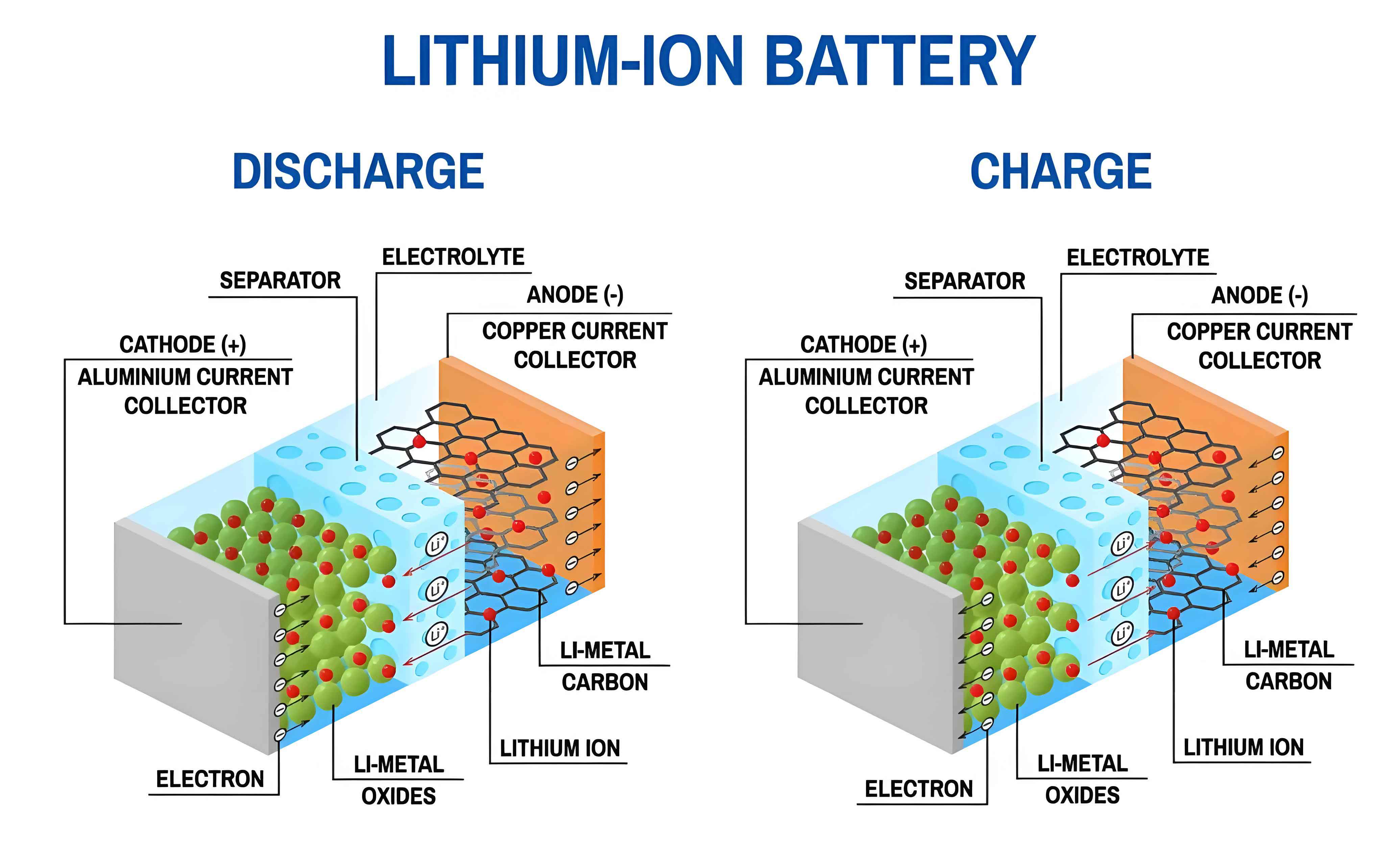
The journey of sintering equipment for li ion battery cathodes is a story of adapting mature industrial technology to the exacting and unique demands of electrochemical energy storage. Early production relied heavily on pusher kilns, valued for their simplicity. However, the relentless market pressure for higher yield, lower cost, and better consistency propelled a rapid transition towards roller hearth kilns. This shift was not merely a change of equipment but a fundamental re-engineering of the thermal processing paradigm for li ion battery materials. From my perspective, the development of these kilns can be analyzed through several interconnected lenses: the specific demands of different cathode chemistries, the continuous mechanical and thermal design improvements, the persistent technical challenges, and the clear trajectories for future innovation. This article synthesizes these perspectives to chart the past, present, and potential future of this essential piece of hardware in the li ion battery supply chain.
The Diverging Demands of Cathode Chemistries
The design and operation of a sintering kiln are profoundly influenced by the specific cathode material being produced. The two dominant families, Lithium Iron Phosphate (LFP) and Nickel-rich layered oxides (NCM/NCA), impose distinct and often contrasting requirements, as summarized in the table below.
| Parameter | Lithium Iron Phosphate (LFP) | Nickel-Rich NCM/NCA |
|---|---|---|
| Typical Sintering Temp. | 750 – 780 °C | 800 – 900 °C |
| Atmosphere | Inert (N2), very low O2 | Oxidizing (Air, O2-enriched, or pure O2) |
| Primary Process Goal | Cost reduction, maximum yield | Precise crystallographic control, low residual lithium |
| Key Kiln Design Focus | Efficient cooling, tar management, dust prevention | Temperature uniformity, corrosion resistance, high gas exchange |
| Saggar Material | Graphite | Mullite |
| By-products / Challenges | Tar, dust | Corrosive alkaline gases (e.g., Li2O, LiOH) |
For LFP, the olivine structure forms under a protective inert atmosphere to prevent the oxidation of Fe2+. The process is relatively forgiving in terms of temperature uniformity but generates organic tars from carbonaceous additives, requiring heated exhaust systems and afterburners. The low density of the precursor powder makes dust control a paramount concern during loading. The driving force in LFP kiln development has been overwhelmingly oriented towards scaling up and driving down capital and operational expenditure per ton of output.
In stark contrast, the synthesis of high-nickel layered oxides is a delicate dance of oxidation and lithiation. The stability of the Ni3+/Ni4+ states requires an oxidizing atmosphere, with oxygen purity escalating with nickel content. This process demands exceptional temperature homogeneity to ensure uniform cation ordering and minimize the formation of deleterious residual lithium compounds (Li2O, Li2CO3, LiOH) on the particle surface. The kiln atmosphere must be actively managed to provide sufficient oxygen flux while effectively removing corrosive by-products. Here, the development focus is on precision, consistency, and the ability to handle aggressive process environments, even at the expense of higher complexity and cost.
The Mechanical Evolution: From Pusher to Monumental Roller Hearth Kilns
The progression in kiln design over the past decade is a clear response to the scaling needs of the li ion battery industry. It can be characterized by two primary axes: the layout of saggar carriers and the physical dimensions of the kiln.
Initially, double-layer, double-row pusher kilns were standard. To boost output, a third layer was attempted but quickly abandoned due to severe temperature gradients that compromised product quality. The shift to roller hearth kilns was transformative. The first generation adopted a four-row, single-layer configuration, immediately offering better temperature control and higher throughput than pusher kilns. This rapidly evolved into the four-row, double-layer design, which became the workhorse for years, especially for sensitive NCM materials.
The next leap was the six-row, double-layer kiln. This was first adopted for LFP production, where absolute temperature uniformity is slightly less critical than throughput. The engineering challenge was significant—ensuring stable movement of a wider load and maintaining temperature across a broader chamber. Successful implementation for LFP paved the way for its adaptation to NCM sintering, a move that required meticulous refinement of gas flow and heating element design to meet the stringent uniformity requirements. Attempts at five-row or even six-row, triple-layer configurations have been made, but the double-layer paradigm has prevailed due to its optimal balance of yield and thermal management.
Concurrently, kiln lengths have stretched dramatically. Pusher kilns were limited to around 36m. Early roller hearth kilns for NCM were typically 40m. This grew to 50m, and then to 56-60m for modern six-row versions. For LFP, the race for productivity has pushed lengths even further, with kilns of 80m, 90m, and even exceeding 100m now in operation or development. This scaling directly reduces specific energy consumption and increases single-line capacity, a key metric for cost-effective li ion battery material production.
| Era | Dominant Kiln Type | Typical Configuration | Typical Length | Primary Driver |
|---|---|---|---|---|
| Early 2010s | Pusher Kiln | 2 Rows, 2 Layers | < 36 m | Technology Transfer, Low CapEx |
| Mid 2010s | Roller Hearth Kiln | 4 Rows, 1-2 Layers | 30 – 40 m | Yield, Consistency |
| Late 2010s | Roller Hearth Kiln | 4 Rows, 2 Layers | 45 – 55 m | Scale, Energy Efficiency |
| 2020s – Present | Roller Hearth Kiln | 6 Rows, 2 Layers | 60 – 100+ m | Maximum Throughput, Lowest $/ton |
Technical Refinements: Precision, Atmosphere, and Durability
The evolution of the roller hearth kiln is not just about size; it encompasses deep technical refinements across multiple subsystems to meet the stringent demands of li ion battery cathode synthesis.
1. Temperature Control and Uniformity: The heart of the process. Kilns are divided into numerous controlled zones (e.g., pre-heat, reaction, cooling) separated by baffles. Heating elements progressed from FeCrAl wires (for lower temperature LFP) to silicon carbide (SiC) rods with ceramic sheaths for high-temperature NCM processing. Thermocouples evolved from type-N to more precise type-S in critical high-temperature zones. Advanced designs feature independent top/bottom heating control and pre-heating chambers for inlet gases to minimize thermal shocks and gradients. The cooling section, especially critical for oxygen-sensitive LFP, now often combines forced air and water-cooled heat exchangers to rapidly bring product temperature below 60°C. The fundamental thermal challenge can be framed by the sintering kinetics, often approximated by an Arrhenius-type relationship:
$$
\text{Sintering Rate} \propto A \exp\left(-\frac{E_a}{k_B T}\right)
$$
where $E_a$ is the activation energy for the solid-state diffusion process, $k_B$ is Boltzmann’s constant, and $T$ is the absolute temperature. A small temperature deviation $\Delta T$ in the kiln can lead to an exponential change in local sintering rate, causing inconsistent crystallite growth and particle morphology across the batch. This is why temperature uniformity, often required to be within ±3-5°C in the hot zone, is non-negotiable for high-performance li ion battery cathodes.
2. Atmosphere Management and Corrosion Resistance: This is a key differentiator. LFP kilns prioritize airtightness, employing multi-chamber gas vestibules at the inlet/outlet to maintain a pure nitrogen blanket. NCM kilns, however, require active gas exchange. Designs incorporate bottom and side gas inlets to ensure oxygen penetrates the saggar columns, while拱顶 structures in the heating zone facilitate the removal of corrosive off-gases. The battle against corrosion from lithium compounds has led to the use of high-alumina (99% Al2O3>) refractory bricks, stainless-steel grades like SUS316L for exposed components, and sophisticated sealing technologies. Kiln pressure holding tests (e.g., a decay from 1000 Pa to 800 Pa taking >60 minutes) have become a standard acceptance criterion, directly impacting process gas consumption and cost for the li ion battery manufacturer.
3. Mechanical Drive and Material Advancements: The transition from pusher to roller drive eliminated a major source of particle contamination (alumina dust from pusher plates). The rollers themselves evolved from alumina-mullite to silicon-infiltrated silicon carbide (SiSiC), offering superior high-temperature strength, wear resistance, and straightness—a critical factor as roller length increases with kiln width. The quest to minimize metallic contamination, a fatal flaw for li ion battery cycle life and safety, has led to stringent “cleanroom” protocols in kiln fabrication, assembly, and maintenance, including acid-washing of parts and magnetic cleaning of all internal surfaces.
Persistent Challenges in Kiln Technology
Despite remarkable progress, several fundamental challenges continue to constrain the design and operation of sintering kilns for li ion battery materials.
| Challenge | Root Cause | Impact on Li-Ion Battery Production |
|---|---|---|
| Saggar “Snaking” & Tracking Error | Long kilns, slight roller misalignment, thermal expansion, saggar/saggar friction. | Jams, kiln stoppages (“arching”), product loss, damage to rollers and saggars. |
| Transverse Temperature Non-Uniformity | Radial heat loss from kiln walls, uneven gas flow, linear heating element geometry. | Batch inconsistency, variable electrochemical performance (capacity, cycling). |
| Corrosive Deposition & Saggar Bonding | Condensation of Li-rich vapors on cooler surfaces (saggars, rollers). | Increased maintenance, roller wear, saggar damage, potential contamination. |
| Catastrophic Roller Failure | Material fatigue, thermal stress, wear from crystalline deposits. | Unplanned downtime, risk of cascading damage within the kiln. |
| High Specific Energy Consumption | Thermal losses through walls, heating of massive structural components, inefficient heat recovery. | High operational cost, larger carbon footprint for the li ion battery. |
The “snaking” problem is perhaps the most critical operational hazard, limiting the practical length and width of kilns. The temperature uniformity challenge fundamentally limits how wide a kiln can be before edge-to-center differences degrade product quality. Corrosion and roller failure are ongoing maintenance and cost issues. Addressing these challenges is central to the next phase of kiln development for the li ion battery industry.
Future Trajectories and Concluding Perspectives
The path forward for sintering kilns is not monolithic but will diverge based on cathode chemistry and broader industry trends.
For LFP, the trajectory is clear: continued scaling for maximum economy of scale. We will see longer and potentially wider kilns. The feasibility of triple-layer stacking may be re-examined with advanced heating and airflow designs. Replacing expensive SiSiC rollers with alternative materials and further enhancing kiln airtightness to reduce nitrogen consumption are key research areas. The production of Lithium Manganese Iron Phosphate (LMFP), a higher-voltage derivative, will utilize nearly identical kiln technology, underscoring the flexibility of this platform.
For NCM and next-generation layered oxides, the focus shifts to “smart precision.” The need is for kilns that offer even greater control over the thermal and atmospheric profile, potentially with dynamic zone control based on real-time process analytics. Advanced sensors and machine learning models could predict roller failure or optimize gas flows. The ability to handle highly corrosive atmospheres for ultra-high-nickel or cobalt-free compositions will require new refractory and alloy solutions. Furthermore, as the industry explores single-crystal NCM, which requires even higher sintering temperatures and longer dwell times, kiln designs must evolve accordingly.
For novel cathode materials (e.g., disordered rock salts, lithium-rich manganese-based oxides), the future may lie in modular kiln designs. Instead of monolithic structures, kilns could be assembled from standardized, plug-and-play modules for pre-heating, reaction, quenching, and cooling. This would offer manufacturers unprecedented flexibility to reconfigure thermal profiles for different chemistries and accelerate pilot-to-production scaling for new li ion battery materials.
Beyond incremental improvements, radical alternatives may emerge. Rotary kilns offer potential advantages in mixing, heat transfer, and continuous processing, though they have historically struggled with the precise atmosphere control and temperature uniformity required for high-end li ion battery cathodes. Overcoming these hurdles could represent a paradigm shift.
In conclusion, the sintering kiln is a dynamic and technologically sophisticated component at the core of li ion battery manufacturing. Its evolution from a simple industrial heater to a precision-engineered, atmosphere-controlled, and massively scaled reactor mirrors the explosive growth and increasing technical maturity of the li ion battery industry itself. The relentless drivers of cost, yield, consistency, and now sustainability will continue to push kiln technology forward. As we look to the next generation of li ion battery materials with higher energy densities and lower costs, the innovation in the kilns that create them will remain a critical, and fascinating, field of engineering endeavor. The future of the li ion battery is, in no small part, being forged in the heart of these high-temperature furnaces.