
In recent years, the development of li ion batteries has been a focal point in energy storage technology, driven by global demands for higher energy density and improved safety. As a researcher in this field, I have observed that silicon-based additives have emerged as a promising class of materials to enhance the performance of li ion batteries. These additives offer multiple functionalities, such as film-forming, scavenging harmful species like HF and H2O, and providing flame retardancy, all while being environmentally benign due to their low toxicity and ease of decomposition. In this article, I will delve into the advances in silicon-based additives, categorizing them into Si–O and Si–N types, and explore their mechanisms, applications, and future prospects. The goal is to provide a comprehensive overview that underscores the critical role of these additives in advancing li ion battery technology.
The electrolyte in a li ion battery is a key component that influences cycle life, safety, and energy density. Traditional carbonate-based electrolytes, while effective, suffer from decomposition issues, especially at high voltages or elevated temperatures. For instance, the common salt LiPF6 decomposes to form PF5 and HF, which can corrode electrodes and degrade battery performance. Silicon-based additives address these challenges by chemically interacting with these deleterious species and forming stable interfacial layers on electrodes. This not only protects the electrodes but also enhances ionic conductivity and reduces impedance. My analysis will highlight how these additives contribute to the stability and efficiency of li ion batteries, particularly in high-energy-density systems like those using nickel-rich cathodes.
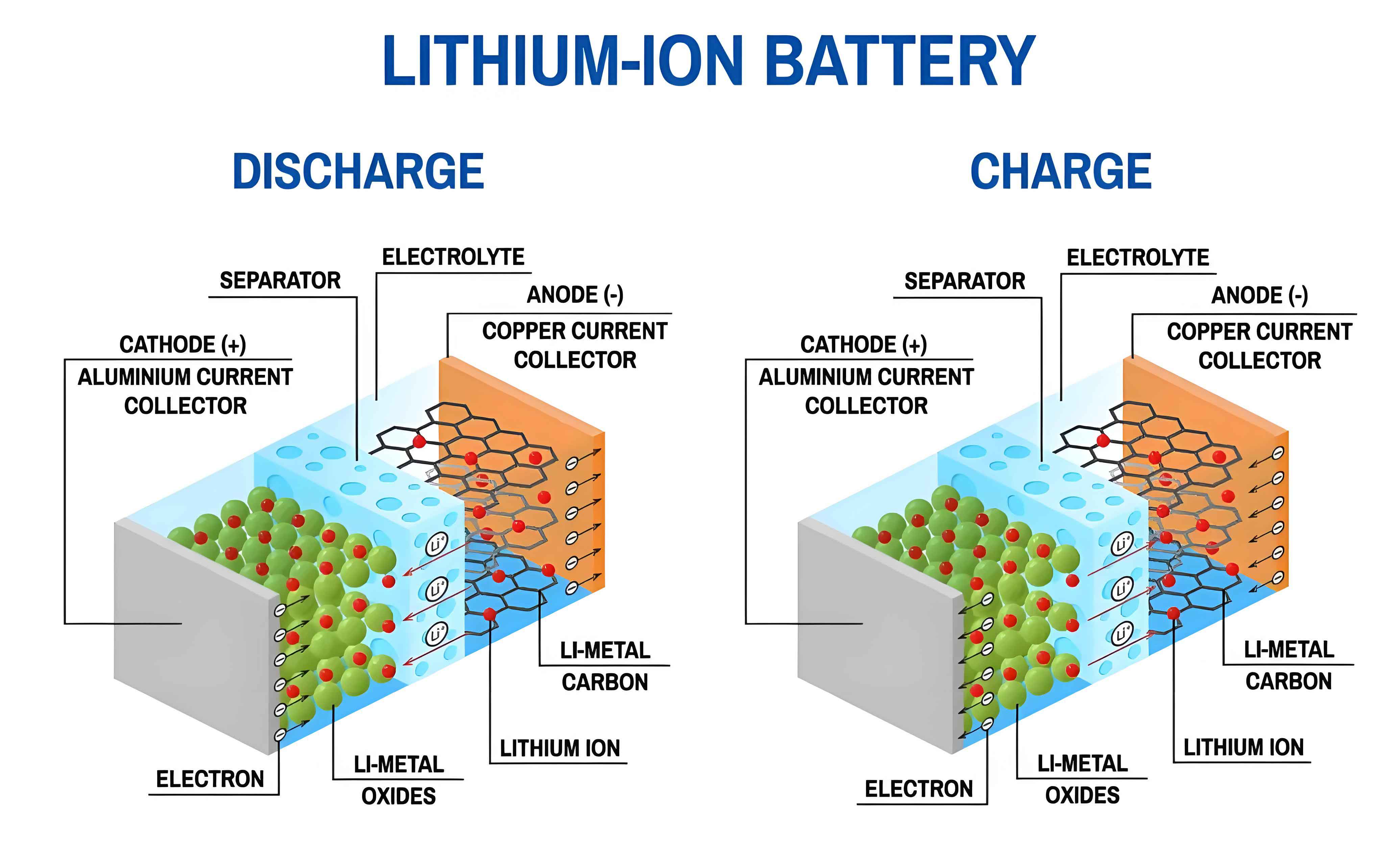
To understand the impact of silicon-based additives, it is essential to consider their molecular structures and electronic properties. Additives with low lowest unoccupied molecular orbital (LUMO) energies tend to reduce preferentially on the anode, forming a solid-electrolyte interphase (SEI), while those with high highest occupied molecular orbital (HOMO) energies oxidize on the cathode, forming a cathode-electrolyte interphase (CEI). Silicon-based compounds often exhibit favorable LUMO/HOMO levels, making them effective for both anode and cathode protection. In the following sections, I will discuss Si–O and Si–N additives in detail, using tables and equations to summarize their characteristics and mechanisms. Throughout this discussion, the term “li ion battery” will be frequently emphasized to reinforce the context of these advancements.
Si–O Class Silicon-Based Additives
Si–O class additives contain silicon-oxygen bonds, which impart thermal stability and low viscosity. These additives are known for their ability to form robust SEI/CEI layers and scavenge HF, PF5, and H2O. For example, phenyl tris(2-methoxyethoxy)silane (PTMS) has been shown to form a SEI on graphite anodes composed of Si–O–Si, Si–O, and Si–O–C structures, which inhibits solvent co-intercalation. However, it may increase irreversible capacity. Similarly, allyloxytrimethylsilane (AMSL) and trimethoxymethylsilane (MTMS) function as HF scavengers, enhancing the cyclability of li ion batteries. The general mechanism involves the reaction of Si–O groups with HF, leading to the formation of silicon fluorides and stable byproducts.
The reaction can be represented by the following equation for a generic Si–O additive: $$ \text{R–Si–O–R’} + \text{HF} \rightarrow \text{R–Si–F} + \text{R’–OH} $$ where R and R’ are organic groups. This reaction effectively removes HF from the electrolyte, mitigating its corrosive effects on electrode materials. In nickel-rich cathodes, such as LiNi0.8Co0.1Mn0.1O2 (NCM811), Si–O additives help suppress Li/Ni cation mixing and structural degradation by forming a protective CEI. I have compiled a table summarizing key Si–O additives and their functions in li ion batteries.
| Additive | Chemical Formula | Primary Function | Impact on Li Ion Battery Performance |
|---|---|---|---|
| PTMS | C15H26O6Si | SEI formation on anode, HF scavenging | Improves cycle stability but may increase irreversible capacity |
| AMSL | C6H14OSi | HF and PF5 scavenging | Enhances high-temperature performance of li ion batteries |
| MTMS | C4H12O3Si | CEI formation on cathode, water removal | Reduces impedance in nickel-rich cathodes |
| DODSi | C4H12O2Si | HF complexation, artificial CEI formation | Protects NCM cathodes from HF attack |
| TMSP | C9H27O3PSi3 | F– scavenging from HF, CEI formation | Stabilizes LiPF6 decomposition in li ion batteries |
In addition to scavenging, Si–O additives can participate in film-forming reactions. For instance, tris(trimethylsilyl) phosphate (TMSP) donates electrons to form a CEI on cathodes, while its trimethylsilyl (TMS) groups react with LiOH residues to produce TMS–OH, which further neutralizes HF. The overall process can be described as: $$ \text{TMSP} + \text{LiOH} \rightarrow \text{TMS–OH} + \text{Li–phosphate complexes} $$ and $$ \text{TMS–OH} + \text{HF} \rightarrow \text{TMSF} + \text{H}_2\text{O} $$ This dual functionality makes Si–O additives versatile for improving the longevity of li ion batteries. Moreover, their low viscosity aids in electrolyte wetting, which is crucial for uniform electrode coverage and efficient ion transport.
To quantify the benefits, studies have shown that adding 0.5–1.0% of Si–O additives can increase the capacity retention of li ion batteries by 10–20% after 300 cycles, especially under high-voltage conditions (above 4.3 V). The formation energy of the SEI/CEI layers can be approximated using DFT calculations, which indicate that Si–O bonds stabilize the interface by reducing surface energy. For example, the Gibbs free energy change (ΔG) for the reaction of an Si–O additive with HF is often negative, indicating spontaneity: $$ \Delta G = -RT \ln K $$ where R is the gas constant, T is temperature, and K is the equilibrium constant. This thermodynamic favorability drives the scavenging process, making Si–O additives effective in practical li ion battery applications.
Si–N Class Silicon-Based Additives
Si–N class additives feature silicon-nitrogen bonds, which exhibit Lewis basicity due to the lone pair on nitrogen. This allows them to complex with Lewis acids like PF5, thereby inhibiting the decomposition of LiPF6 and reducing HF generation. Common examples include hexamethyldisilazane (HMDS) and N,N-diethyltrimethylsilylamine (DEATMS). These additives react with H2O and HF, producing benign byproducts such as trimethylsilanol and ammonia, which further neutralize acids. The mechanism for HMDS can be represented as: $$ (\text{CH}_3)_3\text{Si–N–Si}(\text{CH}_3)_3 + \text{H}_2\text{O} \rightarrow (\text{CH}_3)_3\text{Si–OH} + (\text{CH}_3)_3\text{Si–O–Si}(\text{CH}_3)_3 + \text{NH}_3 $$ followed by: $$ \text{NH}_3 + \text{HF} \rightarrow \text{NH}_4\text{F} $$ This series of reactions effectively removes moisture and acids, enhancing the stability of li ion battery electrolytes.
Si–N additives also contribute to SEI/CEI formation, though the exact composition depends on the breakage site of the Si–N bond. For instance, N-allyl-N,N-bis(trimethylsilyl) amine (NNB) has been found to form a silicon-containing SEI that suppresses Li/Ni mixing in nickel-rich cathodes, leading to improved cycle stability in li ion batteries. Similarly, (trimethylsilyl) isothiocyanate (TMSNCS) complexes with PF5 and reacts with HF to form TMSF, thereby stabilizing the electrolyte. The reaction kinetics can be modeled using Arrhenius equations: $$ k = A e^{-E_a / RT} $$ where k is the rate constant, A is the pre-exponential factor, and Ea is the activation energy. For Si–N additives, Ea values are typically low, indicating fast scavenging reactions that benefit li ion battery performance under operational conditions.
| Additive | Chemical Formula | Primary Function | Impact on Li Ion Battery Performance |
|---|---|---|---|
| HMDS | C6H19NSi2 | H2O and HF scavenging, SEI formation | Improves cycle life and reduces Mn dissolution |
| DEATMS | C7H19NSi | Acid suppression, electrolyte stabilization | Enhances high-voltage stability in li ion batteries |
| NNB | C9H23NSi2 | CEI formation, Li/Ni mixing suppression | Increases capacity retention in NCA/graphite cells |
| TMSNCS | C4H9NSSi | PF5 complexation, HF scavenging | Boosts high-temperature performance of li ion batteries |
| TMS–ON | C6H13NO2Si | Li+ interaction enhancement, HF removal | Reduces transition metal dissolution in NCM cathodes |
The effectiveness of Si–N additives can be further analyzed through electrochemical impedance spectroscopy (EIS) data. In li ion batteries, the charge-transfer resistance (Rct) often decreases with the addition of Si–N additives, indicating improved interfacial kinetics. For example, a 0.1% addition of TMSNCS reduced Rct by 30% in NCM622/graphite full cells, correlating with a capacity retention of 91.8% after 300 cycles. The impedance can be expressed using an equivalent circuit model: $$ Z = R_s + \frac{R_{ct}}{1 + (j\omega R_{ct} C_{dl})^\alpha} $$ where Z is impedance, Rs is series resistance, Cdl is double-layer capacitance, ω is angular frequency, and α is a constant. Si–N additives lower Rct by forming conductive interfacial layers, which is crucial for high-power li ion batteries.
Moreover, Si–N additives exhibit synergistic effects with other electrolyte components. For instance, when combined with fluoroethylene carbonate (FEC), TMSNCS prevents excessive FEC decomposition by stabilizing PF5, thereby extending the life of li ion batteries at elevated temperatures. This synergy can be quantified using stability constants for complex formation: $$ K_f = \frac{[\text{Additive–PF}_5]}{[\text{Additive}][\text{PF}_5]} $$ where Kf is high for Si–N additives, indicating strong complexation. Overall, Si–N class additives offer a robust strategy for electrolyte optimization in li ion batteries, addressing both chemical and electrochemical challenges.
Comparative Analysis and Future Perspectives
Having explored both Si–O and Si–N additives, I find it useful to compare their properties and applications. Si–O additives excel in film-forming and HF scavenging via Si–O bond cleavage, while Si–N additives leverage N lone pairs for PF5 complexation and H2O removal. Both classes enhance the performance of li ion batteries by stabilizing interfaces and reducing electrolyte decomposition. However, their optimal concentrations and combinations vary depending on the electrode materials and operating conditions. Below is a comparative table highlighting key aspects.
| Aspect | Si–O Additives | Si–N Additives |
|---|---|---|
| Primary Mechanism | Si–O bond reaction with HF, SEI/CEI formation | N–PF5 complexation, H2O scavenging |
| Typical LUMO/HOMO | Moderate LUMO, suitable for anode protection | High HOMO, beneficial for cathode protection |
| Impact on Viscosity | Low viscosity, improves wetting | Low to moderate viscosity |
| Environmental Impact | Low toxicity, easily decomposable | Low toxicity, benign byproducts |
| Common Applications | High-voltage li ion batteries with nickel-rich cathodes | Li ion batteries prone to moisture and acid degradation |
Looking ahead, the research on silicon-based additives for li ion batteries is poised to expand in several directions. First, mechanistic studies using advanced techniques like in situ spectroscopy and DFT calculations will elucidate the exact pathways of SEI/CEI formation and scavenging reactions. For instance, the energy barrier for Si–N bond cleavage can be computed as: $$ E_a = \Delta H^\ddagger + RT $$ where ΔH‡ is the enthalpy of activation. Second, the development of multifunctional additives that combine Si–O and Si–N moieties could offer dual benefits, such as simultaneous HF scavenging and PF5 complexation. Third, exploring synergies with other additives, like vinylene carbonate or lithium bis(oxalato)borate, may further enhance the cycle life and safety of li ion batteries.
From an industrial perspective, silicon-based additives are attractive due to their simple synthesis and cost-effectiveness. Future work should focus on scaling up production and integrating these additives into commercial li ion battery formulations. Additionally, as li ion batteries evolve towards solid-state systems, silicon-based additives could play a role in stabilizing solid electrolyte interfaces. For example, their low viscosity might aid in composite electrolyte fabrication. Overall, the versatility and efficacy of silicon-based additives make them a cornerstone for next-generation li ion batteries, driving advancements in energy storage for electric vehicles and grid applications.
In conclusion, my analysis underscores the significant progress in silicon-based additives for li ion batteries. Through detailed discussions of Si–O and Si–N classes, supported by tables and equations, I have highlighted their mechanisms, performance benefits, and potential for future innovation. As research continues, these additives will undoubtedly contribute to safer, more efficient, and longer-lasting li ion batteries, meeting the growing demands of modern technology. The journey from laboratory insights to practical applications exemplifies the dynamic nature of li ion battery development, with silicon-based additives at the forefront of this evolution.