
The relentless pursuit of higher energy density, improved safety, and longer cycle life in energy storage systems has positioned the li ion battery as a cornerstone of modern technology. As a pivotal component determining the performance and cost of a li ion battery, the cathode material is the subject of intense research. Among the plethora of candidates, olivine-type lithium manganese phosphate (LiMnPO4) has emerged as a highly promising contender due to its attractive combination of a high theoretical energy density, excellent structural stability, and the natural abundance and low toxicity of manganese. Its operational voltage plateau around 4.1 V vs. Li/Li+ offers a significant advantage over the commercially established LiFePO4 (~3.4 V), promising a substantial boost in the energy output of a li ion battery. However, its practical application is severely hampered by intrinsic limitations rooted in its crystal structure, namely extremely low electronic conductivity and sluggish lithium-ion diffusion kinetics. This article synthesizes the current research landscape, delving into the fundamental properties, synthesis strategies, and modification techniques essential for unlocking the potential of LiMnPO4 in next-generation li ion battery systems.
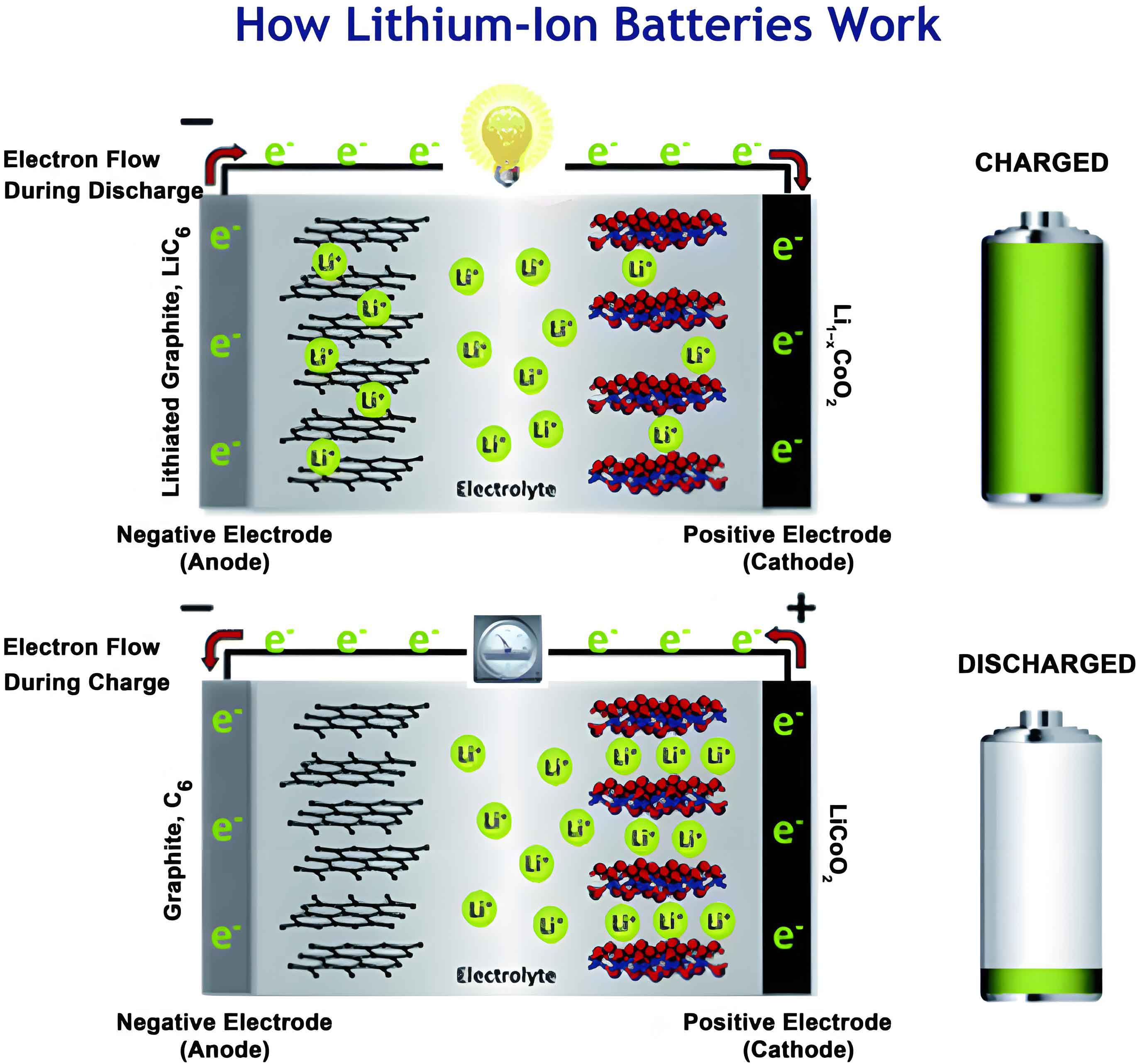
The olivine structure, belonging to the orthorhombic Pnma space group, is the defining feature of LiMnPO4. In this framework, MnO6 octahedra and PO4 tetrahedra share corners to form a robust three-dimensional network. Lithium ions occupy one-dimensional channels along the [010] direction. This structure grants exceptional thermal and chemical stability, a crucial factor for the safety profile of a li ion battery. The electrochemical activity involves a two-phase reaction between LiMnPO4 and MnPO4 during charge/discharge:
$$ \text{LiMnPO}_4 \rightleftharpoons \text{MnPO}_4 + \text{Li}^+ + e^- $$
While the high Mn2+/Mn3+ redox potential (~4.1 V) is advantageous, the poor electronic conductivity (on the order of 10-10 S cm-1) and low Li+ diffusion coefficient (≈10-16 cm2 s-1) are fundamental challenges. These limitations result in severe polarization, low rate capability, and inadequate utilization of active material, particularly at high current densities. Therefore, sophisticated material engineering is required to overcome these hurdles and make LiMnPO4 a viable cathode for high-performance li ion battery applications.
Synthesis Methods for LiMnPO4 Cathode Materials
The synthesis route profoundly influences the morphological, structural, and ultimately, the electrochemical properties of the final LiMnPO4 product. An optimal method should produce phase-pure, nano-sized particles with uniform carbon coating to address intrinsic conductivity issues. The following table summarizes the key characteristics of primary synthesis techniques:
| Method | Principle & Procedure | Key Advantages | Major Drawbacks | Typical Particle Morphology |
|---|---|---|---|---|
| Solid-State Reaction | Mechanical mixing of solid precursors (e.g., Li2CO3, MnCO3, NH4H2PO4) followed by high-temperature calcination under inert atmosphere. | Simple, scalable, suitable for mass production. Low cost of equipment. | Large particle size, irregular morphology, severe agglomeration. Requires prolonged grinding and high temperatures, leading to particle growth. | Micron-sized, irregular, agglomerated particles. |
| Sol-Gel Method | Formation of a homogeneous sol from molecular precursors in a liquid, followed by gelation and thermal decomposition to form the crystalline product. | Excellent chemical homogeneity. Precise stoichiometric control. Can produce nano-sized particles. | Complex process control. Use of expensive chelating agents. Long processing time. Potential for organic residue. | Uniform nanoparticles or nanospheres (100-300 nm). |
| Hydrothermal/Solvothermal Synthesis | Crystallization from aqueous or non-aqueous solution under elevated temperature and pressure in an autoclave. | Direct crystallization at low temperatures. Excellent control over particle size and shape (rods, plates, spheres). High purity and crystallinity. | Batch process with limited scalability. Requires precise control of parameters (T, P, pH, time). Can involve corrosive or toxic solvents. | Well-defined nanocrystals: nanorods, nanosheets, hierarchical structures. |
| Spray Pyrolysis | Aerosol droplets containing precursors are passed through a high-temperature furnace, resulting in rapid evaporation, decomposition, and crystallization. | Continuous process, good for scaling. Produces spherical, hollow, or porous particles. High compositional uniformity. | High energy consumption. Complex equipment setup. Can form hollow structures with low tap density. | Spherical, often hollow or porous microspheres composed of nanoparticles. |
The solid-state method remains attractive for industrial-scale production of li ion battery cathodes due to its simplicity. However, the resulting large particles necessitate aggressive post-synthesis modifications. The hydrothermal method excels in producing tailored nanostructures; for instance, the synthesis of LiMn1-xFexPO4 nanorods significantly enhances Li+ transport. The sol-gel process is renowned for its ability to achieve atomic-level mixing, which is crucial for uniform doping. A key relationship in all thermal synthesis methods is the dependence of crystallite size (D) on the annealing temperature (T) and time (t), often described by an Ostwald ripening or grain growth model:
$$ D^n – D_0^n = k t \exp\left(-\frac{E_a}{RT}\right) $$
where \( D_0 \) is the initial size, \( k \) is a constant, \( E_a \) is the activation energy for grain growth, \( R \) is the gas constant, and \( n \) is the growth exponent. Optimizing T and t is critical to prevent excessive grain growth which degrades performance in a li ion battery.
Key Modification Strategies for Performance Enhancement
To transform LiMnPO4 from a promising material into a practical li ion battery cathode, a multi-pronged modification approach is essential. The strategies primarily focus on enhancing electronic conduction, facilitating Li+ ion transport, and stabilizing the structure during cycling.
1. Particle Nano-Structuring
Reducing the primary particle size to the nanoscale is the most direct way to shorten the diffusion path length for both Li+ ions and electrons. This dramatically decreases the absolute resistance within the particle and increases the electrode-electrolyte contact area. The time \( \tau \) for Li+ diffusion through a spherical particle is governed by:
$$ \tau \approx \frac{L^2}{D_{Li^+}} $$
where \( L \) is the diffusion length (approximately the particle radius) and \( D_{Li^+} \) is the chemical diffusion coefficient. Reducing \( L \) from micrometers to nanometers decreases \( \tau \) by several orders of magnitude, enabling faster charge/discharge rates. Nanosheets, nanorods, and porous hierarchical nanostructures have been successfully synthesized via hydrothermal or solvothermal routes, showing markedly improved capacity retention at high C-rates compared to their bulk counterparts. However, nano-sizing increases surface energy, leading to agglomeration and potentially side reactions with the electrolyte, which must be mitigated.
2. Conductive Surface Coating (Carbon Encapsulation)
Carbon coating is the most ubiquitous and effective strategy to address the abysmal electronic conductivity of LiMnPO4. A uniform, thin, and continuous carbon layer on the particle surface creates a percolating electronic network throughout the electrode, facilitating electron transfer to and from every active particle. The coating also inhibits particle growth during high-temperature sintering. The effectiveness depends on the carbon source (e.g., sucrose, glucose, citric acid, graphene oxide), coating thickness, and graphitization degree. An optimal coating is a compromise: too thin and it’s incomplete; too thick and it adds dead mass, reducing volumetric and gravimetric energy density of the li ion battery. The composite conductivity \( \sigma_{comp} \) can be modeled using percolation theory:
$$ \sigma_{comp} \propto \sigma_c (p – p_c)^t $$
where \( \sigma_c \) is the carbon conductivity, \( p \) is the carbon volume fraction, \( p_c \) is the percolation threshold, and \( t \) is a critical exponent. Advanced coatings using graphene or carbon nanotubes form a 3D conductive web, offering superior performance.
3. Ion Doping (Aliovalent/Isovalent Substitution)
Doping involves the partial substitution of ions in the Li, Mn, or P sites to intrinsically modify the electronic structure and crystal lattice. This is a powerful method to improve bulk electronic conductivity and Li+ mobility.
- Mn-site Doping: This is the most studied approach. Divalent cations like Fe2+, Mg2+, Zn2+, or Ni2+ substitute for Mn2+. Fe-doping (forming LiMn1-xFexPO4) is particularly common as it introduces a conductive phase (LiFePO4) and can enhance kinetics. More importantly, doping with ions like Mg2+ or Zn2+ helps suppress the Jahn-Teller distortion associated with Mn3+ during delithiation, stabilizing the structure and mitigating capacity fade. The doping level \( x \) is critical; an optimum exists where benefits are maximized without excessively lowering the average redox potential or capacity.
- Li-site Doping: Partial substitution of Li+ with larger ions like Na+, K+, or Ag+ can widen the one-dimensional Li+ diffusion channels, effectively reducing the activation energy for ion migration. The lattice parameters change according to Vegard’s law, and the resulting strain can facilitate Li+ hopping.
- P-site or O-site Doping: Substitution with anions like F– for O2- or cations like Si4+ for P5+ is less common but can modify the polyanion framework’s inductive effect, slightly altering the Mn redox potential and potentially improving ionic conductivity.
The combined effect of co-doping (e.g., Fe-Mg, Na-Mg) often yields synergistic improvements in the electrochemical performance of the li ion battery cathode.
| Modification Type | Primary Goal | Key Mechanisms | Impact on Li-Ion Battery Performance |
|---|---|---|---|
| Nano-Structuring | Enhance Rate Capability | Shortens Li+/e– diffusion paths (< 100 nm). Increases surface area for reaction. | Higher reversible capacity at high C-rates. Reduced polarization. |
| Carbon Coating | Boost Electronic Conductivity | Creates conductive percolation network on particle surface. Limits particle growth. | Enables electrochemical activity. Improves capacity utilization and cycling stability. |
| Mn-site Doping (Fe, Mg, Zn) | Improve Bulk Conductivity & Structural Stability | Introduces favorable phases, widens Li channels, suppresses Jahn-Teller distortion of Mn3+. | Higher intrinsic electronic/Li+ conductivity. Better cycle life, especially at elevated temperatures. |
| Li-site Doping (Na, K) | Facilitate Li+ Diffusion | Expands lattice parameters, enlarging Li+ migration channels. | Lower charge-transfer resistance. Improved rate performance. |
Electrochemical Performance and Characterization
The success of modification strategies is quantitatively evaluated through electrochemical testing in a half-cell li ion battery configuration (vs. Li metal). Key metrics include:
- Specific Capacity: The achievable capacity (mAh g-1) at various C-rates, approaching the theoretical 171 mAh g-1.
- Voltage Profile: A flat charge/discharge plateau around 4.1 V indicates a two-phase reaction. Polarization (\( \Delta V = V_{charge} – V_{discharge} \)) is a direct indicator of kinetic limitations.
- Cycle Life: Capacity retention over hundreds of charge/discharge cycles.
- Rate Capability: Capacity delivered at increasingly high current densities (e.g., from 0.1C to 10C).
Electrochemical Impedance Spectroscopy (EIS) is indispensable for deconvoluting the various resistances within the li ion battery cell. A typical Nyquist plot reveals the ohmic resistance (Rs), the charge-transfer resistance (Rct) at the electrode/electrolyte interface, and the Warburg impedance related to solid-state Li+ diffusion. The Li+ diffusion coefficient (\( D_{Li^+} \)) can be estimated from the low-frequency Warburg region using the equation:
$$ D_{Li^+} = \frac{R^2 T^2}{2 A^2 n^4 F^4 C^2 \sigma_w^2} $$
where \( R \) is the gas constant, \( T \) is temperature, \( A \) is electrode area, \( n \) is electrons per molecule, \( F \) is Faraday’s constant, \( C \) is Li+ concentration, and \( \sigma_w \) is the Warburg coefficient. Effective modifications lead to a dramatic reduction in Rct and an increase in \( D_{Li^+} \).
Challenges and Future Perspectives
Despite significant progress, several formidable challenges must be overcome before olivine-type LiMnPO4 can achieve widespread commercialization in li ion battery technology:
- Scalable Synthesis of Optimized Nanocomposites: Bridging the gap between lab-scale synthesis of perfect nano-carbon composites and cost-effective, reproducible mass production is the paramount challenge. Spray pyrolysis and advanced continuous solid-state processes show promise but require further refinement.
- Fundamental Conductivity Limits: While carbon coating addresses inter-particle conductivity, the intrinsic bulk electronic conductivity remains low. Further exploration of novel dopants and deep understanding of defect chemistry are needed.
- Electrolyte Compatibility & Mn Dissolution: Operating at ~4.1 V is close to the oxidative stability limit of conventional carbonate-based electrolytes. Development of more stable electrolytes or protective coatings is crucial. Furthermore, Mn3+ dissolution, especially at elevated temperatures, remains a durability concern that doping strategies must fully resolve.
- Volumetric Energy Density: Nano-sizing and carbon coating reduce the tap density and volumetric energy density of the electrode. Engineering dense, yet nano-porous, secondary particle architectures is a key research direction.
The future development of LiMnPO4 cathodes lies in the intelligent integration of multiple strategies—in-situ synthesis of carbon-wrapped, doped nano-architectures with controlled morphology. Computational materials design will play an increasing role in screening optimal dopant combinations. Furthermore, its application in li ion battery systems may be synergistic, such as using it as a high-voltage component in blend cathodes with LiFePO4 or layered oxides. With continued multidisciplinary research focused on solving the synthesis and conductivity puzzles, olivine-type lithium manganese phosphate holds the potential to significantly advance the energy density frontier of safe, durable lithium-ion batteries.