
The global transition towards sustainable energy systems has placed unprecedented importance on large-scale energy storage solutions. Among these, the li ion battery stands as a cornerstone technology due to its high energy density, declining cost, and mature manufacturing ecosystem. However, the widespread deployment of li ion battery systems for grid storage is fundamentally constrained by two intertwined challenges: finite cycle life and long-term reliability under complex, real-world operating conditions. Accurate prediction of a battery’s remaining useful life (RUL) or State of Health (SOH) is not merely an academic exercise; it is critical for economic dispatch, preventative maintenance, warranty cost reduction, and ensuring the overall safety and profitability of energy storage assets.
Traditionally, li ion battery lifespan is evaluated under controlled laboratory conditions using standardized cycling protocols. These tests yield metrics like “cycle life to 80% of initial capacity,” which, while valuable for benchmarking, often fail to capture the nuanced degradation that occurs in field applications. Real-world operation involves irregular charge-discharge profiles, fluctuating power demands, seasonal temperature variations, and extended periods of idleness at various states of charge. This disconnect creates a significant challenge: how can we efficiently and accurately predict the lifespan of a li ion battery under such variable, path-dependent conditions? The answer lies in accelerated life testing (ALT) and the development of sophisticated prediction models that bridge the gap between accelerated stress data and real-world performance.
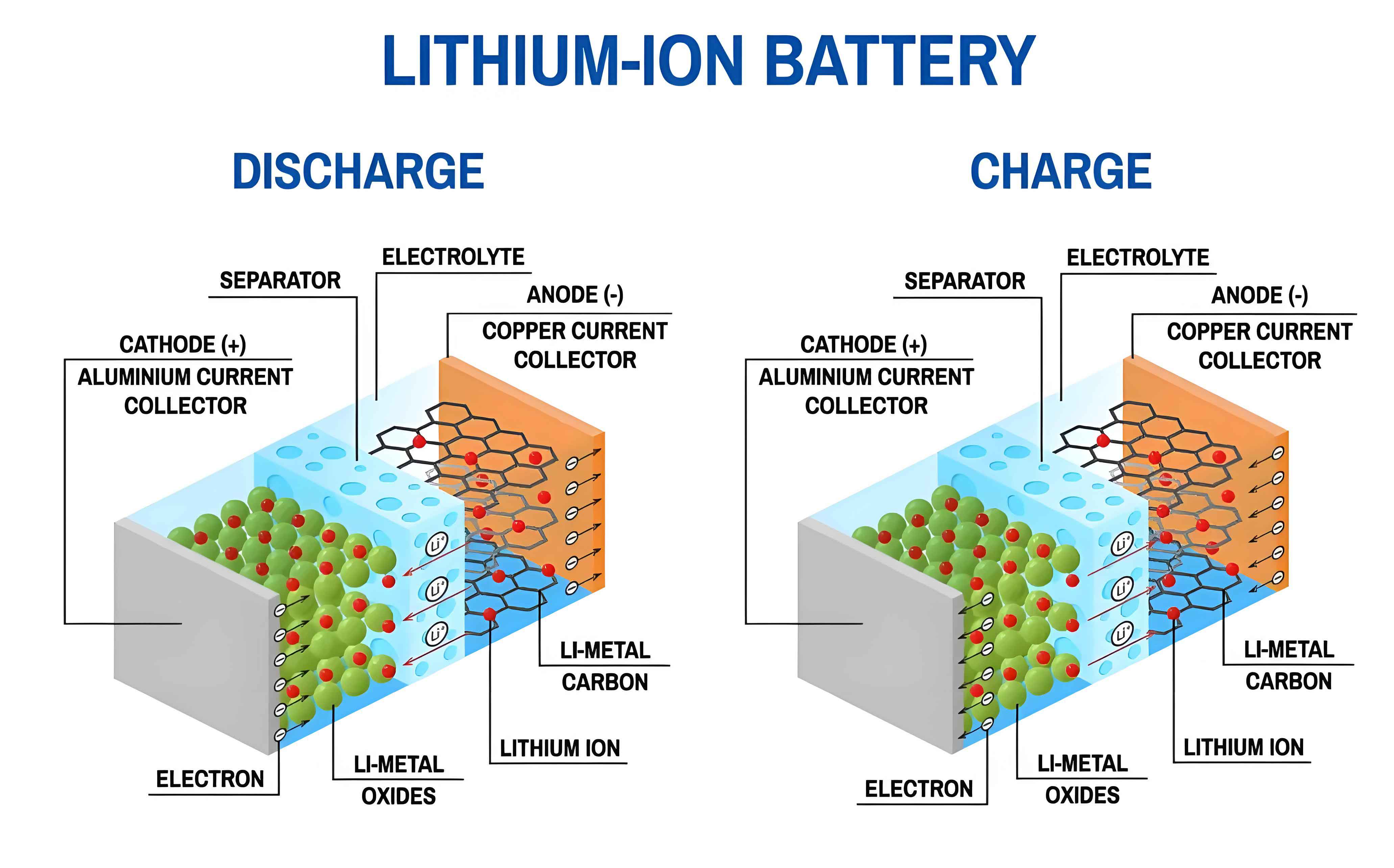
This article, from the perspective of a researcher in the field, delves into the comprehensive analysis of accelerated life aging for grid-scale li ion battery systems. I will explore the fundamental electrochemical degradation mechanisms, dissect the key stress factors that accelerate aging, review methodologies for accelerated testing, and discuss the formidable challenges and promising approaches for translating accelerated data into reliable field-life predictions.
Fundamental Degradation Mechanisms in Li-ion Batteries
The external manifestation of li ion battery aging is a gradual loss of accessible capacity and a steady increase in internal impedance. These observable trends are the macroscopic consequences of a complex set of coupled electrochemical and mechanical processes occurring at the microscopic level within the cell. Understanding these mechanisms is prerequisite for designing meaningful accelerated tests, as the applied stresses should exacerbate specific degradation modes without altering their fundamental nature. The primary aging mechanisms can be categorized as follows:
| Primary Mechanism | Description & Key Processes | Main External Symptom |
|---|---|---|
| Loss of Lithium Inventory (LLI) | Active lithium ions become permanently trapped or consumed in side reactions, reducing the cyclable charge carrier pool. The dominant process is the continuous growth and reformation of the Solid Electrolyte Interphase (SEI) on the anode. Lithium plating (electrodeposition of metallic Li) is another severe form of LLI, especially at low temperatures or high charge rates. | Capacity Fade |
| Loss of Active Material (LAM) | The cathode and/or anode materials lose their ability to intercalate lithium. Causes include particle cracking due to mechanical stress from volume changes, dissolution of transition metals (e.g., Mn, Fe) from the cathode, corrosion of current collectors, and breakdown of the conductive binder network. | Capacity Fade, Increased Impedance |
| Increase in Impedance | Increased resistance to ionic and electronic charge transfer. This results from SEI layer thickening, contact loss within electrodes, electrolyte decomposition/depletion, and increased charge transfer resistance at electrode interfaces. | Power Fade, Reduced Efficiency, Voltage Polarization |
These mechanisms rarely occur in isolation. For instance, cathode material dissolution (LAM) can lead to metal ion migration to the anode, catalyzing further SEI growth (LLI). Particle cracking (LAM) creates fresh surfaces, triggering more SEI formation (LLI). Therefore, the aging trajectory of a li ion battery is a path-dependent function of its entire operational history.
Key Stress Factors for Accelerated Aging
Accelerated Life Testing works by applying elevated stress levels to expedite these degradation mechanisms. The core principle is that the relationship between the stress factor and the rate of the underlying chemical or mechanical process is often governed by established physical laws. Identifying the dominant stress factors and understanding their functional relationship to degradation rate is crucial. The table below summarizes the primary accelerating stresses.
| Stress Factor | Accelerated Condition | Primary Mechanism Accelerated | Governing Principle / Model |
|---|---|---|---|
| Temperature (T) | High Temperature, Low Temperature | High T: SEI growth, electrolyte decomposition, transition metal dissolution. Low T: Lithium plating, increased polarization. | Arrhenius Equation: $$k = A \exp\left(-\frac{E_a}{RT}\right)$$ where $k$ is reaction rate, $A$ is pre-factor, $E_a$ is activation energy, $R$ is gas constant. |
| Charge/Discharge Rate (C-rate) | High C-rate charging/discharging | Mechanical stress leading to particle cracking, accelerated lithium plating during charge, intensified side reactions due to high overpotentials. | Paris’ Law (for mechanical fatigue): $$\frac{da}{dN} = C (\Delta K)^m$$ where $a$ is crack size, $N$ is cycle count, $\Delta K$ is stress intensity factor range (related to C-rate). |
| State of Charge (SOC) | High SOC (especially near 100%), Low SOC (near 0%) | High SOC: Increased cathode potential accelerates electrolyte oxidation; low anode potential promotes SEI growth. Low SOC: Risk of anode copper current collector dissolution during over-discharge. | Empirical models often show exponential dependence. Example model for capacity loss $Q_{loss}$: $$Q_{loss} \propto \exp(\beta \cdot SOC) \cdot t^n$$ |
| Depth of Discharge (DOD) | Large DOD per cycle | Greater volume change and mechanical strain per cycle, leading to faster LAM and LLI. Higher cumulative charge throughput per cycle. | Often modeled with a power-law dependence on cumulative charge throughput (Ah-throughput). |
| Voltage Window | Overcharge (high upper cutoff voltage), Over-discharge (low lower cutoff voltage) | Overcharge: Catastrophic electrolyte oxidation, structural damage to cathode, severe lithium plating. Over-discharge: SEI breakdown, copper dissolution, gas generation. | Can trigger new, dangerous failure modes. Use with extreme caution in ALT. |
The effect of temperature is perhaps the most widely used and understood. The Arrhenius equation powerfully describes how chemical reaction rates, such as those governing SEI growth, depend exponentially on temperature. This allows for the calculation of an acceleration factor (AF) between a high-temperature test and a reference temperature:
$$AF_{(T_{high} \rightarrow T_{ref})} = \frac{k_{T_{high}}}{k_{T_{ref}}} = \exp\left[\frac{E_a}{R}\left(\frac{1}{T_{ref}} – \frac{1}{T_{high}}\right)\right]$$
For example, if a test at 45°C causes the same amount of degradation in 1 month as 12 months at 25°C, the acceleration factor is 12. However, one must be vigilant that elevated temperature does not introduce new degradation mechanisms not present at the reference condition (e.g., separator shrinkage).
Methodologies for Accelerated Life Testing
Based on the stress factors above, ALT protocols are designed. These can be broadly classified into single-stress and multi-stress tests, with the latter being more representative of real-world conditions but also more complex to design and interpret.
Single-Stress Acceleration
This approach isolates one stress factor to study its specific impact on li ion battery degradation. It is fundamental for building mechanistic understanding.
1. Temperature Acceleration: Cells are cycled or stored at constant elevated temperatures. Studies consistently show a dramatic reduction in cycle life. For instance, while a li ion battery might achieve 3000 cycles to 80% capacity at 25°C, the cycle life at 45°C could plummet to ~800 cycles, and at 55°C to under 400 cycles, depending on the chemistry. Calendar aging (pure storage) is even more sensitive; a cell stored at 40°C may reach its end-of-life in 3-4 years, whereas it could last over 15 years at 25°C.
2. C-rate Acceleration: High charge and discharge rates induce significant mechanical stress and polarization. A cell cycled at 2C may see its lifespan reduced to less than 5% of its lifespan at a gentle C/3 rate. The model for capacity fade often takes a form like: $$Q_{loss} = \alpha \cdot (I_{rate})^m \cdot N^z$$ where $I_{rate}$ is the current, $N$ is cycle count, and $\alpha, m, z$ are fitted parameters.
3. SOC Stress: High SOC storage is a potent calendar aging accelerator. The open-circuit voltage (a proxy for anode/cathode potentials) is higher, driving thermodynamic side reactions. Capacity loss during storage can be modeled as: $$Q_{loss, calendar} = A \cdot \exp\left(-\frac{E_a}{RT}\right) \cdot (SOC)^\gamma \cdot t^{1/2}$$ where $t$ is time and $\gamma$ is a positive exponent.
Multi-Stress Acceleration
Real-world aging is a superposition of stresses. Multi-stress ALT combines factors like temperature, SOC, and C-rate to create more realistic and aggressive aging profiles. Orthogonal experimental design is often used to efficiently parse the individual and interactive effects of multiple stresses.
| Test Type | Typical Stress Combinations | Advantages | Disadvantages/Challenges |
|---|---|---|---|
| Calendar Life ALT | Temperature × SOC. Cells stored at high T (e.g., 45°C, 60°C) and high SOC (e.g., 80%, 100%). | Relatively simple, excellent for modeling storage degradation, clear link to Arrhenius kinetics. | Does not account for cycling-induced mechanical degradation. |
| Cycle Life ALT | Temperature × C-rate × DOD. Cells cycled with high C-rate, full DOD, at elevated temperature. | Accelerates cycling-related wear-out mechanisms like particle cracking and SEI growth from volume change. | Risk of shifting dominant mechanism (e.g., lithium plating at high C-rate/low T may not be relevant at reference conditions). |
| Integrated ALT | Complex profiles mimicking field duty cycles, but with compressed time and intensified stresses (higher power, wider DOD, temp spikes). | Most representative of real-world aging paths, potentially captures stress interactions. | Extremely complex to design, difficult to deconvolute individual stress contributions, requires prior knowledge of field usage. |
A key concept in multi-stress acceleration is the “path dependency” of li ion battery aging. The sequence of stresses matters. Therefore, the most advanced ALT methodologies aim not just to apply high stresses, but to apply them in an order and pattern that mirrors a compressed version of the expected real-world operational profile.
From Accelerated Data to Real-World Life Prediction: Models and Challenges
Generating accelerated aging data is only the first step. The ultimate goal is to build a model that can ingest this data and predict long-term performance under normal, milder conditions. This is a formidable inverse problem. The challenges are particularly acute when the prediction target is a li ion battery system operating in the field.
Prediction Modeling Approaches
Three broad categories of models are employed, each with strengths and weaknesses:
1. Physics-Based/Mechanistic Models: These models attempt to mathematically describe the internal electrochemical processes (e.g., using coupled partial differential equations for charge conservation, mass transport, and reaction kinetics). They can be highly accurate and extrapolate well, but they are computationally expensive and require detailed knowledge of cell internals (porosity, particle size, diffusion coefficients) that are often proprietary or hard to measure. Fitting them to data is non-trivial.
2. Empirical/Data-Driven Models: These models bypass internal physics and learn the relationship between measurable inputs (voltage, current, temperature sequences) and outputs (SOH, RUL) directly from data. Techniques include:
- Machine Learning: Support Vector Machines (SVM), Relevance Vector Machines (RVM), Gaussian Process Regression (GPR), and various neural networks (ANN, CNN, LSTM).
- Filtering Techniques: Particle Filters (PF) and Kalman Filters (KF) combined with empirical degradation models (e.g., exponential, polynomial fade).
- Statistical Models: Auto-regressive integrated moving average (ARIMA) models for time-series forecasting of capacity.
While powerful, pure data-driven models are “black boxes,” require massive amounts of high-quality training data spanning diverse conditions, and may fail to generalize to unseen stress profiles.
3. Hybrid/Fusion Models: This is the most promising direction. Hybrid models combine the mechanistic understanding of physics-based models with the adaptive learning power of data-driven techniques. For example:
- Using a simplified physics-informed model (e.g., an empirical aging equation with Arrhenius temperature dependence) to provide a prior trend, which is then updated in real-time by a particle filter using measurement data.
- Using deep learning to extract health features from operational data (e.g., incremental capacity analysis curves, voltage relaxation profiles) that are then fed into a degradation model.
- Embedding physical constraints (like monotonic capacity fade) into the structure of a neural network.
These approaches aim to achieve high accuracy, robustness to noisy data, and the ability to generalize from limited accelerated test data to field conditions.
Challenges in Field Life Prediction
Applying these models to predict the life of a grid-scale li ion battery system introduces specific hurdles:
| Challenge | Description | Implication for ALT & Prediction |
|---|---|---|
| Data Quality & Availability | Field Battery Management System (BMS) data can be noisy, have missing points, low sampling rates, and may not directly measure capacity or impedance. | Models must be robust to noisy inputs. ALT must help identify robust “health indicators” (like voltage curves under specific loads) that can be measured in the field. |
| System vs. Cell Behavior | A battery pack’s life is not the sum of its cells’ lives. It is dominated by the weakest cell and exacerbated by inconsistencies in capacity, impedance, and self-discharge among hundreds or thousands of cells. | ALT should ideally be conducted at the module or pack level to capture the effects of inhomogeneities and thermal gradients. Cell-level ALT data may overestimate system life. |
| Complex, Non-Stationary Duty Cycles | Grid storage duty cycles (frequency regulation, peak shaving, solar smoothing) are irregular, with varying power levels, partial cycling, and long idle periods. This is starkly different from the constant-current constant-voltage (CCCV) cycles used in most ALT. | Accelerated test profiles need to become more sophisticated, moving from simple square-wave cycles to compressed versions of real grid service profiles to capture path-dependent aging effects accurately. |
| Validation Difficulty | Obtaining a true “ground truth” for the lifespan of a field-deployed li ion battery system takes 5-15 years. This makes it extremely difficult to validate long-term prediction models in a timely manner. | Accelerated testing must provide surrogate validation benchmarks. Confidence is built through “aging then predicting” cross-validation on diverse ALT datasets and short-term field correlations. |
Conclusion and Future Outlook
The journey to reliably predict the service life of grid-scale li ion battery energy storage systems is complex but essential for the technology’s long-term viability and economic success. Accelerated life testing serves as the critical bridge between the slow passage of real time and the urgent need for performance and reliability insights.
This review has underscored that effective ALT is not simply about pushing a li ion battery harder; it is about strategically applying elevated stresses—be it temperature, current, or voltage bounds—based on a deep understanding of the fundamental degradation mechanisms they accelerate. The Arrhenius relationship for temperature and models for mechanical fatigue provide a scientific foundation for designing these tests. However, the future of accurate prediction lies in moving beyond single-stress tests towards multi-stress, path-dependent acceleration protocols that better mirror the irregular and variable conditions of grid service.
Equally important is the evolution of prediction models. The limitations of purely physical or purely data-driven approaches are clear. The most promising path forward is the development of hybrid models that fuse domain knowledge (the “why” of degradation) with the pattern-recognition power of machine learning (the “what” from data). These models must be trained and validated on high-quality accelerated aging data that encompasses cell-to-cell variations and system-level effects.
Looking ahead, key research frontiers include: 1) developing standardized, yet flexible, multi-stress ALT protocols representative of major grid storage applications; 2) creating open-source datasets from such tests to benchmark prediction algorithms; 3) advancing hybrid modeling techniques that are both interpretable and accurate; and 4) integrating real-time BMS data with cloud-based digital twin models for continuous, online SOH and RUL updating. By conquering the challenge of accelerated life aging analysis, we can unlock the full potential of the li ion battery, ensuring that energy storage assets are safer, more reliable, and more economically managed throughout their entire lifecycle, thereby solidifying their role as a foundational technology for a sustainable energy grid.