
As we delve into the evolution of energy storage technologies, the li-ion battery stands out as a cornerstone for modern applications, from portable electronics to electric vehicles and grid storage. The relentless pursuit of higher energy density has driven research beyond traditional graphite anodes, with silicon emerging as a promising candidate due to its exceptionally high theoretical specific capacity of approximately 4200 mAh/g. However, the commercialization of silicon anodes faces significant hurdles, primarily due to substantial volume expansion during lithiation and delithiation cycles. While nano-sized silicon has been extensively studied to mitigate these issues, its low tap density and high surface area lead to poor volumetric energy density and severe side reactions. In recent years, there has been a renewed interest in micron-sized silicon particles (typically less than 10 μm) as they offer advantages such as higher tap density, lower cost, and reduced interfacial side reactions. This article, from my perspective as a researcher in the field, aims to comprehensively review the progress in micron silicon anode materials for li-ion batteries, highlighting the challenges, modification strategies, and future directions. We will explore how structural design, carbon compositing, and binder engineering can unlock the potential of micron silicon, supported by tables and formulas to summarize key findings. Throughout this discussion, the term ‘li-ion battery’ will be frequently emphasized to underscore its central role in advancing energy storage solutions.
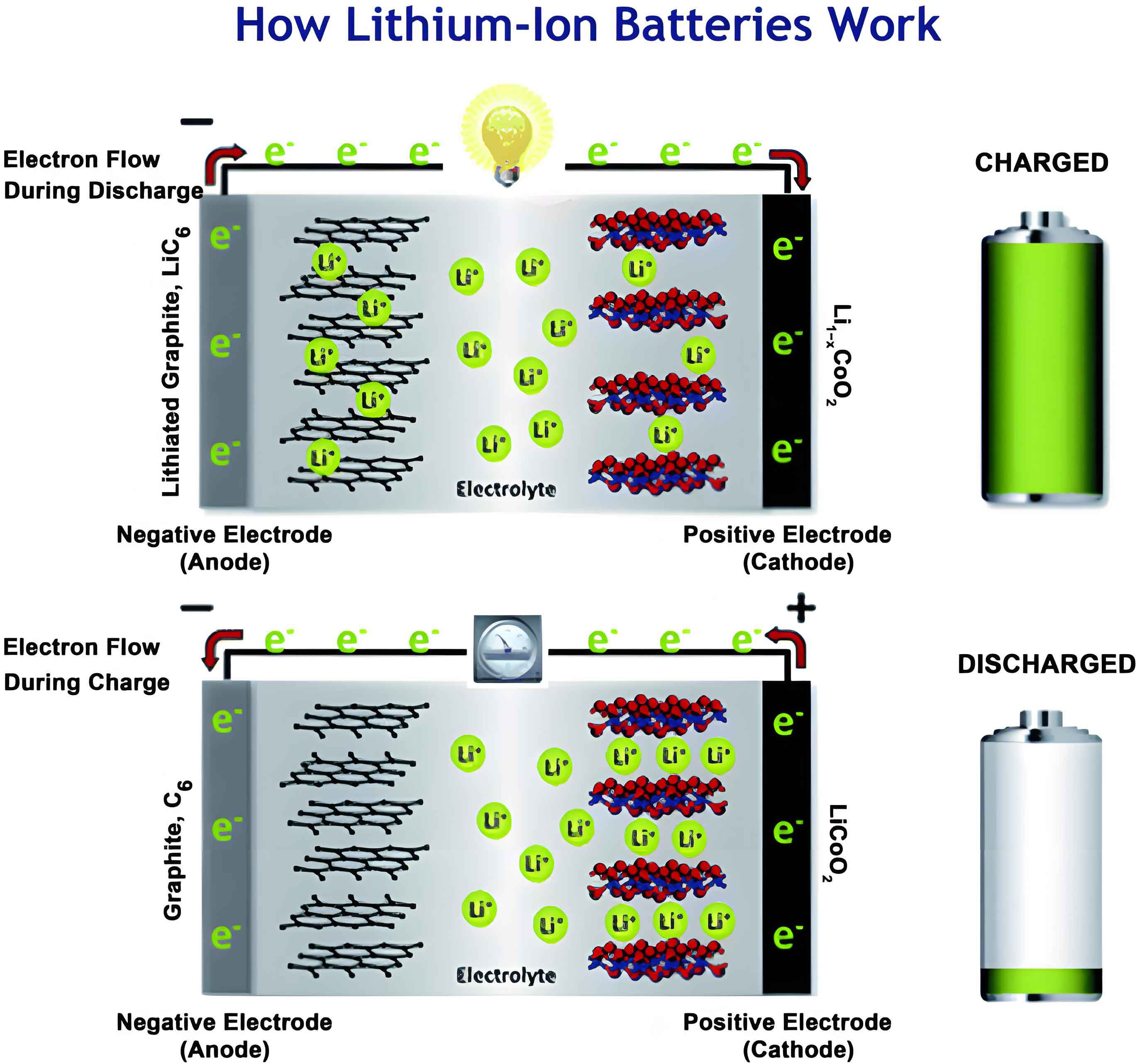
The development of high-performance anode materials is a critical theme in the li-ion battery industry. Silicon, with its natural advantage of high lithium storage capacity, is undoubtedly the focus for next-generation anodes. Compared to commercial graphite, which has a theoretical capacity of 372 mAh/g, silicon offers nearly tenfold higher capacity, making it ideal for enhancing the energy density of li-ion batteries. However, the practical implementation of silicon anodes is hampered by several intrinsic issues, which are exacerbated in micron-sized particles. In this review, we will first elucidate the fundamental problems associated with micron silicon, then delve into various modification approaches, and finally provide insights into future research trends. The integration of micron silicon into li-ion batteries requires a multifaceted strategy to address kinetic limitations, mechanical stress, and electrochemical stability.
One of the primary challenges with micron silicon anodes in li-ion batteries is the increased lithium-ion diffusion path. When silicon particles scale from nanometers to micrometers, the transport distance for lithium ions during alloying reactions expands significantly. This can be described by Fick’s laws of diffusion. The flux \( J \) of lithium ions in silicon is given by:
$$ J = -D \frac{\partial C}{\partial x} $$
where \( D \) is the diffusion coefficient, \( C \) is the concentration of lithium ions, and \( x \) is the diffusion distance. For micron-sized particles, \( x \) is on the order of micrometers, leading to a steeper concentration gradient and slower diffusion kinetics compared to nano-sized silicon where \( x \) is in nanometers. This results in higher electrode impedance and poor rate capability, which is detrimental for fast-charging applications in li-ion batteries. Additionally, the electronic conductivity of silicon is inherently low (semiconductor behavior), and the longer electron transport paths in micron particles further exacerbate the resistance, as described by Ohm’s law:
$$ V = IR $$
where \( V \) is the voltage drop, \( I \) is the current, and \( R \) is the resistance, which increases with particle size. Thus, the kinetic limitations pose a significant barrier to the performance of micron silicon anodes in high-power li-ion batteries.
Another critical issue is the severe volume expansion effect. Silicon undergoes a massive volume change of up to 300% during lithiation, which can be represented by the electrochemical reaction:
$$ \text{Si} + x\text{Li}^+ + x\text{e}^- \rightarrow \text{Li}_x\text{Si} \quad (0 \leq x \leq 3.75) $$
The fully lithiated phase is \(\text{Li}_{15}\text{Si}_4\), corresponding to a theoretical capacity of 3579 mAh/g. This volume expansion generates immense mechanical stress within the particles, leading to cracking and pulverization. The stress \( \sigma \) can be approximated using Hooke’s law for elastic materials:
$$ \sigma = E \epsilon $$
where \( E \) is the Young’s modulus of silicon (approximately 190 GPa) and \( \epsilon \) is the strain due to volume expansion. For micron silicon, the stress accumulation is more pronounced due to the larger particle size, causing electrode degradation and capacity fading in li-ion batteries. Moreover, the repeated expansion and contraction disrupt the solid electrolyte interphase (SEI) layer, leading to continuous electrolyte decomposition and lithium inventory loss. This phenomenon is particularly problematic for the long-term cycling stability of li-ion batteries employing micron silicon anodes.
The stress-induced particle pulverization is a direct consequence of the volume expansion. In micron silicon, the mechanical integrity is compromised over cycles, resulting in the loss of electrical contact between active material, conductive additives, and binders. This can be modeled using fracture mechanics, where the critical stress intensity factor \( K_{IC} \) for silicon dictates crack propagation:
$$ K_{IC} = \sigma \sqrt{\pi a} $$
where \( a \) is the crack length. Larger particles have higher inherent flaw sizes, making them more susceptible to fracture. This leads to electrode disintegration and rapid capacity decay in li-ion batteries. To quantify these challenges, Table 1 summarizes the key problems and their impact on micron silicon anode performance in li-ion batteries.
| Problem | Description | Impact on Li-ion Battery |
|---|---|---|
| Increased Li-ion Diffusion Path | Longer transport distances in micron particles slow down lithiation kinetics. | High impedance, poor rate capability, reduced power density. |
| Severe Volume Expansion | Up to 300% volume change during cycling causes mechanical stress. | Electrode swelling, SEI instability, capacity fading. |
| Particle Pulverization | Stress accumulation leads to cracking and loss of electrical contact. | Rapid capacity decay, short cycle life. |
To overcome these challenges, various modification strategies have been developed for micron silicon anodes in li-ion batteries. The first approach involves structural design, where micron-sized particles are engineered with nanoscale features to balance tap density and strain accommodation. For instance, porous micron silicon structures can be synthesized to provide void space for volume expansion. The porosity \( \phi \) can be defined as:
$$ \phi = \frac{V_{\text{pores}}}{V_{\text{total}}} $$
where \( V_{\text{pores}} \) is the volume of pores and \( V_{\text{total}} \) is the total volume. A hierarchical structure with interconnected pores allows for efficient lithium-ion transport while mitigating stress. One effective method is to create micron-sized particles composed of nano-silicon building blocks, which combine the benefits of both scales. The tap density \( \rho_{\text{tap}} \) of such materials can be expressed as:
$$ \rho_{\text{tap}} = \frac{m}{V_{\text{tap}}} $$
where \( m \) is the mass and \( V_{\text{tap}} \) is the tapped volume. By optimizing the porosity and particle size distribution, researchers have achieved tap densities above 0.5 g/cm³, significantly improving the volumetric energy density of li-ion batteries. Another structural design involves three-dimensional (3D) silicon frameworks, such as those derived from metal-assisted chemical etching. These 3D networks enhance mechanical stability and provide continuous electron pathways. The performance of various structural designs is summarized in Table 2.
| Structural Design | Synthesis Method | Key Features | Performance in Li-ion Battery |
|---|---|---|---|
| Porous Micron Silicon | Magnesiothermic reduction of SiO₂ | High tap density (0.56 g/cm³), nanoscale pores | Capacity: 1467 mAh/g at 2.6 A/g, 83% retention after 370 cycles |
| 3D Silicon Framework | Metal-assisted chemical etching | Interconnected nano-skeleton, high surface area | Capacity: 2050 mAh/g at 400 mA/g, initial coulombic efficiency 94.4% |
| Ant-nest-like Bulk Porous Silicon | Template-free synthesis | Continuous pores, silicon ribbons | Volumetric capacity: 1712 mAh/cm³, electrode expansion <20% at high areal loading |
The second major modification strategy is carbon compositing. Carbon materials, with their high conductivity and elasticity, can encapsulate silicon particles to buffer volume changes and improve electron transport. For micron silicon, carbon coating must be conformal and robust to withstand cyclic strains. Common carbon sources include pitch, polymers, and graphene. The carbon layer thickness \( t_c \) plays a crucial role in performance, as it affects both mechanical support and lithium-ion diffusion. The overall conductivity \( \sigma_{\text{composite}} \) of a silicon-carbon composite can be estimated using the rule of mixtures:
$$ \sigma_{\text{composite}} = \phi_{\text{Si}} \sigma_{\text{Si}} + \phi_{\text{C}} \sigma_{\text{C}} $$
where \( \phi \) and \( \sigma \) represent the volume fraction and conductivity of silicon and carbon, respectively. Core-shell and yolk-shell structures are particularly effective, where the carbon shell provides a protective barrier while allowing volume expansion of the silicon core. For example, carbon-coated porous micron silicon anodes have demonstrated stable cycling in full-cell li-ion batteries with capacity retention over 80% after 450 cycles. Additionally, composites with graphene or carbon nanotubes can form conductive networks that enhance rate capability. The electrochemical performance of various silicon-carbon composites is compared in Table 3.
| Composite Type | Carbon Source | Structure | Performance in Li-ion Battery |
|---|---|---|---|
| Pitch-impregnated Porous Si | Petroleum pitch | Carbon-filled pores, micron-sized particles | Full-cell capacity retention >80% after 450 cycles |
| Si/C Core-shell | Chemical vapor deposition (CVD) | Carbon shell on porous Si, thickness ~40 nm | Capacity: 2050 mAh/g at 400 mA/g, high coulombic efficiency |
| Yolk-shell Si@C | Polymer coating and etching | Hollow carbon shell with Si core | Capacity: 2800 mAh/g, 99.8% coulombic efficiency, 74% retention after 1000 cycles |
| 3D Si/C Network | Carbonized polymer binder | Dendritic carbon framework with embedded Si | Volumetric capacity: 1270 mAh/cm³, 94% retention after 100 cycles |
The third strategy focuses on binder design. Traditional binders like polyvinylidene fluoride (PVDF) are insufficient for micron silicon anodes due to weak adhesion and susceptibility to swelling in electrolytes. Advanced binders with functional groups can form strong interactions (e.g., hydrogen bonds or covalent bonds) with silicon surfaces, enhancing mechanical integrity. Water-based binders, such as carboxymethyl cellulose (CMC) and polyacrylic acid (PAA), are environmentally friendly and offer excellent adhesion. The binding strength \( F_b \) can be related to the interaction energy \( U \) via:
$$ F_b = -\frac{dU}{dr} $$
where \( r \) is the separation distance. Cross-linked polymer networks, such as those from PAA and polyvinyl alcohol (PVA), provide elastic buffers that accommodate volume changes. Moreover, conductive binders like polyaniline (PANI) can improve electron transport, reducing the need for additional conductive additives. The effectiveness of binders is often evaluated by the electrode’s cycling stability and coulombic efficiency in li-ion batteries. Table 4 summarizes key binder systems for micron silicon anodes.
| Binder System | Composition | Key Properties | Performance in Li-ion Battery |
|---|---|---|---|
| CMC/PAA Cross-linked | Carboxymethyl cellulose and polyacrylic acid | Hydrogen bonding, ester linkages, 3D network | Improved cycling stability, high initial coulombic efficiency |
| PAA-PANI Composite | Polyacrylic acid with polyaniline | Conductive, adhesive, mechanical robustness | Enhanced capacity retention, reduced impedance |
| In-situ Polymerized Hydrogel | Conductive polymer on Si nanoparticles | Conformal coating, porous structure | Capacity: 1600 mAh/g at 1 A/g after 1000 cycles |
| Partially Carbonized Polymer | Natural polymer derived carbon binder | Conductive, strong adhesion | Capacity: 774 mAh/g after 1300 cycles with 90% Si content |
To further illustrate the electrochemical behavior, we can consider the reaction kinetics of silicon anodes in li-ion batteries. The lithiation process involves phase transformations, which can be modeled using the Johnson-Mehl-Avrami-Kolmogorov (JMAK) equation for nucleation and growth:
$$ \alpha = 1 – \exp(-kt^n) $$
where \( \alpha \) is the fraction transformed, \( k \) is the rate constant, \( t \) is time, and \( n \) is the Avrami exponent. For micron silicon, the kinetics are often diffusion-limited, leading to lower \( k \) values compared to nano-silicon. Additionally, the volume expansion induces stress that affects the thermodynamic potential. The Nernst equation for the silicon electrode can be modified to include stress effects:
$$ E = E^0 – \frac{RT}{F} \ln \left( \frac{a_{\text{Li}_x\text{Si}}}{a_{\text{Si}} a_{\text{Li}^+}^x} \right) + \frac{\Omega \sigma}{F} $$
where \( E \) is the electrode potential, \( E^0 \) is the standard potential, \( R \) is the gas constant, \( T \) is temperature, \( F \) is Faraday’s constant, \( a \) denotes activities, \( \Omega \) is the partial molar volume of lithium in silicon, and \( \sigma \) is the stress. This highlights how mechanical factors influence the electrochemical performance of li-ion batteries with silicon anodes.
In terms of future outlook, the development of micron silicon anodes for li-ion batteries requires a holistic approach. First, scalable synthesis methods for hierarchical porous structures must be optimized to achieve high tap density and controlled porosity. Second, advanced carbon composites with tailored interfaces can enhance conductivity and strain accommodation. Third, multifunctional binders that combine adhesion, conductivity, and elasticity are crucial for electrode integrity. Moreover, the integration of micron silicon into full-cell li-ion batteries necessitates compatibility with high-voltage cathodes and stable electrolytes. Research should also focus on understanding the long-term degradation mechanisms through in-situ characterization techniques. From my perspective, the revival of micron silicon represents a pragmatic path toward high-energy-density li-ion batteries, balancing cost, performance, and manufacturability.
In conclusion, micron silicon anode materials hold great promise for advancing li-ion battery technology. Despite challenges such as kinetic limitations and volume expansion, innovative strategies in structural design, carbon compositing, and binder engineering have shown significant progress. By leveraging nanoscale features within micron-sized particles, we can achieve high volumetric energy density and cycling stability. The continuous improvement of these materials will be pivotal for meeting the growing demands of energy storage in applications ranging from electric vehicles to renewable integration. As research in this field accelerates, the li-ion battery community must collaborate to translate laboratory innovations into commercial realities, ensuring that micron silicon anodes contribute to a sustainable energy future.