
In recent decades, the rapid advancement of li ion battery technology has revolutionized numerous industries, from portable electronics to emerging electric transportation. As a key energy storage solution, li ion batteries offer high energy density, long cycle life, and environmental benefits, making them indispensable in our modern world. In this article, we delve into the development, challenges, and prospects of li ion batteries, drawing insights from historical trends and current research. We will explore the technical aspects, market dynamics, and future directions, emphasizing the critical role of li ion batteries in shaping a sustainable energy future.
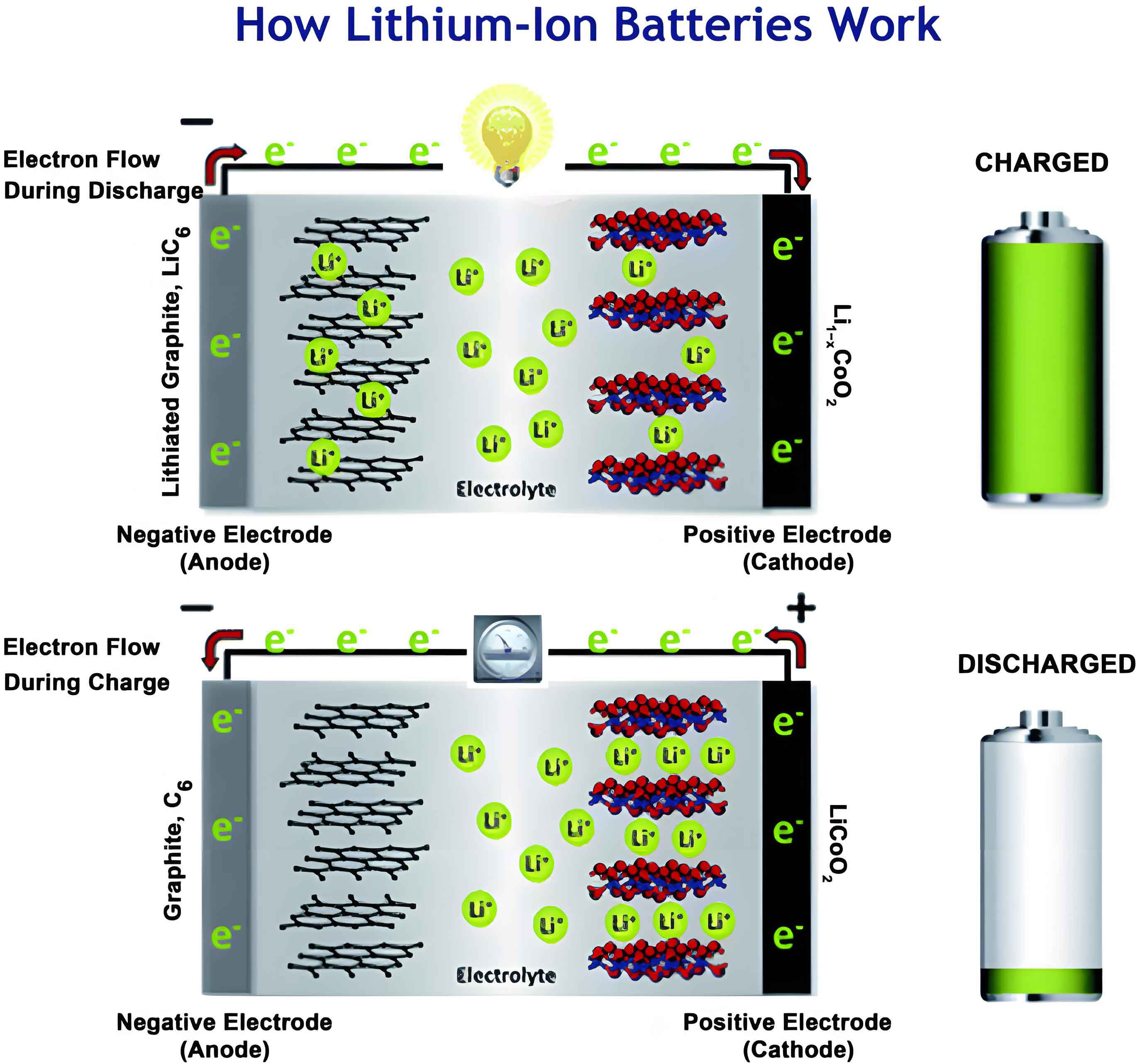
The journey of li ion batteries began in the mid-20th century, with early prototypes emerging in the 1950s. However, it was in the 1970s that practical applications started to take shape, and by the 1980s, research shifted toward lithium-ion systems, leading to commercial success in the 1990s. The core innovation lies in the use of lithium ions shuttling between electrodes, enabling reversible charging and discharging. This mechanism, represented by the general reaction: $$ \text{Li}_x\text{C} + \text{Li}_{1-x}\text{CoO}_2 \rightleftharpoons \text{C} + \text{LiCoO}_2 $$, where C denotes carbon-based anodes, underpins the efficiency of li ion batteries. Over time, advancements in electrode materials and electrolytes have propelled li ion batteries to dominate the portable electronics market, with global production soaring from millions to billions of units annually.
To understand the growth trajectory, let’s examine the historical production data. The following table summarizes the worldwide output and growth rates of li ion batteries from 1994 to 2003, highlighting their exponential expansion.
| Year | Production (billions of units) | Growth Rate (%) |
|---|---|---|
| 1994 | 0.12 | — |
| 1995 | 0.33 | 175.0 |
| 1996 | 1.20 | 264.0 |
| 1997 | 1.96 | 63.3 |
| 1998 | 2.95 | 50.5 |
| 1999 | 4.08 | 38.3 |
| 2000 | 5.46 | 33.8 |
| 2001 | 5.73 | 4.9 |
| 2002 | 8.31 | 45.0 |
| 2003 | 13.93 | 67.6 |
This surge in production is closely tied to cost reductions, as shown in the price trends for liquid and polymer li ion batteries. From 1994 to 2004, the average price per unit dropped significantly, making li ion batteries more accessible. The cost decline can be modeled approximately by an exponential decay function: $$ P(t) = P_0 e^{-kt} $$, where \( P(t) \) is the price at time \( t \), \( P_0 \) is the initial price, and \( k \) is a decay constant. This trend has accelerated adoption in diverse applications, from smartphones to electric vehicles.
The technical superiority of li ion batteries stems from their electrochemical properties. Key metrics include energy density, voltage, and cycle life. For instance, the gravimetric energy density of a typical li ion battery ranges from 100 to 150 Wh/kg, which is substantially higher than that of lead-acid or nickel-based batteries. This can be expressed as: $$ E = \frac{C \times V}{m} $$, where \( E \) is energy density, \( C \) is capacity, \( V \) is voltage, and \( m \) is mass. The high voltage of around 3.6 V per cell reduces the number of cells needed for a given application, enhancing efficiency. Moreover, the cycle life of li ion batteries often exceeds 500 cycles, with ongoing research aiming to extend this further.
A critical aspect of li ion battery development is the choice of cathode materials. Initially, lithium cobalt oxide (LiCoO₂) dominated due to its excellent performance, but concerns over cobalt scarcity and cost have driven exploration of alternatives like lithium manganese oxide (LiMn₂O₄). The comparative properties of these materials are summarized below.
| Material | Specific Capacity (mAh/g) | Voltage (V) | Cost (per ton) | Resource Availability |
|---|---|---|---|---|
| LiCoO₂ | 140-150 | 3.7 | High | Limited |
| LiMn₂O₄ | 100-120 | 3.8 | Low | Abundant |
| LiFePO₄ | 150-170 | 3.3 | Moderate | Abundant |
The electrochemical reactions for these cathodes can be described as: $$ \text{LiCoO}_2 \rightleftharpoons \text{Li}_{1-x}\text{CoO}_2 + x\text{Li}^+ + x e^- $$ and $$ \text{LiMn}_2\text{O}_4 \rightleftharpoons \text{Li}_{1-x}\text{Mn}_2\text{O}_4 + x\text{Li}^+ + x e^- $$. While LiCoO₂ offers higher capacity, LiMn₂O₄ is more economical and environmentally friendly, making it a promising candidate for large-scale applications like electric vehicles. Research is focused on improving the cycle life and stability of manganese-based systems through doping and nanostructuring.
The rise of electric vehicles (EVs) has been a major driver for li ion battery innovation. With global concerns over petroleum depletion and environmental pollution, EVs powered by li ion batteries present a viable solution. For example, an electric car consuming 15 kWh per 100 km contrasts favorably with gasoline vehicles, both in cost and emissions. The energy savings can be quantified as: $$ \text{Savings} = (E_{\text{petrol}} – E_{\text{elec}}) \times \text{distance} $$, where \( E_{\text{petrol}} \) and \( E_{\text{elec}} \) are energy costs per unit. This economic advantage, coupled with policy support, is accelerating EV adoption worldwide.
In the consumer electronics sector, li ion batteries have become ubiquitous, powering devices from laptops to wearables. The miniaturization and enhanced performance of li ion batteries have enabled longer runtimes and faster charging. Market data indicates that production in countries like China, Japan, and South Korea has grown exponentially, with China’s share increasing from 3.6% in 2000 to over 37% by 2005. This growth is fueled by continuous improvements in battery management systems and materials science.
Energy storage systems using li ion batteries are also gaining traction in grid applications, providing stability for renewable energy sources like solar and wind. The ability to store excess energy and release it on demand enhances grid reliability. The efficiency of such systems can be modeled using: $$ \eta = \frac{E_{\text{out}}}{E_{\text{in}}} \times 100\% $$, where \( \eta \) is efficiency, and \( E_{\text{in}} \) and \( E_{\text{out}} \) are energy input and output, respectively. As costs decline, li ion battery-based storage is expected to become mainstream.
However, challenges remain in the widespread deployment of li ion batteries. Safety issues, such as thermal runaway, pose risks that require advanced thermal management and solid-state electrolytes. Resource constraints, particularly for cobalt, necessitate the development of alternative materials. Lifecycle analysis shows that recycling and second-use applications are crucial for sustainability. The environmental impact of li ion batteries can be assessed through metrics like carbon footprint, which is being reduced via greener manufacturing processes.
Future research directions for li ion batteries include exploring new chemistries like lithium-sulfur and lithium-air, which promise higher energy densities. For instance, the theoretical energy density of lithium-air batteries is around 3500 Wh/kg, far exceeding current li ion batteries. This can be expressed as: $$ E_{\text{theoretical}} = \frac{n F V}{M} $$, where \( n \) is electrons transferred, \( F \) is Faraday’s constant, \( V \) is voltage, and \( M \) is molar mass. Additionally, advancements in silicon anodes and solid-state electrolytes aim to enhance performance and safety.
To illustrate the competitive landscape, let’s compare li ion batteries with other battery technologies over time. The table below shows production trends for various battery types from 2000 to 2005.
| Year | Li-ion Battery Production (billions) | Ni-MH Battery Production (billions) | Ni-Cd Battery Production (billions) |
|---|---|---|---|
| 2000 | 5.46 | 12.68 | 12.96 |
| 2001 | 5.73 | 11.50 | 12.80 |
| 2002 | 8.31 | 9.00 | 12.60 |
| 2003 | 13.93 | 7.50 | 12.55 |
| 2004 | 19.51 | 6.00 | 12.50 |
| 2005 | 25.00 (estimated) | 5.50 (estimated) | 12.45 (estimated) |
The dominance of li ion batteries is evident, with production surpassing other types due to their superior characteristics. This trend is expected to continue as innovation drives down costs and improves capabilities.
In conclusion, li ion batteries have transformed from niche products to cornerstone technologies for a sustainable energy future. Their evolution reflects decades of research and market adaptation, with ongoing efforts to address limitations. As we move forward, the integration of li ion batteries in electric vehicles, renewable energy storage, and portable devices will be pivotal. By leveraging advances in materials science and engineering, we can anticipate even more efficient, affordable, and environmentally friendly li ion battery systems. The journey of li ion batteries is far from over, and their continued development will play a crucial role in global energy transitions.
The mathematical modeling of li ion battery performance often involves complex equations, such as the Peukert’s law for capacity under different loads: $$ C = I^n t $$, where \( C \) is capacity, \( I \) is current, \( n \) is the Peukert exponent, and \( t \) is time. Additionally, the Arrhenius equation describes temperature effects on battery life: $$ k = A e^{-E_a/(RT)} $$, where \( k \) is reaction rate, \( A \) is pre-exponential factor, \( E_a \) is activation energy, \( R \) is gas constant, and \( T \) is temperature. These models help optimize li ion battery design and usage.
Looking ahead, the scalability of li ion battery production will be critical. With gigafactories emerging worldwide, economies of scale are reducing costs further. The learning curve for li ion batteries suggests that with each doubling of cumulative production, prices drop by a predictable percentage, often around 20%. This can be expressed as: $$ P(N) = P_0 N^{-b} $$, where \( P(N) \) is price after \( N \) units, \( P_0 \) is initial price, and \( b \) is the learning rate parameter. Such trends bode well for mass adoption in transportation and grid storage.
Ultimately, the success of li ion batteries hinges on interdisciplinary collaboration, combining chemistry, physics, and engineering. As we refine existing technologies and explore new frontiers, li ion batteries will remain at the forefront of energy innovation. Their versatility and performance ensure that they will continue to power our world, driving progress toward a cleaner and more efficient future.