
The pursuit of sustainable energy solutions has positioned the rechargeable Li-ion battery as a cornerstone technology for portable electronics, electric vehicles, and grid-scale storage. The energy density of a Li-ion battery, a critical parameter for these applications, is largely governed by the capacity and voltage of its cathode material. While conventional cathodes like LiCoO2 or LiFePO4 offer good stability, their practical capacities are typically limited to below 200 mAh g-1. This has spurred intensive research into next-generation cathode materials capable of delivering significantly higher energy densities. Among the most promising candidates are lithium- and manganese-rich layered oxides, often represented by the general formula xLi2MnO3·(1-x)LiMO2 (M = Ni, Co, Mn). In this family, the specific composition Li1.2Mn0.54Ni0.13Co0.13O2 (LMNCO) stands out for its exceptionally high reversible capacity exceeding 250 mAh g-1 at high operating voltages (>3.5 V vs. Li/Li+), coupled with the economic and environmental advantages of reduced cobalt content. This article reviews the structural characteristics, lithium storage mechanisms, common synthesis routes, and the extensive modification strategies employed to overcome its intrinsic challenges for practical application in advanced Li-ion batteries.
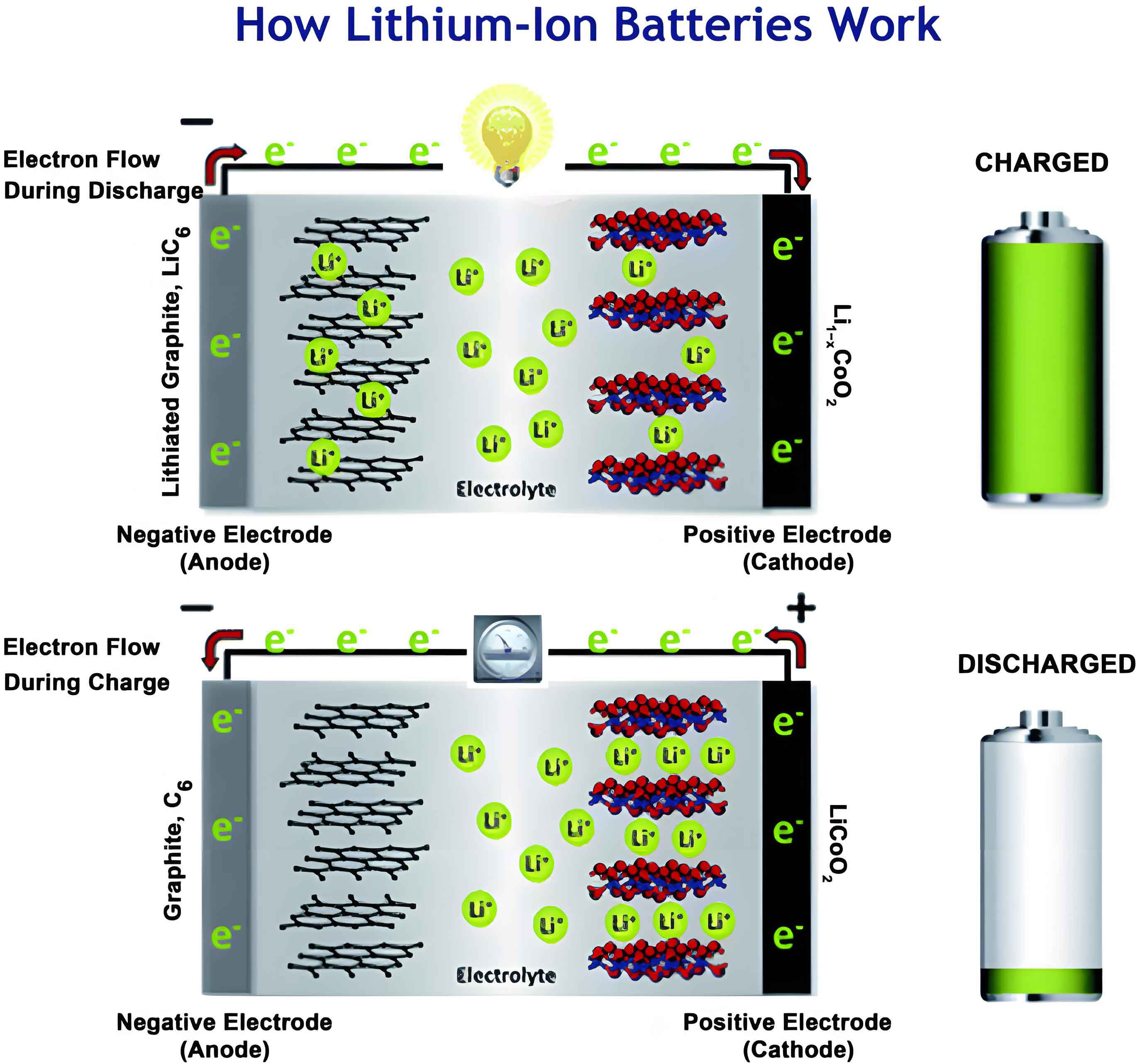
The remarkable capacity of LMNCO originates from its unique composite structure. It is not a single phase but an integrated structure of two layered components: a rhombohedral LiMO2 phase (space group R$\bar{3}$m) and a monoclinic Li2MnO3 phase (space group C2/m). These components share a common oxygen lattice, forming a coherent layered framework. The electrochemical behavior is correspondingly complex. During the initial charge to about 4.4 V, lithium ions are extracted from the LiMO2 component accompanied by the oxidation of transition metal ions (Ni2+/Ni4+, Co3+/Co4+). Upon further charging above ~4.5 V, the Li2MnO3 component is “activated.” This process involves the simultaneous extraction of Li+ and O2- (as Li2O), leading to the release of oxygen and the formation of MnO2-like regions, which can be represented as:
$$\text{Li}_2\text{MnO}_3 \rightarrow \text{MnO}_2 + \text{Li}_2\text{O} + \frac{1}{2}\text{O}_2 \uparrow$$
This anionic redox activity (involving oxide ions) is the source of the extra capacity beyond that provided by cationic redox alone. The theoretical capacity (Q) can be related to the number of electrons transferred (n) and Faraday’s constant (F), but the practical value is limited by irreversibility. The subsequent discharge and following cycles then utilize both the cationic redox from the transition metals and a portion of the reversible anionic redox, yielding the high capacity. However, this activation process is also the root cause of several critical issues: a large initial irreversible capacity loss (low Coulombic efficiency), gradual voltage fade during cycling, and mediocre rate capability due to poor electronic/ionic conductivity and structural rearrangements.
The synthesis pathway plays a fundamental role in determining the morphology, phase purity, and ultimately the electrochemical performance of the LMNCO cathode material for Li-ion batteries. Various methods have been developed, each with distinct advantages and limitations for manufacturing Li-ion battery components.
| Method | Precursor Formation | Calcination Conditions | Key Characteristics |
|---|---|---|---|
| Co-precipitation | Mixed metal salt solution + precipitant (e.g., NaOH, Na2CO3) at controlled pH & temperature. | Typically ~900°C for >12 h in air/oxygen. | Produces spherical secondary particles with high tap density; suitable for scale-up; excellent reproducibility. |
| Sol-Gel | Mixed metal chelates with organic acids (e.g., citric acid) forming a gel network. | Lower temperatures (~800-900°C) for shorter times. | High phase purity, homogeneous mixing at atomic level, fine particle size; complex process control. |
| Solid-State | Mechanical mixing of solid Li and transition metal precursors. | High temperatures (>900°C) for prolonged periods. | Simple and direct; risk of inhomogeneity, irregular morphology, and high energy consumption. |
| Hydrothermal/Solvothermal | Crystallization from an aqueous/organic solution under autogenous pressure. | Post-heat treatment required to achieve crystallinity. | Can produce unique hierarchical morphologies (rods, spheres); good control over crystal growth. |
Among these, co-precipitation is the most industrially viable route for producing the consistent, high-density spherical particles required for commercial Li-ion battery electrodes. The sol-gel method, while less scalable, is a powerful research tool for synthesizing materials with excellent homogeneity. Recent efforts focus on creating sophisticated hierarchical architectures, such as microspheres assembled from radially aligned nanoplates, which can enhance electrolyte infiltration and shorten Li+ diffusion paths, directly benefiting the power performance of the Li-ion battery.
To tackle the inherent drawbacks of LMNCO and unlock its full potential for durable, high-power Li-ion batteries, a multitude of modification strategies have been explored. These can be broadly categorized into bulk doping, surface coating, and morphology/interface engineering.
1. Bulk Ion Doping: This strategy involves substituting a small fraction of cations or anions in the lattice with foreign ions to stabilize the crystal structure from within. Doping can suppress detrimental phase transitions, reduce cation mixing, and enhance Li+ diffusion kinetics. The effectiveness depends heavily on the ionic radius, charge, and bond strength of the dopant.
| Dopant Ion | Site | Key Impact & Proposed Mechanism | Typical Performance Enhancement |
|---|---|---|---|
| F– | O2- | Stronger M-F bond stabilizes structure; mitigates oxygen loss. | Improved capacity retention and reduced voltage fade. |
| Mg2+, Al3+ | Li+ or Mn+ | Pillar effect; inhibits layer-to-spinel transformation; enlarges Li layer spacing. | Enhanced cycling stability and rate capability. |
| Nb5+, Zr4+ | Mn+ | Strong Nb-O/Zr-O bonds stabilize the lattice; large ions expand pathways. | Superior structural integrity during long-term cycling. |
| K+, Na+ | Li+ | Large ions widen Li slab spacing, facilitating Li+ migration. | Significantly improved rate performance. |
Co-doping, such as (Nb5+ + F–) or (Mg2+ + Al3+), often yields synergistic effects by simultaneously stabilizing the anionic and cationic sublattices, offering a more comprehensive solution for the Li-ion battery cathode.
2. Surface Coating: Applying a nanoscale protective layer on the particle surface is a highly effective method to mitigate interfacial degradation. The coating acts as a physical barrier against electrolyte corrosion (especially HF attack), suppresses unwanted side reactions, and can sometimes provide fast ionic or electronic conduction pathways.
| Coating Material | Function | Outcome |
|---|---|---|
| Oxides (Al2O3, TiO2, ZrO2>) | HF scavenger; physical barrier. | Reduces transition metal dissolution; improves cycle life. |
| Fluorides (AlF3, LaF3) | Forms stable interface; enhances Li+ transport. | High capacity retention and excellent rate performance. |
| Fast Ionic Conductors (LATP, LLZO) | Provides rapid Li+ conduction at interface. | Lowers interfacial impedance; boosts power density. |
| Conductive Polymers (PANI) / Carbon | Enhances electronic conductivity. | Improves rate capability and initial Coulombic efficiency. |
The coating method is crucial. Techniques like atomic layer deposition (ALD) can produce ultra-thin, conformal, and uniform coatings that offer exceptional protection with minimal weight penalty, which is vital for maximizing the energy density of the Li-ion battery. However, cost-effective wet-chemical methods remain widely researched.
3. Integrated Modification Strategies: Recognizing that bulk and surface issues are interconnected, the most promising approaches combine doping and coating. For instance, Al-doping can stabilize the bulk lattice, while a subsequent Li2WO4 or Li3PO4 coating protects the surface. This dual-modification strategy addresses both structural degradation and interfacial instability, leading to superior comprehensive performance in terms of capacity, voltage stability, and cycling life for the Li-ion battery.
In conclusion, Li1.2Mn0.54Ni0.13Co0.13O2 represents a pivotal material in the quest for high-energy-density Li-ion batteries. Its high capacity stems from a unique combination of cationic and anionic redox activities within a composite layered structure. While challenges like voltage fade and poor kinetics are significant, substantial progress has been made through advanced synthesis techniques and sophisticated modification strategies. The future development of this cathode material for practical Li-ion batteries likely lies in the rational design of multi-scale architectures: stable bulk structures achieved through intelligent co-doping, protected by uniform and functional nanoscale coatings, and assembled into optimal secondary particle morphologies. Continued fundamental research into the complex reaction mechanisms, coupled with innovative engineering solutions, is essential to translate the outstanding potential of lithium- and manganese-rich cathodes into the next generation of reliable, high-performance Li-ion batteries for demanding applications like electric vehicles and large-scale renewable energy storage.