
The reliable and safe operation of large-scale energy storage systems, particularly those based on Li-ion batteries, is a cornerstone of modern power grids integrating renewable energy. Central to this reliability is the Battery Management System (BMS), which must accurately monitor key aging indicators. Among these, the State of Health (SOH), which reflects the battery’s current capacity relative to its initial state, and the Remaining Useful Life (RUL), which predicts the cycles or time until a predefined end-of-life threshold (e.g., 80% of initial capacity), are paramount for lifecycle management, maintenance scheduling, and safety assurance. Accurately predicting these parameters remains a significant challenge due to the complex, nonlinear degradation processes inherent to Li-ion batteries.
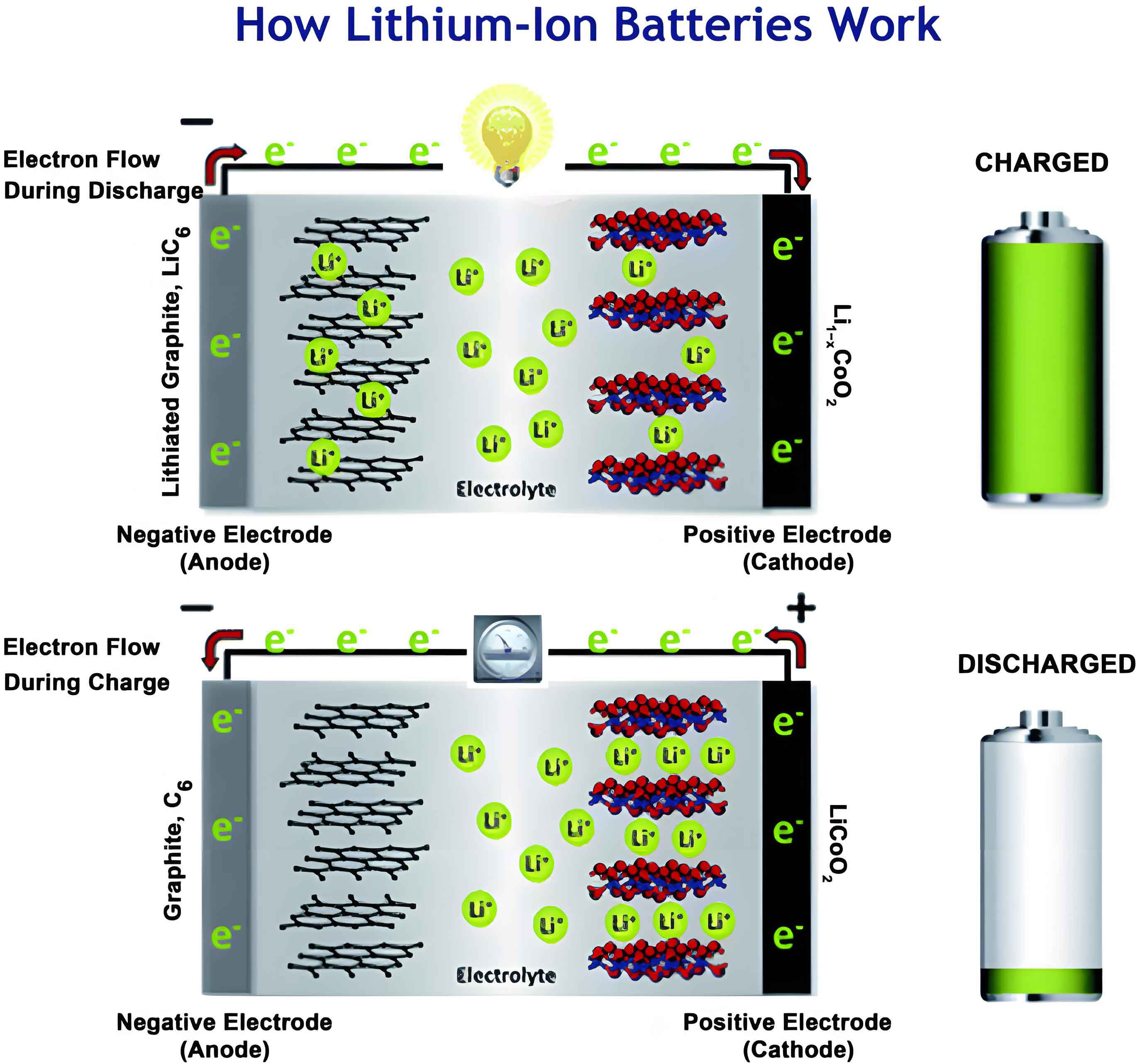
Traditional methods for assessing Li-ion battery health include direct experimental techniques, model-based approaches, and data-driven strategies. Direct methods, like full discharge capacity tests or Electrochemical Impedance Spectroscopy (EIS), are accurate but impractical for online BMS applications. Model-based methods, such as equivalent circuit models combined with filters (e.g., Kalman filters), require precise parameter identification and can be computationally intensive. In recent years, data-driven methods have gained prominence because they circumvent the need for complex electrochemical modeling. These methods learn the relationship between easily measurable battery operational data—termed Health Features (HFs)—and the degradation state. Common HFs include voltage plateaus, charge/discharge times, incremental capacity (IC) curve peaks, and temperature profiles during operation.
However, a critical shortcoming in many existing data-driven models is the treatment of all extracted health features as equally informative. In reality, the quality and informational content of different HFs vary significantly. Some features may have a strong, consistent correlation with capacity fade, while others may be noisy or only weakly indicative of degradation, especially under varying operational conditions. Feeding low-information-content features into a prediction model can introduce noise, reduce robustness, and lead to increased prediction bias. Therefore, it is not only the correlation but the information quantity and quality of the health feature that should govern its influence in a predictive model.
This article addresses this gap by proposing a novel weighted neural network framework for the co-prediction of SOH and RUL for Li-ion batteries, explicitly accounting for the informational value of each health feature. The core innovation lies in a dual-strategy approach: first, enhancing the learning process of a Genetic Algorithm-optimized Backpropagation (GA-BP) neural network with an information-aware momentum factor; and second, employing an entropy-weighting mechanism to filter out predictions from low-information features before fusing them for a final, robust estimate. This method ensures that the model’s predictions are dominated by high-fidelity data, thereby improving accuracy and reliability.
The Landscape of Health Features for Li-Ion Batteries
The success of any data-driven model for Li-ion battery prognostics hinges on the selection of informative health features. These are parameters derived from routine charge/discharge data that evolve predictably as the battery degrades. Below is a discussion of primary HF categories, their relationship to underlying degradation mechanisms, and their inherent informational value.
Features Related to Capacity and Energy
The most direct indicator of a Li-ion battery’s health is its available capacity. While direct measurement requires a full cycle, indirect proxies are used. The Incremental Capacity (IC) curve, obtained by differentiating the voltage-capacity (V-Q) charge curve (dQ/dV vs. V), is a powerful tool. Peaks and valleys in the IC curve correspond to phase transitions in the electrode materials. As the Li-ion battery ages, these peaks diminish in height and shift in voltage position. The height of the main peak ($HF_{peak}$) and its voltage location ($HF_{V\_peak}$) are potent health features. Similarly, the total energy delivered during a specific voltage window can serve as an HF, though it may exhibit abrupt changes that can corrupt data.
Features Related to Voltage Response
The voltage response under load reveals internal resistance growth. During a constant-current discharge pulse, two key voltage drops are observable: an instantaneous drop ($\Delta V_{ohm}$) due to the ohmic resistance ($R_{ohm}$), and a gradual drop ($\Delta V_{polar}$) due to polarization resistance ($R_{p}$). Both resistances increase with Li-ion battery aging, making these voltage drops excellent health features:
$$\Delta V_{ohm} = I \cdot R_{ohm}(SOH)$$
$$\Delta V_{polar} = I \cdot R_{p}(SOH)$$
where $I$ is the discharge current. Monitoring $\Delta V_{ohm}$ and $\Delta V_{polar}$ provides a window into the increasing internal resistance of the Li-ion battery.
Features Related to Time
For operation under constant current (CC), the time required to charge or discharge between two voltage thresholds is proportional to the available capacity. As the Li-ion battery loses capacity, the Constant Current Charge Time (CCCT, $t_c$) and Constant Current Discharge Time (CCDT, $t_d$) decrease. These are simple yet effective HFs:
$$Q = I \cdot t \quad \Rightarrow \quad t_d(SOH) = \frac{Q(SOH)}{I_{discharge}}$$
Features Related to Temperature
Increased internal resistance causes greater heat generation. Therefore, the maximum temperature ($T_{max}$) reached during a standard cycle or the temperature rise rate ($dT/dt$) can correlate with the state of health of the Li-ion battery. However, temperature is highly sensitive to ambient conditions and cooling, which can add noise.
The informational content of these features is not uniform. To quantify the causal influence of an HF on capacity, metrics like Transfer Entropy can be used. For a candidate HF $X$ and capacity $Y$, the transfer entropy $T_{X \to Y}$ measures the reduction in uncertainty in future capacity given the past of the HF, beyond what is explained by the past of capacity itself:
$$T_{X \to Y} = \sum p(y_{n+1}, y_n^{(k)}, x_n^{(l)}) \log_2 \frac{p(y_{n+1} | y_n^{(k)}, x_n^{(l)})}{p(y_{n+1} | y_n^{(k)})}$$
where $y_n^{(k)}$ denotes the $k$-dimensional past of $Y$. A higher $T_{X \to Y}$ indicates a stronger predictive information flow from the HF to capacity. An analysis of common HFs might reveal, for instance, that discharge energy has a higher transfer entropy to capacity than charge time, making it a more informative feature for predicting the state of the Li-ion battery.
The Proposed GA-IBP+EWM Framework
Our proposed framework, termed GA-IBP+EWM (Genetic Algorithm-Optimized Information-based BP with Entropy Weight Method), consists of two major interconnected phases: 1) an information-enhanced neural network for initial SOH/RUL estimation from individual HFs, and 2) an entropy-based fusion mechanism to produce a final, robust prediction.
Phase 1: Information-Enhanced GA-BP Neural Network (GA-IBP)
We employ a BP neural network as the base predictor. To avoid local minima and improve convergence, the initial weights and biases ($\omega, b$) are optimized using a Genetic Algorithm (GA). The fitness function for the GA is the sum of squared errors between predictions and true SOH/RUL values.
The standard BP weight update via gradient descent is:
$$\omega_{q+1} = \omega_q + \eta \cdot \nabla \omega_q, \quad \nabla \omega_q = -\frac{\partial L}{\partial \omega_q}$$
where $\eta$ is the learning rate and $L$ is the loss function.
The key modification is the introduction of an information-aware momentum factor $\theta_{info}$. This factor adjusts the classical momentum term based on the informational effectiveness of the input data batch. It is designed to accelerate convergence when processing low-information-content data, preventing the model from getting stuck. The factor is calculated using the divergence between the predicted and expected data information entropy:
$$\theta_{info} = 1 – \exp\left(-\rho \cdot \frac{1}{n}\sum_{i=1}^{n} (\hat{y}_i – d_i)^2 \right)$$
where $\hat{y}$ are predictions, $d$ is a measure of expected data information value (e.g., derived from feature entropy), $n$ is the batch size, and $\rho$ is a scaling constant. The weight update rule is then enhanced:
$$\omega_{q+1} = \omega_q + \eta \cdot \nabla \omega_q + \theta_{info} \cdot (\omega_q – \omega_{q-1})$$
This ensures that the momentum’s contribution is dynamically scaled by the informational quality of the current learning step, leading to more stable and efficient training for Li-ion battery data.
Phase 2: Entropy-Weighting Fusion Method (EWM)
Multiple GA-IBP networks are trained, each taking a single health feature (HF) as input to predict SOH or RUL. This yields a set of preliminary predictions $\{s(HF_1), s(HF_2), …, s(HF_m)\}$. Instead of simply averaging these results, we assign a fusion weight to each prediction based on the information entropy of its corresponding HF.
First, each HF time series is normalized. For a positive-correlation HF (where value decreases with aging, like capacity):
$$Y_{norm} = \frac{y_i – \min(\mathbf{y})}{\max(\mathbf{y}) – \min(\mathbf{y})}$$
For a negative-correlation HF (where value increases with aging, like internal resistance):
$$Y_{norm} = \frac{\max(\mathbf{y}) – y_i}{\max(\mathbf{y}) – \min(\mathbf{y})}$$
The information entropy $H_j$ for the $j$-th normalized HF is computed:
$$H_j = – \sum_{k=1}^{K} p(Y_{j,k}) \log_2 p(Y_{j,k})$$
where $p(Y_{j,k})$ is the probability of the HF value being in the $k$-th bin. A lower entropy $H_j$ indicates the data is more “ordered” and carries more information about the systematic degradation of the Li-ion battery.
The informational effectiveness $d_j$ and the entropy weight $\omega_j^{ent}$ for each HF are then:
$$d_j = 1 – H_j$$
$$\omega_j^{ent} = \frac{d_j}{\sum_{i=1}^{m} d_i} = \frac{1 – H_j}{\sum_{i=1}^{m} (1 – H_i)}$$
The final, fused SOH prediction ($SOH_{final}$) is a weighted sum of the preliminary predictions:
$$SOH_{final} = \sum_{j=1}^{m} \omega_j^{ent} \cdot s(HF_j)$$
This approach actively filters out contributions from high-entropy (low-information, noisy) health features, making the final prediction for the Li-ion battery more robust.
The process for RUL estimation is similar but can be further refined by using the final SOH prediction as an additional input stream. A separate set of GA-IBP networks predicts RUL from individual HFs, and from the estimated $SOH_{final}$ trajectory. These preliminary RUL estimates are then fused using a combined weight based on both their individual HF entropy and their prediction accuracy (e.g., Mean Absolute Error, MAE) on a validation set:
$$\omega_j^{final} = \frac{(1 – MAE_j) \cdot (1 – H_j)}{\sum_i [(1 – MAE_i) \cdot (1 – H_i)]}$$
The final RUL is computed as:
$$RUL_{final} = \sum_{j} \omega_j^{final} \cdot r(HF_j) + \omega_{SOH}^{final} \cdot r(SOH_{final})$$
Validation and Results
The proposed GA-IBP+EWM framework was validated using two sources: a public 18650 Li-ion battery aging dataset (NASA PCoE) and a custom experimental testbed.
Case 1: Public Dataset Validation
Data from an 18650 Li-ion battery (2.7 Ah) cycled under constant current regimes was used. Health Features extracted were: Discharge Energy ($Q$), Constant Current Charge Time ($t_c$), and Constant Current Discharge Time ($t_d$). Their correlation with capacity was confirmed via Pearson and Spearman coefficients, all above 0.94.
The entropy weights calculated for these features were:
| Health Feature (HF) | Information Entropy (Nat) | Entropy Weight ($\omega^{ent}$) |
|---|---|---|
| Discharge Energy ($Q$) | 0.939 | 40.38% |
| CC Charge Time ($t_c$) | 0.969 | 20.28% |
| CC Discharge Time ($t_d$) | 0.940 | 39.34% |
The SOH and RUL prediction results, compared against a standard MAE-weighted fusion and an equal-weight fusion, demonstrated the superiority of the entropy-weighting approach.
| Prediction Model | SOH MAE | SOH RMSE | RUL MAE (Ah) | RUL RMSE (Ah) |
|---|---|---|---|---|
| GA-IBP+EWM (Proposed) | 0.47% | 0.69% | 0.0211 | 0.0269 |
| MAE-Weighted Fusion | 0.52% | 0.71% | 0.0222 | 0.0272 |
| Equal-Weight Fusion | 0.82% | 0.98% | 0.0280 | 0.0330 |
Case 2: Experimental Validation
A custom test platform was used to cycle commercial Li-ion coin cells. The selected health features were: IC peak height during charge ($y_{peak}$), IC peak voltage during discharge ($x_{tel}$), and the instantaneous voltage drop at discharge start ($\Delta u_{ohm}$). Two cells (B1, B2) were tested until their capacity reached 80% of initial.
The proposed method was compared against standard BP, LSTM, and basic GA-BP networks. The final fused SOH for cell B1, for example, was:
$$SOH_{final,B1} = 0.2429 s(HF_1) + 0.2081 s(HF_2) + 0.2338 s(HF_3) + 0.3152 s(S_{EWM})$$
where $s(S_{EWM})$ is the entropy-weighted preliminary prediction.
The results conclusively showed lower error metrics for the GA-IBP+EWM model across both cells.
| Cell | Model | SOH MAE | SOH RMSE | RUL MAE (mAh) | RUL RMSE (mAh) |
|---|---|---|---|---|---|
| B1 | BP Network | 1.78% | 2.09% | 0.0040 | 0.0048 |
| LSTM Network | 1.71% | 1.86% | 0.0068 | 0.0074 | |
| GA-BP Network | 0.99% | 1.10% | 0.0032 | 0.0036 | |
| GA-IBP+EWM | 0.37% | 0.42% | 0.0027 | 0.0031 | |
| B2 | BP Network | 1.75% | 2.13% | 0.0050 | 0.0060 |
| LSTM Network | 1.79% | 2.00% | 0.0073 | 0.0081 | |
| GA-BP Network | 0.89% | 1.01% | 0.0039 | 0.0045 | |
| GA-IBP+EWM | 0.63% | 0.81% | 0.0035 | 0.0042 |
Conclusion
This article presented a novel data-driven framework for the accurate co-prediction of State of Health and Remaining Useful Life for Li-ion batteries. The core contribution is the explicit quantification and utilization of health feature information content within a neural network-based model. By integrating an information-aware momentum factor into a GA-optimized BP network and employing an entropy-weighting method for prediction fusion, the model effectively prioritizes high-fidelity data streams and suppresses the influence of noisy or low-information features.
Validation on both public and experimental Li-ion battery cycling data demonstrated that the proposed GA-IBP+EWM framework significantly outperforms conventional neural network models and simple fusion techniques. It achieved SOH prediction errors (MAE) below 0.63% and RUL estimation errors (MAE) below 0.0035 mAh in experimental tests, showcasing superior accuracy and robustness. This approach provides a principled pathway towards more reliable BMS algorithms, enhancing the safety and economic management of energy storage systems built on Li-ion battery technology. Future work will focus on automating the selection of the most informative health features under diverse operating conditions to further generalize the framework’s application.