
The pervasive adoption of Li-Ion battery technology as a cornerstone for modern energy storage, powering everything from portable electronics to electric vehicles (EVs) and grid-scale storage systems, represents a significant technological leap. The intrinsic high energy density that makes Li-Ion battery cells so attractive is, however, accompanied by a well-documented safety challenge: the risk of thermal runaway. This self-accelerating exothermic process, once initiated by thermal, electrical, or mechanical abuse, can lead to fire, explosion, and the release of toxic gases, posing severe threats to life and property. My research is driven by the critical need to develop more effective fire suppression agents specifically tailored for these complex, self-sustaining Li-Ion battery fires.
Traditional fire extinguishing agents often fall short when confronting a Li-Ion battery fire. Water, while effective at cooling, can cause electrical short circuits in large-scale installations. Gaseous agents like CO₂ offer poor cooling, and clean agents like perfluorohexanone, though effective, are costly and can produce toxic decomposition products. Dry chemical powders, particularly ABC powder (based on monoammonium phosphate), are widely used but are notorious for their poor cooling performance and the high probability of re-ignition in Li-Ion battery fires, as they fail to adequately quench the deep-seated chemical reactions within the cell. This investigation centers on evaluating a novel solid-phase suppressant: vermiculite powder. Vermiculite is a naturally occurring, hydrous, iron-magnesium-aluminum silicate mineral with a distinctive layered structure. When heated, it undergoes dramatic exfoliation, expanding 8-40 times its original volume, releasing water vapor, and forming a lightweight, porous, and highly insulating char layer. This unique property suggests its potential as a multi-mechanism fire suppressant through cooling (endothermic water release), oxygen isolation (physical barrier), and heat radiation blocking (insulation).
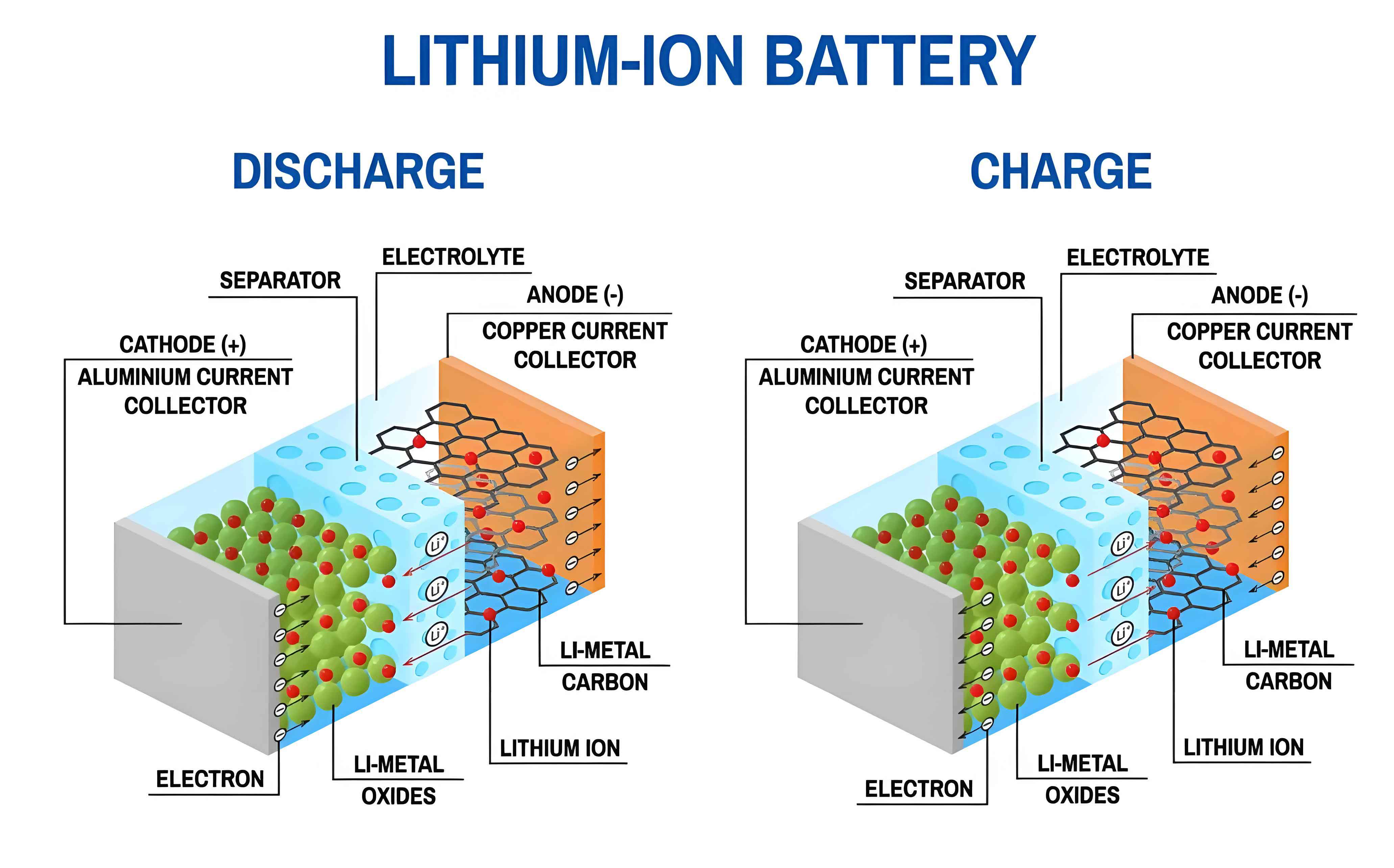
This exploration delves deeper by not only assessing raw vermiculite powder but also its chemically modified variants. The hypothesis is that impregnating the vermiculite structure with specific inorganic salts could enhance its fire-retardant efficacy. The chosen modifiers were sodium bicarbonate (NaHCO₃) and magnesium chloride (MgCl₂), both known for their flame-inhibiting properties. NaHCO₃ decomposes endothermically to release CO₂ and water vapor, while MgCl₂ can promote char formation and release chlorine radicals that interfere with combustion chain reactions. The core objective of my work was to systematically compare the fire suppression performance, thermal mitigation capability, and re-ignition resistance of these novel powders against conventional ABC dry powder for a 32 Ah ternary Li-Ion battery (Li[Ni₀.₈Co₀.₁Mn₀.₁]O₂/Graphite) under thermal abuse conditions.
Experimental Methodology and Materials Preparation
The experimental platform was designed and constructed to safely induce and monitor thermal runaway in a single Li-Ion battery cell and to apply extinguishing agents under controlled conditions. The main chamber was a 1 m³ stainless steel enclosure with a reinforced glass observation window. A 2000W electric heating plate was used to induce thermal abuse on the largest face of the prismatic pouch cell. The cell was instrumented with an array of K-type thermocouples (TCs) to record surface and plume temperatures. A gas analyzer was positioned to monitor the concentration of key combustion products, notably carbon monoxide (CO). All trials began with the Li-Ion battery at 100% State of Charge (SOC), representing the worst-case hazard scenario.
The preparation of the fire suppressant powders was a critical phase. Raw vermiculite ore was first washed, dried, and then thermally exfoliated. The expanded vermiculite was then milled into a fine powder using a planetary ball mill. For the modified powders, the raw vermiculite was subjected to a solution ion-exchange process prior to expansion and milling. Specifically, vermiculite was stirred in solutions of NaHCO₃ or MgCl₂ at varying concentrations (0.5, 1.0, 2.0 mol/L) for an extended period to facilitate cation exchange within its interlayers. After filtration and drying, this treated vermiculite was then expanded and milled, yielding the final modified powders. This process aims to integrate the active fire-suppressing ions (Na⁺, Mg²⁺, Cl⁻, HCO₃⁻) into the vermiculite matrix.
The experimental matrix consisted of nine distinct test conditions, summarized in Table 1. Each test was repeated to ensure reliability. The standard procedure involved heating the Li-Ion battery until the onset of violent jet fire, waiting 5 seconds, and then applying the extinguishing agent for a duration of 45 seconds from a fixed height.
| Condition ID | Suppressant Agent | Additive Concentration (mol/L) | Primary Active Components |
|---|---|---|---|
| 1 | No Suppressant (Control) | – | – |
| 2 | ABC Dry Powder | – | NH₄H₂PO₄ |
| 3 | Vermiculite Powder (VP) | – | (Mg,Fe,Al)₃[(Si,Al)₄O₁₀](OH)₂·4H₂O |
| 4 | 0.5M-NaHCO₃ VP | 0.5 | Vermiculite, NaHCO₃ |
| 5 | 1.0M-NaHCO₃ VP | 1.0 | Vermiculite, NaHCO₃ |
| 6 | 2.0M-NaHCO₃ VP | 2.0 | Vermiculite, NaHCO₃ |
| 7 | 0.5M-MgCl₂ VP | 0.5 | Vermiculite, MgCl₂ |
| 8 | 1.0M-MgCl₂ VP | 1.0 | Vermiculite, MgCl₂ |
| 9 | 2.0M-MgCl₂ VP | 2.0 | Vermiculite, MgCl₂ |
Thermal Runaway Characteristics and Agent Performance
The thermal runaway process of the unrestrained Li-Ion battery (Condition 1) followed a distinct, four-stage sequence common to such events: I) Heating and gas release (venting), II) Ignition and onset of open flame, III) Violent jetting fire, and IV) Flame decay and extinction. The peak surface temperature recorded exceeded 485°C, with the entire event lasting nearly 300 seconds. This control test underscored the intense and sustained energy release of a failing Li-Ion battery.
The primary metrics for evaluating suppressant performance were time to extinguish open flame (Text), peak surface temperature (Tpeak), post-application temperature (Tpost), cooling rate (CR), and incidence of re-ignition. The comparative data is consolidated in Table 2.
| Condition | Suppressant | Text (s) | Tpeak (°C) | Tpost (°C) | CR (°C/s) | Re-ignition? |
|---|---|---|---|---|---|---|
| 2 | ABC Powder | 42 ± 2 | 345.2 ± 13.2 | 216.9 ± 9.3 | 12.26 ± 2.57 | Yes |
| 3 | Vermiculite (VP) | 29 ± 2 | 294.2 ± 10.6 | 138.8 ± 10.8 | 20.30 ± 3.90 | Yes |
| 5 | 1.0M-NaHCO₃ VP | 25 ± 2 | 278.8 ± 16.6 | 101.5 ± 7.3 | 21.45 ± 4.35 | Yes |
| 8 | 1.0M-MgCl₂ VP | 18 ± 2 | 254.8 ± 13.5 | 62.8 ± 6.9 | 23.95 ± 5.85 | No |
The results are striking. Raw vermiculite powder (VP) outperformed ABC powder decisively, extinguishing flames 13 seconds faster and achieving a significantly lower peak temperature. The cooling rate for VP was approximately 66% higher than for ABC powder. This can be attributed to vermiculite’s multi-faceted action: its layered platelets blanket the Li-Ion battery surface, smothering the flame; its endothermic dehydration reaction absorbs substantial heat; and the resulting expanded, porous layer provides excellent thermal insulation, slowing heat feedback to the cell. However, raw VP still allowed re-ignition, indicating that while it quenches the surface flame effectively, it may not fully terminate all internal exothermic reactions in a severely compromised Li-Ion battery.
The modification process yielded further significant improvements. Both NaHCO₃- and MgCl₂-modified vermiculite powders reduced Text and Tpeak further. The performance enhancement was concentration-dependent, as illustrated by the trends in Tpeak and CR. We can model the general improvement in cooling efficiency with additive concentration [C] using a simplified linear relationship:
$$ CR \approx CR_0 + k \cdot [C] $$
where \( CR_0 \) is the cooling rate of raw vermiculite (~20.30 °C/s) and \( k \) is an effectiveness constant specific to the additive. For the MgCl₂ series, \( k \) appears larger than for the NaHCO₃ series, indicating a more potent effect per unit concentration. The most critical finding was that the MgCl₂-modified vermiculite, particularly at 1.0M and 2.0M concentrations, successfully prevented re-ignition entirely. This is a paramount advantage for Li-Ion battery fire safety, as re-ignition poses a major challenge for most existing agents.
Mechanistic Analysis of Suppression and Toxicity Mitigation
The superior performance, especially of MgCl₂-modified vermiculite, can be explained by a synergistic combination of mechanisms targeting the complex failure pathways of a Li-Ion battery.
1. Physical Barrier and Thermal Insulation: All vermiculite-based agents excel here. Upon contact with the hot Li-Ion battery surface, the powder expands, creating a low-density, high-porosity crust. This crust acts as a highly effective insulating layer, reducing the heat flux from the burning cell to unreacted materials and to the environment. The effective thermal conductivity \( k_{eff} \) of this vermiculite char layer is very low:
$$ q” = -k_{eff} \cdot \nabla T $$
where \( q” \) is the heat flux and \( \nabla T \) is the temperature gradient. A low \( k_{eff} \) directly reduces \( q” \), containing the thermal event.
2. Endothermic Cooling: The dehydration of vermiculite’s interlayer and structural water is a highly endothermic process, absorbing energy from the fire zone:
$$ \text{Vermiculite-H}_2\text{O} + \Delta H \rightarrow \text{Expanded Vermiculite} + \text{H}_2\text{O}_{(v)} $$
The released water vapor also dilutes oxygen and fuel gases near the flame.
3. Chemical Inhibition (Modified Powders): This is where modification provides the critical edge. For MgCl₂-modified vermiculite, the incorporated MgCl₂ can decompose and interact with the fire chemistry. It may release HCl gas, which can interfere with the high-energy H⁺ and OH⁻ radicals in the flame front, disrupting the chain-branching reactions of combustion:
$$ \text{HCl} + \text{H}^\cdot \rightarrow \text{H}_2 + \text{Cl}^\cdot $$
$$ \text{Cl}^\cdot + \text{CH}_4 \ (\text{or other fuels}) \rightarrow \text{HCl} + \text{CH}_3^\cdot $$
The net effect is the conversion of highly reactive radicals into less reactive ones, quenching the flame at a chemical level. Furthermore, Mg species can catalyze the formation of a more stable, graphitic char on the electrode materials, sealing off fuel sources.
4. Toxicity Suppression: The emission of Carbon Monoxide (CO) during a Li-Ion battery fire is a major toxicity hazard. The gas analysis revealed a profound difference between agents. The peak CO concentration for the control test was ~2562 ppm. ABC powder, likely due to incomplete combustion caused by its rapid flame knockdown without sufficient cooling, resulted in an even higher peak CO concentration (~3922 ppm). In contrast, vermiculite-based agents drastically reduced peak CO levels. Raw VP reduced it to ~696 ppm, and the modified powders drove it even lower (~459-463 ppm). This demonstrates that the combined cooling and chemical suppression of the vermiculite-based agents leads to more complete combustion or earlier termination of gaseous fuel production, significantly mitigating this acute inhalation hazard associated with Li-Ion battery failure.
Conclusion and Engineering Implications
This comprehensive investigation leads to several definitive conclusions regarding the suppression of thermal runaway in Li-Ion batteries:
- Vermiculite Powder as a Superior Base Agent: Unmodified vermiculite powder already represents a significant advancement over traditional ABC dry powder for Li-Ion battery fires. Its mechanism of action—combining rapid heat absorption via dehydration, effective flame smothering, and the formation of an insulating char layer—enables faster flame extinction and better temperature control.
- The Critical Role of Chemical Modification: The process of modifying vermiculite with inorganic salts, particularly MgCl₂, transforms it from a good suppressant into an exceptional one. The modification introduces potent chemical flame inhibition pathways that work in synergy with vermiculite’s physical properties. This synergy is crucial for addressing the deep-seated, self-sustaining electrochemical reactions within a compromised Li-Ion battery.
- Prevention of Re-ignition is Achievable: The most significant outcome is the demonstrated ability of MgCl₂-modified vermiculite powder to prevent re-ignition—a common and dangerous failure mode for other suppressants. This property is non-negotiable for practical firefighting scenarios involving high-value or high-risk Li-Ion battery installations.
- Concentration-Dependent Efficacy: The performance of modified vermiculite scales positively with the concentration of the impregnating salt, providing a tunable parameter for optimizing suppressant formulations based on specific Li-Ion battery chemistries and formats.
The engineering implications are substantial. While ABC dry powder has a role in general fire protection, its limitations for Li-Ion battery safety are clear. Modified vermiculite powder emerges as a highly promising candidate for specialized applications. In electric vehicle emergency response protocols, stationary energy storage system (ESS) protection cabinets, and battery manufacturing/repair facilities, a suppressant that cools rapidly, prevents re-ignition, and reduces toxic gas emissions offers a far more robust safety solution. Future work will focus on optimizing the modification process for large-scale production, testing the agent on larger module and pack-level Li-Ion battery fires, and evaluating its long-term compatibility and potential corrosivity. The journey toward safer Li-Ion battery technology necessitates continuous innovation in mitigation strategies, and advanced solid-phase suppressants like modified vermiculite powder represent a compelling step forward on that path.