
The relentless pursuit of reducing the carbon footprint of the transportation sector has positioned the li ion battery as the cornerstone of the electric vehicle (EV) revolution. While significant strides have been made in extending the driving range of EVs, the prolonged charging duration compared to conventional refueling remains a critical barrier to mass consumer adoption. Consequently, the development of fast-charging li ion battery technology, capable of achieving an 80% state of charge (SOC) in under 15 minutes, has emerged as a paramount research and engineering objective. The performance of a li ion battery under extreme fast-charging (XFC) conditions is governed by a complex interplay of materials and interfacial kinetics. The electrolyte, often described as the “blood” of the battery, plays a decisive role in enabling or limiting fast charge capability. During charging, Li+ ions must navigate a series of steps: bulk transport in the liquid electrolyte, desolvation at the electrode-electrolyte interface, diffusion through the solid electrolyte interphase (SEI) on the anode, and finally, solid-state diffusion within the active material. The energy barriers associated with the first three steps are intrinsically linked to the physicochemical properties of the electrolyte. Therefore, strategic electrolyte engineering is essential to minimize these barriers, suppress detrimental side reactions like lithium plating, and ensure the safety and longevity of fast-charging li ion battery systems.
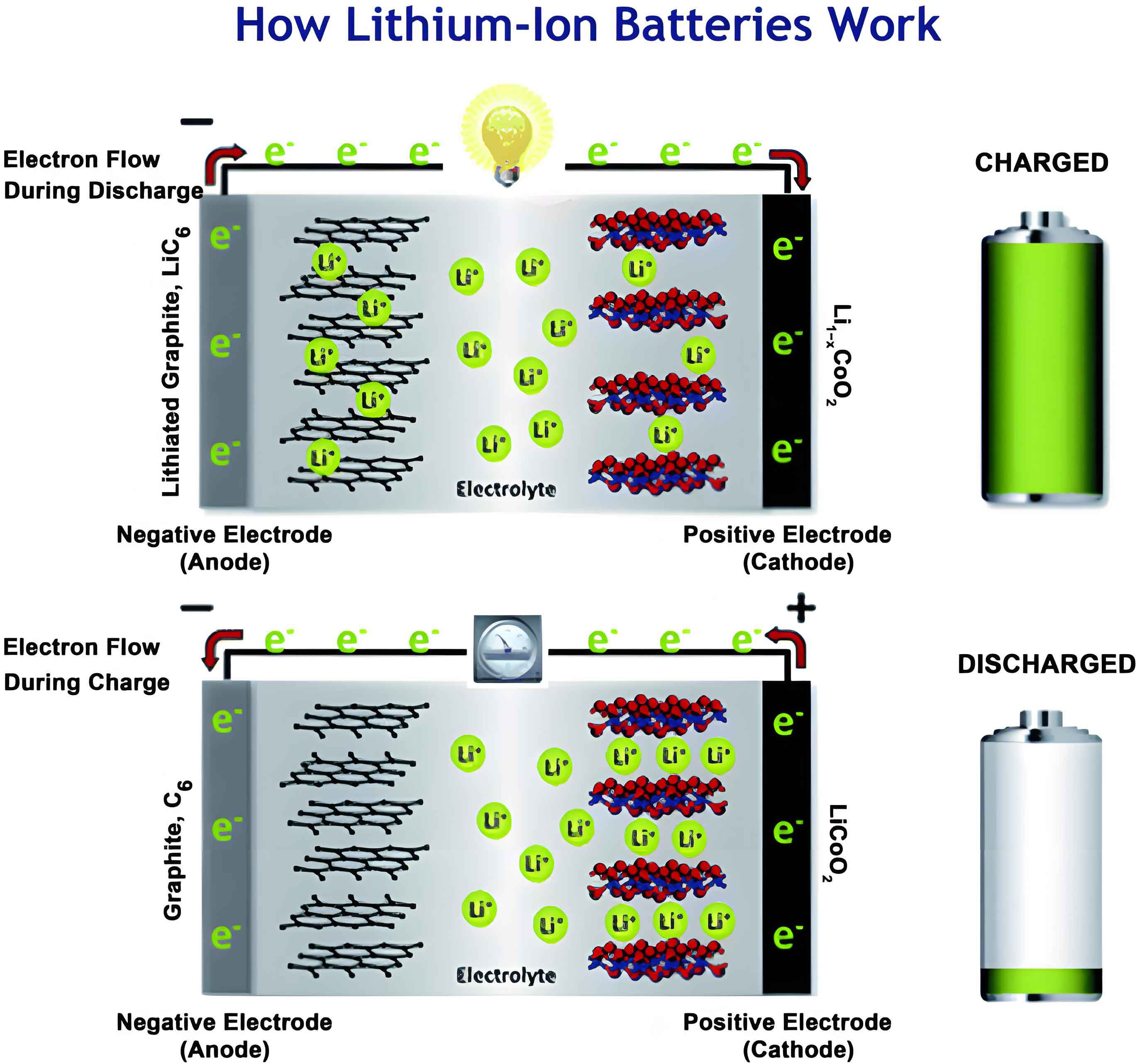
The overarching goal in designing electrolytes for the fast-charging li ion battery is to enhance Li+ transport kinetics while stabilizing the electrode interfaces, particularly the graphite anode. This can be systematically approached by focusing on three interconnected aspects: 1) enhancing the bulk ionic conductivity and Li+ transference number, 2) reducing the desolvation energy barrier at the anode interface, and 3) engineering a robust, thin, and ionically conductive SEI layer. Advances in each of these domains, often leveraging novel solvent formulations, high-concentration electrolytes, and functional additives, are critical for realizing the next generation of the fast-charging li ion battery.
1. Enhancing Bulk Ion Transport Properties
The foundation of a high-power, fast-charging li ion battery lies in the electrolyte’s ability to facilitate rapid Li+ flux without significant concentration polarization. The bulk transport properties are primarily determined by the solvent’s viscosity, dielectric constant, and the nature of the Li+ solvation structure.
1.1 Low-Viscosity Solvent Systems
Conventional electrolytes for the li ion battery rely on mixtures of cyclic carbonates like ethylene carbonate (EC) for SEI formation and linear carbonates like ethyl methyl carbonate (EMC) or dimethyl carbonate (DMC) for low viscosity. For XFC, the search has extended to alternative solvents with inherently lower melting points and viscosities. Linear carboxylic esters, such as methyl acetate (MA) and methyl propionate (MP), have garnered significant attention. Their lower viscosity directly translates to higher ionic conductivity and greater cation mobility, which is crucial for the fast-charging li ion battery. The self-diffusion coefficients of Li+ (DLi), anion (DA), and solvent (Dsol) are key metrics, as shown in studies comparing different Li[FSA] (lithium bis(fluorosulfonyl)amide) based electrolytes.
The relationship between solvent viscosity and ionic transport can be summarized for different formulations relevant to the fast-charging li ion battery:
| Electrolyte (Li[FSA] in solvent) | Viscosity @ 30°C (mPa·s) | Ionic Conductivity (mS/cm) | DLi (10⁻⁷ cm²/s) | Key Advantage for Fast-Charging |
|---|---|---|---|---|
| MP (1 mol/dm³) | 220 | 0.43 | 0.20 | Moderate conductivity |
| MA (1 mol/dm³) | 270 | 1.51 | 0.70 | Highest conductivity & DLi |
| ML (1 mol/dm³) | 1030 | 0.37 | 0.15 | Higher boiling point |
The data clearly indicates that the MA-based electrolyte offers superior bulk transport properties, a prerequisite for the fast-charging li ion battery. The ionic conductivity (σ) is related to these diffusion coefficients and ion concentrations by the Nernst-Einstein equation, which, while not exact for correlated systems, provides a useful framework:
$$
\sigma \approx \frac{F^2}{RT} (c_{Li} D_{Li} + c_{A} D_{A})
$$
where \(F\) is Faraday’s constant, \(R\) is the gas constant, \(T\) is temperature, and \(c\) denotes concentration. Maximizing \(D_{Li}\) is therefore a direct target for electrolyte design in the fast-charging li ion battery.
1.2 High-Concentration Electrolytes (HCE) and Localized HCE
A paradigm shift in electrolyte design for the fast-charging li ion battery involves moving from the conventional ~1 M concentration to “highly concentrated electrolytes” (HCEs) with salt/solvent molar ratios approaching or exceeding 1:2. In these systems, all solvent molecules are coordinated to Li+ ions, fundamentally altering the solvation structure and transport mechanism. This leads to a dramatic increase in the Li+ transference number (\(t_{Li+}\)), a critical parameter often overlooked in conventional formulations. The \(t_{Li+}\) is defined as the fraction of the total ionic current carried by the Li+ ion:
$$
t_{Li+} = \frac{D_{Li}}{D_{Li} + D_{A}}
$$
In a conventional electrolyte, \(t_{Li+}\) is typically low (~0.2-0.4), meaning anions contribute more to current flow, leading to severe concentration gradients and polarization during fast charging of the li ion battery. In HCEs, \(D_{Li}\) increases relative to \(D_{A}\), pushing \(t_{Li+}\) closer to 0.5 or higher. This suppresses concentration polarization, allowing the li ion battery to sustain higher charge currents at elevated SOC, as modeled by the following relationship for the limiting current \(I_{lim}\):
$$
I_{lim} \propto \frac{t_{Li+} D_{eff} c_0}{(1 – t_{Li+}) L}
$$
where \(D_{eff}\) is the effective diffusion coefficient, \(c_0\) is the initial concentration, and \(L\) is the diffusion length. A higher \(t_{Li+}\) directly increases \(I_{lim}\), enabling faster charging of the li ion battery. The evolution of diffusivity ratios with concentration highlights this advantage:
| Electrolyte System | [Solvent]/[Li] Ratio | Trend of Dsol/DLi | Implication for Fast-Charging Li-ion Battery |
|---|---|---|---|
| Li[FSA]:MP | Decreasing (1.0 → 0.6) | Decreases significantly | DLi increases faster than Dsol, beneficial. |
| Li[FSA]:MA | Decreasing (1.0 → 0.6) | Decreases below linear trend | Marked enhancement of DLi at very high concentration. |
| Li[FSA]:ML | Decreasing (1.0 → 0.6) | Decreases | Improvement in Li+ transport. |
To mitigate the high viscosity and cost of HCEs, the “localized HCE” (LHCE) concept was developed for the fast-charging li ion battery. An LHCE is created by diluting an HCE with a non-coordinating solvent (e.g., bis(2,2,2-trifluoroethyl) ether or hydrofluoroether). This preserves the cation-anion-aggregate-dominated solvation structure of the HCE at the electrode interface while restoring fluidity and ionic conductivity akin to a dilute electrolyte in the bulk. This innovation marries high \(t_{Li+}\) with practical conductivity, making it a leading strategy for the fast-charging li ion battery.
2. Reducing the Desolvation Energy Barrier
Before a Li+ ion can intercalate into the graphite anode of a fast-charging li ion battery, it must shed its solvation shell in a process called desolvation. This step is often the most energetically costly in the charging process, with the activation energy (\(E_a,_{desolv}\)) posing a significant kinetic bottleneck at high currents and low temperatures. The desolvation energy is directly related to the binding energy between the Li+ ion and its surrounding solvent molecules.
Molecular dynamics simulations and quantum chemical calculations reveal that the binding energy in a conventional EC-based solvation sheath (e.g., Li+(EC)4) is significantly higher than in electrolytes designed for the fast-charging li ion battery. For instance, in acetonitrile (AN)-based HCEs, the prevalent solvation structure is Li+(AN)2(FSI−), where the Li+ interacts strongly with the FSI− anion and more weakly with the AN solvent. The binding energy can be approximated from the interaction potentials:
$$
E_{binding} \approx \sum_{i}^{solvents} V_{Li-S,i} + \sum_{j}^{anions} V_{Li-A,j}
$$
Where \(V_{Li-S}\) and \(V_{Li-A}\) represent the Li+-solvent and Li+-anion interaction potentials, respectively. Electrolytes that promote anion involvement in the primary solvation shell (via high concentration or selective solvent choice) generally exhibit lower \(E_a,_{desolv}\). This principle is exploited in solvents like fluorinated esters (e.g., diethyl fluoromalonate – DEFM) or in AN-based systems, where the calculated binding energy for Li+-DEFM is notably lower than for Li+-DEC, leading to markedly improved low-temperature and fast-charging performance for the li ion battery.
2.1 Role of Lithium Salt Anion
The choice of lithium salt is pivotal in tuning the desolvation kinetics for the fast-charging li ion battery. Salts like lithium bis(fluorosulfonyl)imide (LiFSI) and lithium bis(trifluoromethanesulfonyl)imide (LiTFSI) offer advantages over the traditional LiPF6. First, they often have higher ionic conductivity in equivalent solutions. More importantly, their anions (FSI−, TFSI−) have a stronger tendency to enter the Li+ solvation shell and a lower dissociation energy, facilitating the desolvation process. Comparative studies on li ion battery cells show that LiFSI-based electrolytes enable a higher fraction of constant-current (CC) charging phase at 3C and 5C rates compared to LiPF6-based ones, indicating lower overall polarization—a key feature for the fast-charging li ion battery. The reduced polarization minimizes the anode potential drop below 0 V vs. Li/Li+, thereby suppressing the risk of lithium plating, which is the primary failure mode during fast charging of the li ion battery.
3. Engineering a High-Performance Solid Electrolyte Interphase (SEI)
A stable, ionically conductive, and mechanically robust SEI on the graphite anode is non-negotiable for the longevity of any li ion battery, but its requirements are even more stringent for the fast-charging li ion battery. The ideal SEI must be thin to minimize IR drop, highly conductive to Li+ to reduce interfacial resistance, and uniform to prevent localized current hot spots that lead to plating.
3.1 Inorganic-Rich vs. Organic-Rich SEI
The composition of the SEI drastically affects its ionic transport properties. An SEI rich in inorganic components like LiF, Li2O, and LixPOyFz generally exhibits higher ionic conductivity and lower activation energy for Li+ migration compared to an SEI dominated by organic polymeric species (e.g., oligomers of EC). The activation energy (\(E_a\)) for Li+ hop-ping through the SEI can be described by an Arrhenius-type relationship for the interfacial charge-transfer resistance (\(R_{ct}\)):
$$
R_{ct} = A \cdot \exp\left(\frac{E_a}{k_B T}\right)
$$
where \(A\) is a pre-exponential factor and \(k_B\) is Boltzmann’s constant. Experiments on model systems have demonstrated that inorganic-rich SEI layers derived from HCE or LHCE formulations can have an \(E_a\) as low as ~0.65 eV, whereas organic-rich SEI layers can have an \(E_a\) > 0.85 eV. This difference is crucial for the fast-charging li ion battery, as a lower \(E_a\) ensures efficient Li+ transport across the interface even at high current densities. The following table contrasts SEI types relevant to the fast-charging li ion battery:
| SEI Type | Typical Formation Electrolyte | Major Components | Estimated Ea for Li+ Transport | Suitability for Fast-Charging Li-ion Battery |
|---|---|---|---|---|
| Inorganic-Rich | HCE (e.g., 4 M LiFSI/DME), FEC-containing | LiF, Li2O, LixN | ~0.65 eV (Lower barrier) | Excellent (High conductivity, stable) |
| Organic-Rich | Conventional EC/DMC LiPF6 | Polycarbonates, (CH2OCO2Li)2 | ~0.85 eV (Higher barrier) | Poor (High resistance, less stable) |
3.2 Strategic Use of Electrolyte Additives
Additives are indispensable tools for *in-situ* SEI engineering in the fast-charging li ion battery. They are used in small quantities (0.5-5 wt%) to preferentially reduce at the anode before the base solvents, forming a protective layer.
- Film-Forming Additives: Vinylene carbonate (VC) and fluoroethylene carbonate (FEC) are quintessential examples. FEC, in particular, decomposes to form a flexible, LiF-rich SEI that is highly effective in suppressing lithium plating and accommodating volume changes, making it almost mandatory for silicon-containing anodes in the fast-charging li ion battery.
- Multi-Functional Additives: Recent research focuses on additives that address multiple challenges simultaneously. For example, lithium difluoro(oxalate)borate (LiDFOB) can form a robust borate-rich SEI while also stabilizing the cathode interface. Other additives like propargyl methanesulfonate (PMS) or phosphorus-based compounds can scavenge harmful HF and catalyze the formation of favorable SEI components.
- Synergistic Additive Pairs: Combining additives can yield superior SEI for the fast-charging li ion battery. A blend of VC and a long-chain amine (e.g., octadecylamine – ODA) has been shown to produce a thinner, more uniform, and more conductive SEI than either additive alone. The VC contributes polycarbonate and Li2CO3, while the ODA may facilitate a more ordered, compact layer. This synergy results in significantly lower charge-transfer resistance (\(R_{ct}\)) and excellent capacity retention in graphite and silicon-oxide based cells under 5C fast-charging conditions.
The impact of an effective additive on interfacial kinetics in the fast-charging li ion battery can be quantified by the reduction in \(R_{ct}\), as measured by electrochemical impedance spectroscopy (EIS). An optimized additive package can reduce \(R_{ct}\) by more than 70% compared to a baseline electrolyte, directly translating to lower overpotential and enhanced fast-charge capability for the li ion battery.
4. Summary and Future Perspectives
The development of the fast-charging li ion battery is a multi-faceted challenge where electrolyte innovation is a critical enabler. Progress hinges on a holistic design strategy that simultaneously addresses bulk transport, interfacial desolvation, and SEI layer properties. The adoption of low-viscosity ester co-solvents, the paradigm of high-concentration and localized high-concentration electrolytes (LHCEs), and the strategic deployment of multi-functional additives represent the most promising pathways forward. These approaches collectively work to increase the Li+ transference number, lower the desolvation energy barrier, and foster the growth of a thin, inorganic-rich, and highly conductive SEI—all essential traits for the fast-charging li ion battery.
Looking ahead, the commercialization of the fast-charging li ion battery must also contend with system-level challenges. The high currents involved (potentially exceeding 6C) generate substantial heat, necessitating advanced thermal management systems within the battery pack to maintain optimal temperature (typically 25-40°C). Furthermore, the existing grid and charging infrastructure must evolve to support the multi-hundred-kW power levels required for widespread XFC. Continuous research into more stable cathode materials (e.g., coated single-crystal NMC, LMFP) and anode materials (e.g., hard carbon, composite Si/C) that can withstand the mechanical and electrochemical stresses of rapid lithium insertion will work in tandem with advanced electrolytes. Ultimately, the realization of a safe, durable, and truly fast-charging li ion battery that can recharge in minutes will be the culmination of synchronized breakthroughs across electrolyte science, electrode engineering, and battery system design.