
With the rapid development of new energy utilization and the deepening of carbon neutrality goals, the power system is undergoing significant transformations. The transition from traditional energy sources dominated by thermal power to new energy sources is持续推进, and the limitations of photovoltaic and wind power generation have propelled the development of battery energy storage technologies. Among these, the li ion battery has become one of the most competitive technologies for large-scale power energy storage due to its long lifespan, high energy density, and fast charging and discharging capabilities. However, due to imperfect safety monitoring techniques, there have been numerous fire and explosion accidents globally involving li ion battery energy storage systems. This article aims to summarize and review the safety monitoring technologies for li ion battery energy storage stations from a first-person perspective, providing a clearer direction and goals for future development. I will delve into the current research, applications, challenges, and future trends, emphasizing the critical role of monitoring in ensuring the safe operation of li ion battery systems.
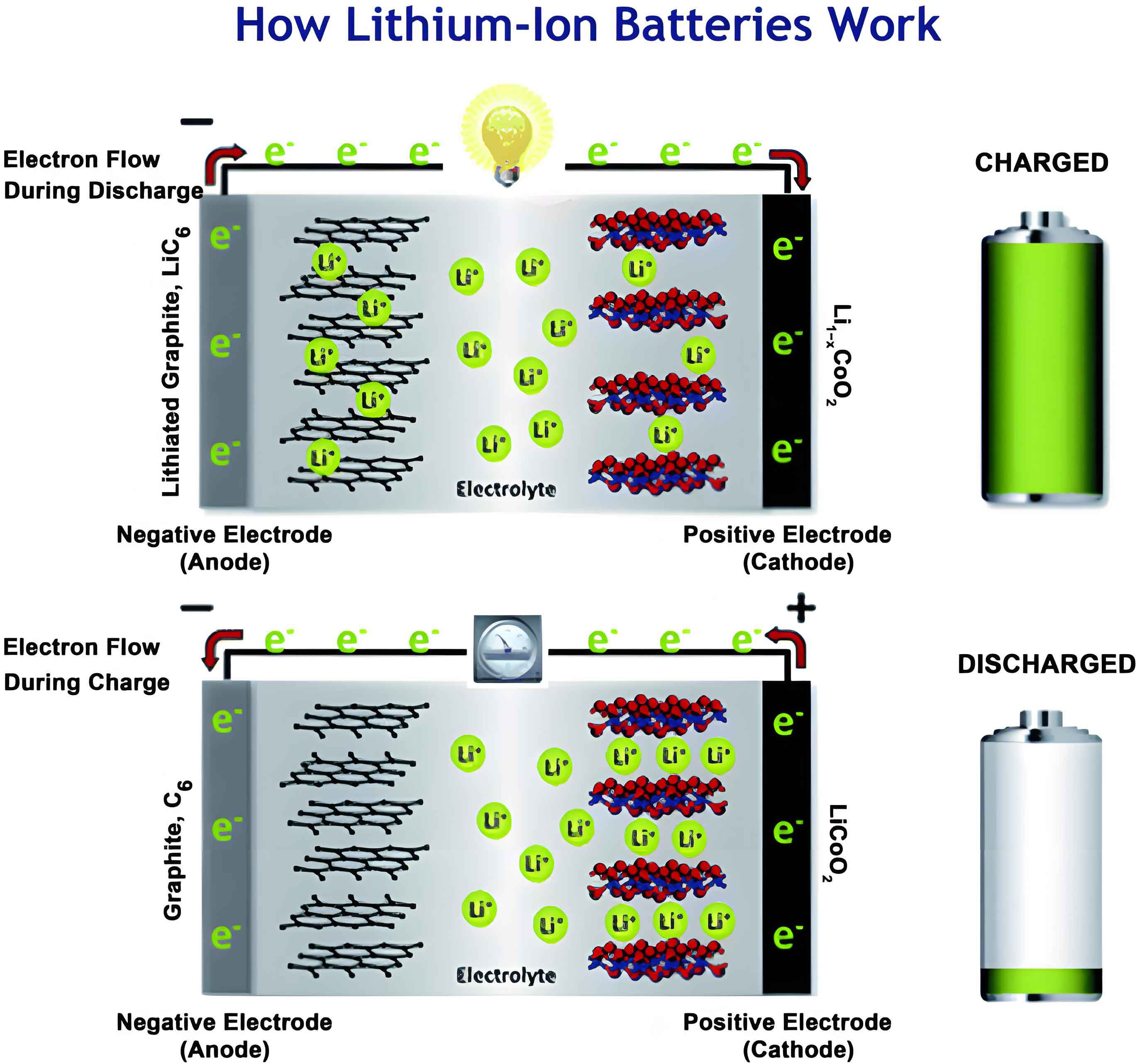
The importance of li ion battery energy storage cannot be overstated, as it supports grid stability, renewable integration, and peak shaving. However, safety remains a paramount concern, particularly with the risk of thermal runaway—a self-perpetuating chain reaction that leads to rapid temperature rise and potential fires or explosions. In this article, I will explore the multifaceted approaches to monitoring and mitigating these risks, incorporating tables and mathematical models to summarize key concepts. The li ion battery is at the heart of this discussion, and its safety monitoring is essential for the sustainable growth of energy storage systems worldwide.
1. Thermal Runaway Monitoring in Li Ion Batteries: Mechanisms and Signals
Thermal runaway in li ion batteries is a complex phenomenon triggered by abuse conditions such as overcharging, short circuits, or mechanical damage. It involves exothermic reactions that escalate uncontrollably, often releasing gases and heat. For large-scale energy storage systems using li ion battery packs, high-density arrangements amplify the risk, making early detection crucial. Researchers have categorized thermal runaway into stages, each with distinct signals: temperature spikes, voltage drops, gas emissions, and pressure changes. By monitoring these signals, we can develop预警 systems to prevent catastrophic failures.
In my analysis, I find that gas detection is particularly promising for early warning. During thermal runaway, gases like hydrogen (H₂), carbon monoxide (CO), and carbon dioxide (CO₂) are released. Studies show that gas concentration changes can precede temperature rises, offering a window for intervention. For instance, the relationship between gas release and thermal runaway can be modeled using kinetic equations. The rate of gas production might be expressed as:
$$ \frac{d[G]}{dt} = k \cdot \exp\left(-\frac{E_a}{RT}\right) \cdot f(SOC) $$
where $[G]$ is gas concentration, $k$ is a rate constant, $E_a$ is activation energy, $R$ is the gas constant, $T$ is temperature, and $f(SOC)$ is a function of the state of charge in the li ion battery. This highlights how gas signals correlate with internal battery states.
To encapsulate the key monitoring signals for thermal runaway in li ion batteries, I present Table 1, which compares different detection methods and their effectiveness.
| Signal Type | Detection Technology | Early Warning Potential | Limitations |
|---|---|---|---|
| Temperature | Thermocouples, Infrared Sensors | Moderate; often lags behind internal events | Surface measurements may not reflect core temperature |
| Gas Concentration | Electrochemical Sensors, Spectroscopy | High; can detect pre-thermal runaway phases | Sensitivity to environmental factors, cross-interference |
| Electrical Parameters | Voltage/Current Monitors, Impedance Spectroscopy | Variable; depends on abuse conditions | May not differentiate fault types clearly |
| Pressure | Pressure Transducers | High for sealed systems | Invasive installation, cost |
| Acoustic Emissions | Ultrasonic Sensors | Emerging; detects internal structural changes | Noise interference, complex signal processing |
Moreover, the integration of multiple signals enhances reliability. For example, a fusion algorithm might combine temperature and gas data to improve预警 accuracy. In li ion battery systems, this can be represented as a weighted decision function:
$$ \text{Alarm} = \begin{cases} 1 & \text{if } w_T \Delta T + w_G \Delta [G] + w_V \Delta V \geq \theta \\ 0 & \text{otherwise} \end{cases} $$
where $w_T$, $w_G$, $w_V$ are weights for temperature, gas concentration, and voltage changes, respectively, and $\theta$ is a threshold. This approach underscores the need for comprehensive monitoring in li ion battery energy storage.
2. Temperature Monitoring Techniques for Li Ion Batteries
Temperature is a critical parameter in li ion battery safety, as overheating accelerates degradation and can trigger thermal runaway. Accurate temperature monitoring helps manage thermal management systems and prevent unsafe conditions. Various techniques have been developed, each with advantages and drawbacks. In my assessment, non-contact methods like infrared thermography offer valuable insights into surface temperature distribution, while embedded sensors provide internal data.
For instance, fiber optic sensors have gained attention due to their immunity to electromagnetic interference and high precision. Studies compare fiber optic sensors with traditional thermocouples, showing that fiber optics can detect finer temperature gradients in li ion battery packs. The temperature field of a li ion battery cell can be modeled using the heat conduction equation:
$$ \rho C_p \frac{\partial T}{\partial t} = \nabla \cdot (k \nabla T) + \dot{q}_{\text{gen}} $$
where $\rho$ is density, $C_p$ is specific heat capacity, $k$ is thermal conductivity, and $\dot{q}_{\text{gen}}$ is the volumetric heat generation rate. For a li ion battery, $\dot{q}_{\text{gen}}$ depends on factors like current, internal resistance, and SOC, often expressed as:
$$ \dot{q}_{\text{gen}} = I^2 R_{\text{int}} + I T \frac{dU}{dT} $$
where $I$ is current, $R_{\text{int}}$ is internal resistance, and $U$ is open-circuit voltage. This equation helps predict temperature rises during operation.
To summarize the temperature monitoring methods for li ion batteries, I have compiled Table 2, which outlines key technologies and their applications.
| Monitoring Method | Principle | Accuracy Range | Suitability for Li Ion Batteries |
|---|---|---|---|
| Thermocouples (Type K) | Seebeck effect; voltage change with temperature | ±1-2°C | Good for surface points; cheap but invasive |
| Infrared Thermography | Detection of infrared radiation | ±0.5-2°C | Excellent for full-field surface mapping; non-contact |
| Fiber Bragg Grating (FBG) Sensors | Wavelength shift with temperature/strain | ±0.1°C | High precision; can be embedded internally |
| Resistance Temperature Detectors (RTDs) | Resistance change with temperature | ±0.1-0.5°C | Stable and accurate; used in battery management systems |
| Negative Temperature Coefficient (NTC) Thermistors | Resistance decreases with temperature | ±0.5-1°C | Common in consumer li ion battery packs; cost-effective |
In practice, combining these methods can provide a holistic view. For example, infrared cameras might scan battery packs periodically, while FBG sensors offer continuous internal monitoring. This multi-layered approach is vital for large-scale li ion battery energy storage, where thermal hotspots can develop quickly.
3. Theoretical Foundations: Modeling Thermal Behavior and Gas Dynamics
Understanding the theoretical underpinnings of li ion battery safety is essential for developing effective monitoring strategies. Research spans electrochemical-thermal coupling, gas evolution kinetics, and risk assessment models. From my review, I see that simulations and experiments often complement each other to predict thermal runaway scenarios.
One key area is modeling the state of charge (SOC) and state of health (SOH) of li ion batteries, as these parameters influence thermal stability. SOC estimation can be based on coulomb counting or model-based approaches. For instance, the extended Kalman filter (EKF) is widely used for SOC estimation in li ion battery systems, with equations like:
$$ SOC_{k+1} = SOC_k – \frac{\eta I_k \Delta t}{C_n} $$
where $\eta$ is coulombic efficiency, $I_k$ is current at time step $k$, $\Delta t$ is time interval, and $C_n$ is nominal capacity. Coupled with thermal models, this allows for predicting temperature rises under different operating conditions.
Gas dynamics during thermal runaway are another critical focus. Experiments show that li ion batteries release flammable gases like H₂ and CH₄, which pose explosion risks. The lower explosive limit (LEL) for these gases can be modeled using Le Chatelier’s rule for mixtures:
$$ LEL_{\text{mix}} = \frac{1}{\sum \frac{y_i}{LEL_i}} $$
where $y_i$ is the mole fraction of gas $i$, and $LEL_i$ is its individual lower explosive limit. Monitoring gas concentrations relative to LEL helps in assessing explosion hazards in li ion battery enclosures.
To illustrate the interplay between various theoretical parameters, Table 3 summarizes key models and their applications in li ion battery safety monitoring.
| Theoretical Model | Key Equations/Parameters | Application in Monitoring |
|---|---|---|
| Electrochemical-Thermal Model | $$ \frac{\partial c}{\partial t} = \nabla \cdot (D \nabla c) + \frac{j}{F} $$ Combined with heat generation terms |
Predicts internal temperature and potential hot spots in li ion batteries |
| Gas Kinetic Model | $$ r = A e^{-E/RT} [\text{electrolyte}]^n $$ | Estimates gas production rates during thermal abuse for early warning |
| Equivalent Circuit Model (e.g., Thevenin) | $$ V = OCV(SOC) – IR_0 – V_p $$ $$ \frac{dV_p}{dt} = -\frac{V_p}{R_p C_p} + \frac{I}{C_p} $$ |
Used for SOC/SOH estimation and fault detection in li ion battery systems |
| Computational Fluid Dynamics (CFD) Simulations | Navier-Stokes equations with heat and mass transfer | Models gas dispersion and thermal propagation in li ion battery packs |
| Risk Assessment Model | $$ R = P \times C $$ where P is probability, C is consequence | Quantifies failure risks to prioritize monitoring efforts for li ion battery storage |
These models enable proactive monitoring by predicting unsafe conditions before they manifest. For example, by simulating thermal runaway scenarios, we can design sensor placements that optimize detection times for li ion battery arrays.
4. Applied Monitoring Systems and Innovations for Li Ion Battery Safety
In applied research, numerous innovations have emerged to enhance the safety monitoring of li ion battery energy storage. From my perspective, these range from integrated sensor networks to advanced algorithms for data analysis. Practical systems often combine hardware and software to provide real-time monitoring and预警.
One notable development is the use of distributed fiber optic sensing for temperature monitoring in li ion battery packs. These systems can measure temperature at multiple points along a single fiber, offering high spatial resolution. The data can be processed to detect anomalies, such as rapid temperature rises indicative of thermal runaway in li ion battery cells.
Another application involves gas sensor arrays that detect multiple species simultaneously. For li ion batteries, sensors for H₂, CO, and volatile organic compounds (VOCs) are deployed in enclosures. Data fusion techniques combine these readings to improve reliability. A simple fusion model might be:
$$ \text{Hazard Index} = \alpha \cdot \frac{[H_2]}{LEL_{H_2}} + \beta \cdot \frac{[CO]}{TLV_{CO}} + \gamma \cdot \Delta T $$
where $\alpha, \beta, \gamma$ are tuning coefficients, and TLV is the threshold limit value. This index can trigger alarms if it exceeds a setpoint.
Additionally, battery management systems (BMS) for li ion battery energy storage now incorporate advanced monitoring features. These include impedance tracking for SOH estimation and communication protocols for cloud-based monitoring. The integration of Internet of Things (IoT) technologies allows for remote monitoring of large-scale li ion battery installations.
To showcase the diversity of applied monitoring systems for li ion batteries, Table 4 provides an overview of recent innovations and their key features.
| System/Innovation | Key Components | Monitoring Capabilities | Benefits for Li Ion Battery Safety |
|---|---|---|---|
| Multi-Sensor Fusion Platforms | Thermocouples, gas sensors, voltage/current sensors, microcontrollers | Real-time data acquisition and fusion for thermal runaway detection | Reduces false alarms; provides comprehensive state assessment |
| Embedded Fiber Optic Networks | Fiber Bragg gratings, interrogators, data processors | Distributed temperature and strain monitoring within battery packs | High accuracy and durability; enables early internal fault detection |
| Infrared Thermal Imaging Drones | Drone-mounted IR cameras, image processing software | Periodic thermal scans of large battery installations | Non-contact; covers large areas; identifies hotspots in li ion battery arrays |
| Cloud-Based AI Monitoring Systems | Cloud servers, machine learning algorithms, dashboards | Predictive analytics for failure based on historical data | Scalable; enables proactive maintenance of li ion battery systems |
| Acoustic Emission Detection Systems | Ultrasonic sensors, signal processors | Detects internal short circuits or mechanical breaches | Early warning of internal faults before thermal runaway in li ion batteries |
These applied systems highlight the trend towards integration and intelligence. For instance, AI algorithms can analyze patterns in li ion battery data to predict failures, enhancing safety beyond traditional threshold-based alarms.
5. Challenges and Limitations in Current Monitoring Approaches
Despite advancements, several challenges persist in the safety monitoring of li ion battery energy storage systems. From my analysis, these issues stem from technological, economic, and operational factors that hinder optimal performance.
First, the singularization of monitoring signals remains a problem. Relying on a single type of signal, such as temperature alone, may miss early warning signs in li ion batteries. Thermal runaway involves multiple phenomena, and no single sensor can capture all aspects. This leads to delayed or missed alarms, especially in complex li ion battery packs where faults can propagate quickly.
Second, technological maturity is limited. Many monitoring techniques for li ion batteries are still in the research or pilot stages, with few large-scale deployments. Standardization is lacking, making it difficult to compare systems across different li ion battery installations. Additionally, the cost of advanced sensors like fiber optics or high-resolution gas analyzers can be prohibitive for widespread adoption.
Third, environmental interferences affect sensor accuracy. For example, gas sensors in li ion battery enclosures may be influenced by humidity or other contaminants, leading to false readings. Similarly, temperature sensors might not accurately reflect internal conditions if improperly placed. These factors complicate the reliability of monitoring systems for li ion battery energy storage.
To quantify these challenges, I have developed a risk matrix in Table 5, assessing the impact and likelihood of common monitoring failures in li ion battery systems.
| Challenge | Likelihood (Scale 1-5) | Impact on Safety (Scale 1-5) | Mitigation Strategies |
|---|---|---|---|
| Signal Delay or Loss | 3 (Moderate) | 4 (High; can lead to undetected thermal runaway) | Redundant sensors; robust communication protocols |
| False Alarms Due to Sensor Drift | 4 (Frequent) | 3 (Moderate; causes unnecessary shutdowns) | Regular calibration; sensor fusion to cross-validate |
| High Cost of Advanced Monitoring | 5 (Very Likely) | 4 (High; limits deployment in li ion battery projects) | Economies of scale; development of low-cost alternatives |
| Complexity in Data Interpretation | 4 (Frequent) | 3 (Moderate; may overwhelm operators) | AI-driven analytics; user-friendly dashboards |
| Lack of Standardization | 5 (Very Likely) | 4 (High; hinders interoperability and benchmarking) | Industry collaboration; adoption of international standards |
Moreover, the dynamic nature of li ion battery operation adds complexity. For instance, cycling at high rates can cause rapid temperature changes that mimic早期 thermal runaway signals, leading to false positives. Mathematical models can help differentiate, such as by analyzing rate of change:
$$ \frac{d^2T}{dt^2} \text{ vs. } \frac{d[G]}{dt} $$
where a simultaneous spike in both second derivative of temperature and gas rate might confirm thermal runaway in a li ion battery, rather than normal operation.
Addressing these challenges requires a holistic approach, integrating multiple disciplines to enhance the safety monitoring of li ion battery energy storage.
6. Future Directions: Towards Intelligent and Integrated Monitoring
Looking ahead, the future of safety monitoring for li ion battery energy storage is poised for significant transformation, driven by trends in big data, artificial intelligence, and material science. From my perspective, the evolution will focus on making monitoring systems more predictive, integrated, and cost-effective.
First, the adoption of big data analytics will enable predictive maintenance. By collecting vast amounts of data from li ion battery operations—including temperature, voltage, current, and environmental conditions—machine learning algorithms can identify patterns preceding failures. For example, a neural network might be trained to predict thermal runaway risk based on historical data from li ion battery packs, using an equation like:
$$ \text{Risk Score} = NN(T_{历史}, V_{历史}, I_{历史}, SOC_{历史}) $$
where $NN$ denotes a neural network model. This allows for proactive interventions before critical conditions arise.
Second, integration with smart grid technologies will enhance monitoring. Li ion battery energy storage systems can communicate with grid operators in real-time, adjusting operations based on safety metrics. This interoperability relies on standardized protocols and cloud platforms, facilitating centralized monitoring of distributed li ion battery resources.
Third, advancements in sensor technology will improve accuracy and reduce costs. For instance, nanomaterials-based gas sensors could offer higher sensitivity for detecting early gas emissions from li ion batteries. Similarly, wireless sensor networks might eliminate wiring complexities, simplifying installation in large-scale li ion battery installations.
To illustrate these future directions, Table 6 outlines key trends and their potential impact on li ion battery safety monitoring.
| Future Trend | Description | Expected Impact on Li Ion Battery Monitoring |
|---|---|---|
| AI and Machine Learning Integration | Use of algorithms for anomaly detection and predictive analytics | Enables early warning with high accuracy; reduces false alarms in li ion battery systems |
| Digital Twin Technology | Virtual replicas of physical battery systems for simulation and monitoring | Allows real-time safety assessment and scenario testing for li ion battery packs |
| Advanced Material Sensors | Sensors using graphene, MOFs, or other novel materials | Improves sensitivity and durability for gas and temperature monitoring in li ion batteries |
| 5G and IoT Connectivity | High-speed, low-latency communication for sensor networks | Facilitates real-time data transmission and remote control of li ion battery storage |
| Standardization and Regulation | Development of global safety standards for monitoring | Ensures consistency and reliability across li ion battery projects worldwide |
Furthermore, the concept of “smart monitoring” for li ion battery energy storage involves autonomous systems that can make decisions without human intervention. For example, an integrated monitoring unit might trigger cooling systems or isolate faulty cells based on real-time analytics, using control laws like:
$$ \text{Cooling Power} = K_p (T – T_{\text{set}}) + K_i \int (T – T_{\text{set}}) dt $$
where $K_p$ and $K_i$ are proportional and integral gains, and $T_{\text{set}}$ is the target temperature for the li ion battery. This closed-loop approach enhances safety dynamically.
In conclusion, the li ion battery is central to the future of energy storage, and its safety monitoring must evolve to address emerging challenges. By embracing innovations in technology and methodology, we can build more resilient and efficient systems. I am confident that continued research and collaboration will lead to breakthroughs that ensure the safe deployment of li ion battery energy storage on a global scale, supporting the transition to sustainable energy. The journey towards comprehensive safety monitoring for li ion batteries is ongoing, and it holds promise for a safer, more reliable energy future.