
As we advance toward a sustainable future, electrified transportation and large-scale renewable energy integration are pivotal for achieving global carbon neutrality goals. At the heart of this transformation lies the li ion battery, a critical component powering electric vehicles and energy storage systems. However, despite decades of development, li ion battery technology still grapples with limitations in performance, lifespan, and safety. For instance, incidents such as electric vehicle fires and energy storage station failures highlight urgent needs for enhanced reliability. Accurate assessment of battery health and safety states, coupled with robust management systems, is essential to address these challenges. Traditional battery systems often rely on external sensors, which provide limited data on individual cells and fail to capture internal electrochemical, thermal, and mechanical dynamics. This data scarcity leads to inaccuracies in state estimation and management, particularly as batteries evolve toward larger formats like the 4680 cylindrical or blade-style cells, where internal inhomogeneities exacerbate degradation. To overcome these hurdles, the concept of “smart batteries” integrated with multi-physical sensors has emerged as a promising frontier. This approach enables real-time monitoring of internal states through electrical, thermal, mechanical, gas, and acoustic sensing, facilitating high-precision state estimation and safety预警. In this review, I explore the latest advancements in smart sensing techniques for li ion battery, analyze their implications for understanding aging, failure, and thermal runaway mechanisms, and discuss the challenges ahead. The integration of these technologies paves the way for next-generation battery management systems that enhance reliability and safety across the battery lifecycle.
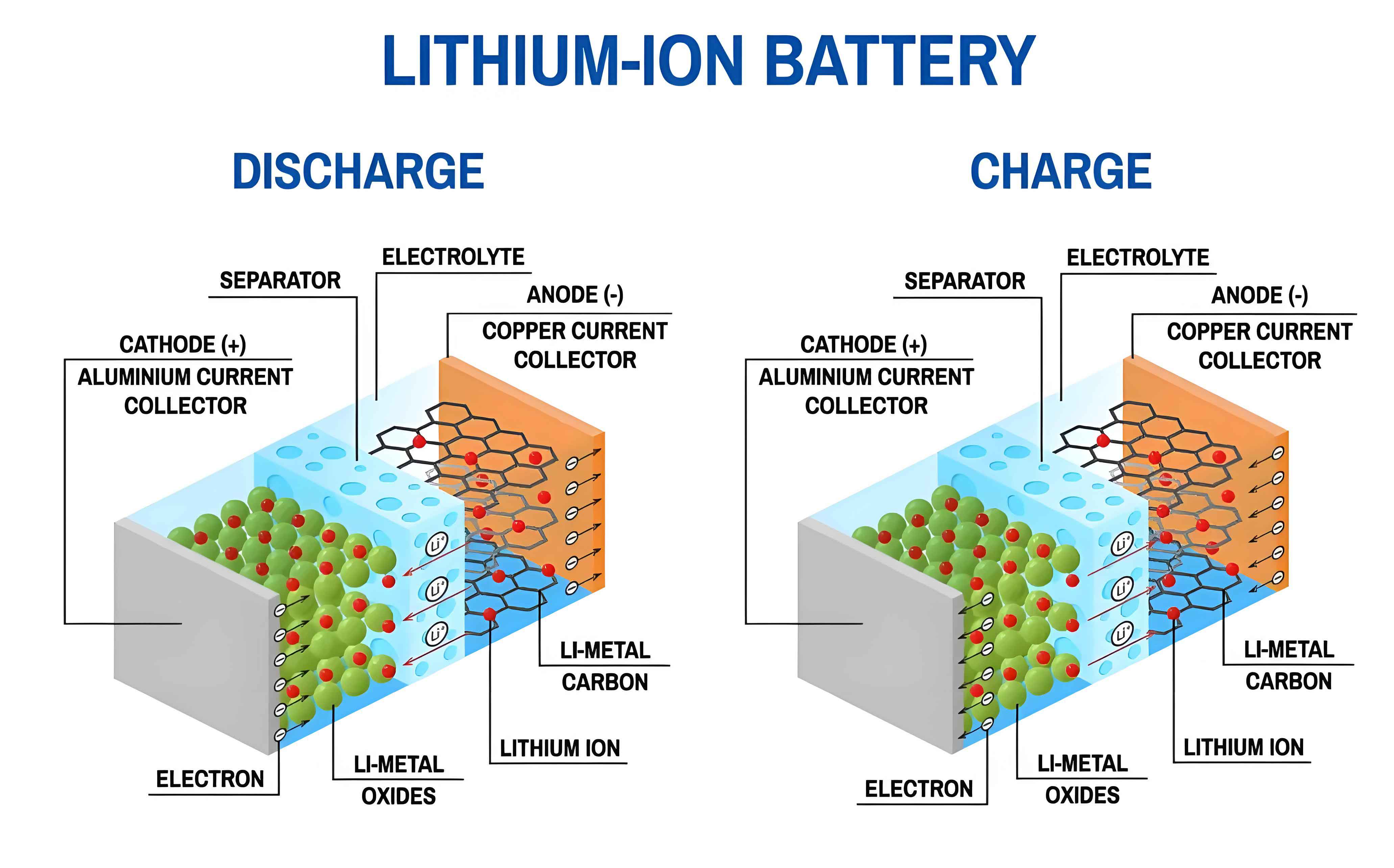
The core of smart li ion battery systems lies in multi-physical field sensing, which captures diverse signals to decode internal states. This involves embedding sensors directly into cells or modules to measure parameters like voltage, temperature, stress, gas composition, and acoustic waves. These signals offer insights into complex processes such as lithium plating, SEI growth, material cracking, and gas evolution, which are otherwise inaccessible. For example, internal temperature gradients can reveal thermal hotspots that accelerate aging, while mechanical strain can indicate electrode deformation linked to capacity fade. By correlating multi-sensor data, we can develop advanced models for state-of-charge (SOC), state-of-health (SOH), and state-of-safety (SOS) estimation. This review delves into each sensing modality, starting with electrical sensing, which forms the basis of conventional battery management but is now evolving with internal potential and impedance measurements. I will also cover thermal, mechanical, gas, and acoustic sensing, highlighting their principles, applications, and integration challenges. Throughout, the term li ion battery will be emphasized to underscore its centrality in this discourse. To structure the discussion, I have organized the content into sections corresponding to each sensing type, supplemented with tables and equations to summarize key findings. The goal is to provide a comprehensive resource for researchers and engineers working on smart li ion battery technologies.
Electrical Sensing: Beyond Voltage and Current
Electrical signals, such as voltage and current, are fundamental to battery management systems (BMS) in li ion battery packs. Typically, BMS monitor cell voltages at the module level and currents across series-connected modules. However, these external measurements offer limited insight into internal electrochemical states, prompting the development of advanced electrical sensing techniques. Two prominent approaches are internal potential measurement and electrochemical impedance spectroscopy (EIS), both aimed at enhancing the accuracy of state estimation and fast-charging protocols.
Internal potential measurement focuses on monitoring the anode potential to prevent lithium plating, a critical issue during fast charging of li ion battery. Lithium plating occurs when the anode potential drops below 0 V (vs. Li/Li+) due to polarization losses, leading to dendrite growth, capacity loss, and safety risks. By embedding reference electrodes between the anode and separator, researchers have demonstrated real-time anode potential tracking. This allows for dynamic adjustment of charging currents to maintain the anode potential slightly above 0 V, enabling faster charging without plating. For instance, studies show that such strategies can increase charging speeds by up to 40% while avoiding lithium deposition over hundreds of cycles. The governing equation for anode potential during charging can be expressed as:
$$E_{\text{anode}} = E_{\text{ocv}} – \eta_{\text{conc}} – \eta_{\text{act}} – I \cdot R_{\Omega}$$
where \(E_{\text{anode}}\) is the anode potential, \(E_{\text{ocv}}\) is the open-circuit voltage, \(\eta_{\text{conc}}\) and \(\eta_{\text{act}}\) are concentration and activation overpotentials, \(I\) is the current, and \(R_{\Omega}\) is the ohmic resistance. However, challenges persist in commercializing reference electrodes for li ion battery, including long-term stability in aggressive electrolytes and minimal interference with ion transport. Sensor placement is also critical; ideal positioning within the electrode stack often obstructs lithium-ion pathways, necessitating innovative designs like coated separators or integrated micro-electrodes.
Electrochemical impedance spectroscopy (EIS) is another powerful tool for nondestructive evaluation of li ion battery. It involves applying a small alternating voltage across a frequency range and measuring the impedance response, which reflects internal processes such as charge transfer, diffusion, and interfacial reactions. EIS data can diagnose aging mechanisms, like SEI growth or contact loss, by analyzing impedance spectra. For example, the Nyquist plot of a li ion battery typically shows a semicircle at high frequencies representing charge transfer resistance (\(R_{ct}\)), followed by a Warburg diffusion tail at low frequencies. The impedance \(Z(\omega)\) as a function of angular frequency \(\omega\) is given by:
$$Z(\omega) = R_{\Omega} + \frac{R_{ct}}{1 + j\omega R_{ct}C_{dl}} + \frac{\sigma}{\sqrt{\omega}}(1-j)$$
where \(C_{dl}\) is the double-layer capacitance and \(\sigma\) is the Warburg coefficient. Recent efforts aim to miniaturize EIS systems for integration into li ion battery packs, using vector impedance analyzers or data acquisition cards with fast Fourier transform (FFT) algorithms. These systems reduce measurement time from minutes to seconds, enabling near-real-time monitoring. However, dynamic EIS during cycling may differ from static measurements, complicating interpretation. Thus, developing rapid EIS techniques and models that account for operational conditions is crucial for practical deployment in smart li ion battery systems.
| Sensing Method | Measured Parameter | Application in Li Ion Battery | Key Challenges |
|---|---|---|---|
| Internal Potential | Anode potential vs. Li/Li+ | Fast-charging optimization, lithium plating prevention | Sensor stability, placement interference |
| EIS | Impedance spectrum | Aging diagnosis, SOC/SOH estimation | Miniaturization, dynamic interpretation |
In summary, electrical sensing advancements are vital for enhancing the performance and safety of li ion battery. By moving beyond traditional voltage and current measurements, we can gain deeper insights into internal states, enabling smarter management strategies. Future work should focus on robust sensor integration and real-time data processing to unlock the full potential of these techniques.
Thermal Sensing: Capturing Internal Temperature Dynamics
Temperature profoundly influences the behavior of li ion battery, affecting reaction rates, ion transport, and degradation mechanisms. Inhomogeneous temperature distributions can lead to uneven aging and reduced lifespan, especially in large-format cells. Traditional thermal management systems rely on surface-mounted thermocouples, but these fail to capture internal temperature gradients. Thus, internal thermal sensing has emerged as a key area for smart li ion battery development, utilizing micro-thermocouples, fiber Bragg gratings (FBG), thin-film thermistors, and resistance temperature detectors (RTDs).
Micro-thermocouples are widely used for internal temperature measurement in li ion battery due to their small size and fast response. By embedding them along the radial direction of cylindrical cells, researchers have mapped temperature profiles during discharge. For example, studies show that high discharge rates cause significant internal heating, and forced convection can reduce overall temperature but increase gradients. The heat generation in a li ion battery during operation can be modeled using the energy balance equation:
$$\rho C_p \frac{\partial T}{\partial t} = \nabla \cdot (k \nabla T) + q_{\text{gen}}$$
where \(\rho\) is density, \(C_p\) is heat capacity, \(k\) is thermal conductivity, \(T\) is temperature, and \(q_{\text{gen}}\) is the volumetric heat generation rate. Internal sensors provide direct data to validate such models, improving thermal management designs. However, implanting sensors in pouch or prismatic li ion battery poses challenges, as they may contact electrodes or electrolyte, leading to corrosion or performance degradation. Solutions include embedding sensors in current collectors or using protective coatings to minimize impact.
Fiber Bragg gratings (FBG) offer another approach for thermal sensing in li ion battery. FBGs are optical fibers with periodic refractive index variations that reflect specific wavelengths. Temperature changes alter the grating period, shifting the reflected wavelength. By multiplexing multiple FBGs, simultaneous measurements at different internal locations are possible. For instance, FBGs have been used to monitor internal, surface, and ambient temperatures in 18650 cells, enabling accurate heat generation assessment. The wavelength shift \(\Delta \lambda_B\) is related to temperature change \(\Delta T\) by:
$$\Delta \lambda_B = \lambda_B (\alpha + \xi) \Delta T$$
where \(\lambda_B\) is the Bragg wavelength, \(\alpha\) is the thermal expansion coefficient, and \(\xi\) is the thermo-optic coefficient. However, FBGs are also sensitive to strain, requiring decoupling techniques for pure temperature measurement. Additionally, FBG systems involve costly demodulation equipment, but multiplexing can reduce per-sensor costs in large-scale li ion battery applications.
Thin-film thermistors and RTDs are compact resistive sensors that change resistance with temperature. They can be integrated into li ion battery layers, such as between electrodes and separators, to provide real-time internal data. Challenges include ensuring long-term stability in harsh electrochemical environments and minimizing sensor footprint to avoid capacity loss. A comparison of thermal sensing technologies is summarized in the table below.
| Sensor Type | Principle | Advantages for Li Ion Battery | Limitations |
|---|---|---|---|
| Micro-thermocouple | Thermoelectric effect | Fast response, low cost | Potential interference, placement issues |
| FBG | Optical wavelength shift | Multipoint sensing, immunity to EMI | Costly, strain-temperature coupling |
| Thin-film Thermistor | Resistance-temperature effect | Miniaturization, direct integration | Stability in electrolyte, manufacturing complexity |
Thermal sensing is indispensable for optimizing the performance and safety of li ion battery. By capturing internal temperature dynamics, we can design better thermal management systems, prevent hotspots, and extend battery life. Future efforts should address sensor durability and integration methods to enable widespread adoption in smart li ion battery systems.
Mechanical Sensing: Monitoring Stress and Strain Evolution
Mechanical changes in li ion battery during cycling are closely tied to electrochemical processes. Lithium intercalation and deintercalation cause volume changes in electrode materials, leading to stress and strain. Over time, cyclic mechanical loading can result in particle cracking, contact loss, and capacity fade. Thus, mechanical sensing provides valuable insights into battery health and degradation mechanisms. Common techniques include pressure sensors, strain gauges, and thickness measurements, adapted for different li ion battery formats.
For pouch or prismatic li ion battery, linear variable differential transformers (LVDTs) are used to measure stack pressure under constraint. Studies show that applied preload affects battery lifespan; moderate pressure improves contact and longevity, while excessive stress accelerates degradation. The pressure evolution during cycling can be modeled using empirical relations, but a more fundamental approach involves coupling mechanical and electrochemical models. The stress \(\sigma\) in electrode particles due to lithiation can be described by:
$$\sigma = E \epsilon + \beta \Delta c$$
where \(E\) is Young’s modulus, \(\epsilon\) is strain, \(\beta\) is the chemical expansion coefficient, and \(\Delta c\) is the concentration change of lithium. Mechanical sensors help validate such models by providing real-time data on pressure or strain. For example, thin-film strain sensors embedded between cell layers in cylindrical li ion battery have measured circumferential strain, revealing correlations with SOC and aging. However, sensor implantation can damage electrodes or alter mechanical properties, necessitating careful design.
In cylindrical li ion battery, such as 18650 cells, mechanical sensing often focuses on radial strain due to layer expansion. Micro strain gauges attached to the outer casing or inserted between layers can capture these deformations. Data shows that strain increases with cycling, indicating irreversible growth from SEI formation or gas generation. Additionally, external constraints like module housing affect mechanical behavior, highlighting the need for integrated sensing in pack designs. The relationship between external pressure \(P\) and cell thickness change \(\Delta h\) for a constrained li ion battery can be approximated by:
$$P = k_1 \Delta h + k_2 (\Delta h)^2$$
where \(k_1\) and \(k_2\) are stiffness coefficients derived from experimental data. This phenomenological model aids in estimating internal pressure from thickness measurements, but it lacks generalizability across different li ion battery chemistries and formats.
Mechanical sensing also aids in safety monitoring, as internal short circuits or thermal runaway can cause rapid pressure buildup. By detecting abnormal stress changes, early warnings can be issued. The table below summarizes mechanical sensing methods and their applications in li ion battery.
| Sensing Method | Measured Parameter | Application in Li Ion Battery | Challenges |
|---|---|---|---|
| LVDT/Pressure Sensor | Stack pressure | Cycle life optimization, contact assessment | Integration in modules, calibration |
| Strain Gauge | Local strain | Degradation monitoring, SOC correlation | Sensor durability, signal noise |
| Eddy Current Sensor | Thickness change | Swelling detection, safety预警 | Sensitivity to materials, cost |
Overall, mechanical sensing enriches our understanding of the electrochemomechanical coupling in li ion battery. By correlating stress-strain data with electrochemical performance, we can develop predictive models for aging and failure. Future research should focus on multi-scale modeling and minimally invasive sensor integration to harness mechanical signals for smart li ion battery management.
Gas Sensing: Detecting Electrolyte Decomposition and Safety Risks
Gas generation in li ion battery is a critical indicator of various processes, including SEI formation during formation, electrolyte decomposition during cycling, and venting during thermal runaway. Monitoring gas composition and concentration can reveal degradation mechanisms and provide early warnings for safety incidents. However, gas sensing poses challenges due to the need for in-situ and real-time measurement without compromising cell integrity. Current approaches range from external gas analyzers to embedded sensors for specific gases like CO2 or H2.
During normal operation of a li ion battery, gases such as CO2, CO, and hydrocarbons are produced from electrolyte reduction or oxidation. In-situ gas sampling systems with ports attached to pouch cells allow periodic analysis, helping correlate gas evolution with electrochemical events. For example, dQ/dV peaks during cycling often coincide with gas generation, enabling identification of side reactions. The rate of gas production \(r_g\) can be expressed as a function of current \(I\) and side reaction overpotential \(\eta_s\):
$$r_g = k_g \exp\left(\frac{\alpha_g F \eta_s}{RT}\right)$$
where \(k_g\) is a rate constant, \(\alpha_g\) is the transfer coefficient, \(F\) is Faraday’s constant, \(R\) is the gas constant, and \(T\) is temperature. Such models benefit from direct gas measurements to parameterize degradation kinetics. However, sampling methods are not real-time and may alter cell behavior, limiting their use in operational li ion battery systems.
For safety applications, gas sensing is crucial for detecting thermal runaway in li ion battery. This process releases large amounts of gases like CO2, CO, and H2, which can be monitored using non-dispersive infrared (NDIR) sensors or electrochemical gas sensors. Studies show that gas signals often follow pressure and temperature changes during abuse tests, providing a secondary warning. For instance, in overcharge scenarios, pressure spikes precede CO2 release by seconds, indicating that mechanical sensing might offer faster detection. Nevertheless, gas sensors placed externally in battery packs can still provide valuable data if properly positioned to capture venting events. The integration of multiple sensors—gas, pressure, temperature—enhances reliability, as demonstrated in experiments with ternary li ion battery cells.
The main hurdle for gas sensing in li ion battery is achieving true in-situ monitoring without large, intrusive sensors. Miniaturized gas sensors embedded in cells are under development but face issues like electrolyte interference and limited lifespan. Alternatively, external sensor arrays with sealed chambers around cells can capture gases post-venting, but this adds complexity. The table below compares gas sensing techniques for li ion battery applications.
| Gas Sensing Technique | Target Gases | Role in Li Ion Battery | Limitations |
|---|---|---|---|
| NDIR Sensor | CO2, CO | Thermal runaway detection, aging monitoring | External placement, delayed signal |
| Mass Spectrometry | Multiple gases | Mechanistic studies, electrolyte analysis | Cost, non-real-time |
| Electrochemical Sensor | H2, O2 | Safety预警, leak detection | Cross-sensitivity, calibration needs |
In summary, gas sensing offers a window into the chemical state of li ion battery, aiding in both performance optimization and safety management. Future advancements should focus on miniaturized, durable sensors that can operate inside cells, coupled with algorithms to interpret gas data in context with other signals for comprehensive li ion battery health monitoring.
Acoustic Sensing: Ultrasonic and Acoustic Emission Techniques
Acoustic sensing, particularly ultrasonic testing, is a nondestructive method for probing internal structures of li ion battery. It involves sending ultrasonic waves through the cell and analyzing reflections or transmissions to detect defects, gas accumulation, or electrolyte distribution. This technique is valuable for quality control, state estimation, and safety monitoring, as it can capture changes in material properties without disassembly.
Ultrasonic sensing in li ion battery typically uses piezoelectric transducers to generate and receive sound waves. Key parameters include time-of-flight (TOF) and signal amplitude, which relate to wave speed and attenuation. For example, TOF increases when gas pockets form inside a li ion battery, indicating degradation or failure. Similarly, changes in ultrasonic attenuation can reflect electrolyte drying or electrode delamination. The wave propagation in a multilayer li ion battery can be modeled using the acoustic impedance \(Z = \rho v\), where \(\rho\) is density and \(v\) is sound velocity. The reflection coefficient \(R\) at an interface between two layers is given by:
$$R = \frac{Z_2 – Z_1}{Z_2 + Z_1}$$
where \(Z_1\) and \(Z_2\) are the acoustic impedances of adjacent materials. By measuring reflections, we can infer internal layer conditions. Studies have applied ultrasonic transmission imaging to map electrolyte wetting in pouch li ion battery, optimizing manufacturing processes. Additionally, frequency-domain analysis of ultrasonic damping has been proposed for SOC estimation, leveraging the dependence of mechanical properties on lithium concentration.
Acoustic emission (AE) sensing detects stress waves from micro-cracking or deformation in li ion battery electrodes. During cycling, electrode particles fracture due to volume changes, releasing acoustic energy. AE sensors placed on the cell surface can capture these signals, providing insights into mechanical degradation. For instance, AE event rates correlate with cycling stages, highlighting active damage periods. However, AE signals are often weak and require sensitive equipment, limiting field deployment.
Ultrasonic techniques also show promise for safety monitoring in li ion battery. During overcharge, internal gas generation and swelling alter ultrasonic signals, enabling early detection. Experiments demonstrate that TOF and peak amplitude increase significantly before thermal runaway, offering a预警 window. Challenges include the need for direct contact with cells and interference from external noise. The table below summarizes acoustic sensing methods for li ion battery.
| Acoustic Method | Measured Parameters | Application in Li Ion Battery | Challenges |
|---|---|---|---|
| Ultrasonic Testing | TOF, amplitude, attenuation | Electrolyte wetting, defect detection, SOC estimation | Contact requirements, thick cell limitations |
| Acoustic Emission | Stress wave events | Micro-cracking monitoring, degradation analysis | Signal sensitivity, environmental noise |
In conclusion, acoustic sensing provides a unique perspective on the internal state of li ion battery, complementing other sensing modalities. By integrating ultrasonic data with electrochemical models, we can enhance state estimation accuracy and predict failures. Future work should aim at developing compact, low-cost acoustic systems for integration into smart li ion battery packs.
Summary and Outlook: Toward Integrated Smart Battery Systems
The development of smart sensing technologies for li ion battery holds immense potential to revolutionize battery management by providing rich, multi-physical data on internal states. From electrical and thermal to mechanical, gas, and acoustic sensing, each modality offers unique insights into aging, failure, and safety mechanisms. However, realizing fully integrated smart li ion battery systems faces several cross-cutting challenges that must be addressed to enable commercialization.
First, sensor technology itself requires advancements. Sensors must be miniaturized to avoid impacting the energy density of li ion battery, while maintaining long-term stability in corrosive electrolytes. They should also be implanted with minimal damage to electrode materials, perhaps through innovative designs like current collector integration or flexible substrates. Power consumption must be ultra-low to avoid draining the li ion battery, and costs need reduction for mass adoption. For example, wireless sensors could eliminate wiring complexities but demand efficient energy harvesting and robust signal transmission through metal casings.
Second, battery design and manufacturing processes must evolve to accommodate sensors. This involves optimizing sensor placement within cells to capture representative data without hindering ion transport or mechanical integrity. Manufacturing lines for li ion battery may need retooling to embed sensors during electrode stacking or assembly, requiring close collaboration between sensor and battery producers. Standardization of interfaces and protocols will also be key for scalable production of smart li ion battery.
Third, signal acquisition and transmission systems need development. Multi-sensor data from within a li ion battery must be reliably collected and transmitted to external BMS, either via wired or wireless means. Wireless options, such as radio-frequency or inductive coupling, offer advantages in sealing and simplicity but face challenges like signal attenuation and interference. Data processing algorithms must handle high-dimensional, noisy signals to extract meaningful features for state estimation.
Fourth, intelligent battery management strategies are essential to leverage sensor data. This involves creating multi-physics models that fuse signals from different sensors to estimate SOC, SOH, and SOS with high accuracy. Machine learning techniques can be employed to identify patterns indicative of degradation or impending failure. For instance, correlating mechanical strain with impedance changes might predict contact loss in li ion battery. Ultimately, closed-loop control systems could use real-time sensor feedback to optimize charging, thermal management, and safety interventions.
The journey toward smart li ion battery is just beginning, but the benefits—enhanced safety, extended lifespan, and improved performance—are compelling. By overcoming the technical barriers in sensing, integration, and data utilization, we can unlock the full potential of li ion battery for a sustainable energy future. Continued research and collaboration across disciplines will be vital to turn this vision into reality, making li ion battery not only smarter but also more reliable and safe for widespread use.