
As a researcher in the field of energy storage, I have witnessed the growing demand for advanced lithium-ion battery technologies that can power everything from portable electronics to electric vehicles. The quest for higher energy density has led to a focus on silicon-based anodes due to their exceptional theoretical capacity. However, the practical application of silicon anodes in lithium-ion battery systems is hampered by severe volume expansion during cycling, which causes mechanical degradation and rapid capacity fading. In this work, I explore a novel approach to address these challenges by developing microsized porous silicon structures coated with polyacrylonitrile-derived nitrogen-doped carbon. This design aims to provide internal buffer space and enhance conductivity, ultimately leading to improved performance in lithium-ion battery applications.
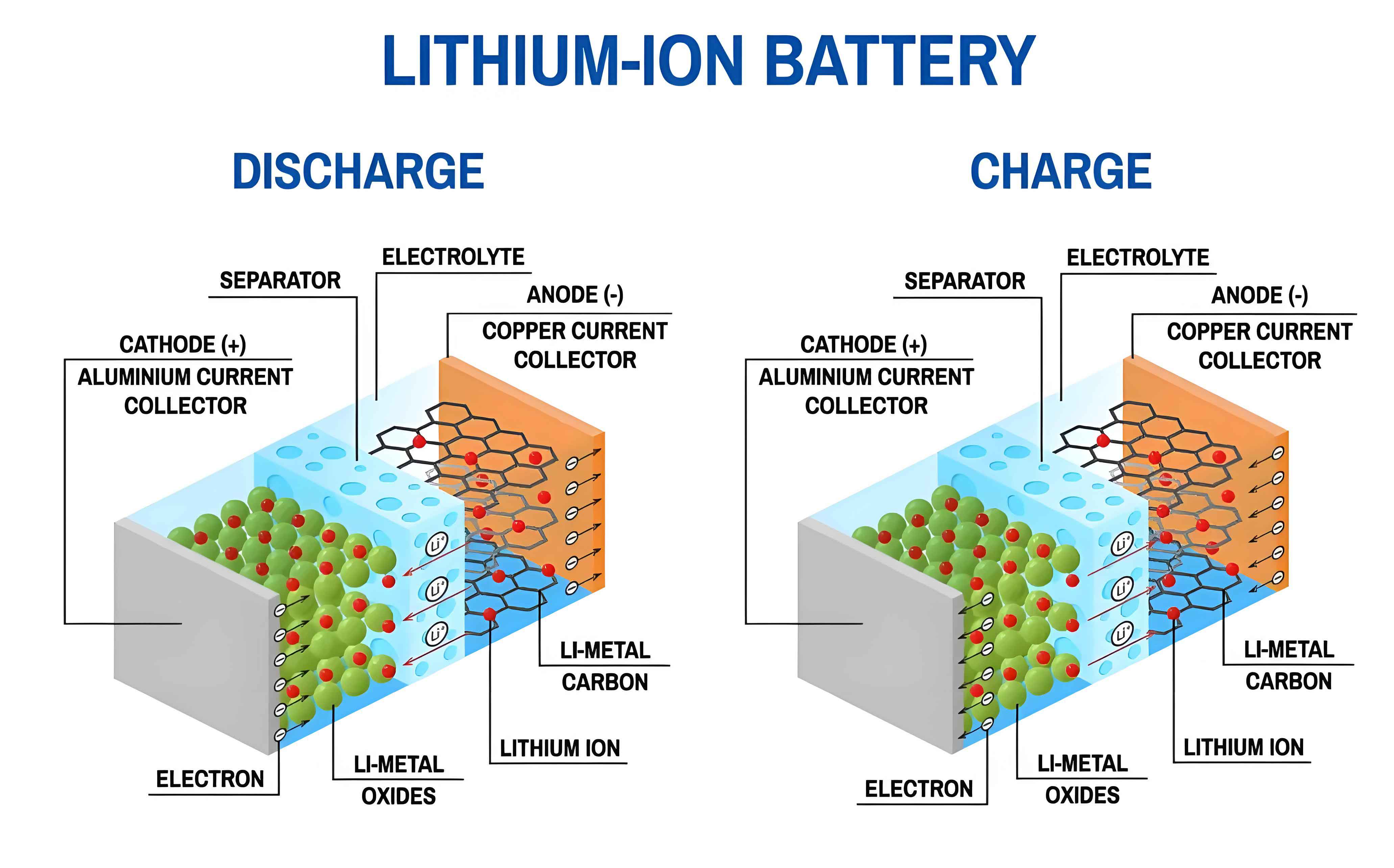
The development of lithium-ion battery technology hinges on the discovery of anode materials that can deliver high capacity while maintaining structural integrity. Silicon stands out as a promising candidate, but its large volume changes during lithiation and delithiation pose significant hurdles. To overcome this, I have investigated a top-down strategy to create porous silicon from microsized precursors, combined with a carbon coating derived from polyacrylonitrile (PAN). This composite material is designed to mitigate volume expansion and improve electrochemical stability in lithium-ion battery systems. The role of thermal treatment temperature on the PAN-derived carbon layer is critical, as it influences the nitrogen doping content, defect structure, and overall performance of the anode in a lithium-ion battery.
In this article, I will detail the synthesis process, structural characterization, and electrochemical evaluation of these porous silicon-carbon composites. I will use tables and formulas to summarize key findings, emphasizing how the optimized material achieves high-rate capability and long-term cycling stability in lithium-ion battery configurations. The integration of porous silicon with a robust carbon coating represents a significant step forward in enabling silicon-based anodes for next-generation lithium-ion battery technologies.
Introduction to Silicon Anodes in Lithium-Ion Batteries
Lithium-ion battery technology has revolutionized energy storage, but there is an ongoing need to enhance energy density for applications such as electric vehicles and grid storage. Silicon anodes offer a high theoretical capacity of approximately 3,579 mAh g-1 (based on Li15Si4), which is nearly ten times that of conventional graphite anodes. However, the commercialization of silicon anodes in lithium-ion battery systems is limited by several issues. The most prominent is the enormous volume expansion (up to 300%) during lithium insertion, which leads to particle pulverization, loss of electrical contact, and continuous growth of the solid electrolyte interphase (SEI) layer. These factors result in capacity decay and poor cycle life, hindering the widespread adoption of silicon in lithium-ion battery devices.
To address these challenges, researchers have explored nanostructured silicon materials, such as nanoparticles, nanowires, and nanotubes. While these nanostructures can accommodate volume changes to some extent, they often suffer from low tap density, high production costs, and complex synthesis routes, which limit their practicality for lithium-ion battery manufacturing. In contrast, microsized silicon (M-Si) offers advantages in terms of cost-effectiveness and higher tap density, but it experiences even more severe stress concentrations and longer ion diffusion paths, leading to accelerated failure in lithium-ion battery cycling.
One promising strategy is the creation of porous silicon (P-Si) structures, which provide internal voids to buffer volume expansion. This approach can be achieved through a top-down method involving lithium metal insertion and extraction, resulting in a three-dimensional porous framework. When combined with carbon coatings, such as those derived from polyacrylonitrile (PAN), the composite can enhance electrical conductivity and stabilize the SEI layer. PAN is particularly interesting due to its ability to form nitrogen-doped carbon upon thermal treatment, which can improve ion and electron transport in lithium-ion battery anodes.
In this study, I focus on the synthesis and optimization of porous silicon@PAN-derived carbon composites (P-Si@C-PAN) for high-performance lithium-ion battery anodes. I investigate the effect of thermal treatment temperature on the structural evolution of PAN and its impact on electrochemical behavior. The goal is to achieve a balance between carbon defect introduction, nitrogen doping retention, and coating integrity, ultimately leading to superior cycling stability and rate capability in lithium-ion battery applications.
Materials and Methods for Composite Synthesis
The preparation of porous silicon begins with microsized silicon (M-Si) particles, which are mixed with lithium metal flakes in a 1:1 weight ratio and heated to 400°C for 4 hours in an inert atmosphere. This process forms a LixSi alloy, which is then treated with anhydrous ethanol and acetic acid to remove residual lithium and create a porous structure. The resulting porous silicon (P-Si) is further annealed at 800°C for 12 hours to crystallize the silicon framework. The P-Si particles are subsequently coated with a PAN solution in N,N-dimethylformamide (DMF), dried, and subjected to thermal treatment at various temperatures (300°C, 400°C, 500°C, and 800°C) to obtain the final P-Si@C-PAN composites.
For electrochemical testing, electrodes are fabricated by mixing the composite material with conductive additives (Super P and carbon nanotubes in a 9:1 ratio) and polyacrylic acid binder in an 8:1:1 mass ratio. The slurry is cast onto copper foil and assembled into coin cells with lithium metal as the counter electrode. Characterization techniques include scanning electron microscopy (SEM), transmission electron microscopy (TEM), X-ray diffraction (XRD), Raman spectroscopy, X-ray photoelectron spectroscopy (XPS), thermogravimetric analysis (TGA), and Fourier-transform infrared spectroscopy (FTIR). Electrochemical measurements, such as cyclic voltammetry (CV), galvanostatic intermittent titration technique (GITT), and electrochemical impedance spectroscopy (EIS), are performed to evaluate performance in lithium-ion battery configurations.
The key parameters studied include the nitrogen doping content, carbon layer structure, and defect density, all of which influence the behavior of the anode in a lithium-ion battery. By varying the thermal treatment temperature, I aim to optimize these properties for enhanced lithium storage.
Structural and Morphological Characterization
The morphology of the porous silicon reveals a three-dimensional network with particle sizes ranging from 4 to 10 μm. SEM images show that the P-Si structure consists of interconnected pores, which provide ample space for volume accommodation during cycling in a lithium-ion battery. The specific surface area of P-Si is measured to be around 2.6 m2 g-1, which is significantly higher than that of M-Si (approximately 0.031 m2 g-1). This increase in surface area, while moderate, helps to reduce side reactions while facilitating ion transport in the lithium-ion battery anode.
XRD patterns confirm the crystalline nature of silicon in both M-Si and P-Si, with characteristic peaks corresponding to the cubic silicon phase. After PAN coating and thermal treatment, the composites retain these silicon peaks, indicating that the carbon layer does not alter the crystal structure. Raman spectroscopy further elucidates the carbon coating quality. The P-Si@C-PAN composites exhibit distinct G and D bands at approximately 1,590 cm-1 and 1,350 cm-1, respectively, which are absent in bare P-Si. The intensity ratio of the D band to the G band (ID/IG) provides insights into the defect density within the carbon layer. As shown in Table 1, this ratio increases with higher thermal treatment temperatures, suggesting greater disorder and defect introduction.
| Sample | Treatment Temperature (°C) | Nitrogen Content (wt%) | Carbon Content (wt%) | ID/IG Ratio | Specific Surface Area (m2 g-1) |
|---|---|---|---|---|---|
| P-Si@C-PAN-300 | 300 | 12.5 | 25.5 | 1.135 | 2.8 |
| P-Si@C-PAN-400 | 400 | 11.35 | 18.2 | 1.309 | 2.6 |
| P-Si@C-PAN-500 | 500 | 10.8 | 16.2 | 1.374 | 2.5 |
| P-Si@C-PAN-800 | 800 | 0.23 | 9.35 | 1.5 (estimated) | 2.4 |
XPS analysis reveals the surface composition of the composites. For P-Si@C-PAN-400, the nitrogen content is 11.35 wt%, with contributions from pyridinic and pyrrolic nitrogen species. In contrast, P-Si@C-PAN-800 shows a drastic reduction in nitrogen content to 0.23 wt%, indicating the loss of nitrogen-containing groups at high temperatures. High-resolution C 1s spectra confirm the presence of C-N and C-O bonds in the 400°C-treated sample, which are absent in the 800°C-treated sample. These bonds are crucial for enhancing ionic and electronic conductivity in lithium-ion battery anodes.
STEM and elemental mapping images demonstrate a uniform distribution of carbon and nitrogen on the silicon surface, confirming the successful encapsulation of P-Si by the PAN-derived carbon layer. This homogeneous coating is essential for maintaining structural integrity during the repeated volume changes experienced in a lithium-ion battery.
Electrochemical Performance in Lithium-Ion Battery Systems
The electrochemical behavior of the P-Si@C-PAN composites is evaluated in half-cell configurations against lithium metal. Cyclic voltammetry (CV) curves show typical redox peaks corresponding to lithium insertion and extraction in silicon. The kinetics of lithium-ion transport are analyzed using the GITT method, which allows for the calculation of lithium-ion diffusion coefficients (DLi+). The diffusion coefficient can be estimated using the following formula based on GITT data:
$$ D_{Li^+} = \frac{4}{\pi \tau} \left( \frac{m_B V_M}{M_B S} \right)^2 \left( \frac{\Delta E_s}{\Delta E_\tau} \right)^2 $$
where τ is the pulse duration, mB is the mass of active material, VM is the molar volume, MB is the molar mass, S is the electrode-electrolyte contact area, ΔEs is the steady-state voltage change, and ΔEτ is the voltage change during the pulse. For simplicity in comparative analysis, I use a simplified version to highlight trends. The calculated DLi+ values for different composites are summarized in Table 2.
| Sample | Initial Coulombic Efficiency (%) | Specific Capacity at 4 A g-1 after 200 cycles (mAh g-1) | Capacity Retention at 4 A g-1 after 200 cycles (%) | Li+ Diffusion Coefficient (cm2 s-1) | Charge Transfer Resistance (Rct, Ω) |
|---|---|---|---|---|---|
| P-Si@C-PAN-300 | 80.97 | 450 | 40.5 | 6.53 × 10⁻¹³ | 85 |
| P-Si@C-PAN-400 | 87.35 | 857.6 | 67.5 | 2.59 × 10⁻¹² | 45 |
| P-Si@C-PAN-500 | 81.05 | 520 | 42.1 | 1.524 × 10⁻¹² | 70 |
| P-Si@C-PAN-800 | 75.2 | 300 | 17.07 | 8.5 × 10⁻¹³ | 120 |
The cycling performance at a high current density of 4 A g-1 demonstrates the superiority of P-Si@C-PAN-400. It maintains a specific capacity of 857.6 mAh g-1 after 200 cycles, with a capacity retention of 67.5%. In contrast, P-Si@C-PAN-800 shows rapid capacity decay, retaining only 17.07% of its initial capacity. This highlights the importance of nitrogen doping and carbon layer integrity in achieving stable performance for lithium-ion battery anodes.
Rate capability tests further confirm the advantages of P-Si@C-PAN-400. Even at an ultra-high current density of 8 A g-1, it delivers a capacity of 685 mAh g-1, while other samples exhibit significantly lower capacities. The enhanced rate performance is attributed to the optimized carbon defect structure and efficient ion transport pathways, which are critical for fast-charging lithium-ion battery applications.
Electrochemical impedance spectroscopy (EIS) reveals lower charge transfer resistance (Rct) for P-Si@C-PAN-400 (45 Ω) compared to other composites. This reduction in resistance facilitates faster reaction kinetics, contributing to the improved performance in lithium-ion battery cycling. The Nyquist plots show a smaller semicircle in the mid-frequency region for P-Si@C-PAN-400, indicating a more stable SEI layer and better interfacial contact.
To analyze the charge storage mechanism, I employ CV at various scan rates. The relationship between peak current (i) and scan rate (v) is given by:
$$ i = a v^b $$
where a and b are constants. The b-value can be determined from the slope of log(i) versus log(v) plots. A b-value of 0.5 indicates diffusion-controlled behavior, while a value of 1.0 suggests capacitive-dominated processes. For P-Si@C-PAN-400, the b-value is calculated to be 0.97, indicating a significant contribution from surface-controlled reactions, which is beneficial for high-rate performance in lithium-ion battery systems. In comparison, P-Si@C-PAN-300 and P-Si@C-PAN-500 have lower b-values of 0.81 and 0.78, respectively, reflecting more diffusion-limited behavior.
The galvanostatic charge-discharge profiles show typical voltage plateaus for silicon-based anodes. The P-Si@C-PAN-400 composite exhibits stable voltage profiles with minimal polarization, even after multiple cycles, underscoring its robustness in lithium-ion battery operation.
Effect of Thermal Treatment on PAN-Derived Carbon Layer
The thermal evolution of PAN plays a pivotal role in determining the properties of the carbon coating. TGA analysis of pure PAN shows a major weight loss around 400°C, corresponding to the cyclization and decomposition stages. When PAN is coated on porous silicon and treated at different temperatures, the carbon content decreases with increasing temperature, as shown in Table 1. However, the nitrogen doping content and defect structure vary significantly.
At 300°C, PAN undergoes initial cyclization, leading to the formation of a ladder-like structure with retained nitrogen groups. FTIR spectra confirm the disappearance of the C≡N peak and the emergence of amine groups. This stage results in a carbon layer with high nitrogen content but relatively low conductivity and defect density.
At 400°C, further pyrolysis occurs, introducing carbon defects while maintaining a substantial nitrogen content (11.35 wt%). The ID/IG ratio increases to 1.309, indicating a higher degree of disorder, which enhances Li+ diffusion and electron transfer. The carbon layer remains intact and dense, providing mechanical support to the porous silicon core during volume changes in lithium-ion battery cycling.
At 500°C and above, extensive carbonization leads to the loss of nitrogen species and the breakdown of the carbon network. For P-Si@C-PAN-800, the nitrogen content drops to 0.23 wt%, and the carbon layer becomes more graphitic but brittle, failing to accommodate silicon expansion. This results in poor electrochemical performance in lithium-ion battery tests.
The optimal treatment at 400°C thus balances defect introduction, nitrogen retention, and structural integrity. The carbon defects act as active sites for lithium storage, while the nitrogen doping improves wettability and ionic conductivity. These factors collectively contribute to the superior performance of P-Si@C-PAN-400 in lithium-ion battery applications.
Mechanistic Insights into Enhanced Performance
The enhanced electrochemical performance of P-Si@C-PAN-400 can be attributed to several synergistic effects. First, the porous silicon framework provides internal void space to accommodate volume expansion, reducing mechanical stress on the carbon coating. Second, the PAN-derived carbon layer with high nitrogen doping and controlled defects facilitates rapid ion and electron transport. Third, the uniform coating stabilizes the SEI layer, minimizing side reactions and capacity fade.
To quantify the lithium storage behavior, I consider the contributions from diffusion-controlled and capacitive processes. The total charge stored (Q) can be expressed as:
$$ Q = Q_{\text{diffusion}} + Q_{\text{capacitive}} $$
where Qdiffusion is proportional to the square root of scan rate (v1/2), and Qcapacitive is linearly proportional to v. For P-Si@C-PAN-400, the capacitive contribution dominates at high scan rates, as evidenced by the b-value close to 1. This indicates that surface-controlled reactions, such as lithium adsorption on defect sites, play a key role in enabling fast charging for lithium-ion battery systems.
The lithium-ion diffusion coefficient (DLi+) is higher for P-Si@C-PAN-400 (2.59 × 10⁻¹² cm2 s-1) compared to other samples, as calculated from GITT data. This enhancement stems from the defective carbon structure and nitrogen-induced electronic modulation, which lower the energy barrier for ion migration. The improved diffusion kinetics are crucial for maintaining capacity at high current densities in lithium-ion battery operation.
Furthermore, the structural stability of P-Si@C-PAN-400 is confirmed by post-cycling SEM analysis. After 50 cycles, the electrode morphology remains relatively intact, with no severe cracking or detachment, unlike bare M-Si or P-Si without carbon coating. This demonstrates the effectiveness of the carbon layer in preserving electrode integrity during repeated lithiation and delithiation in a lithium-ion battery.
Comparative Analysis with Other Silicon-Based Anodes
To contextualize the performance of P-Si@C-PAN composites, I compare them with other silicon-based anode materials reported for lithium-ion battery applications. Key metrics include specific capacity, cycle life, rate capability, and scalability. The P-Si@C-PAN-400 composite outperforms many existing materials, particularly in terms of high-rate cycling stability. For instance, conventional nano-silicon composites often show rapid capacity decay at currents above 2 A g-1, whereas P-Si@C-PAN-400 retains over 800 mAh g-1 at 4 A g-1 after 200 cycles.
The use of microsized porous silicon also addresses tap density concerns, making it more suitable for practical lithium-ion battery manufacturing. The simple top-down synthesis route further enhances scalability compared to bottom-up nanostructuring methods. When integrated with PAN-derived carbon, the composite offers a cost-effective and high-performance solution for next-generation lithium-ion battery anodes.
In terms of nitrogen doping, the retention of 11.35 wt% nitrogen at 400°C is noteworthy, as it exceeds levels typically achieved in other carbon-coated silicon anodes. This high nitrogen content contributes to the exceptional conductivity and SEI stability observed in lithium-ion battery testing.
Future Directions and Applications
The development of P-Si@C-PAN composites opens up new avenues for advancing lithium-ion battery technology. Future research could focus on optimizing the porosity of silicon further, tailoring the carbon coating thickness, and exploring alternative polymer precursors for carbonization. Additionally, integrating these composites with high-voltage cathodes could enable full-cell configurations with enhanced energy density for electric vehicles and grid storage.
From a manufacturing perspective, the synthesis process is compatible with existing lithium-ion battery production lines, facilitating potential commercialization. The use of polyacrylonitrile, a widely available polymer, adds to the economic feasibility. Moreover, the environmental impact of silicon mining and processing can be mitigated by recycling silicon waste into porous structures, aligning with sustainable practices for lithium-ion battery development.
Beyond lithium-ion battery systems, these composites may find applications in other energy storage technologies, such as sodium-ion or potassium-ion batteries, where volume change management is equally critical. The fundamental principles of porous buffer spaces and conductive coatings can be adapted to various electrode materials.
Conclusion
In summary, I have demonstrated the successful fabrication of porous silicon@PAN-derived carbon composites for high-performance lithium-ion battery anodes. Through systematic investigation of thermal treatment temperatures, I identified that treatment at 400°C yields an optimal balance of nitrogen doping, carbon defect introduction, and coating integrity. The resulting P-Si@C-PAN-400 composite exhibits outstanding electrochemical properties, including a high specific capacity of 857.6 mAh g-1 at 4 A g-1 after 200 cycles, excellent rate capability up to 8 A g-1, and stable cycling performance.
The enhanced performance is attributed to the synergistic effects of the porous silicon framework, which accommodates volume expansion, and the nitrogen-doped carbon layer, which improves ionic and electronic conductivity. These findings underscore the potential of this composite design to overcome the longstanding challenges of silicon anodes in lithium-ion battery applications.
As the demand for high-energy-density storage solutions grows, materials like P-Si@C-PAN-400 will play a crucial role in enabling the next generation of lithium-ion battery technologies. I believe that further optimization and scale-up can lead to practical implementations, contributing to the advancement of sustainable energy systems worldwide.