
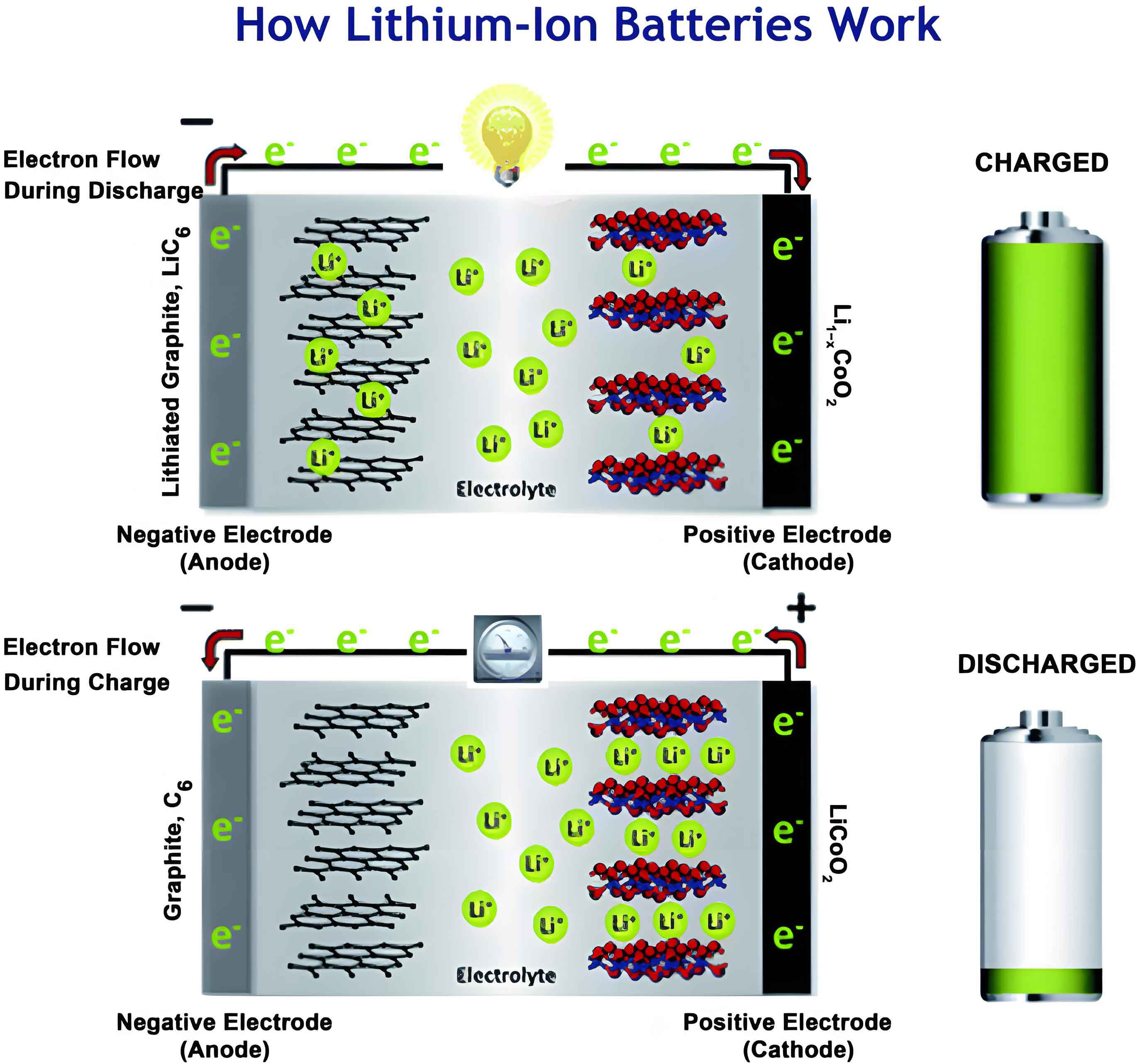
Energy storage technologies form a critical backbone for the new energy industry, facilitating grid load leveling, integrating intermittent renewable sources, improving power quality, and powering electric vehicles, rail systems, and marine vessels. Among various technologies, the li ion battery has emerged as the most widespread solution due to its high energy density, good power performance, low self-discharge, and declining cost. However, systems relying solely on li ion battery packs face significant limitations. Performance degrades severely at low temperatures, and lifespan accelerates under high-rate pulsed discharge or highly fluctuating power demands. Furthermore, the relatively moderate power density of li ion battery cells often necessitates an oversized pack to meet peak power requirements in applications with stringent life expectations, leading to increased weight, volume, and cost.
The core challenge, therefore, is to improve the operating conditions for the li ion battery to mitigate its degradation. Combining two or more complementary storage devices into a Hybrid Energy Storage System (HESS) effectively addresses these issues. A HESS allows high-power and high-energy components to be configured flexibly according to application demands. The most prevalent and well-matched combination pairs the high-energy-density li ion battery with the high-power-density, long-cycle-life supercapacitor (SC). This li ion battery/SC HESS leverages the strengths of each component: the SC handles rapid power transients and peak loads, thereby “smoothing” the power profile seen by the li ion battery, which primarily supplies the steady energy base. This synergy enhances system efficiency, extends the li ion battery lifespan, reduces stress, and can lower overall system cost.
However, realizing the full potential of a li ion battery/SC HESS hinges on a core technology: the Energy Management Strategy (EMS). The EMS is responsible for dynamically and optimally splitting the real-time load power demand between the li ion battery and the SC. An effective EMS is crucial for achieving the desired benefits of longevity for the li ion battery, high efficiency, and reliable operation. Consequently, the design and optimization of EMS have become a primary research focus. This review provides a systematic analysis of EMS methods for li ion battery/supercapacitor HESS. It begins with the foundational system topologies and management architecture, then delves into a detailed classification, comparison, and analysis of prevalent energy management strategies, concluding with future research directions.
Fundamentals of HESS Topology and Energy Management
The choice of HESS topology dictates whether and how power can be actively distributed between the li ion battery and the supercapacitor. Topologies are broadly categorized into Controlled and Uncontrolled types, as summarized in the classification below. Only controlled topologies enable the implementation of sophisticated EMS algorithms.
Topology Structures
In Controlled HESS topologies, power flow is managed using power electronic converters, primarily bidirectional DC/DC converters. These are further divided into Fully-Active and Semi-Active configurations.
- Fully-Active Topology: Both the li ion battery and SC banks are connected to the common DC bus through their own dedicated bidirectional DC/DC converters. This configuration offers the highest degree of control, allowing independent regulation of the output current (and thus power) from each storage device as well as the DC bus voltage. It is ideal for applications requiring strict bus voltage stability but incurs higher cost and complexity due to the use of two converters.
- Semi-Active Topology: Only one storage device interfaces with the DC bus via a bidirectional DC/DC converter, while the other connects directly. This reduces cost and complexity at the expense of some control flexibility.
- Capacitor-Semi-Active: The SC is connected through the converter, and the li ion battery is directly linked to the bus. This is the most common configuration as it allows direct control of the high-power SC’s current, effectively using it to filter the li ion battery‘s power profile.
- Battery-Semi-Active: The li ion battery is connected through the converter, and the SC is linked directly. This is less common but can be useful in specific scenarios.
In contrast, Uncontrolled (or Passive) HESS topologies connect both the li ion battery and SC directly in parallel to the DC bus without any intervening power converters. The power split between them is determined solely by their internal impedances and instantaneous terminal voltages, following Kirchhoff’s laws. While simple and low-cost, this topology offers no possibility for active energy management; it cannot enforce an optimal power-sharing strategy to protect the li ion battery. Therefore, the following discussion on EMS pertains exclusively to controlled topologies (Fully-Active and Semi-Active).
| Topology Type | Battery Power Control | SC Power Control | Bus Voltage Control | EMS Applicability |
|---|---|---|---|---|
| Fully-Active | Controlled | Controlled | Controlled | Full |
| Semi-Active (Capacitor) | Uncontrolled | Controlled | Uncontrolled | Partial (via SC control) |
| Semi-Active (Battery) | Controlled | Uncontrolled | Uncontrolled | Partial (via Battery control) |
| Passive | Uncontrolled | Uncontrolled | Uncontrolled | None |
Energy Management System Architecture and Control
The HESS Energy Management System (EMS) is the supervisory controller responsible for implementing the chosen strategy. Its functional architecture extends a traditional Battery Management System (BMS).
The core EMS unit performs three key functions: 1) Data Acquisition: It collects real-time data (voltage, current, temperature) from the main bus and each storage branch. 2) Subsystem Communication: It interfaces with dedicated BMS units for the li ion battery pack and SC bank to obtain state information (State of Charge – SOC, State of Health – SOH) and issues high-level commands for cell balancing, protection, and thermal management. 3) Power Allocation Decision & Control: This is the primary EMS function. Based on the acquired data and the load power demand (Pload), the EMS algorithm computes the optimal or desired power (or current) reference setpoints for each storage device (Pbat*, Psc*). For a fully-active topology, a bus voltage reference (Vbus*) is also generated.
These reference values are sent to the lower-level power electronic converter controllers. These controllers use techniques like Pulse Width Modulation (PWM) to adjust the duty cycles of the converter switches, enforcing the commanded power split through closed-loop feedback control, thereby realizing the EMS’s decisions in hardware.
Classification and Analysis of Energy Management Strategies
Energy Management Strategies can be classified based on their underlying technical approach. The evolution progresses from simple, rule-based methods to sophisticated, learning-based systems, each with distinct trade-offs between optimality, computational complexity, and robustness.
1. Rule-Based and Experience-Driven Strategies
These are the most intuitive and computationally simple strategies, derived from heuristic understanding or “expert knowledge” of the li ion battery and SC characteristics.
- Logic Threshold Control: This method defines a set of static rules based on system states. For example:
IF (SOC_sc < SOC_sc_min) AND (P_load > 0):
    THEN Set P_bat = P_load + P_charge_sc; P_sc = -P_charge_sc
ELSE IF (P_load is high-frequency component):
    THEN Assign to SC
...
The rules typically use thresholds on parameters like load power, li ion battery SOC, and SC SOC. While simple and robust, its performance is highly dependent on the pre-set thresholds, which may not be optimal across all driving cycles.
- Filter-Based Methods: This approach directly implements the core heuristic: use the SC to smooth the li ion battery power. The total load power is passed through a filter (e.g., a low-pass filter). The low-frequency component is assigned to the li ion battery, and the high-frequency component is assigned to the SC.
$$P_{bat}(t) = P_{load}(t) * h_{lp}(t)$$
$$P_{sc}(t) = P_{load}(t) – P_{bat}(t)$$
where $h_{lp}(t)$ is the impulse response of a low-pass filter. The cutoff frequency is a critical design parameter. Adaptive filtering techniques can adjust this frequency online based on the power spectrum of the demand or the SC’s SOC, improving adaptability over fixed-filter methods. - Fuzzy Logic Control: This method formalizes expert knowledge using linguistic variables and fuzzy sets. It maps inputs (e.g., “load power is HIGH”, “SC SOC is MEDIUM”) to outputs (e.g., “battery power change is SMALL_NEGATIVE”) through a set of fuzzy IF-THEN rules. It handles the inherent imprecision in system states better than crisp logic thresholds but still relies on the designer’s experience to define membership functions and rule bases.
Summary: Rule-based strategies are favored for their simplicity, reliability, and ease of real-time implementation. They provide a foundational and effective means to protect the li ion battery from sharp transients. However, their near-optimality is not guaranteed as they are not derived from a formal optimization process. Performance evaluation is often qualitative or based on comparison with simpler baselines.
2. Optimization-Based Strategies
These strategies formulate the power-split problem as a mathematical optimization to systematically minimize a cost function (e.g., energy loss, li ion battery degradation, operational cost) subject to system constraints (e.g., power limits, SOC boundaries).
2.1. Offline Global Optimization
This approach assumes prior knowledge of the entire driving cycle or load profile. A global optimization algorithm is used to find the power-split sequence that minimizes the total cost over the complete horizon.
- Dynamic Programming (DP): DP is a powerful algorithm that guarantees a globally optimal solution for a discretized system model. It works by solving backward from the final state to the initial state. The cost function $J$ over a drive cycle from time step $k=0$ to $N$ is typically defined as:
$$J = \sum_{k=0}^{N} L(x(k), u(k))$$
where $x(k)$ is the state (e.g., SOC_bat, SOC_sc) and $u(k)$ is the control variable (e.g., battery power). The term $L$ can represent instantaneous li ion battery aging cost, resistive losses, or fuel equivalent cost. While providing a benchmark for optimal performance, DP is computationally prohibitive for online use due to the “curse of dimensionality.” - Pontryagin’s Minimum Principle (PMP): PMP is a continuous-time optimal control method that provides necessary conditions for optimality. It transforms the global problem into a set of local Hamiltonian minimization problems, often solved more efficiently than DP but still generally offline. The Hamiltonian $H$ is defined as:
$$H(x(t), u(t), \lambda(t), t) = L(x(t), u(t)) + \lambda^T(t) \cdot f(x(t), u(t))$$
where $\lambda(t)$ are co-state variables and $f$ describes the system dynamics (e.g., SOC change).
The optimal control sequence from DP or PMP serves as a “golden benchmark.” To create an online-implementable strategy, researchers often extract rules from this optimal solution dataset using techniques like machine learning or design rule-based controllers that mimic the optimal behavior.
2.2. Online Predictive Optimization (Model Predictive Control – MPC)
To handle unknown and stochastic future loads, MPC employs a receding horizon approach. At each control time step:
- Prediction: Forecast the future load power demand (or a related variable like vehicle velocity) over a finite prediction horizon (e.g., next 10-100 seconds). Prediction models range from simple auto-regressive models to sophisticated Markov chains or neural networks.
- Optimization: Solve a constrained optimization problem over this prediction horizon to minimize a cost function, using the current system state as the initial condition. The optimization is typically less computationally intense than global DP because the horizon is shorter.
- Implementation: Apply only the first control action (the optimal power split for the immediate moment) from the solved sequence to the system.
- Reiteration: At the next time step, update the state with new measurements, shift the prediction horizon forward, and repeat the process.
The effectiveness of MPC heavily depends on the accuracy of the prediction model. Its major advantage is the ability to incorporate future information and system constraints explicitly, leading to near-optimal performance in real-time. However, it requires significant onboard computational resources or can be implemented via cloud-edge collaboration to offload heavy calculations.
| Optimization Method | Principle | Horizon | Optimality | Online Feasibility | Key Challenge |
|---|---|---|---|---|---|
| Dynamic Programming (DP) | Bellman’s Principle, backward solution | Full Cycle (Global) | Global Optimum | No (Offline Benchmark) | Curse of dimensionality |
| Pontryagin’s Minimum Principle (PMP) | Hamiltonian minimization | Full Cycle (Global) | Necessary Conditions | Rarely | Solving co-state dynamics |
| Model Predictive Control (MPC) | Receding horizon optimization | Finite Future (Local) | Local/Rolling Optimum | Yes (with sufficient computation) | Prediction accuracy and computation speed |
3. Driving-Cycle Pattern Recognition Based Strategies
This class of strategies attempts to bridge the gap between offline optimization and real-time application by leveraging historical data. The core idea is to pre-optimize and store EMS rules for a library of standard or typical driving “micro-cycles.”
- Offline Phase: A large database of driving cycles is segmented into characteristic micro-cycles (e.g., acceleration, cruising, deceleration, or fixed-duration segments). For each micro-cycle archetype, an optimal power-split rule or control map is derived using offline optimization methods like DP.
- Online Phase: While the vehicle is operating, the EMS continuously monitors real-time driving parameters (e.g., speed, acceleration, power demand). A pattern recognition module (often using fuzzy logic or machine learning classifiers) identifies which pre-defined micro-cycle pattern the current driving condition most closely resembles.
- Rule Selection: The EMS then applies the pre-optimized energy management rule corresponding to the identified pattern. The pattern is updated periodically (e.g., every few seconds) to adapt to changing driving conditions.
This method offers improved adaptability over static rule-based strategies without the heavy online computational burden of MPC. Its performance is highly dependent on the comprehensiveness of the pre-defined pattern library and the accuracy of the real-time pattern classifier. It may struggle with entirely novel driving conditions not represented in the library.
4. Machine Learning Based Strategies
Advanced machine learning (ML) techniques are increasingly applied to learn optimal or near-optimal EMS policies directly from data or through interaction with the system environment.
- Supervised Learning (Neural Networks – NN): A neural network can be trained to act as a direct EMS controller. The training dataset can be generated from offline global optimization (e.g., DP results), containing optimal input-output pairs (e.g., inputs: load power, SOCs; output: optimal battery power). Once trained, the NN provides instantaneous control outputs with very low online computational cost, effectively approximating the optimal policy. The challenge lies in obtaining a comprehensive and high-quality training dataset that covers the full range of possible operating conditions for the li ion battery and SC system.
- Reinforcement Learning (RL) / Deep Reinforcement Learning (DRL): This is a more autonomous learning paradigm. An RL agent (the EMS controller) interacts with the HESS environment. It takes an action $a_t$ (power split), observes the resulting new state $s_{t+1}$ (SOCs, temperatures) and a reward $r_t$. The reward is designed to reflect the EMS objectives, e.g., a negative reward for li ion battery stress or energy loss. The agent’s goal is to learn a policy $\pi(a|s)$ that maximizes the cumulative future reward. DRL uses deep neural networks to represent the policy or value functions, enabling it to handle high-dimensional state spaces. Over many episodes of training, the agent discovers an effective management strategy without needing pre-existing optimal data. However, DRL requires careful reward shaping, extensive training time, and may face convergence issues.
Summary: ML-based strategies, particularly those employing NNs trained on DP data, show promise in achieving near-optimal performance with excellent real-time capability. DRL offers the potential for adaptive learning in complex, uncertain environments. However, both require significant effort in data preparation, model training, and validation.
Comparative Analysis and Future Perspectives
The performance of an EMS depends heavily on the nature of the load. We can distinguish between regular, predictable loads (e.g., fixed-route buses, stationary grid applications with daily patterns) and highly stochastic loads (e.g., personal electric vehicles, unpredictable renewable generation). The following table synthesizes the characteristics of the discussed EMS classes.
| EMS Category | Key Principle | Performance (Regular Loads) | Performance (Stochastic Loads) | Robustness | Offline Comp. Cost | Online Comp. Cost |
|---|---|---|---|---|---|---|
| Rule-Based (Logic/Filters) | Expert heuristics, filtering | Moderate | Poor to Moderate | Moderate | Low | Very Low |
| Offline Optimization Derived | Global opt. for a known cycle | Excellent (Benchmark) | Moderate (if cycle mismatch) | Moderate | High | Very Low |
| Model Predictive Control (MPC) | Rolling horizon optimization | Very Good | Good to Very Good | Good | Low (model dev.) | High |
| Pattern Recognition | Match & apply pre-opt. rules | Good | Moderate to Good | Moderate | Medium | Medium |
| Machine Learning (NN/RL) | Learn policy from data/interaction | Very Good | Good to Very Good | Good | Very High (Training) | Low (Inference) |
Future Research Directions
For HESS, especially in electric vehicles facing stochastic driving conditions, the quest is for strategies with high performance, robustness, and low real-time computation. Key future research avenues include:
- Enhanced Prediction for Stochastic Loads: Improving the accuracy of short-term future load prediction is critical for MPC and predictive strategies. Integrating multi-source data (e.g., traffic, terrain, driver behavior via V2X), and employing advanced AI-based predictors (LSTM, Transformers) will help reduce uncertainty, enabling more optimal and robust power allocation for the li ion battery.
- High-Fidelity HESS Modeling: The effectiveness of optimization and learning-based EMS depends on the accuracy of the underlying models. Future work needs to integrate more precise, real-time capable electro-thermal-aging models for the li ion battery, capturing effects like low-temperature power fade, nonlinear degradation under combined stress factors (high C-rate, deep DOD, temperature), and SC self-discharge dynamics.
- Cloud-Edge Collaborative EMS: To overcome onboard computational limits, a collaborative architecture can be deployed. The heavy computation (e.g., neural network training, long-horizon MPC optimization) can be performed in the cloud, while the vehicle’s edge controller executes a lightweight policy or receives updated control parameters periodically. This fusion can enable real-time implementation of the most advanced algorithms.
- Application-Specific EMS Development: While much research focuses on EVs, tailored EMS development for other applications like marine vessels, aircraft, and grid-scale storage with their unique duty cycles and constraints (e.g., saltwater environment, aviation safety standards, grid code compliance) requires further in-depth exploration.
In conclusion, the energy management of li ion battery/supercapacitor hybrid systems is a vibrant field of research. From foundational rule-based methods to cutting-edge AI-driven approaches, the evolution of EMS aims to fully unlock the synergistic potential of these complementary storage technologies. The future lies in intelligent, adaptive, and computationally efficient strategies that ensure the longevity of the li ion battery, maximize system efficiency, and enhance the economic viability of hybrid energy storage across diverse applications.