
The relentless pursuit of sustainable energy solutions has positioned electrochemical energy storage, particularly the li ion battery, at the forefront of technological advancement. As the demand for higher energy density, longer cycle life, and improved safety profiles intensifies, the exploration of novel electrode materials becomes paramount. Among the myriad of candidates, polyoxometalates (POMs) have emerged as a fascinating class of inorganic metal-oxygen clusters with unique attributes conducive to electrochemical energy storage. Their inherent abilities to undergo fast and reversible multi-electron redox reactions, coupled with structural tunability, make them compelling candidates for next-generation li ion battery electrodes. This article delves into the application of specifically engineered cobalt-substituted tungstate POMs as anode materials, providing a comprehensive analysis of their synthesis, electrochemical behavior, and performance metrics, thereby offering a detailed perspective on their potential within the li ion battery landscape.
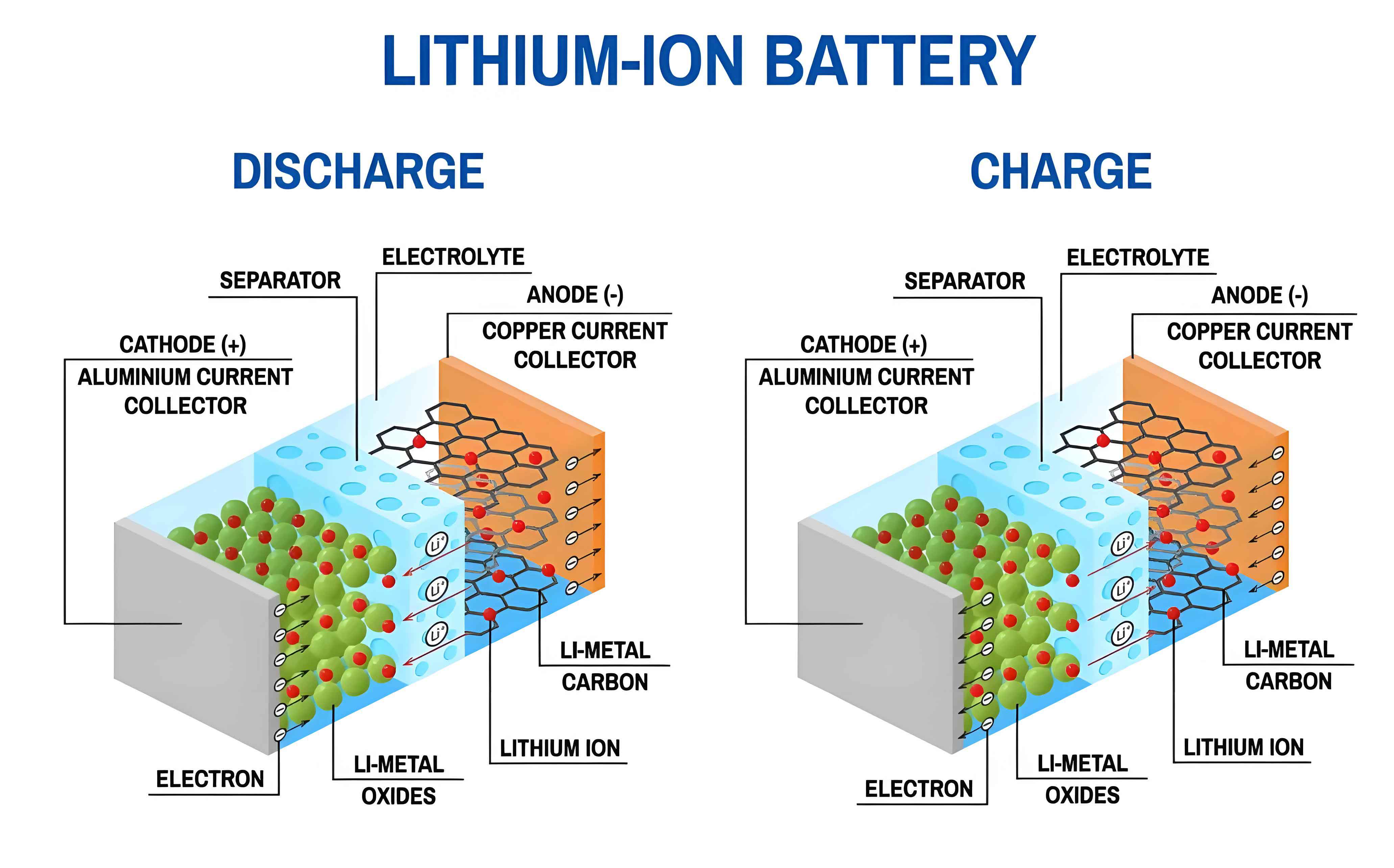
The fundamental operation of a li ion battery revolves around the shuttling of lithium ions between a cathode and an anode through an electrolyte. During discharge, lithium ions de-intercalate from the anode material and travel to the cathode, while electrons flow through the external circuit, providing electrical power. The reverse process occurs during charging. The anode is a critical component, as its ability to host lithium ions efficiently and reversibly directly dictates the capacity, rate capability, and longevity of the entire cell. Traditional graphite anodes, while commercially successful, offer a limited theoretical capacity (372 mAh g-1), spurring research into alternative materials capable of higher lithium storage.
Polyoxometalates represent a vast family of anionic clusters, typically composed of early transition metals (e.g., W, Mo, V) in their high oxidation states, bridged by oxygen atoms. Their structural diversity, from the classic Keggin (e.g., [XM12O40]n–) and Dawson ([X2M18O62]n–) types to more complex architectures, allows for precise chemical modification. The “X” atom, often a heteroatom like P, Si, or B, sits at the center of the structure. Crucially, one or more of the addenda “M” atoms (e.g., WVI) can be substituted with other transition metal ions (e.g., Co, Fe, Mn), creating transition-metal-substituted POMs (TMSPs). This substitution not only alters the electronic structure and redox potentials but also introduces new active sites for electrochemical reactions. The general formula for a monotransition-metal-substituted Keggin anion can be represented as [XW11O39M(L)]n–, where M is the transition metal and L is an often labile ligand, such as H2O. The electroactivity of POMs in a li ion battery context is believed to stem from a combination of redox processes involving both the transition metal substituent and the tungsten-oxygen framework, coupled with possible conversion and alloying reactions depending on the elements present.
The synthesis of well-defined POMs is a cornerstone of their study. The chosen materials for this deep dive are barium salts of cobalt-substituted undecatungstoborates: Ba3[BW11O39CoIII(H2O)] and Ba3.5[BW11O39CoII(H2O)]. Their synthesis follows a sequential build-up approach. First, the lacunary (defect) precursor, K8[BW11O39H]·13H2O, is prepared by the acidification of a sodium tungstate and boric acid solution, followed by precipitation with potassium chloride. This precursor possesses a vacancy where a tungsten atom is missing, creating a site for metal incorporation. Reacting this lacunary species with cobalt(II) chloride yields the divalent cobalt-substituted anion, isolated as K7[BW11O39CoII(H2O)]. Subsequent oxidation of this compound with sodium persulfate (Na2S2O8) converts the cobalt center from +2 to +3, yielding the trivalent cobalt analogue. Finally, metathesis reactions with barium chloride precipitate the corresponding barium salts, which offer different solubility and handling properties compared to the potassium salts. The purity and structure of these compounds are confirmed through techniques like infrared spectroscopy, where characteristic bands for W–Ot (terminal), W–Ob–W (bridging), and B–O stretches are observed around 940, 820, and 980 cm-1, respectively.
The electrochemical evaluation of these materials as anodes for a li ion battery begins with cyclic voltammetry (CV). When scanned within a potential window relevant for anode operation (e.g., 0.01–3.0 V vs. Li/Li+), the CV profile provides insights into the redox processes and their reversibility. For Ba3[BW11O39CoIII(H2O)], initial cycles often show reduction peaks corresponding to the reduction of WVI to lower oxidation states and, critically, the reduction of CoIII to CoII and potentially further to Co0. The subsequent oxidation scan may show broad or less pronounced peaks, indicating a degree of irreversibility in the initial phase, often associated with the formation of a solid electrolyte interphase (SEI) and irreversible structural changes. In contrast, the CV of the divalent cobalt analogue, Ba3.5[BW11O39CoII(H2O)], may show less distinct redox features in the same window, as the CoII center is already in a lower oxidation state, altering the electrochemical accessibility of subsequent reduction steps. This fundamental difference in the initial redox chemistry sets the stage for their divergent performance in a li ion battery.
Galvanostatic charge-discharge (GCD) testing is the primary method for assessing practical performance in a li ion battery. When cycled at a constant current density, the voltage profile as a function of specific capacity reveals the working potentials and mechanisms. Both cobalt-substituted POMs typically exhibit sloping voltage profiles without distinct plateaus, which is characteristic of a pseudo-capacitive or a multi-step intercalation/conversion reaction mechanism rather than a classic two-phase intercalation process seen in graphite. A key performance indicator is the specific capacity. For instance, at a current density of 200 mA g-1, the trivalent cobalt material, Ba3[BW11O39CoIII(H2O)], can deliver a stable specific capacity around 269 mAh g-1 after 200 cycles with a Coulombic efficiency exceeding 99%. Under identical conditions, the divalent cobalt analogue often demonstrates a lower stabilized capacity, for example, approximately 165 mAh g-1.
The performance gap widens when subjected to more strenuous testing. At a higher current density of 1000 mA g-1 over 900 cycles, the capacity retention of the trivalent cobalt species remains superior. The capacity fading in such systems can be empirically modeled by a function correlating capacity (Cn) with cycle number (n):
$$C_n = C_0 \cdot e^{-k \cdot n} + C_{stable}$$
where \(C_0\) is the initial capacity, \(k\) is the decay rate constant, and \(C_{stable}\) is the capacity contribution from stable components. The smaller \(k\) value for the CoIII material indicates slower degradation, highlighting its enhanced structural robustness within the li ion battery environment.
The rate capability, a critical parameter for high-power applications of a li ion battery, is evaluated by cycling the electrode at progressively increasing current densities. A summary of the performance comparison is presented in the table below:
| Material | Current Density (mA g-1) | Discharge Capacity (mAh g-1) | Key Observation |
|---|---|---|---|
| Ba3[BW11O39CoIII(H2O)] | 200 | ~448 | Excellent capacity recovery, indicating high structural reversibility and stability. |
| 500 | ~323 | ||
| 1000 | ~250 | ||
| 2000 | ~189 | ||
| 5000 | ~107 | ||
| 200 (return) | ~454 | ||
| Ba3.5[BW11O39CoII(H2O)] | 200 | Lower than CoIII analogue | Poorer capacity retention and recovery, suggesting inferior kinetic and structural stability. |
| 500 | Proportionally lower | ||
| 1000 | Proportionally lower | ||
| 2000 | Proportionally lower | ||
| 5000 | Proportionally lower | ||
| 200 (return) | ~276 |
The data clearly demonstrates the superior rate performance of the trivalent cobalt POM. Its ability to recover nearly 100% of its initial low-rate capacity after undergoing extreme current densities is a testament to its exceptional electrochemical resilience and fast reaction kinetics, which are desirable attributes for a high-performance li ion battery anode.
The underlying mechanism for lithium storage in these cobalt-substituted POMs is complex and likely multi-faceted. It is not simple intercalation. A proposed reaction pathway may involve the following steps:
1. Initial Reduction of the Framework and Cobalt Center: Upon first discharge (lithiation), the high-valent WVI and CoIII/CoII centers are reduced, accompanied by the insertion of Li+ ions for charge compensation.
$$[BW_{11}O_{39}Co^{III}(H_2O)]^{7-} + xLi^+ + xe^- \rightarrow Li_x[BW_{11}^{(VI, V)}O_{39}Co^{II}(H_2O)]^{(7+x)-}$$
2. Further Reduction and Conversion: At lower potentials, more extensive reduction occurs. The tungsten-oxygen framework may undergo a conversion-like reaction, where Li2O and metallic tungsten nanoparticles are formed. Simultaneously, the cobalt ion can be further reduced to metallic cobalt nanoparticles.
$$Li_x[BW_{11}O_{39}Co^{II}]^{(7+x)-} + (many)Li^+ + (many)e^- \rightarrow B_2O_3 + Li_2O + W^0 + Co^0 + other\,species$$
3. Reversible Reaction: In subsequent cycles, the electrochemically generated nanoscale metal particles (W0, Co0) and the surrounding Li2O/LixByOz matrix can engage in a reversible conversion reaction.
$$W^0 + Co^0 + Li_2O \rightleftharpoons WO_y + CoO_z + Li^+ + e^-$$
The specific capacities achieved (often > 400 mAh g-1 initially) are much higher than what could be achieved by a single-electron transfer per formula unit, supporting this multi-electron conversion mechanism. The superior performance of the CoIII material can be attributed to its higher initial oxidation state, which provides a greater “redox reservoir” and potentially leads to a more favorable nanostructured conversion product upon first discharge, enhancing the reversibility of subsequent cycles in the li ion battery.
Electrochemical impedance spectroscopy (EIS) further elucidates the kinetic advantages. The Nyquist plots typically consist of a semicircle in the high-medium frequency region, representing the charge-transfer resistance (\(R_{ct}\)) at the electrode-electrolyte interface, and a sloping line in the low-frequency region, representing Li+ diffusion (Warburg impedance). The charge-transfer resistance can be related to the exchange current density (\(i_0\)) by the following simplified relation at equilibrium:
$$R_{ct} = \frac{RT}{nF i_0}$$
where \(R\) is the gas constant, \(T\) is temperature, \(n\) is the number of electrons transferred, and \(F\) is Faraday’s constant. Consistently, the \(R_{ct}\) value for the trivalent cobalt POM electrode is found to be lower than that of its divalent counterpart after cycling, indicating faster charge-transfer kinetics, which directly contributes to its better rate capability in a li ion battery. This kinetic superiority is intertwined with the material’s inherent electronic conductivity and the stability of the formed SEI layer.
While the performance of these cobalt-substituted POMs is promising, challenges remain for their practical integration into commercial li ion battery systems. Their electrical conductivity in the bulk state is typically low, necessitating intimate mixing with conductive additives like carbon black or graphene. The often-noticed initial irreversible capacity loss, common to many conversion-type anodes, reduces the overall energy efficiency. Furthermore, the volume changes associated with conversion reactions can lead to particle pulverization and loss of electrical contact over very long-term cycling, although the POM-derived nanostructures seem to mitigate this to a significant degree. Future research directions are multifaceted. One promising avenue is the nano-structuring of POMs, such as creating hollow spheres, nanosheets, or embedding them in porous carbon matrices. This enhances the electrode-electrolyte contact area, shortens Li+ diffusion paths, and accommodates volume strain more effectively. Another direction is the exploration of other transition metal substituents (e.g., Mn, Fe, Ni, V) and heteroatoms (P, Si, Ge) to fine-tune redox potentials, capacity, and stability. The synthesis of POM-based composites with conductive polymers or 2D materials like MXenes could also synergistically combine the high redox activity of POMs with superior conductivity and mechanical flexibility. Each of these strategies aims to address the existing limitations and unlock the full potential of POMs as transformative anode materials for the future li ion battery.
In conclusion, transition-metal-substituted polyoxometalates, particularly cobalt-containing tungstates like Ba3[BW11O39CoIII(H2O)], represent a sophisticated and highly tunable class of materials for advanced li ion battery anodes. Their electrochemical activity stems from a combination of multi-electron redox processes and conversion reactions involving both the heteropolyanion framework and the substituted cobalt center. The oxidation state of the incorporated cobalt ion plays a decisive role; the trivalent cobalt variant demonstrates markedly superior cycling stability, specific capacity, and rate performance compared to its divalent analogue. This is attributed to its higher initial redox capacity, more favorable reaction kinetics, and the formation of a more robust electroactive structure upon cycling. Although challenges related to conductivity and initial irreversibility persist, ongoing research into nanostructuring, composite formation, and compositional engineering is paving the way for overcoming these hurdles. The fundamental insights gained from studying these model systems provide a valuable blueprint for the rational design of next-generation high-performance electrode materials, significantly contributing to the evolution of the li ion battery technology towards meeting the ever-growing demands of energy storage.