
The ubiquitous presence of energy storage devices in modern technology is undeniable. Among them, the li ion battery stands as a cornerstone, powering everything from portable electronics to electric vehicles due to its superior energy density, excellent rate capability, and long cycle life. However, the continuous demand for higher energy density pushes the boundaries of conventional materials. The commercial graphite anode, with a theoretical specific capacity limited to approximately 372 mAh g-1, has become a bottleneck for next-generation high-energy li ion battery systems. This limitation has catalyzed intensive research into alternative anode materials with significantly higher capacity.
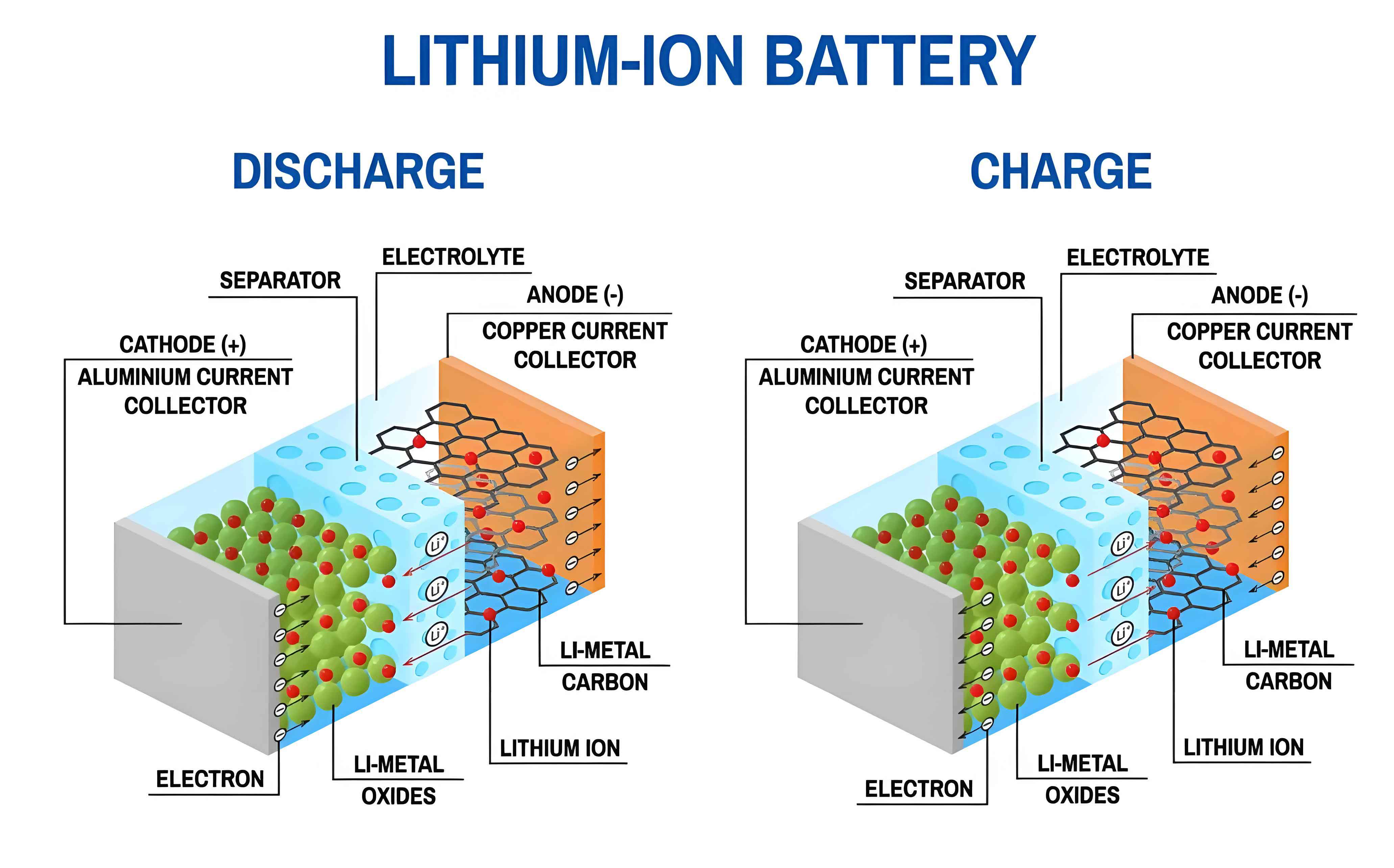
Silicon (Si) emerges as a highly promising candidate to supersede graphite. Its extraordinarily high theoretical specific capacity, ranging from 3572 to 4200 mAh g-1, which is more than ten times that of graphite, along with its natural abundance, makes it a focal point for advancing li ion battery technology. The fundamental reaction governing this high capacity is the alloying/de-alloying process with lithium, which can be simplistically represented as:
$$ Si + xLi^+ + xe^- \leftrightarrow Li_xSi $$
where \( x \) can reach up to 4.4, corresponding to the Li22Si5 phase. Despite this immense promise, the practical application of silicon anodes in a commercial li ion battery is severely hindered by two critical, intrinsic drawbacks. First, the massive volume expansion (up to ~300%) during lithiation induces tremendous mechanical stress, leading to particle pulverization, loss of electrical contact, and eventual electrode disintegration. Second, the constant fracturing and reformation of the Solid Electrolyte Interphase (SEI) film consume both lithium ions and electrolyte, causing rapid capacity fade and low Coulombic efficiency. Furthermore, the intrinsic electronic conductivity of silicon is relatively poor, which impairs rate performance.
To harness the high capacity of silicon while mitigating its drawbacks, composite strategies have been developed. The most prevalent and effective approach is to combine silicon with carbonaceous materials. A silicon-carbon (Si/C) composite leverages the high capacity of silicon and the structural buffering, conductivity enhancement, and SEI-stabilizing properties of carbon. Various carbon matrices, including graphite, amorphous carbon, carbon nanotubes, and graphene, have been explored. Among carbon precursors, pitch is particularly attractive for li ion battery anode synthesis. Upon pyrolysis, pitch transforms into a soft carbon that is both conductive and can act as a viscous binder at intermediate temperatures, enabling the formation of a dense, coherent coating that effectively encapsulates silicon particles and improves interfacial stability.
This work presents a detailed investigation into the synthesis and electrochemical evaluation of silicon/graphite/carbon (Si/G/C) composites for li ion battery anodes, employing a scalable spray-drying method with pitch as the carbon source. The primary objective was to engineer a composite material with an optimal microstructure that balances high capacity, good conductivity, and, most critically, long-term cycling stability by effectively accommodating silicon’s volume changes.
Experimental Methodology and Material Design
The core synthesis strategy revolved around the spray-drying technique, a process highly amenable to scaling up for commercial li ion battery electrode material production. The procedure began with the preparation of two separate dispersions. A silicon dispersion was created by ultrasonically mixing nano-silicon powder and polyvinylpyrrolidone (PVP, acting as a surfactant) in an ethanol solution. Concurrently, a second dispersion was prepared by mixing natural flake graphite and varying amounts of pitch (the carbon precursor) in tetrahydrofuran (THF). These two dispersions were then combined under vigorous stirring to form a homogeneous slurry.
This slurry was fed into a spray dryer, where it was atomized into fine droplets and rapidly dried in a hot air stream. The instantaneous drying process locked the silicon particles and graphite flakes together within a matrix of pitch, forming spherical precursor particles. This step is crucial for achieving a uniform mixture and a desirable spherical morphology beneficial for electrode packing density in a li ion battery. The collected precursor powder was subsequently subjected to a pyrolysis step in an inert atmosphere at 900°C for 3 hours. During pyrolysis, the pitch carbonized into a conductive, amorphous carbon coating, firmly binding the silicon and graphite components and completing the formation of the final Si/G/C composite.
To systematically study the impact of the carbon coating thickness and its role in the li ion battery performance, composites with different pitch contents were synthesized. The silicon-to-graphite mass ratio was kept constant, while the pitch additive was varied. The samples were labeled accordingly for clarity in analysis, as summarized in Table 1.
| Sample Designation | Silicon Content (g) | Graphite Content (g) | Pitch Content (g) | Description |
|---|---|---|---|---|
| Si/G-0 | 0.15 | 0.45 | 0.00 | Baseline composite without pitch-derived carbon. |
| Si/G/C-1 | 0.15 | 0.45 | 0.10 | Composite with a low content of pitch-derived carbon. |
| Si/G/C-2 | 0.15 | 0.45 | 0.20 | Composite with a medium (optimized) content of pitch-derived carbon. |
| Si/G/C-3 | 0.15 | 0.45 | 0.30 | Composite with a high content of pitch-derived carbon. |
The electrochemical evaluation was conducted by fabricating CR2032-type coin half-cells against a lithium metal counter electrode. The working electrode consisted of the active material (Si/G/C composite), a conductive agent (Super P), and a binder (CMC/SBR) in a weight ratio of 8:1:1. The cells were assembled in an argon-filled glovebox using a standard electrolyte for li ion battery systems (1 M LiPF6 in EC/DEC/EMC) and a polypropylene separator. Galvanostatic charge-discharge tests, cyclic voltammetry, and electrochemical impedance spectroscopy (EIS) were performed to comprehensively assess the performance of these anodes in a li ion battery configuration.
Structural and Morphological Evolution
The phase composition of the synthesized composites was first confirmed by X-ray diffraction (XRD). All patterns showed characteristic diffraction peaks corresponding to crystalline silicon and graphite. No new crystalline phases were detected after pyrolysis, indicating that the process only resulted in the carbonization of pitch into amorphous carbon without side reactions with Si or graphite. A key observation was the gradual attenuation of diffraction peak intensities for both Si and graphite with increasing pitch content. This attenuation is attributed to the increasing thickness of the amorphous carbon coating, which reduces the X-ray scattering from the underlying crystalline components. The sample without pitch (Si/G-0) exhibited the sharpest and most intense peaks, confirming the absence of any coating.
Scanning electron microscopy (SEM) provided direct visual evidence of the transformative effect of the spray-drying and pitch-carbonization process on the material’s morphology. The Si/G-0 sample (without pitch) exhibited a loose, flaky structure characteristic of the raw graphite, with numerous silicon particles agglomerated on the surface and between the graphite layers. This morphology is suboptimal for a li ion battery anode as it offers poor buffering against silicon expansion and inconsistent electrical pathways.
In stark contrast, the introduction of pitch radically altered the microstructure. For the Si/G/C-1 sample, the initial stages of spherical agglomeration were observed, though some graphite sheet features remained visible. The Si/G/C-2 sample displayed the most optimal morphology: well-defined spherical secondary particles with a diameter of 10-30 μm. The spherical shape is a direct result of the spray-drying process and is highly desirable for achieving high tap density in li ion battery electrode manufacturing. The pitch-derived carbon acted as an effective binder, encapsulating the silicon and graphite into these robust microspheres. However, excessive pitch content, as in the Si/G/C-3 sample, led to over-agglomeration, where particles fused together into larger, irregular blocks, which could negatively impact electrode processing and ion transport.
Further insights into the microstructure of the optimal Si/G/C-2 composite were obtained through scanning transmission electron microscopy (STEM) and energy-dispersive X-ray spectroscopy (EDS) mapping. The STEM images clearly revealed that silicon nanoparticles and graphite flakes were uniformly embedded within a continuous amorphous carbon matrix. The EDS elemental maps for silicon and carbon confirmed the homogeneous distribution of silicon throughout the carbon/graphite sphere. This core-shell-like structure, with silicon particles dispersed in a conductive carbon/graphite matrix, is ideal for a high-performance li ion battery anode. The graphite provides a stable, conductive framework and contributes its own capacity, while the amorphous carbon coating serves multiple critical functions: (i) it buffers the volume expansion of silicon, (ii) maintains electrical connectivity between particles during cycling, (iii) limits direct contact between silicon and the electrolyte, thereby stabilizing the SEI layer, and (iv) binds the entire composite structure together.
Electrochemical Performance in Li-Ion Battery Cells
The galvanostatic charge-discharge profiles of the initial cycle provide fundamental insights into the electrochemical behavior of the composites as li ion battery anodes. All curves exhibited characteristic voltage plateaus. During discharge (lithiation), a clear plateau around 0.1 V vs. Li/Li+ corresponds to the alloying reaction of lithium with silicon to form LixSi. During charge (delithiation), a plateau near 0.45 V is associated with the de-alloying process. The initial Coulombic efficiency (ICE), a critical parameter for practical li ion battery design, is defined as:
$$ ICE(\%) = \frac{Q_{charge}^{1st}}{Q_{discharge}^{1st}} \times 100\% $$
where \( Q_{charge}^{1st} \) and \( Q_{discharge}^{1st} \) are the first-cycle charge and discharge capacities, respectively. The irreversible capacity loss in the first cycle is primarily attributed to the formation of the SEI layer and other side reactions. The electrochemical data extracted from the first cycle is compiled in Table 2.
| Sample | 1st Discharge Capacity (mAh g-1) | 1st Charge Capacity (mAh g-1) | Initial Coulombic Efficiency (%) |
|---|---|---|---|
| Si/G-0 | 576.6 | 415.7 | 72.10 |
| Si/G/C-1 | 509.0 | 400.9 | 78.76 |
| Si/G/C-2 | 536.5 | 433.3 | 80.76 |
| Si/G/C-3 | 523.3 | 413.3 | 78.98 |
The uncoated Si/G-0 sample displayed the highest initial discharge capacity, which is expected due to its higher relative silicon content (no dilution by extra carbon). However, it suffered from the lowest ICE (72.1%), a direct consequence of severe, irreversible side reactions on the large, unprotected surface of silicon particles. The introduction of the pitch-derived carbon coating consistently improved the ICE. The Si/G/C-2 sample achieved the best balance, offering a high discharge capacity of 536.5 mAh g-1 and the highest ICE of 80.76%. This clearly demonstrates that the carbon coating effectively passivates the silicon surface, reducing parasitic reactions and contributing to a more efficient first cycle in the li ion battery.
The rate capability of an anode is vital for applications requiring high power, such as electric vehicles. The composites were tested at increasing current densities from 100 to 1000 mA g-1. While the uncoated Si/G-0 showed reasonable capacity at low rates, its performance deteriorated rapidly at higher currents due to kinetic limitations and increasing polarization. The Si/G/C-2 composite exhibited superior rate performance, delivering capacities of approximately 475 mAh g-1 at 500 mA g-1 and 386 mAh g-1 at 1000 mA g-1. This enhanced rate capability is attributed to the improved electrical conductivity provided by the integrated carbon/graphite network and the stable spherical morphology that facilitates electrolyte penetration and lithium-ion diffusion.
Long-term cycling stability is the ultimate test for any silicon-based li ion battery anode. The cells were cycled at a constant current density of 100 mA g-1 for 100 cycles. The capacity retention, a key metric for li ion battery lifespan, is calculated as:
$$ \text{Capacity Retention (\%)} = \frac{Q_{discharge}^{n=100}}{Q_{discharge}^{n=1}} \times 100\% $$
The Si/G-0 electrode experienced rapid capacity decay, retaining only about 52% of its initial capacity after 100 cycles. This rapid failure is archetypal of unmodified silicon anodes, caused by particle isolation due to volume-change-induced pulverization and continuous SEI growth. In contrast, all pitch-coated samples showed markedly improved cycling stability. The Si/G/C-2 electrode demonstrated the most stable performance, maintaining a discharge capacity of 338.1 mAh g-1 after 100 cycles, corresponding to a capacity retention of 63%. Furthermore, its Coulombic efficiency quickly stabilized and remained near 99.5% after the first few cycles, indicating highly reversible lithium insertion/extraction processes and a stable electrode/electrolyte interface. This performance underscores the critical role of the pitch-derived carbon matrix in confining silicon expansion, preserving structural integrity, and ensuring consistent operation throughout the life of the li ion battery.
Electrochemical Impedance and Kinetic Analysis
To gain deeper insight into the interfacial properties and charge transfer kinetics, electrochemical impedance spectroscopy (EIS) was performed on cells featuring the Si/G-0 and the optimal Si/G/C-2 anodes. The Nyquist plots typically consist of a depressed semicircle in the high-to-medium frequency region and an inclined line in the low-frequency region. The semicircle diameter corresponds to the charge-transfer resistance (\(R_{ct}\)) at the electrode/electrolyte interface, while the low-frequency tail represents the Warburg impedance (\(Z_w\)) associated with solid-state lithium-ion diffusion within the electrode material.
A comparative analysis revealed a dramatic difference. The Si/G/C-2 electrode exhibited a significantly smaller semicircle diameter compared to the Si/G-0 electrode. Using an equivalent circuit model for fitting, the extracted \(R_{ct}\) values were quantitatively determined, as shown in Table 3.
| Sample | Charge-Transfer Resistance, \(R_{ct}\) (Ω) | Interpretation |
|---|---|---|
| Si/G-0 | 82.3 | High interfacial resistance due to unstable SEI and poor contact. |
| Si/G/C-2 | 23.1 | Low interfacial resistance due to stable SEI and good electrical wiring by carbon matrix. |
The lower \(R_{ct}\) value for the Si/G/C-2 composite is a direct consequence of the conductive carbon coating. This coating ensures excellent electrical wiring of the silicon particles, minimizes contact resistance, and promotes the formation of a thinner, more stable, and more ionically conductive SEI layer. This reduced interfacial resistance directly translates to the better rate capability and cycling stability observed for this material in li ion battery tests. The relationship between overpotential (\(\eta\)) and current (\(I\)) can be conceptually linked to this resistance through a simplified form of the Butler-Volmer equation at high overpotentials:
$$ I \approx I_0 \exp\left(\frac{\alpha n F \eta}{RT}\right) $$
where a lower \(R_{ct}\) (inversely related to the exchange current density \(I_0\)) leads to a lower \(\eta\) for the same current \(I\), improving power performance.
Conclusion and Perspective
In summary, this study successfully demonstrates the design and fabrication of high-performance Si/G/C composite anodes for advanced li ion battery applications via a scalable spray-drying method. The strategic use of pitch as a carbon source proved to be highly effective. During pyrolysis, the carbonized pitch formed a crucial amorphous carbon matrix that serves as a conductive binder, a mechanical buffer, and a surface passivation layer.
The composite with an optimized pitch content (Si/G/C-2) exhibited a well-defined spherical secondary structure, where silicon nanoparticles were uniformly embedded within a continuous network of graphite and amorphous carbon. This unique architecture addressed the core challenges of silicon anodes: it accommodated volume expansion, maintained electrical integrity, and stabilized the SEI layer. As a result, this composite delivered a balanced and robust electrochemical performance in a li ion battery configuration: a high initial discharge capacity of 536.5 mAh g-1, an excellent initial Coulombic efficiency of 80.76%, good rate capability, and significantly enhanced cycling stability with 63% capacity retention after 100 cycles.
The findings underscore the importance of holistic material engineering in developing viable silicon-based anodes. The synergy between nano-silicon (high capacity), graphite (conductivity and structural framework), and pitch-derived carbon (buffering, binding, and surface stabilization) is key to unlocking the potential of silicon for the next generation of high-energy-density li ion battery systems. Future work may focus on further optimizing the porosity of the carbon matrix, exploring pre-lithiation strategies to compensate for initial capacity loss, and integrating these advanced composites into full-cell configurations to evaluate their practical viability in commercial li ion battery packs for electric vehicles and large-scale energy storage.