
The accurate estimation of the State-of-Health (SOH) for li-ion batteries is crucial for ensuring the safety, reliability, and longevity of systems like electric vehicles and grid storage. SOH, typically defined as the ratio of current maximum capacity to rated capacity, serves as a key indicator of performance degradation. However, the capacity fade in li-ion batteries is not a monotonic process. Throughout their lifespan, these batteries often exhibit a phenomenon known as “capacity regeneration,” where the available capacity temporarily increases or stabilizes before resuming its downward trend. This complex behavior, driven by intricate internal electrochemical reactions and external operating conditions, poses a significant challenge for precise short-term SOH estimation. Traditional data-driven models that overlook this phenomenon can lead to substantial estimation inaccuracies, potentially causing premature maintenance alarms or missed failure warnings. Therefore, developing a robust SOH estimation framework that explicitly accounts for capacity regeneration is of paramount importance for advanced battery management systems.
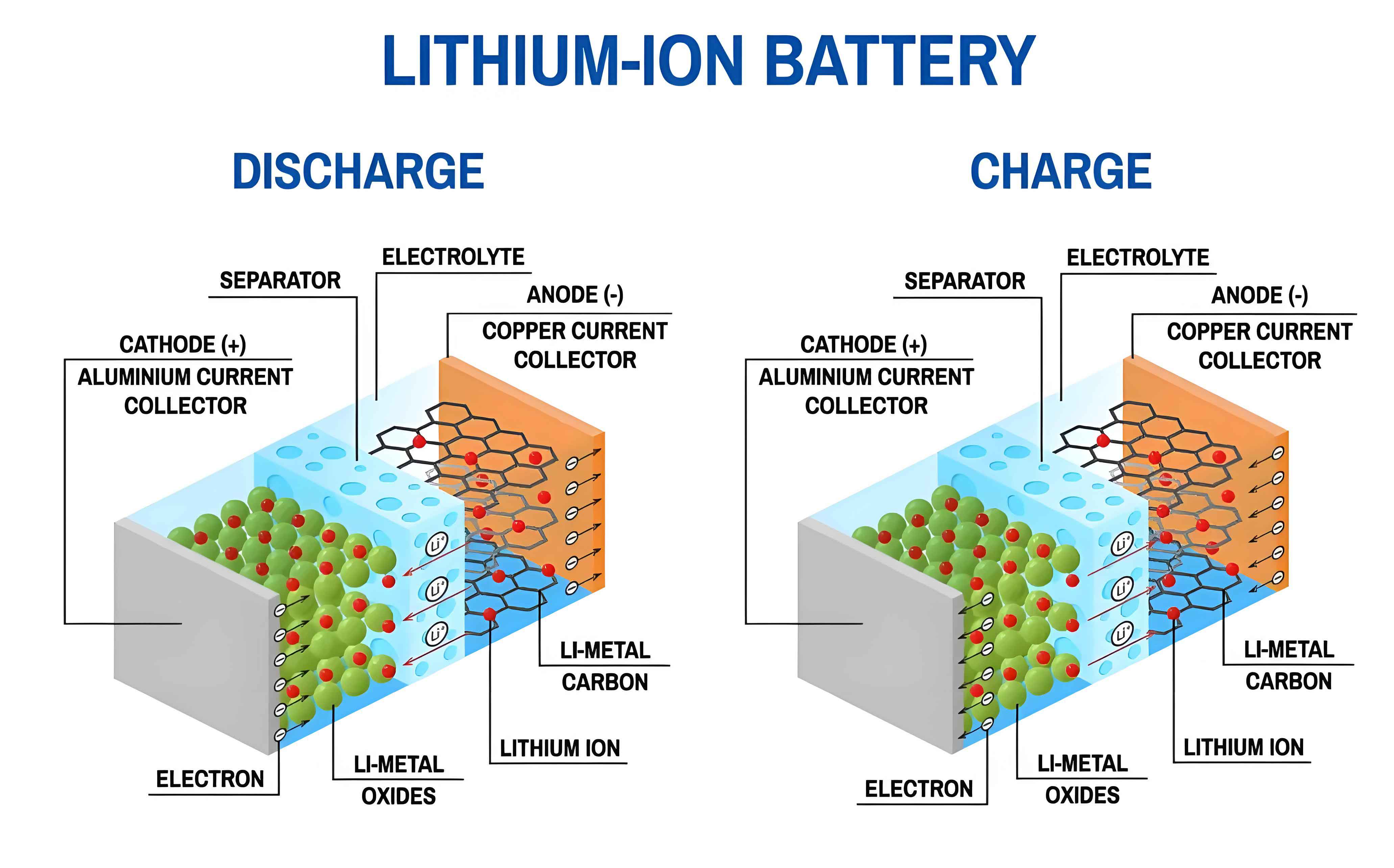
1. The Challenge of Capacity Regeneration in Li-Ion Batteries
The degradation of a li-ion battery is primarily caused by the loss of active lithium inventory and the deterioration of electrode materials. The SOH is commonly defined as:
$$SOH = \frac{Q_c}{Q_{\text{rated}}} \times 100\%$$
where \(Q_c\) is the current maximum capacity and \(Q_{\text{rated}}\) is the nominal capacity. While the long-term trend of \(Q_c\) is decreasing, the trajectory is often non-linear and non-stationary. Capacity regeneration manifests as local peaks or plateaus in the capacity versus cycle number curve. These fluctuations can be attributed to several factors, such as the temporary redistribution of lithium ions, partial recovery of electrode materials after rest periods, or changes in the solid-electrolyte interphase (SEI) layer dynamics. Ignoring these high-frequency, non-stationary components in the capacity data and modeling only the overall downward trend leads to models that are insensitive to short-term state changes. This lack of sensitivity results in poor estimation performance precisely when accurate short-term forecasting is needed for proactive management. Consequently, any advanced SOH estimation method for li-ion batteries must effectively decouple and model both the long-term degradation trend and the short-term regeneration dynamics.
2. Signal Decomposition Using Optimal Variational Mode Decomposition (OVMD)
To address the issue of capacity regeneration, we propose preprocessing the raw capacity data using Variational Mode Decomposition (VMD). VMD is a fully non-recursive signal processing technique that adaptively decomposes a complex signal into a discrete number of band-limited intrinsic mode functions (IMFs). The core idea is to separate the raw capacity sequence \(C(t)\) into \(K\) modes \(\{C_k(t)\}\), each with a specific center frequency \(\omega_k\), by solving a constrained variational optimization problem:
$$\min_{\{C_k\},\{\omega_k\}} \left\{ \sum_{k=1}^{K} \left\| \partial_t \left[ \left( \delta(t) + \frac{j}{\pi t} \right) * C_k(t) \right] e^{-j\omega_k t} \right\|_2^2 \right\}$$
$$\text{s.t.} \sum_{k=1}^{K} C_k = C(t)$$
This problem is solved by introducing a quadratic penalty term \(\alpha\) and Lagrangian multipliers \(\lambda\), transforming it into an unconstrained problem. The solution is obtained iteratively using the Alternating Direction Method of Multipliers (ADMM), updating \(C_k\) and \(\omega_k\) in the frequency domain:
$$\hat{C}_k^{n+1}(\omega) = \frac{\hat{C}(\omega) – \sum_{i \neq k} \hat{C}_i(\omega) + \frac{\hat{\lambda}(\omega)}{2}}{1 + 2\alpha(\omega – \omega_k)^2}$$
$$\omega_k^{n+1} = \frac{\int_0^\infty \omega |\hat{C}_k(\omega)|^2 d\omega}{\int_0^\infty |\hat{C}_k(\omega)|^2 d\omega}$$
A critical step in VMD is determining the optimal number of decomposition layers \(K\). An improper \(K\) can lead to mode mixing or over-decomposition. We employ a center-frequency comparison method. The decomposition is performed for a range of \(K\) values, and the resulting center frequencies are examined. The optimal \(K\) is selected just before the point where newly generated modes have center frequencies very close to existing ones, indicating redundancy. This approach is termed Optimal VMD (OVMD).
Applying OVMD to the capacity data of a li-ion battery yields two distinct types of components: The first IMF (C1) typically represents a low-frequency, smooth signal that captures the global aging trend of the li-ion battery. The subsequent IMFs (C2 to C_K) represent higher-frequency, non-stationary signals that encapsulate the local fluctuations, i.e., the capacity regeneration phenomena. This decomposition allows us to treat the long-term degradation and short-term regeneration dynamics separately, providing a cleaner input for subsequent modeling stages.
| Battery ID | K=3 | K=4 | K=5 | K=6 | K=7 | Selected K |
|---|---|---|---|---|---|---|
| B0005 | 0, 0.1400, 0.3572 | 0, 0.0846, 0.2115, 0.3991 | 0, 0.0741, 0.1748, 0.3007, 0.4370 | 0, 0.0736, 0.1716, 0.2872, 0.3959, 0.4735 | 0, 0.0722, 0.1647, 0.2467, 0.3160, 0.4024, 0.4736 | 6 |
| B0006 | 0, 0.0906, 0.2756 | 0, 0.0780, 0.2186, 0.4180 | 0, 0.0605, 0.1589, 0.2705, 0.4370 | 0, 0.0600, 0.1554, 0.2566, 0.3635, 0.4525 | 0, 0.0403, 0.1022, 0.1799, 0.2691, 0.3577, 0.4579 | 6 |
The table above shows the center frequencies for different \(K\) values for two li-ion battery datasets. For both batteries, when \(K\) increases from 6 to 7, the highest center frequencies (0.4735 vs. 0.4736 for B0005; 0.4525 vs. 0.4579 for B0006) become very close, indicating mode redundancy. Therefore, \(K=6\) is chosen as the optimal decomposition level.
3. The INFO-Optimized Support Vector Regression (INFO-SVR) Model
After decomposing the capacity sequence of the li-ion battery, we model each IMF component separately. Support Vector Regression (SVR) is chosen for its strong generalization ability with small samples and robustness to noise. The goal of SVR is to find a function \(f(c)\) that deviates from the actual target values \(y_i\) by at most \(\epsilon\) while remaining as flat as possible. For non-linear regression, the input \(c\) is mapped to a high-dimensional feature space via a function \(\phi(c)\). The function is formulated as:
$$f(c) = \omega^T \phi(c) + b$$
This leads to the following convex optimization problem:
$$\min_{\omega,b,\xi_i,\hat{\xi}_i} \frac{1}{2} \|\omega\|^2 + Z \sum_{i=1}^{n} (\xi_i + \hat{\xi}_i)$$
$$\text{subject to: } \begin{cases} y_i – \omega^T \phi(c_i) – b \leq \epsilon + \xi_i \\ \omega^T \phi(c_i) + b – y_i \leq \epsilon + \hat{\xi}_i \\ \xi_i, \hat{\xi}_i \geq 0 \end{cases}$$
where \(Z\) is the regularization parameter (penalty factor) balancing model complexity and training error, and \(\xi_i, \hat{\xi}_i\) are slack variables. Using the Lagrange multiplier method and a kernel function \(K(c_i, c_j) = \phi(c_i)^T \phi(c_j)\), the solution becomes:
$$f(c) = \sum_{i=1}^{n} (\alpha_i – \hat{\alpha}_i) K(c_i, c) + b$$
We employ the Radial Basis Function (RBF) kernel: \(K(c_i, c_j) = \exp\left(-\frac{\|c_i – c_j\|^2}{2g^2}\right)\), where \(g\) is the kernel width parameter. The performance of the SVR model for the li-ion battery data is highly sensitive to the choice of hyperparameters \(Z\) and \(g\). To optimize them efficiently, we utilize the weighted mean of vectors algorithm (INFO). INFO is a recent metaheuristic optimization algorithm inspired by information theory and physical laws. Its core principle is to update the position of vectors (solutions) based on a weighted mean rule and scaling laws. The key update rules are:
For exploration (when \(rand < 0.5\)):
$$z_1^{g} = x_{l}^g + \sigma \times MeanRule + rand \times \frac{x_{bs} – x_{a_1}^g}{F(x_{a_1}^g) – F(x_{a_2}^g) + 1}$$
For exploitation (when \(rand \geq 0.5\)):
$$z_1^{g} = x_{bs} + \sigma \times MeanRule + rand \times \frac{x_{a_1}^g – x_{a_2}^g}{F(x_{a_1}^g) – F(x_{a_2}^g) + 1}$$
where \(x_{bs}\) is the best-so-far solution, \(x_{a_1}, x_{a_2}\) are randomly selected vectors, \(\sigma\) is a scaling rate (\(\sigma = 2\alpha \times rand – \alpha\), \(\alpha = 2 \exp(-4g/M)\)), \(F\) is the fitness function (Mean Absolute Error), and \(MeanRule\) is a weighted averaging operator. The new vector \(z_1^{g}\) is then combined with another generated vector \(z_2^{g}\) to produce the final updated position \(u_l^g\). A local search is also incorporated to refine the solution. The fitness function for optimizing the li-ion battery SVR model is defined as the Mean Absolute Error (MAE) between the predicted and actual capacity values:
$$F(x) = \frac{1}{N} \sum_{j=1}^{N} |y_i – \hat{y}_i|$$
By employing INFO to find the optimal \((Z, g)\) pair for each IMF’s SVR model, we significantly enhance the prediction accuracy and generalization capability of the overall framework for li-ion battery SOH estimation.
4. The Integrated OVMD-INFO-SVR Framework and Experimental Validation
The proposed integrated framework for li-ion battery SOH estimation consists of the following steps: 1) The raw capacity vs. cycle data from the li-ion battery is decomposed using OVMD into \(K\) IMFs. 2) Each IMF component (both low-frequency trend and high-frequency regeneration components) is used to train a separate SVR model. 3) The hyperparameters (\(Z\) and \(g\)) of each SVR model are optimized using the INFO algorithm. 4) For prediction, the historical IMF values are fed into their respective trained INFO-SVR models to obtain predictions for the next cycle. 5) The predicted IMFs are summed to reconstruct the final capacity (and hence SOH) prediction for the li-ion battery.
We validate the proposed OVMD-INFO-SVR method using publicly available li-ion battery aging data from NASA (B0005, B0006) and a set of laboratory-tested li-ion batteries. The parameters of these li-ion batteries are listed below:
| Battery ID / Type | Chemistry | Temperature (°C) | Cut-off Voltage (V) | Rated Capacity (Ah) |
|---|---|---|---|---|
| NASA B0005 | LiCoO2 | 24 | 2.7 | 2.0 |
| NASA B0006 | LiCoO2 | 24 | 2.5 | 2.0 |
| Lab-Tested Battery | NMC | 24 | 2.5 | 1.8 |
To demonstrate the superiority of our method, we compare it against three baseline models: a standard Back-Propagation Neural Network (BPNN), a standard SVR model with empirical parameters, and an INFO-optimized SVR model trained directly on the raw capacity data (without OVMD decomposition). Predictions are made from different starting cycles (T) to test the model’s performance with varying amounts of training data. The prediction error is evaluated using Root Mean Square Error (RMSE) and Mean Absolute Error (MAE).
$$RMSE = \sqrt{\frac{1}{N} \sum_{i=1}^{N} (y_i – \hat{y}_i)^2}, \quad MAE = \frac{1}{N} \sum_{i=1}^{N} |y_i – \hat{y}_i|$$
The comparative results clearly demonstrate the effectiveness of the proposed approach for li-ion battery SOH estimation. The key findings are summarized in the table below:
| Battery | Start Cycle (T) | Method | RMSE (%) | MAE (%) |
|---|---|---|---|---|
| B0005 | 70 | BPNN | 22.02 | 20.44 |
| SVR | 26.99 | 24.59 | ||
| INFO-SVR (Raw) | 8.23 | 7.77 | ||
| OVMD-INFO-SVR (Proposed) | 1.96 | 1.56 | ||
| B0006 | 80 | BPNN | 19.52 | 18.34 |
| SVR | 22.86 | 20.05 | ||
| INFO-SVR (Raw) | 2.86 | 2.15 | ||
| OVMD-INFO-SVR (Proposed) | 1.92 | 1.42 | ||
| Lab-Tested | 400 | BPNN | 16.04 | 14.33 |
| SVR | 6.39 | 4.57 | ||
| INFO-SVR (Raw) | 2.08 | 1.38 | ||
| OVMD-INFO-SVR (Proposed) | 1.98 | 1.09 |
The results unequivocally show that the proposed OVMD-INFO-SVR framework achieves the highest accuracy for li-ion battery SOH estimation. The RMSE and MAE are consistently below 2% across different batteries and starting points, significantly outperforming all other methods. For instance, during a pronounced capacity regeneration event around cycle 150 for battery B0005, the SVR and BPNN models produced errors over 19%, while the proposed method maintained an error below 0.3%. This highlights the model’s exceptional ability to capture the subtle dynamics of capacity regeneration in li-ion batteries. Furthermore, the performance of the proposed method remains stable and accurate even when the amount of training data is reduced (i.e., with later prediction start cycles T), demonstrating its robustness and excellent generalization capability. The method also shows good transferability, performing well on li-ion batteries with different chemistries (LiCoO2 from NASA and NMC from the lab).
5. Conclusion
In this work, we have addressed the critical challenge of capacity regeneration in li-ion battery SOH estimation. By proposing a novel OVMD-INFO-SVR data-driven framework, we effectively separate the long-term degradation trend from the short-term regeneration fluctuations inherent in li-ion battery capacity data. The OVMD algorithm provides an optimal decomposition of the non-stationary capacity signal, while the INFO-optimized SVR models ensure precise and robust forecasting for each component. Comprehensive experimental validation on multiple li-ion battery datasets confirms that the proposed method delivers superior accuracy, stability, and generalizability compared to conventional BPNN, SVR, and even optimized SVR models applied to raw data. The achieved estimation errors (MAE and RMSE consistently below 2%) demonstrate the practical viability of this approach for enhancing the reliability of battery management systems. Accurate short-term SOH estimation, as enabled by this method, is vital for optimizing usage strategies, scheduling timely maintenance, and preventing failures in applications reliant on li-ion battery technology.