
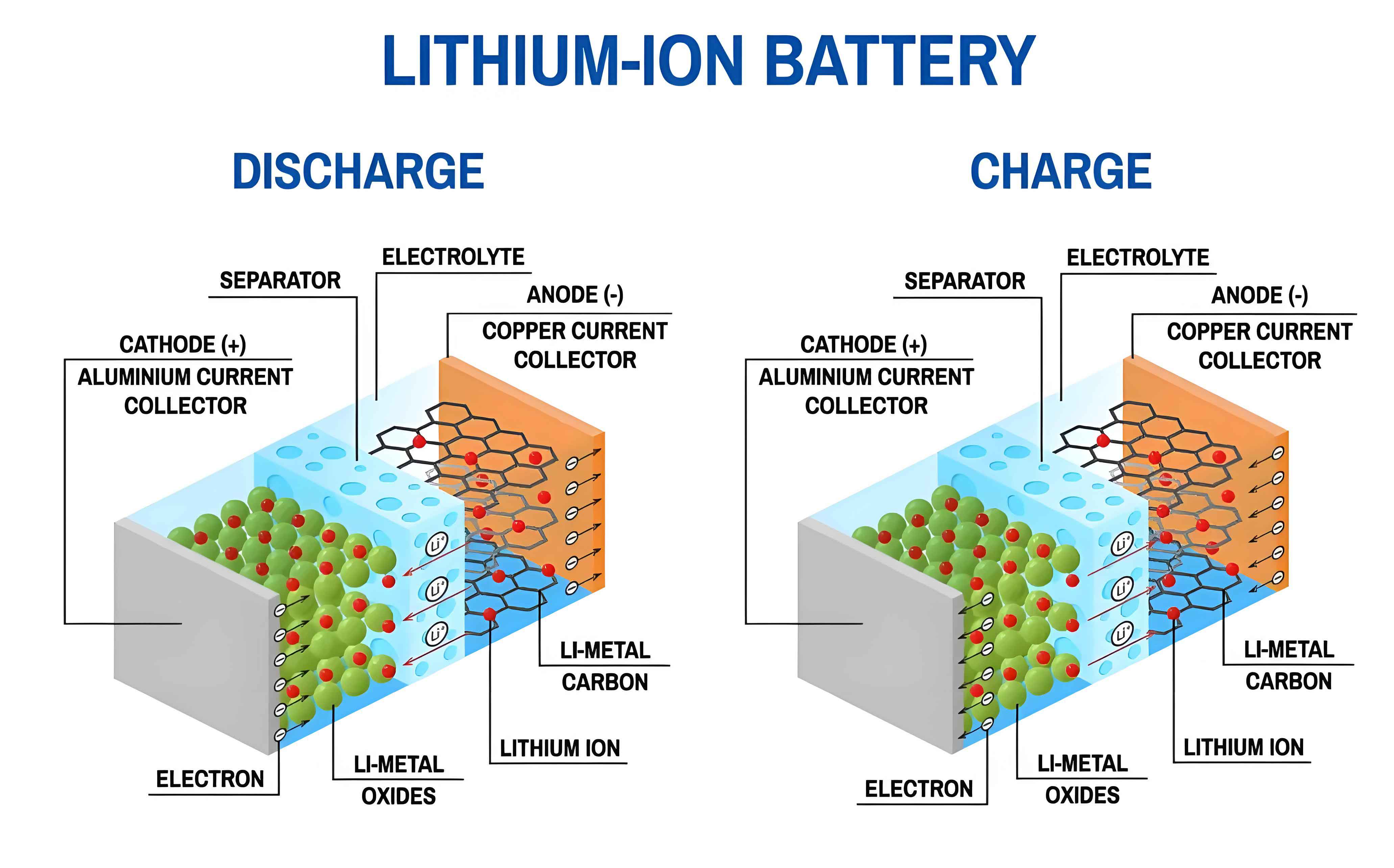
As a pivotal component within a li-ion battery, the separator fulfills the critical roles of preventing electrical contact between the cathode and anode, absorbing and immobilizing the electrolyte, and facilitating ionic conduction. The persistent quest for higher energy density and power in li-ion batteries is invariably accompanied by escalating safety concerns. Commercial polyolefin separators, while cost-effective, exhibit significant weaknesses, particularly their propensity for thermal shrinkage and melting at elevated temperatures, which can directly lead to internal short circuits and catastrophic thermal runaway. Therefore, the development of advanced, high-safety composite separators is paramount for the next generation of reliable and durable li-ion batteries. This article delves into the fundamental requirements for separators, reviews recent progress in designing composite separators with enhanced thermal stability, flame retardancy, and lithium dendrite suppression capabilities, and provides a perspective on future development directions.
Fundamental Requirements for Li-Ion Battery Separators
Although the separator is electrochemically inactive, its properties profoundly influence the internal resistance, rate capability, cycle life, and most importantly, the safety of a li-ion battery. An ideal separator must satisfy a multifaceted set of requirements.
1. Microstructure and Porosity: The separator must possess a uniform microporous structure. The pore size should be sufficiently small (typically sub-micron) to prevent electrode particle penetration, yet the pores must be interconnected to allow complete electrolyte filling and unhindered ion transport. The overall porosity, a measure of the void volume fraction, directly impacts electrolyte uptake and ionic conductivity. The tortuosity ($\tau$), defined as the ratio of the actual ion path length to the separator thickness, is a critical parameter influencing ionic resistance. The effective ionic conductivity ($\sigma_{eff}$) of an electrolyte-saturated separator is related to the bulk electrolyte conductivity ($\sigma_0$), porosity ($\epsilon$), and tortuosity by the Bruggeman relation:
$$\sigma_{eff} = \sigma_0 \cdot \frac{\epsilon}{\tau}$$
A high porosity and low tortuosity are desirable for minimizing ionic resistance in a li-ion battery.
2. Electrolyte Wettability and Compatibility: The separator material must exhibit excellent wettability by the organic carbonate-based electrolytes used in li-ion batteries. Poor wetting leads to incomplete pore filling, creating regions of high ionic resistance and inhomogeneous current distribution, which can trigger localized Li plating and dendrite growth. Furthermore, the separator must be chemically and electrochemically stable against the strongly reducing and oxidizing environments at the anode and cathode, respectively, throughout the operational voltage window of the li-ion battery.
3. Mechanical, Thermal, and Dimensional Stability: Adequate mechanical strength, especially puncture strength, is essential to withstand the winding pressure during cell assembly and to physically impede the penetration of growing lithium dendrites. Thermal stability is arguably the most critical safety-related property. The separator must maintain its dimensional integrity at elevated temperatures to prevent electrode contact. Commercial polyolefins like polyethylene (PE, ~135°C melt point) and polypropylene (PP, ~165°C melt point) fall short in this regard. The separator should also have a high melting point or decomposition temperature to act as a thermal fuse.
4. Interaction with Electrolyte Components: The surface chemistry of the separator can interact with Li+ ions, anions, and solvent molecules, affecting local Li+ transference number, electrolyte viscosity, and ultimately the stability of Li deposition. A separator that promotes uniform Li+ flux is highly desirable for safe operation of li-ion batteries, especially those employing lithium metal anodes.
The key parameter requirements for a functional li-ion battery separator are summarized in the table below.
| Parameter | Typical Requirement |
|---|---|
| Thickness | < 25 μm (for high energy density) |
| Porosity | 40% – 60% |
| Pore Size | 0.01 – 1 μm |
| Gurley Value (Air Permeability) | ~200 – 800 s/100 mL |
| Puncture Strength | > 300 gf |
| Thermal Shrinkage (at 90°C, 1h) | < 5% |
| Melting Point / Thermal Stability | > 150°C (ideally >200°C) |
| Electrolyte Uptake | > 100% |
| Wettability | Complete and rapid wetting |
Strategies for High-Safety Composite Separators
To overcome the limitations of plain polyolefin films, significant research focuses on engineering composite separators. These strategies can be broadly categorized into three interconnected themes: enhancing thermal resilience, imparting flame retardancy, and suppressing lithium dendrite growth.
1. Thermally Stable and High-Temperature Resistant Separators
The primary goal here is to replace or modify the low-melting-point polyolefin substrate with materials possessing intrinsic high thermal stability.
A. High-Temperature Polymer Substrates: Polymers with high glass transition or melting temperatures are excellent candidates. Electrospinning is a prevalent technique to fabricate non-woven membranes from such polymers, yielding high porosity and excellent electrolyte uptake.
- Polyimide (PI): PI stands out for its exceptional thermal stability (decomposition temperature >500°C) and mechanical strength. Electrospun PI nanofiber membranes show negligible shrinkage even at temperatures above 200°C, significantly enhancing the safety ceiling of the li-ion battery.
- Polyacrylonitrile (PAN) and Poly(vinylidene fluoride) (PVDF): These polymers offer better electrolyte affinity than polyolefins. Core-shell nanofibers, such as PAN core with PVDF shell, combine the thermal stability of PAN with the good electrochemical compatibility of PVDF. The ionic conductivity ($\sigma$) of such composite membranes can be superior to Celgard, as described by:
$$\sigma = n \cdot e \cdot \mu$$
where $n$ is the charge carrier concentration, $e$ is the elementary charge, and $\mu$ is the mobility, which is enhanced by good electrolyte uptake and polar surface interactions. - Cellulose-Based Membranes: Natural cellulose or bacterial cellulose offers a sustainable alternative with good thermal stability and superior wettability due to abundant hydroxyl groups.
B. Organic/Inorganic Composite Coatings: Coating a conventional PE or PP separator with a thermally robust layer is a commercially adopted approach.
- Ceramic Coatings (Al2O3, SiO2): A layer of ceramic particles (e.g., Al2O3, SiO2) bonded with a polymer binder (e.g., PVDF, carboxymethyl cellulose) is applied on one or both sides of the polyolefin separator. This coating significantly reduces thermal shrinkage by physically pinning the substrate and providing a heat-resistant barrier. The ceramic particles also improve electrolyte wettability. The thermal shutdown effect of the polyolefin core is often retained, while the ceramic layer maintains separator integrity at higher temperatures.
- Advanced Core-Shell Structures: More integrated designs involve in-situ growth or coating of inorganic layers on high-temperature polymer nanofibers. For instance, a conformal SiO2 layer on PI nanofibers creates a “ceramic” nano-encapsulation, yielding a separator with exceptional thermal stability and non-flammability.
The thermal properties of common separator materials are compared below:
| Material | Melting Point (°C) | Key Advantage |
|---|---|---|
| Polyethylene (PE) | ~135 | Low cost, shutdown feature |
| Polypropylene (PP) | ~165 | Good chemical stability |
| Poly(vinylidene fluoride) (PVDF) | ~170 | Good electrolyte affinity, polar |
| Polyacrylonitrile (PAN) | >300 (Decomposes) | High thermal stability |
| Polyimide (PI) | >400 (Decomposes) | Exceptional thermal/mechanical strength |
| Cellulose | >250 (Decomposes) | Excellent wettability, sustainable |
2. Flame-Retardant Functionalized Separators
Since the organic liquid electrolyte is a primary fuel in li-ion battery fires, incorporating flame-retardant (FR) agents into or onto the separator is a direct strategy to mitigate fire hazards.
A. FR Additive Coatings: Coating the separator with a layer containing FR compounds is common.
- Phosphorus-based FRs: Compounds like ammonium polyphosphate, phosphazenes, or organic phosphate esters can be incorporated into coating slurries. They typically act through a condensed-phase mechanism, promoting char formation on the separator surface upon heating, which insulates the underlying material and halts the supply of combustible volatiles to the flame.
- Halogen-based FRs: Although effective through a gas-phase radical quenching mechanism, environmental and toxicity concerns are driving a shift away from halogenated FRs in li-ion batteries.
- Inorganic FRs: Metal hydroxides like Al(OH)3 and Mg(OH)2 are attractive. Upon heating, they undergo endothermic decomposition, releasing water vapor which dilutes fuel gases and cools the system:
$$\text{2 Al(OH)}_{3} \xrightarrow{\Delta} \text{Al}_2\text{O}_3 + 3 \text{H}_2\text{O}$$
The residual metal oxide forms a protective barrier.
B. Intrinsically Flame-Retardant Polymers: Using polymers with inherent FR properties as the separator matrix or coating binder is another approach. Some polyphosphazenes and specially synthesized polymers with phosphonate groups can serve this purpose, eliminating the risk of FR additive leaching in the li-ion battery electrolyte.
3. Dendrite-Suppressing Composite Separators
Uncontrolled lithium dendrite growth, which can pierce the separator, is a major failure mode limiting the cycle life and safety of high-energy li-ion batteries, particularly those with lithium metal anodes. The separator can be engineered to mitigate this.
A. Mechanical Reinforcement: Enhancing the separator’s puncture strength provides a physical barrier against dendrite penetration. Coatings with hard ceramic nanoparticles (Al2O3, SiO2) or using ultra-strong polymer nanofibers (e.g., polyoxazole) increase the mechanical force required for a dendrite tip to breach the separator. The pressure ($P$) from a growing dendrite tip is related to its radius ($r$) and the separator’s yield strength ($\sigma_y$). A stronger separator increases the critical pressure for failure.
B. Regulating Lithium-Ion Flux: Homogeneous Li+ deposition is key to preventing dendrites. Separators can be designed to guide Li+ flux.
- Surface Charge Modification: Introducing negative surface charges (e.g., via polydopamine coating, sulfonated groups) can help repel anions and slightly attract Li+, potentially increasing the Li+ transference number ($t_{+}$) near the separator/anode interface. A higher $t_{+}$ reduces concentration polarization, a driver for dendritic growth. The transference number is defined as:
$$t_{+} = \frac{\sigma_{+}}{\sigma_{+} + \sigma_{-}}$$
where $\sigma_{+}$ and $\sigma_{-}$ are the cationic and anionic conductivities, respectively. - Structured Pores and Channels: Separators with vertically aligned or uniformly sized nanochannels (e.g., from anodized aluminum oxide templates or specific MOFs) can help normalize Li+ ion distribution, preventing localized hotspots of high current density that initiate dendrites.
C. Providing Lithiophilic Nucleation Sites: Coatings containing materials that are “lithiophilic” (e.g., ZnO, Ag nanoparticles, certain nitrogen-doped carbons) can lower the nucleation overpotential for lithium deposition. By providing abundant and uniform nucleation sites, these coatings promote the formation of a smooth, dense Li metal layer instead of dendritic structures, enhancing the safety and longevity of the li-ion battery.
Summary and Future Perspectives
The pursuit of high-safety composite separators for li-ion batteries is a multi-dimensional challenge balancing thermal resilience, mechanical robustness, electrochemical compatibility, and cost. While significant progress has been made—from ceramic-coated polyolefins to advanced electrospun nanofiber composites—the ideal universal separator remains a target for ongoing research. Future development will likely focus on the following directions:
1. Ultra-Thin yet Robust Separators: The drive for higher energy density in li-ion batteries demands thinner separators (<10 μm) without compromising safety. This requires advanced manufacturing techniques and materials with intrinsically high strength-to-thickness ratios, such as ultra-thin ceramic-polymer composite films or single-layer nanofiber mats.
2. Multifunctional Integrated Designs: The next generation of separators will likely combine several of the aforementioned features. For example, a separator could consist of a thin, high-temperature polymer scaffold coated with a layer that is simultaneously ceramic-reinforced (for thermal/mechanical stability), surface-modified (for high Li+ transference number), and contains lithiophilic sites. Such an integrated approach addresses multiple failure modes simultaneously in a li-ion battery.
3. Separator as a Component in Solid-State Batteries: The ultimate safety solution may lie in solid-state li-ion batteries. Here, the traditional separator concept evolves into a solid electrolyte (SE) layer. Composite solid electrolytes, often employing a porous polymer matrix (like PI or PVDF) infiltrated with a ceramic or glassy SE, are a promising avenue. This “separator” would be completely non-flammable and mechanically rigid enough to block dendrites. The challenge is to achieve high room-temperature ionic conductivity ($>10^{-4}$ S/cm), excellent interfacial contact, and scalable processing. The conductivity in such composites can be modeled by percolation theory:
$$\sigma_{composite} = \sigma_{filler} \cdot (V – V_c)^t$$
for $V > V_c$, where $V$ is the volume fraction of the conductive filler (solid electrolyte), $V_c$ is the percolation threshold, and $t$ is a critical exponent.
4. Smart Separators: Research is exploring separators with “smart” functionalities, such as irreversible thermal shutdown that permanently blocks ion transport upon reaching a critical temperature, or responsive materials that can self-heal minor punctures. While in early stages, these concepts could provide an additional layer of safety for li-ion batteries.
In conclusion, the development of high-safety composite separators is a dynamic and critical frontier in li-ion battery technology. Moving beyond simple polyolefin films to engineered, multifunctional composites is essential for realizing the full potential of high-energy-density storage while ensuring the operational safety required for large-scale applications in electric vehicles and grid storage. The continued synergy between materials science, electrochemistry, and processing engineering will be key to unlocking these advanced safety solutions for the future of li-ion batteries.