
As I reflect on the rapid advancement of renewable energy systems, the solar inverter stands out as a cornerstone of modern photovoltaic (PV) installations. From its humble beginnings in ancillary industries to its current role as the heart of solar power generation, the solar inverter has undergone a remarkable transformation. In this article, I will delve into the technical development trajectory of solar inverters, exploring their classifications, functionalities, and future directions. I aim to provide a comprehensive overview, enriched with tables and formulas to summarize key concepts, while emphasizing the term “solar inverter” throughout to underscore its centrality in the energy landscape.
The journey of the solar inverter began long before the PV industry’s rise. Initially, inverter technology was primarily employed in sectors such as rail transportation and power supplies, where AC-to-DC or DC-to-AC conversion was necessary. However, with the emergence of the photovoltaic industry, the solar inverter became the core device in新能源发电 systems, gaining widespread recognition. In developed regions like Europe and North America, where environmental consciousness is deeply ingrained, the solar market matured early, particularly in residential applications. Household solar systems flourished, and residential solar inverters are now treated as commonplace appliances, achieving high penetration rates. This shift highlights how the solar inverter has evolved from a niche component to a household essential, driving the adoption of clean energy.
At its essence, a solar inverter converts the direct current (DC) electricity generated by PV modules into alternating current (AC) for grid integration. Its performance and reliability determine the quality and efficiency of power generation, positioning it as the pivotal element in any solar power system. From a technical standpoint, the relationship between the inverter and the grid defines several primary categories: grid-tied inverters, off-grid inverters, bidirectional inverters, and microgrid inverters. Among these, grid-tied solar inverters dominate the market share and serve as the foundation for all inverter technological developments. Compared to other types, grid-tied solar inverters are relatively simpler in design, focusing primarily on PV input and grid output. The key technical metrics for these devices revolve around safe, reliable, efficient, and high-quality power output. National standards for solar inverter grid-connection technical conditions universally emphasize these aspects, though specific parameters may vary. For grid-tied solar inverters, all technical requirements are derived from grid demands for distributed generation systems—top-down mandates covering voltage, frequency specifications, power quality, fault response controls, and grid-connection protocols. Essentially, a grid-tied solar inverter must merely comply with grid regulations; it faces no internal demands from the generation system itself. Technically, it operates on a “grid-tied generation” principle: it generates power when grid conditions are met, without bearing responsibility for grid stability, security, or energy management within the PV system. According to international statistics, over 90% of installed and operational PV systems are grid-connected, utilizing grid-tied solar inverters. The system configuration typically involves PV panels, DC switches, the solar inverter, metering devices, and the public grid, all monitored by control systems.
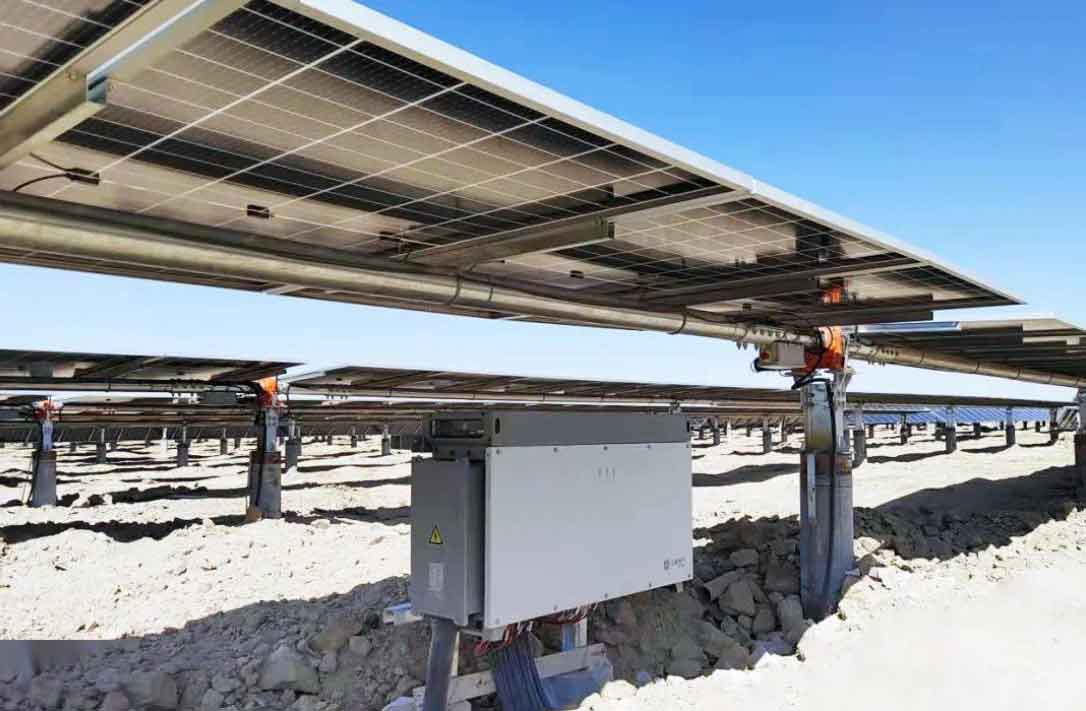
In contrast to grid-tied solar inverters, off-grid solar inverters are designed for systems disconnected from the utility grid, directly powering loads. These inverters find application in remote areas lacking grid access, regions with poor grid conditions, or scenarios with self-generation and self-consumption needs. Off-grid systems emphasize “self-generation and self-use,” but their limited adoption has resulted in scant technological research and development. Internationally, few technical standards exist for off-grid solar inverters, leading to a decline in their study. However, the functionality and technology involved in off-grid solar inverters are far from simple, especially regarding integration with storage batteries. The control and management of entire off-grid systems are more complex than those of grid-tied counterparts. In fact, a system comprising an off-grid solar inverter, PV panels, batteries, and loads constitutes a rudimentary microgrid—an isolated “island system” operating independently from the main grid.
Building upon off-grid technology, bidirectional solar inverters merge features of both grid-tied and off-grid inverters. They are employed in local power networks or hybrid systems where generation sources operate in parallel with the grid. Although currently niche, these systems represent the embryonic form of microgrids, aligning with future distributed generation architectures and business models. Thus, bidirectional solar inverters serve as a bridge between present grid-tied applications and forthcoming local microgrid implementations. In mature solar markets, microgrid applications at household or small-scale community levels are gradually emerging. Governments incentivize local generation, storage, and consumption networks, prioritizing self-use of renewable energy and drawing from the grid only when necessary. Consequently, bidirectional solar inverters must incorporate advanced control and energy management functions, such as battery charge-discharge control, grid-tied/off-grid operational strategies, and reliable load supply protocols. In summary, bidirectional solar inverters assume a broader system-level role in control and management, transcending mere grid or load requirements.
Looking ahead, microgrids centered on renewable generation represent a key direction for grid evolution. In this paradigm, local microgrids will interact dynamically with the main grid, often operating independently in islanded mode and connecting only during power surplus or deficit periods. Currently, due to immature technical and policy frameworks, microgrids are not widely deployed, with only a few demonstration projects—mostly grid-tied—in operation. Microgrid solar inverters, embodying the technical traits of bidirectional inverters, assume critical grid management functions. They act as integrated inverter-control-management units, handling local energy management, load control, battery management, inversion, and protection. Working in tandem with microgrid energy management systems (EMS), they form the core of microgrid infrastructure. Compared to the initial grid-tied solar inverters, microgrid solar inverters have evolved beyond mere inversion to encompass microgrid management, addressing system-level challenges. For instance, in a typical microgrid setup—such as one with diesel generators as base supply, renewable sources as supplements, and managed by an EMS—contactors controlled by the system can shed non-critical loads during islanded operation to maintain stability and ensure critical load security.
Presently, most manufacturers supply grid-tied solar inverters, with limited offerings of off-grid and bidirectional types. Only a handful of large international firms have introduced microgrid solar inverters, which lack standardized technical and certification benchmarks, leading to varied functionalities and performance levels. In the residential segment, a few European leaders like SMA and KACO offer such products, while domestic players are yet to catch up. This disparity underscores the ongoing innovation in solar inverter technology, driven by the need for smarter, more integrated energy solutions.
To elucidate the technical progression of solar inverters, I will now delve into detailed comparisons and mathematical formulations. A fundamental aspect of any solar inverter is its conversion efficiency, which can be expressed as:
$$ \eta = \frac{P_{\text{out}}}{P_{\text{in}}} \times 100\% $$
where $\eta$ represents efficiency, $P_{\text{out}}$ is the AC output power, and $P_{\text{in}}$ is the DC input power from PV modules. For grid-tied solar inverters, this efficiency is crucial for maximizing energy yield, often measured under various conditions like European efficiency or California Energy Commission (CEC) efficiency. Additionally, power quality metrics such as total harmonic distortion (THD) are vital, given by:
$$ \text{THD} = \frac{\sqrt{\sum_{h=2}^{\infty} V_h^2}}{V_1} \times 100\% $$
where $V_h$ is the voltage harmonic of order $h$, and $V_1$ is the fundamental voltage. Grid standards typically mandate THD below 5% for solar inverters to ensure grid compatibility.
Another key formula involves the maximum power point tracking (MPPT) efficiency, essential for optimizing PV output. The MPPT algorithm adjusts the operating point to extract maximum power, defined as:
$$ \eta_{\text{MPPT}} = \frac{P_{\text{actual}}}{P_{\text{max}}} \times 100\% $$
where $P_{\text{actual}}$ is the power harvested by the solar inverter, and $P_{\text{max}}$ is the theoretical maximum power from the PV array under given irradiance and temperature. Modern solar inverters achieve MPPT efficiencies above 99%, showcasing technological strides.
For bidirectional and microgrid solar inverters, energy management equations become prominent. Consider a system with battery storage: the state of charge (SOC) dynamics can be modeled as:
$$ \text{SOC}(t) = \text{SOC}_0 + \frac{1}{C} \int_0^t I_b(\tau) \, d\tau $$
where $\text{SOC}_0$ is the initial SOC, $C$ is battery capacity, and $I_b$ is battery current (positive for charging, negative for discharging). The solar inverter must regulate this process to balance generation, storage, and consumption.
To summarize the classifications and characteristics of solar inverters, I present the following table:
| Type | Key Function | Primary Applications | Technical Complexity | Market Share | Standards Availability |
|---|---|---|---|---|---|
| Grid-Tied Solar Inverter | DC to AC conversion for grid integration | Residential, commercial, utility-scale PV systems | Moderate | ~90% | Well-established (e.g., IEC 62109, IEEE 1547) |
| Off-Grid Solar Inverter | DC to AC conversion for isolated loads | Remote areas, backup power, standalone systems | High (due to battery integration) | <5% | Limited |
| Bidirectional Solar Inverter | Dual-mode operation (grid-tied and off-grid) | Hybrid systems, preliminary microgrids | High | <3% | Emerging |
| Microgrid Solar Inverter | Integrated inversion, control, and energy management | Microgrid demonstrations, smart communities | Very High | <2% | Nascent |
This table illustrates how the solar inverter has diversified, with increasing complexity aligned with system integration needs. Furthermore, the evolution of solar inverter topologies is worth noting. Early solar inverters often used central inverter designs, but string and multi-string architectures have gained popularity for scalability and fault tolerance. More recently, module-level power electronics (MLPE) like microinverters and DC optimizers have emerged, though they represent a different segment. For the purpose of this discussion, I focus on the mainstream solar inverter categories outlined above.
Another critical aspect is the grid-support functions of modern solar inverters. With the rise of distributed generation, grid codes now require solar inverters to provide ancillary services such as voltage regulation, frequency response, and low-voltage ride-through (LVRT). Mathematically, LVRT capability can be described by a voltage-time characteristic, where the solar inverter must remain connected during grid faults if the voltage stays above a defined curve. For example, a typical LVRT curve might stipulate that for a voltage dip to 0% of nominal, the solar inverter should stay connected for up to 0.15 seconds, while for a dip to 50%, it should remain connected indefinitely. These requirements are encapsulated in formulas like:
$$ V_{\text{min}}(t) = V_0 – k \cdot t $$
where $V_{\text{min}}$ is the minimum permissible voltage, $V_0$ is the nominal voltage, $k$ is a decay constant, and $t$ is time. Compliance with such curves ensures grid stability, highlighting how the solar inverter’s role has expanded from simple conversion to active grid participation.
In terms of sizing and selection, engineers often use formulas to match a solar inverter to a PV array. The DC-to-AC ratio, or inverter loading ratio (ILR), is given by:
$$ \text{ILR} = \frac{P_{\text{DC, rated}}}{P_{\text{AC, rated}}} $$
where $P_{\text{DC, rated}}$ is the rated DC power of the PV array, and $P_{\text{AC, rated}}$ is the rated AC output of the solar inverter. Typical ILR values range from 1.1 to 1.3, allowing for overloading conditions to maximize energy capture. Additionally, the ambient temperature derating factor for a solar inverter can be expressed as:
$$ P_{\text{derated}} = P_{\text{rated}} \times \left(1 – \frac{T_{\text{ambient}} – T_{\text{rated}}}{T_{\text{factor}}}\right) $$
where $P_{\text{derated}}$ is the derated power, $T_{\text{ambient}}$ is the operating temperature, $T_{\text{rated}}$ is the rated temperature (often 25°C), and $T_{\text{factor}}$ is a manufacturer-specific coefficient. These calculations underscore the importance of proper solar inverter specification for optimal performance.
As we transition towards microgrids, the solar inverter’s functionality becomes even more multifaceted. In a microgrid context, the solar inverter must coordinate with other distributed energy resources (DERs) via an EMS. A simplified energy balance equation for a microgrid with a solar inverter, battery, and loads is:
$$ P_{\text{PV}}(t) + P_{\text{batt}}(t) + P_{\text{grid}}(t) = P_{\text{load}}(t) + P_{\text{loss}}(t) $$
where $P_{\text{PV}}$ is power from PV (processed by the solar inverter), $P_{\text{batt}}$ is battery power (positive for discharge), $P_{\text{grid}}$ is grid power (positive for import), $P_{\text{load}}$ is load demand, and $P_{\text{loss}}$ accounts for system losses. The solar inverter, especially in bidirectional or microgrid forms, actively manages these flows to minimize grid dependence or optimize economics.
To further compare technical parameters across solar inverter types, consider this table on key performance indicators (KPIs):
| KPI | Grid-Tied Solar Inverter | Off-Grid Solar Inverter | Bidirectional Solar Inverter | Microgrid Solar Inverter |
|---|---|---|---|---|
| Efficiency ($\eta$) | >98% (peak) | >95% | >96% | >95% |
| MPPT Efficiency | >99% | >98% | >99% | >99% |
| THD | <3% | <5% | <3% | <3% |
| Grid Support Functions | No | Limited | Yes (advanced) | |
| Battery Management | None | Basic | Integrated | Comprehensive |
| Communication Protocols | Modbus, SunSpec, etc. | Proprietary | CAN, Ethernet, etc. | IEC 61850, DNP3, etc. |
| Typical Power Range | 1 kW – 1 MW+ | 500 W – 10 kW | 3 kW – 50 kW | 10 kW – 100 kW |
These KPIs reveal the escalating demands on solar inverter technology as we move from grid-tied to microgrid applications. The solar inverter must not only convert power efficiently but also communicate intelligently and manage complex energy flows.
In discussing the development roadmap, it’s clear that the solar inverter has evolved from a passive device to an active grid citizen. Initially, grid-tied solar inverters focused on “fit-and-forget” operation, but now, with bidirectional and microgrid solar inverters, they enable “prosumer” models where users generate, store, and trade electricity. This shift is fueled by advancements in semiconductor technology (e.g., silicon carbide and gallium nitride devices), digital signal processing, and software algorithms. For instance, the efficiency gains in solar inverters can be partly attributed to improved switching losses, modeled as:
$$ P_{\text{sw}} = \frac{1}{2} V_{\text{ds}} I_{\text{ds}} (t_{\text{rise}} + t_{\text{fall}}) f_{\text{sw}} $$
where $P_{\text{sw}}$ is switching power loss, $V_{\text{ds}}$ is drain-source voltage, $I_{\text{ds}}$ is drain-source current, $t_{\text{rise}}$ and $t_{\text{fall}}$ are rise and fall times, and $f_{\text{sw}}$ is switching frequency. Wide-bandgap semiconductors reduce these losses, allowing solar inverters to operate at higher frequencies with better efficiency.
Moreover, the integration of energy storage with solar inverters is a game-changer. The levelized cost of storage (LCOS) often guides such integrations, calculated as:
$$ \text{LCOS} = \frac{\sum_{t=0}^{N} \frac{I_t + M_t}{(1+r)^t}}{\sum_{t=0}^{N} \frac{E_t}{(1+r)^t}} $$
where $I_t$ is investment cost, $M_t$ is maintenance cost, $E_t$ is energy discharged, $r$ is discount rate, and $N$ is system lifetime. Solar inverters with built-in storage management help optimize LCOS, making systems more economical.
Looking forward, the solar inverter will continue to be pivotal in smart grids and virtual power plants (VPPs). In VPPs, aggregated solar inverters can provide grid services collectively, requiring sophisticated coordination. The control logic for a solar inverter in a VPP might involve real-time pricing signals, expressed as:
$$ P_{\text{setpoint}} = f(\lambda(t), \text{SOC}, P_{\text{forecast}}) $$
where $P_{\text{setpoint}}$ is the power setpoint for the solar inverter, $\lambda(t)$ is electricity price, SOC is battery state of charge, and $P_{\text{forecast}}$ is predicted generation or load. This exemplifies how the solar inverter is becoming an intelligent node in a larger energy ecosystem.
In conclusion, the technical development of solar inverters mirrors the broader transition towards decentralized, resilient, and sustainable energy systems. From simple grid-tied devices to complex microgrid managers, the solar inverter has proven to be adaptable and indispensable. As I envision the future, innovations in artificial intelligence, blockchain for energy trading, and advanced materials will further transform solar inverters into holistic energy hubs. The journey of the solar inverter is far from over; it will undoubtedly remain at the forefront of the renewable energy revolution, driving efficiency, reliability, and integration. By embracing this evolution, we can harness solar power more effectively, paving the way for a cleaner, smarter grid.