
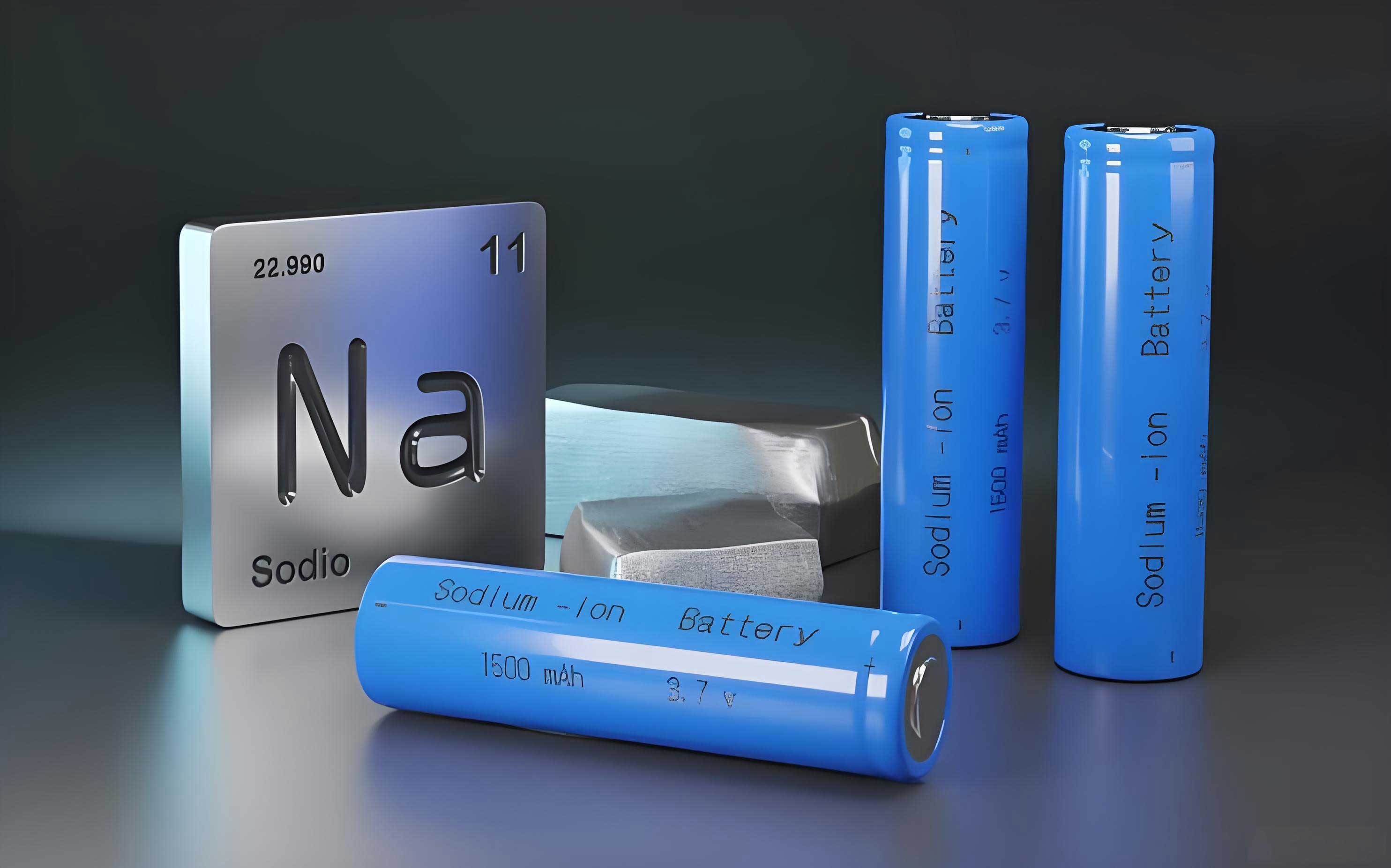
As a researcher in the field of electrochemical energy storage, I find the development of the sodium-ion battery to be a compelling and necessary technological pursuit. While lithium-ion batteries dominate the market, concerns regarding the geopolitical and economic constraints of lithium resources drive the search for complementary technologies. The sodium-ion battery, leveraging the abundant and globally distributed sodium, presents a viable alternative. Its operational principle is analogous to that of the lithium-ion counterpart, involving the shuttling of ions between a cathode and an anode through an electrolyte medium during charge and discharge cycles. The electrolyte is arguably the lifeblood of the battery, governing ionic conductivity, dictating the electrochemical stability window, and critically influencing the formation and properties of the solid-electrolyte interphase (SEI) on the anode and the cathode-electrolyte interphase (CEI) on the cathode. These interphases are paramount for the long-term cyclability and safety of any battery. Among various options, organic liquid electrolytes are currently the most prominent for the sodium-ion battery due to their relatively wide electrochemical stability window and high ionic conductivity. This review aims to comprehensively dissect the current research progress in organic electrolytes for the sodium-ion battery, focusing on the triumvirate of components: the solvent, the sodium salt, and functional additives. I will discuss how each component and their intricate interplay govern bulk electrolyte properties, interfacial chemistry, and ultimately, the electrochemical performance of the sodium-ion battery.
1. Solvents: The Foundation of Ion Transport
The primary role of the solvent is to dissolve the sodium salt to create a conductive medium. An ideal solvent for a sodium-ion battery must possess a high dielectric constant to effectively dissociate the salt, low viscosity to facilitate rapid ion transport, a wide electrochemical window to withstand high-voltage operation, and good thermal and chemical stability. The choice of solvent directly impacts the solvation structure of the Na+ ion, which in turn influences the desolvation energy at the electrode interface and the decomposition pathways that form the SEI/CEI.
1.1 Carbonate-Based Solvents: The Legacy from Li-ion Technology
Drawing from the extensive knowledge base of lithium-ion batteries, carbonate esters are the most commonly employed solvents in sodium-ion battery research. They are generally categorized into cyclic carbonates (e.g., ethylene carbonate – EC, propylene carbonate – PC) and linear carbonates (e.g., dimethyl carbonate – DMC, diethyl carbonate – DEC, ethyl methyl carbonate – EMC). Cyclic carbonates like EC and PC have high dielectric constants, promoting salt dissociation, but他们也 have high viscosity. Linear carbonates have lower viscosity but poorer salt-dissociating ability. Therefore, solvent mixtures are almost universally used to balance these properties. For instance, EC is often mixed with a linear carbonate like DEC or EMC; the high dielectric constant of EC aids dissociation, while the low viscosity of the linear carbonate enhances mobility.
The physical and electrochemical properties of common carbonate solvents are summarized in Table 1. The Lowest Unoccupied Molecular Orbital (LUMO) energy is a key indicator; a higher LUMO energy generally suggests greater resistance to reduction at the anode. Conversely, the Highest Occupied Molecular Orbital (HOMO) energy indicates oxidation stability at the cathode.
| Solvent | Abbreviation | Melting Point (°C) | Boiling Point (°C) | Viscosity @25°C (cP) | Dielectric Constant @25°C | ELUMO (eV) |
|---|---|---|---|---|---|---|
| Ethylene Carbonate | EC | 36.4 | 248 | ~2.1 | ~89.8 | ~1.18 |
| Propylene Carbonate | PC | -48.8 | 242 | ~2.5 | ~64.9 | ~1.24 |
| Dimethyl Carbonate | DMC | 4.6 | 91 | ~0.59 | ~3.1 | ~1.05 |
| Diethyl Carbonate | DEC | -74.3 | 126 | ~0.75 | ~2.8 | ~1.29 |
| Ethyl Methyl Carbonate | EMC | -53.0 | 110 | ~0.65 | ~3.0 | ~1.25 |
Table 1: Physical and electrochemical properties of common carbonate solvents for sodium-ion battery electrolytes.
A critical challenge with carbonate-based electrolytes in sodium-ion batteries is the instability of the formed SEI on many anode materials, particularly hard carbon (HC). The SEI tends to be more soluble and less robust compared to that in lithium-ion systems, leading to continuous electrolyte decomposition and capacity fade.
1.2 Ether-Based Solvents: Enabling Unique Chemistries
Ether solvents, such as 1,2-dimethoxyethane (DME), diglyme, and tetraglyme, present a fascinating alternative for sodium-ion batteries. While their oxidation stability is inferior to carbonates, limiting their use with high-voltage cathodes, they exhibit remarkable compatibility with certain anodes. Unlike in lithium-ion batteries, sodium ions do not readily intercalate into graphite in conventional carbonate electrolytes. However, in ether-based electrolytes, Na+ ions can co-intercalate with solvent molecules into graphite, enabling reversible capacity. More importantly for practical applications, ethers often lead to the formation of thinner, more compact, and more stable SEI layers on hard carbon anodes. This results in higher initial Coulombic efficiency and superior cycling stability in many cases.
The improved performance is attributed to the different solvation structure and reduction behavior. Ethers coordinate with Na+ differently than carbonates, and their decomposition products form an SEI rich in organic sodium compounds and sodium alkoxides, which is more flexible and adherent. The ionic conductivity in ether-based electrolytes can be very high due to the low viscosity of solvents like DME. The solvation energy of Na+ in ethers is also generally lower, which can be approximated by the Born solvation energy equation, highlighting the role of solvent dielectric constant (εr) and ion radius (r):
$$ \Delta G_{solv} \propto -\frac{q^2}{8\pi\epsilon_0 r} \left(1 – \frac{1}{\epsilon_r}\right) $$
where \(q\) is the ion charge, and \(\epsilon_0\) is the vacuum permittivity. A lower absolute value of \(\Delta G_{solv}\) for Na+ in ethers compared to carbonates can facilitate easier desolvation at the electrode interface, enhancing rate capability.
1.3 Phosphate-Based Solvents: The Quest for Safety and High Voltage
Safety remains a paramount concern for all battery technologies. Conventional carbonate and ether solvents are highly flammable. Phosphorus-based solvents, such as trimethyl phosphate (TMP) and triethyl phosphate (TEP), are intrinsically non-flammable, offering a pathway to safer sodium-ion batteries. The main challenge has been their poor compatibility with graphite or hard carbon anodes, often leading to excessive reduction and poor SEI formation.
Recent strategies have overcome this hurdle. Using high-concentration sodium salts or incorporating effective film-forming additives can promote the formation of a stable SEI on hard carbon in phosphate-based electrolytes. Furthermore, phosphate solvents, especially when fluorinated (e.g., tris(2,2,2-trifluoroethyl) phosphate – TFEP), exhibit enhanced oxidation stability. This makes them promising candidates for high-voltage sodium-ion battery cathodes operating above 4.0 V vs. Na/Na+. The fluorinated phosphate solvents not only suppress oxidation at the cathode but also contribute to forming a stable, inorganic-rich CEI, mitigating transition metal dissolution and surface reconstruction. This addresses a key limitation in developing high-energy-density sodium-ion batteries.
2. Sodium Salts: The Source of Charge Carriers
The sodium salt is the source of the charge-carrying Na+ ions. Its anion significantly influences the ionic conductivity, electrochemical stability, aluminum current collector corrosion, and the chemical composition of the SEI/CEI. An ideal salt should have high dissociation constant, good chemical and electrochemical stability, and be low-cost.
2.1 Common Sodium Salts and Their Properties
Several sodium salts have been investigated extensively. Their key characteristics are compared in Table 2.
| Sodium Salt | Chemical Formula | Ionic Conductivity (Typical) | Oxidative Stability | Al Corrosion | Remarks |
|---|---|---|---|---|---|
| Sodium Hexafluorophosphate | NaPF6 | High | High (~4.5V) | Passivates Al | Most common; hygroscopic; thermally decomposes to PF5 |
| Sodium Perchlorate | NaClO4 | High | High | Corrosive | Excellent stability but strong oxidizer; safety concerns |
| Sodium Bis(trifluoromethanesulfonyl)imide | NaTFSI | Medium-High | Medium (~4.0V) | Corrosive | Thermally stable; corrosive to Al; used with coated Al |
| Sodium Bis(fluorosulfonyl)imide | NaFSI | High | Lower (~3.8V) | Less corrosive | Promotes anion-derived SEI; good for high concentration |
| Sodium Triflate | NaOTf / NaCF3SO3 | Medium | Medium | Corrosive | Less common |
Table 2: Comparison of common sodium salts used in sodium-ion battery electrolytes.
The anion decomposition plays a crucial role in forming the inorganic component of the SEI. For instance, PF6– reduction leads to NaF and NaxPOyFz species, while FSI– reduction yields NaF, Na2O, and sulfonamide-based species. A stable, NaF-rich inner SEI layer is often associated with low interfacial resistance and long cycle life. The compatibility of a specific salt with an electrode material is not universal. For example, while NaPF6 might form a stable CEI on a layered oxide cathode, NaClO4 could lead to a thicker, more resistive layer due to continuous oxidative decomposition.
2.2 The Critical Role of Salt Concentration
Moving beyond the salt identity, its concentration is a powerful lever to tune electrolyte properties and interfacial chemistry. We can categorize electrolytes based on salt concentration (C):
- Conventional Electrolyte (C ≈ 1 M): The standard approach, offering a good balance of conductivity, viscosity, and cost.
- High-Concentration Electrolyte (HCE, C > 3 M): As the salt concentration increases, the solvent molecules become fully coordinated to Na+ ions, and anions are forced into the primary solvation shell. This creates a solvation structure dominated by contact ion pairs (CIPs) and aggregates (AGGs). The remarkable outcome is that the anion, rather than the solvent, preferentially reduces at the anode, forming a robust, inorganic-rich SEI. This often leads to dramatically improved stability of reactive anodes (like sodium metal) and high-voltage cathodes. However, HCEs suffer from high viscosity, poor wetting, and high cost.
- Localized High-Concentration Electrolyte (LHCE): This is an elegant solution to the drawbacks of HCEs. A diluent, typically a hydrofluoroether (e.g., 1,1,2,2-Tetrafluoroethyl-2,2,3,3-tetrafluoropropyl ether, TTE), is added to an HCE. The diluent is non-polar and does not coordinate with Na+, thus it dilutes the bulk electrolyte concentration, lowering viscosity and cost, while maintaining the local high-concentration solvation structure around the Na+ ion. The formula for effective LHCE design can be conceptualized as maintaining a high local salt/solvent ratio despite a lower overall salt concentration.
- Low-Concentration Electrolyte (LCE, C < 1 M): Interestingly, the larger ionic radius and lower Lewis acidity of Na+ compared to Li+ result in a smaller Stokes radius and lower desolvation energy. This theoretically allows for functional electrolytes at very low salt concentrations. Ultra-low concentration electrolytes (e.g., 0.3 M) have shown promise in enhancing low-temperature performance by forming a more porous, organic-dominated SEI that may facilitate ion transport at low temperatures, while significantly reducing cost.
The ionic conductivity (σ) of an electrolyte as a function of concentration (C) typically follows a non-linear trend described by a modified version of the Nernst-Einstein relationship, considering ion association:
$$ \sigma = F \sum_i |z_i| C_i u_i $$
where \(F\) is Faraday’s constant, \(z_i\) is the charge number, \(C_i\) is the concentration, and \(u_i\) is the mobility of ion \(i\). At very high concentrations, despite high carrier density \(C_i\), the drastically reduced mobility \(u_i\) (due to high viscosity) can lead to a plateau or even decrease in conductivity.
3. Additives: The Performance Modifiers
Additives are compounds added in small quantities (typically < 5 wt%) to the base electrolyte to address specific shortcomings. They are a cost-effective way to drastically improve the performance and lifespan of a sodium-ion battery without redesigning the bulk electrolyte.
3.1 Film-Forming Additives for Anode Protection
These additives have a higher reduction potential (lower LUMO energy) than the base solvents. They therefore decompose preferentially during the initial charging cycles, forming a tailored, stable SEI that prevents further, detrimental reduction of the main solvents.
- Fluoroethylene Carbonate (FEC): The most ubiquitous additive in sodium-ion battery research. Its decomposition forms a NaF-rich, compact SEI layer on anodes like hard carbon and sodium metal, significantly improving initial Coulombic efficiency and cycle life. However, its effectiveness can depend on other factors like the binder used.
- Sodium Difluoro(oxalato)borate (NaDFOB) & Sodium Difluorophosphate (NaPO2F2): These sodium salts themselves act as additives. They decompose to form borate- and phosphate-rich interface layers, respectively, which are effective in stabilizing the anode interface and suppressing gas generation.
- Tris(trimethylsilyl) Phosphite (TMSP): This additive forms a thin, uniform SEI rich in Si-O-F species. These species have a high electron work function, which effectively blocks electron tunneling, thereby preventing continuous SEI growth and sodium consumption.
3.2 Cathode Protection and High-Voltage Additives
These additives have a lower oxidation potential (higher HOMO energy) than the base solvents. They oxidize first at the high-voltage cathode, forming a protective CEI that suppresses oxidative decomposition of the electrolyte and transition metal dissolution.
- Succinic Anhydride (SA) & Diglycolic Anhydride (DGA): These cyclic anhydrides are effective high-voltage additives. They preferentially oxidize to form a uniform, passivating CEI layer, which stabilizes the cathode structure, particularly by suppressing oxygen loss from lattice oxygen redox reactions in high-capacity layered oxides.
- 1,3-Propane Sultone (PS): A common additive that forms a sulfate-rich CEI, helping to trap dissolved transition metal ions and prevent their migration to the anode.
3.3 Multifunctional and Synergistic Additive Blends
The most advanced electrolyte formulations employ blends of additives that work synergistically to protect both electrodes simultaneously. For example, a combination of FEC (for anode SEI), PS (for cathode CEI and metal trapping), and 1,3,2-Dioxathiolane 2,2-dioxide (DTD, another cathode stabilizer) has been shown to provide superior cycle life in full sodium-ion battery cells. The design principle is to create a “cocktail” where each additive addresses a specific failure mechanism, and their decomposition products may interact to form an interphase with optimal mechanical and ionic transport properties.
The effect of an additive can be quantified by its impact on overpotential and cycle life. The improvement in cycle life can be modeled empirically by considering the reduction in parasitic current (ipar) due to a more stable SEI:
$$ Q_{loss, cycle} = \int i_{par} \, dt $$
where \(Q_{loss, cycle}\) is the irreversible capacity loss per cycle. An effective additive minimizes \(i_{par}\) over thousands of cycles.
4. Conclusion and Perspective
In summary, the development of organic electrolytes is central to the advancement of the sodium-ion battery technology. Through systematic investigation and innovative design of solvents, sodium salts, and additives, significant progress has been made in improving energy density, cycle life, rate capability, and safety. The solvation structure, dictated by the interplay of all three components, is the key to understanding and controlling interfacial chemistry. Looking forward, several research directions appear critical for the commercialization of the sodium-ion battery:
- Solvent Innovation: Beyond carbonates and ethers, the discovery and molecular design of new solvent classes with inherently high oxidation stability, low flammability, and the ability to form stable interfaces are needed. This is particularly important for unlocking the full potential of high-voltage cathodes in the sodium-ion battery.
- Salt and Concentration Engineering: Further exploration of new anion chemistries and the optimization of concentration regimes (LHCE, LCE) will continue to yield performance benefits. Understanding the precise link between local solvation structure and interfacial composition at a molecular level is essential.
- Additive Science: The rational design of multi-functional additive packages, potentially guided by computational screening and machine learning, will be crucial for solving complex, interrelated degradation mechanisms in full cells. The quest is for additives that synergistically form ultra-thin, conductive, and mechanically robust SEI/CEI layers.
- Holistic Compatibility: Electrolyte development cannot occur in isolation. It must be integrated with the design of next-generation cathode and anode materials, as well as compatible binders and separators, for the sodium-ion battery system.
The journey of the sodium-ion battery from lab to market is well underway. Its success will hinge not only on cost and resource advantages but also on achieving performance parity with incumbent technologies. A deep understanding and continuous innovation in organic electrolyte chemistry will undoubtedly be a cornerstone of this endeavor, paving the way for the sodium-ion battery to become a pillar of a sustainable energy future.