
The efficient utilization of green and clean energy places greater demands on energy storage technologies. Among various options, electrochemical energy storage stands out due to its high energy conversion efficiency, long cycle life, and high energy and power density. Lithium-ion batteries (LIBs), with their superior performance, dominate markets such as electric vehicles and portable electronics. However, limited lithium reserves, uneven global distribution, and high cost have spurred the development of novel secondary ion batteries. Sodium, sharing similar physicochemical properties with lithium as a Group 1 element, is abundant and low-cost, making sodium-ion batteries one of the most promising alternatives to LIBs.
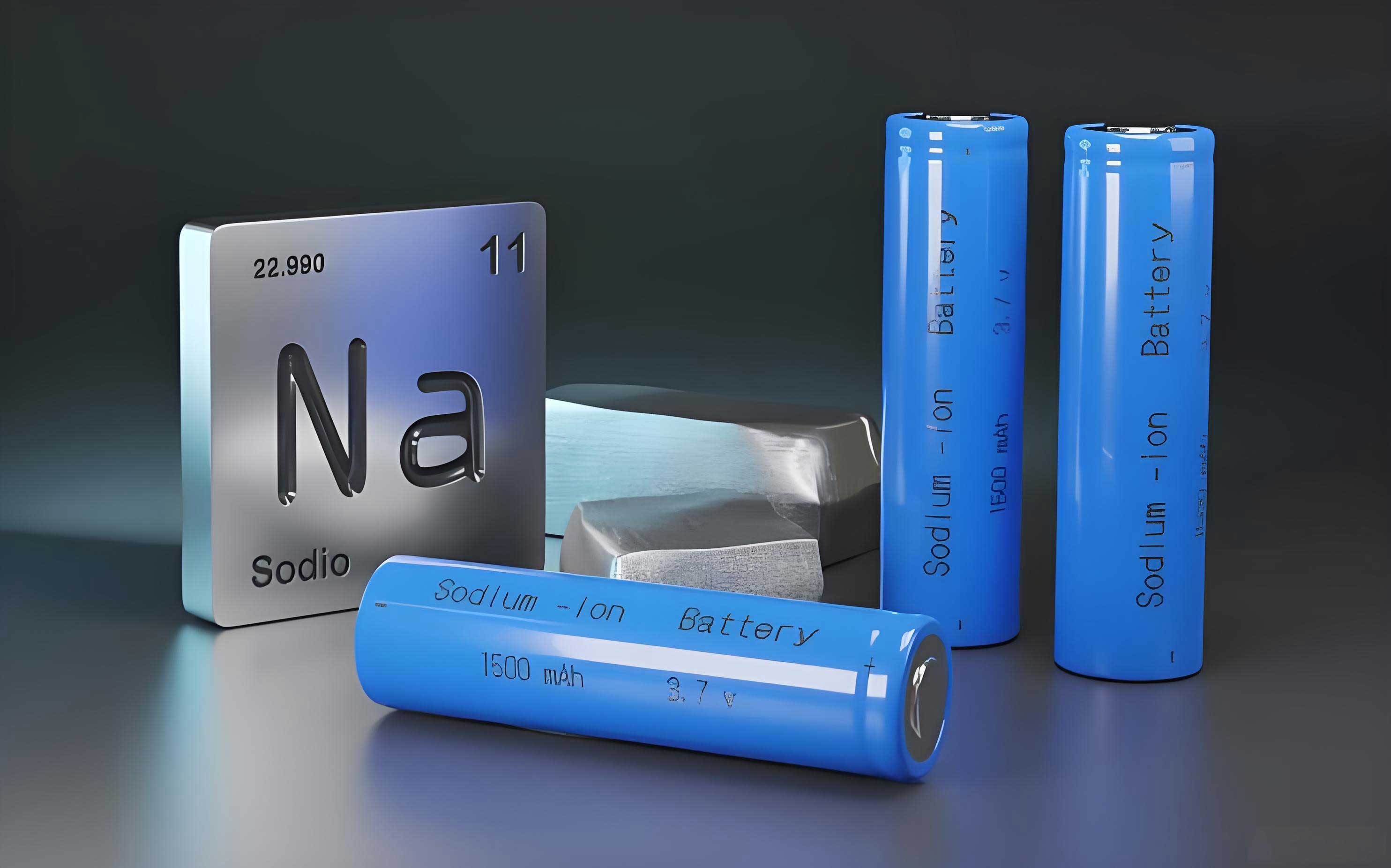
A sodium-ion battery primarily consists of cathode and anode materials, electrolyte, and a separator. The cathode and anode possess electrochemical activity, providing voltage through redox reactions, while the electrolyte transports Na⁺ ions. The separator allows rapid Na⁺ passage while blocking electron transfer to prevent short circuits. During charging, Na⁺ ions are extracted from the cathode material, travel through the electrolyte, cross the separator, and embed into the anode active material, with electrons moving from the cathode to the anode via the external circuit. The discharge process reverses this, completing energy storage and release.
Current cathode materials for sodium-ion batteries mainly include transition metal oxides, phosphate-based polyanionic compounds, and Prussian blue analogues, known for their high specific capacity, high redox potential, structural stability, and favorable Na⁺ (de)intercalation kinetics. Anode materials should ideally have a relatively low redox potential to widen the electrochemical window, strong bonding capability with electrons and ions for higher theoretical capacity, stable structure to mitigate volume expansion during cycling, good compatibility with electrolytes, and environmental friendliness. Commonly studied anode materials include carbon-based materials, alloy materials, transition metal oxides, and organic compounds. The advantages and disadvantages of typical electrode materials are summarized in Table 1.
| Material Type | Advantages | Disadvantages |
|---|---|---|
| Cathode Materials | ||
| Transition Metal Oxides | High specific capacity, easy synthesis | Low energy density |
| Phosphate-based Polyanionic Compounds | Structurally stable, high safety | Relatively low specific capacity, poor conductivity |
| Prussian Blue Analogues | Good electrochemical performance, open 3D framework | Structural defects, low electronic conductivity |
| Anode Materials | ||
| Carbon Materials | Low cost, long cycle life | Low specific capacity |
| Alloy Materials | High theoretical capacity | Poor rate capability and cycling stability |
| Transition Metal Oxides | Abundant sources, low price | Large volume change |
| Organic Compounds | Flexible, suitable for wearable devices | Low electronic conductivity, high solubility |
Table 1: Comparison of cathode and anode materials for sodium-ion batteries.
However, several challenges hinder the practical application of sodium-ion batteries. Compared to Li⁺ (0.076 nm), the larger ionic radius of Na⁺ (0.102 nm) often results in lower capacity, sluggish kinetics, and structural deformation during cycling. Furthermore, the higher standard electrode potential of sodium (-2.71 V vs. Li/Li⁺) leads to lower output voltage and energy density for sodium-ion batteries. These factors contribute to insufficient diffusion dynamics and difficulties in Na⁺ (de)intercalation, causing sluggish reaction kinetics and structural degradation, which ultimately impair electrochemical performance. To address these issues, strategies such as designing three-dimensional (3D) porous structures to enhance electrolyte infiltration, provide more active sites, and facilitate Na⁺ diffusion have been explored. Consequently, finding suitable anode materials is key to advancing sodium-ion battery technology.
Two-dimensional (2D) materials, with their tunable electronic properties and high conductivity, are promising candidates for alkali metal ion battery electrodes, including graphene, MXene, and silicene. Among them, 2D layered MXene materials exhibit high conductivity, large specific surface area offering abundant Na⁺ attachment sites, chemical stability, and flexibility, making them an excellent choice for sodium-ion battery anodes. Their advantages for Na⁺ storage and transport include: (1) The 2D MXene sheets provide an ideal platform for constructing diverse composite structures; (2) High conductivity facilitates fast electron transfer and ion transport, improving reaction kinetics; (3) Systems built with MXene materials often demonstrate high structural integrity, enabling long-term cycling stability for sodium-ion batteries. This paper reviews recent progress on MXene-based anodes for sodium-ion batteries, covering their fundamental properties, synthesis methods, optimization strategies, sodium storage mechanisms, current challenges, and future perspectives.
1. Two-Dimensional Layered MXene Materials
MXenes are a family of 2D transition metal carbides, nitrides, and carbonitrides, typically denoted as Mn+1XnTx (n=1–3), where M represents an early transition metal (e.g., Ti, V, Nb, Ta, Cr, Mo), X is carbon and/or nitrogen, and Tx signifies surface functional groups such as –OH, –F, and –O. MXenes are generally synthesized by selectively etching the “A” layer (typically Group 13 or 14 elements like Al, Ga, Si) from their parent MAX phases, which have a general formula of Mn+1AXn. In MAX phases, M and X atoms are bonded through mixed covalent/ionic bonds, forming a hexagonal crystal structure where M atoms are arranged in octahedra with X atoms at the center. The M–A bond is relatively weak compared to the M–X bond, allowing selective removal of the A layer under appropriate conditions to yield 2D MXene sheets. The etching environment (etchant type, concentration, temperature, time) critically influences the final composition and structure of MXene.
1.1 Synthesis of MXene
Common synthesis methods include acid etching, alkaline etching, electrochemical etching, chemical vapor deposition (CVD), and others like molten salt etching.
1.1.1 Acid Etching
This is the most prevalent method, primarily using hydrofluoric acid (HF) or fluoride-containing acidic solutions. For instance, etching Ti3AlC2 with HF proceeds as follows:
$$2Ti_3AlC_2 + 6HF \rightarrow 2AlF_3 + 3H_2 + 2Ti_3C_2$$
The exposed Ti atoms on the newly formed Ti3C2 layers then react with water or HF, leading to surface functionalization:
$$Ti_3C_2 + 2H_2O \rightarrow Ti_3C_2(OH)_2 + H_2$$
$$Ti_3C_2 + 2HF \rightarrow Ti_3C_2F_2 + H_2$$
An in-situ HF etching method uses a mixture of a fluoride salt (e.g., LiF) and a mineral acid (e.g., HCl). This generates a milder, in-situ HF etchant, often yielding MXene with larger flake size and fewer defects. While effective, HF-based methods involve hazardous chemicals.
1.1.2 Alkaline Etching
This method utilizes concentrated alkaline solutions (e.g., KOH, NaOH) to etch the A layer. For example, with Ti3AlC2:
$$Ti_3AlC_2 + KOH + H_2O \rightarrow Ti_3C_2 + KAlO_2 + 1.5H_2$$
Alkaline etching typically produces MXene with rich –OH terminations, beneficial for ion adsorption. However, it often requires harsh conditions (high temperature, pressure, and concentrated base), and the product can be prone to oxidation.
1.1.3 Other Synthesis Methods
Electrochemical Etching: Applies a voltage in a suitable electrolyte to selectively dissolve the A layer. It’s a faster process and can yield halogen-terminated MXenes but may lead to over-etching or incomplete etching.
Chemical Vapor Deposition (CVD): Enables direct growth of MXene crystals or unique structures like hollow spheres without a MAX phase precursor, offering high purity and controlled morphology but requiring high temperatures.
Molten Salt Etching: Uses molten fluoride salts as both the etchant and reaction medium. It’s suitable for synthesizing nitride MXenes but may introduce impurities.
Element Replacement: Involves a displacement reaction where a Lewis acidic molten salt replaces the A element with another metal, which is subsequently removed.
The morphology, advantages, and disadvantages of MXenes prepared by different methods are compared in Table 2.
| Preparation Method | Key Advantages | Main Disadvantages |
|---|---|---|
| HF Acid Etching | Simple, fast, widely applicable | Uses hazardous HF, may cause defects |
| In-situ HF Etching (e.g., LiF+HCl) | Milder conditions, larger flakes | Still uses fluoride ions |
| Alkaline Etching | Fluoride-free, rich –OH groups | Harsh conditions (T, P), material oxidation |
| Electrochemical Etching | Fast, versatile surface groups | Risk of over-etching, incomplete etching |
| Chemical Vapor Deposition | Direct growth, unique 3D structures | High temperature, complex process |
| Molten Salt Etching | Fluoride-free route for nitrides | Impurities, high temperature |
Table 2: Comparison of MXene synthesis methods.
2. MXene-Based Anode Materials for Sodium-Ion Batteries
While pristine MXene (e.g., Ti3C2Tx) as an anode exhibits excellent cycling stability, its practical specific capacity (often below 100–150 mAh g⁻¹) falls far short of its theoretical value due to severe restacking of nanosheets driven by van der Waals forces and susceptibility to oxidation. This restacking reduces active sites and lengthens ion diffusion paths, degrading performance in sodium-ion batteries. Therefore, optimization strategies are essential to enhance Na⁺ storage capacity while maintaining structural advantages. Primary modification approaches include morphology/structure engineering, heteroatom doping, and compositing with other functional materials.
2.1 Morphology and Structure Optimization
Preventing nanosheet restacking is crucial. Expanding the interlayer spacing via intercalation is a common and effective strategy. Organic molecules like tetramethylammonium hydroxide (TMAOH) or dimethyl sulfoxide (DMSO) can be inserted between MXene layers, increasing the d-spacing and creating more space for Na⁺ accommodation and diffusion. For example, TMAOH-intercalated Ti3C2Tx delivered a capacity of 340 mAh g⁻¹ at 0.1 A g⁻¹. Constructing three-dimensional architectures is another powerful approach to mitigate restacking. Strategies include using sacrificial templates (e.g., PMMA spheres) to create hollow MXene spheres, freeze-drying to form 3D porous aerogels, or self-assembly to build interconnected networks. These 3D structures provide large surface area, abundant pores for electrolyte penetration, and short ion diffusion paths, significantly boosting rate capability and cycling stability in sodium-ion batteries.
2.2 Heteroatom Doping
Introducing heteroatoms like nitrogen (N), sulfur (S), or silicon (Si) into the MXene structure can modify its electronic properties, create more active sites, and enhance conductivity. Nitrogen doping can occur at three sites: substituting for C in the lattice, replacing –OH groups, or adsorbing on –O terminals. N-doped MXenes often exhibit improved electronic conductivity and Na⁺ adsorption energy. For instance, 3D-printed porous N-Ti3C2Tx frameworks showed a capacity of 180.5 mAh g⁻¹ at a high rate of 25 C. Sulfur doping can introduce more active sites and modify surface chemistry. Si doping can help accommodate volume changes and strengthen interactions within composites. These doping strategies effectively tailor the electrochemical properties of MXene anodes for enhanced performance in sodium-ion batteries.
2.3 MXene-Based Composites
Combining MXene with other active or conductive materials is a highly effective route to develop high-performance anodes. The MXene matrix provides a conductive, flexible, and stable backbone, while the secondary component contributes high capacity, prevents MXene restacking, or buffers volume changes.
2.3.1 MXene/Carbon Composites
Carbon materials (hard carbon, graphene, carbon nanotubes) complement MXene well. Hard carbon offers good Na⁺ storage capacity and low cost. Flexible freestanding films of hard carbon particles bonded by MXene nanosheets (HC-MXene) have been developed, simplifying electrode fabrication and delivering a stable capacity of 368 mAh g⁻¹ at 30 mA g⁻¹. Graphene or reduced graphene oxide (rGO) can act as conductive spacers between MXene sheets. The interaction between oxygen-containing groups on rGO and MXene’s surface functionalities helps construct mechanically robust, loosely stacked heterostructures with facilitated ion transport.
2.3.2 MXene/Metal Chalcogenide Composites
Metal oxides, sulfides, and selenides are attractive due to their high theoretical capacities but suffer from poor conductivity and large volume expansion. MXene can address these issues.
With Metal Oxides: Composites like TiO2@Ti3C2Tx, where TiO2 nanospheres are encapsulated within a MXene shell, combine the high capacity of TiO2 with the superior conductivity and buffering capability of MXene, achieving ultra-long cycle life (5,000 cycles). Sb2O3/MXene and SnO2/MXene composites also demonstrate significantly enhanced rate and cycling performance compared to their pure components.
With Metal Sulfides: Layered sulfides like MoS2 are widely studied. In composites such as C-MoS2/CNTs-Ti3C2, vertically aligned, carbon-coated MoS2 nanosheets grow on MXene with interwoven CNTs. This structure provides ample active sites, prevents restacking, and ensures fast electron/ion transport, leading to high initial discharge capacity (594 mAh g⁻¹) and excellent cyclability.
With Metal Selenides: Selenides (e.g., CoSe2, SnSe2, MoSe2) have larger interlayer spacing than sulfides. Composites like carbon-coated MoSe2/MXene heterostructures leverage the high capacity of MoSe2 and the conductive, stabilizing network of MXene, showing outstanding long-term cycling stability over 2,000 cycles.
2.3.3 MXene/Organic Material Composites
Conductive polymers (e.g., polyaniline – PANI) or metal-organic framework (MOF) derivatives can be composited with MXene. PANI can be intercalated into MXene layers, expanding the spacing and enhancing structural stability through π-π interactions. MOF-derived metal oxide/carbon composites integrated with MXene form unique 3D architectures (e.g., bead-like nanofibers) that offer abundant pores, high conductivity, and effective volume change accommodation, resulting in superior full-cell performance for sodium-ion batteries.
2.3.4 MXene/Elemental Material Composites
Elements like Sb, P, and Si that alloy with sodium have very high theoretical capacities but enormous volume expansion. Confining them within a MXene matrix can effectively buffer this expansion. For example, in a double-confined structure like Sb/Sb2S3@Ti3C2Tx@C, the active material is encapsulated by both a carbon layer and MXene sheets, leading to ultra-stable cycling over 2,500 cycles. Similarly, black phosphorus quantum dots composited with MXene (BPQD/TNS) exhibit exceptional rate performance due to the conductive and confining MXene framework.
The electrochemical performance of various MXene-based composites in sodium-ion batteries is summarized in Table 3.
| Composite Type & Example | Key Performance Highlights |
|---|---|
| Pristine MXene (Ti3C2Tx) | ~100 mAh g⁻¹ at 0.2 A g⁻¹, excellent stability (68.3 mAh g⁻¹ after 1000 cycles). |
| Intercalated MXene (TMAOH/Ti3C2Tx) | 340 mAh g⁻¹ at 0.1 A g⁻¹, 280 mAh g⁻¹ after 800 cycles at 0.5 A g⁻¹. |
| 3D Structured MXene (T-MXene@C aerogel) | 257.6 mAh g⁻¹ at 0.05 A g⁻¹, 91.7% capacity retention after 3000 cycles at 1 A g⁻¹. |
| N-doped MXene (Porous N-Ti3C2Tx) | 180.5 mAh g⁻¹ at a high rate of 25 C, 75% retention after 3500 cycles at 2 A g⁻¹. |
| MXene/Carbon (HC-MXene film) | 368 mAh g⁻¹ at 30 mA g⁻¹, no capacity decay after 1500 cycles. |
| MXene/Oxide (TiO2@Ti3C2Tx) | ~110 mAh g⁻¹ maintained after 5000 cycles at 0.96 A g⁻¹. |
| MXene/Sulfide (C-MoS2/CNTs-Ti3C2) | High initial discharge of 594 mAh g⁻¹, 562 mAh g⁻¹ after 200 cycles at 0.1 A g⁻¹. |
| MXene/Selenide (MoSe2/Mo2CTx/C) | 652.2 mAh g⁻¹ at 0.5 A g⁻¹, 86.3% capacity retention after 2200 cycles at 2 A g⁻¹. |
| MXene/Alloying Element (Sb/Sb2S3@Ti3C2Tx@C) | 366 mAh g⁻¹ initial, 250 mAh g⁻¹ after 2500 cycles at 1 A g⁻¹ (0.0228 mAh g⁻¹ decay/cycle). |
| MXene/Black Phosphorus (PDDA-BP/Ti3C2) | Ultra-high capacity of 1112 mAh g⁻¹ at 1 A g⁻¹, 658 mAh g⁻¹ after 2000 cycles. |
Table 3: Sodium storage performance of selected MXene-based composite anodes.
3. Sodium Storage Mechanisms in MXene
Understanding the Na⁺ storage mechanism in MXene is vital for rational material design. Combined characterization techniques like in-situ X-ray diffraction (XRD), X-ray absorption spectroscopy (XAS), nuclear magnetic resonance (NMR), and scanning transmission electron microscopy (STEM), coupled with density functional theory (DFT) calculations, have provided deep insights.
In-situ XRD studies on Ti3C2Tx during sodiation/desodiation reveal reversible phase transitions. Upon Na⁺ intercalation, the characteristic (00l) peaks of Ti3C2Tx diminish while new peaks at lower angles appear, corresponding to the formation of a Na-intercalated phase (e.g., NaTi3C2Tx). These changes are reversible upon desodiation, confirming the structural stability of MXene during cycling. Atomic-scale HAADF-STEM imaging has directly observed the intercalation of Na⁺ ions between MXene layers, sometimes forming a bilayer structure at high sodiation levels.
The electrochemical process involves different states of Na⁺: (1) solvated Na⁺ in the electrolyte, (2) partially desolvated Na⁺ in the SEI layer, (3) adsorbed solvated Na⁺ on the MXene surface, and (4) fully desolvated Na⁺ intercalated into the interlayer space. The initial cycle often involves electrolyte decomposition to form a stable solid electrolyte interphase (SEI).
Mechanistic studies on V2CTx using operando XANES show that the redox reactions during charge/discharge primarily involve the transition metal (V), with its oxidation state changing reversibly. The shape of the cyclic voltammetry (CV) curves and galvanostatic profiles often suggests a dominant capacitive charge storage behavior, especially at higher scan rates. The total stored charge (Q) can be deconvoluted into contributions from diffusion-controlled intercalation (battery-type, Qdiff) and surface-controlled capacitive processes (Qcap), following the relationship:
$$i = a v^b$$
where \(i\) is the current, \(v\) is the scan rate, and \(b\) is an exponent. A \(b\)-value of 0.5 indicates diffusion control, while 1.0 indicates capacitive control. For MXenes, \(b\)-values are often close to 1, signifying a large pseudocapacitive contribution. The current response at a fixed potential can be further quantified as:
$$i(V) = k_1 v + k_2 v^{1/2}$$
where \(k_1 v\) represents the capacitive contribution and \(k_2 v^{1/2}\) the diffusion-controlled contribution. This analysis typically reveals that a significant portion (often >70-80% at moderate rates) of MXene’s capacity originates from fast surface redox reactions (pseudocapacitance) and electric double-layer formation, explaining the excellent rate capability observed in sodium-ion batteries.
Furthermore, NMR and DFT studies suggest that during initial “activation” or pre-sodiation, some Na⁺ ions become trapped (“pillared”) within the MXene layers. These trapped ions help maintain an expanded and stable interlayer spacing for subsequent rapid and reversible intercalation/deintercalation of other Na⁺ ions. Thus, the storage mechanism in MXene for sodium-ion batteries is best described as a hybrid process involving both surface-controlled capacitive reactions (on functional groups and possibly transition metal sites) and intercalation pseudocapacitance, facilitated by a stable and sometimes pillared layered structure.
4. Conclusions and Perspectives
MXenes have emerged as a highly promising class of anode materials for sodium-ion batteries, owing to their unique combination of metallic conductivity, hydrophilic surfaces, tunable functional groups, and structural flexibility. This review has detailed their synthesis routes, various optimization strategies (morphology control, doping, compositing), and elucidated their hybrid sodium storage mechanism involving intercalation and surface redox pseudocapacitance. Significant progress has been made in developing MXene-based composites that deliver high capacity, exceptional rate performance, and long cycle life, addressing many shortcomings of pristine MXene.
However, several critical challenges remain to be overcome for their practical implementation in sodium-ion batteries:
1. Synthesis and Environmental Impact: The most common HF-based etching methods are hazardous and environmentally unfriendly. While fluoride-free routes (alkaline, electrochemical, molten salt) exist, they often suffer from harsh conditions, complexity, or impurities. Future efforts should focus on developing greener, scalable, and cost-effective synthesis protocols that provide high-quality, defect-controlled MXenes.
2. Stability Against Oxidation: MXenes, especially in aqueous dispersions or thin films, are susceptible to oxidation, transforming into metal oxides (e.g., TiO2) and carbon, which drastically degrades their electrochemical properties. Strategies like careful storage in inert atmospheres, terminal group substitution, or encapsulation within protective carbon or polymer layers are necessary to enhance long-term stability.
3. Restacking of Nanosheets: Van der Waals forces cause MXene flakes to re-stack during electrode processing, reducing active surface area. Constructing 3D porous architectures, using efficient intercalants/spacers (like graphene dots or polymers), and fabricating freestanding films are effective solutions that need further refinement.
4. Bridging the Gap Between Theory and Practice: The theoretical capacity of MXenes is high, but practical values are much lower. Continued optimization through composite engineering, precise control of surface chemistry (terminal groups), and creating optimal porous morphologies is essential to unlock their full potential.
5. Understanding and Controlling Surface Chemistry: The type and distribution of surface terminations (–O, –OH, –F) profoundly influence electrochemical behavior. Developing methods for precise functionalization or creating termination-free MXene surfaces could lead to materials with tailored properties for optimal Na⁺ storage.
Future research directions should prioritize: (i) scalable and safe synthesis, (ii) advanced composite design with synergistic interactions, (iii) in-depth mechanistic studies using advanced in-situ/operando techniques to guide material design, and (iv) exploration of full-cell configurations pairing high-performance MXene anodes with suitable cathodes to evaluate practical energy density and longevity.
In conclusion, MXene-based materials hold tremendous promise for advancing sodium-ion battery technology toward cost-effective, high-performance energy storage. By addressing the existing challenges through multidisciplinary research, MXenes are poised to play a significant role in the future landscape of post-lithium battery systems.