
In the face of escalating global energy demands and the urgent need to mitigate environmental pollution, the transition towards sustainable energy storage systems has become paramount. The rapid consumption of fossil fuels has precipitated not only an energy crisis but also a significant rise in atmospheric CO2 levels, directly contributing to global climate change. Against this backdrop, developing efficient, economical, and environmentally benign energy storage technologies is critical. Lithium-ion batteries (LIBs), while dominant, face challenges due to the limited geographical distribution and rising cost of lithium resources. This has catalyzed a renaissance in sodium-ion battery (SIB) research. SIBs offer a compelling alternative, leveraging the natural abundance, low cost, and similar electrochemistry of sodium. They are particularly promising for large-scale stationary storage and cost-sensitive applications like low-speed electric vehicles and grid storage, where ultra-high energy density is not the primary requirement.
The performance of a sodium-ion battery is intrinsically linked to its electrode materials. Among various cathode contenders—including layered transition metal oxides (e.g., NaxMnO2), Prussian blue analogues, and polyanionic compounds—sodium vanadium fluorophosphate, Na3V2(PO4)2F3 (commonly abbreviated as NVPF), has emerged as a frontrunner for high-voltage applications. Its appeal lies in its unique combination of a stable three-dimensional NASICON-type framework, high theoretical specific capacity (∼128 mAh g−1 via a two-electron transfer), high operating voltage (∼3.7 V and ∼4.2 V vs. Na+/Na), and consequently, high theoretical energy density (approaching 500 Wh kg−1). Furthermore, the strong ionicity of the F–V bond and the open channels within its structure facilitate rapid Na+ ion diffusion.
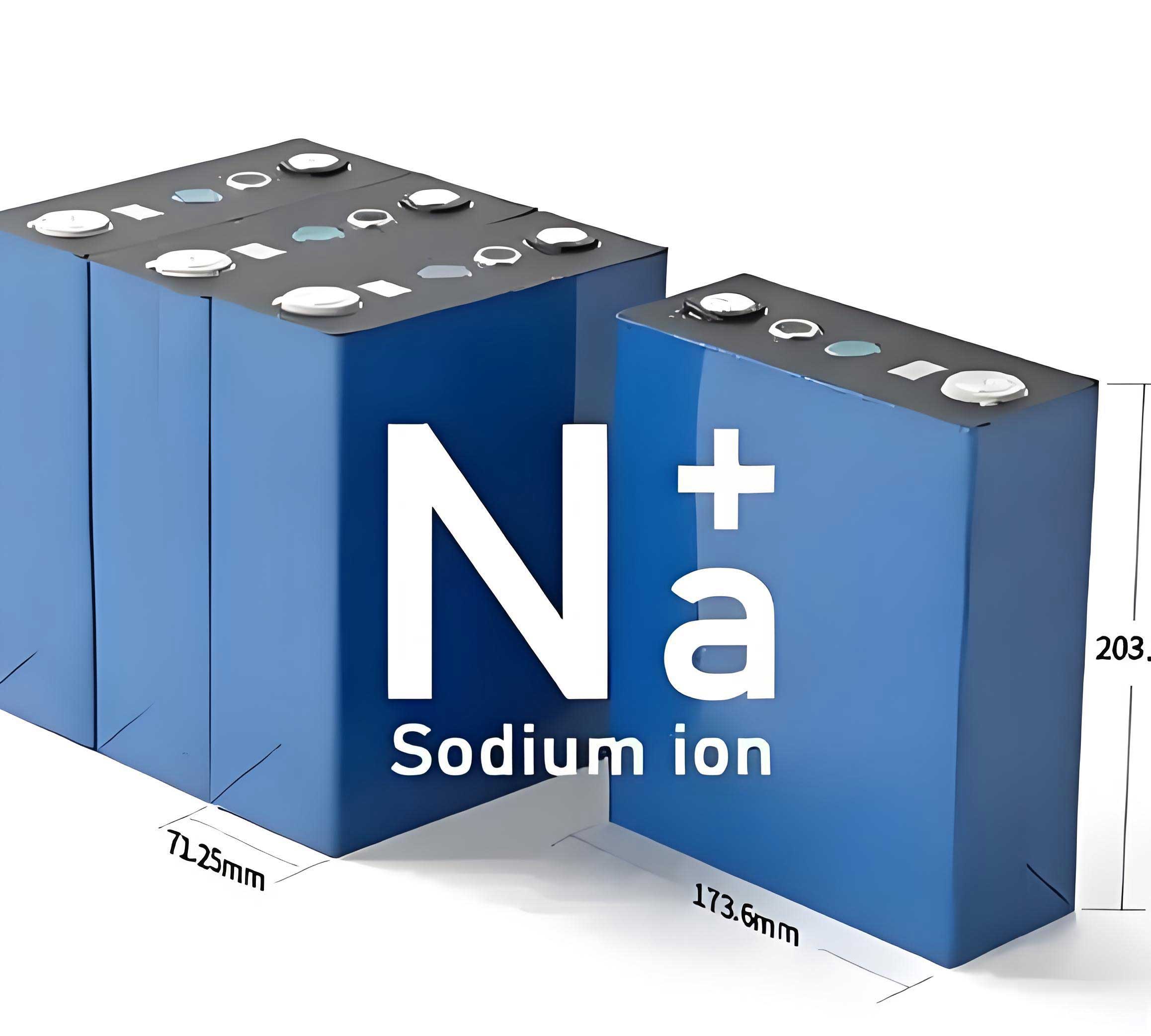
However, the practical deployment of NVPF is hindered by two major intrinsic drawbacks: its poor electronic conductivity (∼10−12 S cm−1), which stems from the insulating [PO4] tetrahedra separating V atoms, and the substantial structural stress experienced during Na+ extraction/insertion, leading to capacity fade and limited rate capability. This review provides a systematic overview of the recent progress in advancing NVPF-based cathodes for sodium-ion batteries. We delve into the material’s crystal structure and sodium storage mechanisms, summarize mainstream synthesis techniques, and critically evaluate prevalent modification strategies such as micro-nano structuring, carbon coating, elemental doping, and battery component optimization. Finally, we offer perspectives on future research directions to overcome existing challenges and accelerate the commercialization of high-performance NVPF cathodes.
1. Crystal Structure and Sodium Storage Mechanism
NVPF crystallizes in a three-dimensional NASICON structure, built from corner-sharing [V2O8F3] bioctahedra and [PO4] tetrahedra. This framework creates open tunnels along specific crystallographic directions, providing pathways for facile Na+ ion migration. The exact space group has been debated, with reports of both tetragonal P42/mnm and orthorhombic Amam symmetries. In the Amam model, which is now widely accepted, Na+ ions occupy three distinct crystallographic sites: Na1 (fully occupied), Na2 (4/3 occupied), and Na3 (2/3 occupied).
The electrochemical process involves the extraction of two Na+ ions per formula unit, corresponding to the redox couple V3+/V4+. This occurs through a complex sequence of phase transitions: Na3V2(PO4)2F3 (Amam) → Na2.4V2(PO4)2F3 → Na2V2(PO4)2F3 (I4/mmm) → Na1.8–1.3V2(PO4)2F3 (I4/mmm) → NaV2(PO4)2F3 (Cmc21). The typical galvanostatic charge/discharge profile exhibits two clear plateaus at approximately 3.7/3.6 V and 4.2/4.1 V, corresponding to the extraction of Na+ from different sites. The overall reaction can be represented as:
$$ \text{Na}_3\text{V}_2(\text{PO}_4)_2\text{F}_3 \leftrightarrow \text{NaV}_2(\text{PO}_4)_2\text{F}_3 + 2\text{Na}^+ + 2e^- $$
Despite its advantageous structure, the intrinsic electronic conductivity of NVPF remains a critical bottleneck for achieving high power density in sodium-ion batteries.
2. Synthesis Methods for NVPF
Various synthesis routes have been developed to prepare NVPF, each offering distinct advantages in terms of morphology control, phase purity, and scalability.
| Synthesis Method | Principle & Process | Advantages | Disadvantages & Challenges |
|---|---|---|---|
| Solid-State Reaction | Mechanical mixing of precursors (e.g., V2O5, NH4H2PO4, NaF, carbon source) followed by high-temperature calcination under inert atmosphere. | Simple, scalable, high product yield, suitable for industrial production. | Large particle size, irregular morphology, severe agglomeration, poor control over nanostructure, often requires prolonged grinding/calcination. |
| Sol-Gel Method | Formation of a homogeneous sol from molecular precursors (e.g., vanadium alkoxides, ammonium phosphates) using chelating agents (e.g., citric acid, oxalic acid), gelation, and subsequent thermal decomposition. | Better molecular-level mixing, lower crystallization temperature, improved stoichiometry control, can incorporate carbon sources easily. | Time-consuming drying/aging steps, difficult to control final particle morphology precisely, use of expensive/organic precursors. |
| Spray Drying | Atomization of a precursor solution/slurry into fine droplets, followed by rapid drying in a hot gas stream to form spherical powders. | Excellent for producing uniform spherical particles, high tap density, continuous process, good scalability. | Limited to simple spherical morphologies, difficult to create complex hierarchical structures, requires optimization of droplet size and drying parameters. |
| Hydrothermal/Solvothermal | Reaction in a sealed autoclave at elevated temperature and pressure using water or organic solvents. Microwave-assisted variants enable faster heating. | Good control over crystal size and morphology (nanoparticles, microspheres, rods), high crystallinity, relatively low temperature. | Batch process, scalability issues, potential safety concerns with high pressure, reproducibility can be sensitive to subtle changes in pH, precursor concentration, and filling ratio. |
| Electrospinning | Preparation of a precursor/polymer solution, which is electrospun into nanofibers, followed by calcination to obtain NVPF embedded in carbon nanofibers. | Produces self-standing, binder-free electrodes with 1D/3D conductive networks, excellent electron transport pathways, flexible. | Low mass loading per unit area, complex setup, challenging to scale up for mass production, high cost of some polymer precursors. |
The choice of synthesis method significantly impacts the electrochemical performance of the final NVPF material in sodium-ion batteries. For instance, nanostructured materials from hydrothermal routes often show superior rate capability due to shortened ion diffusion paths, while spray-dried microspheres offer better practicality due to higher tap density.
3. Modification Strategies for Enhanced Performance
To overcome the intrinsic limitations of NVPF, several modification strategies have been extensively researched.
3.1 Micro-Nano Structure Design
Engineering the material’s architecture at micro- and nano-scales is a fundamental strategy to enhance kinetics and mechanical stability.
- Zero-Dimensional (0D) Nanoparticles: Ultra-small nanoparticles (< 100 nm) provide a large electrode-electrolyte contact area, extremely short diffusion lengths for both Na+ and electrons, and effectively alleviate volume strain during cycling. Synthesis often requires careful use of surfactants or confined reactions.
- One-Dimensional (1D) Nanorods/Nanofibers: 1D structures facilitate directional electron transport and efficient electrolyte penetration along their length. They are often integrated into 3D conductive networks (e.g., via electrospinning) to create robust, flexible electrodes for sodium-ion batteries.
- Three-Dimensional (3D) Hierarchical Structures: These materials combine the benefits of nanoscale building blocks (high activity) with micro-scale assemblies (structural stability and high tap density). Examples include microspheres composed of nanosheets or nano-blocks, and hollow structures. They offer multidimensional charge transport pathways and can better accommodate volume changes.
The effective diffusion coefficient (DNa+) can be qualitatively related to the particle radius (r) by the equation (for semi-infinite linear diffusion):
$$ \tau \approx \frac{r^2}{D_{\text{Na}^+}} $$
where $\tau$ is the diffusion time. Reducing ‘r’ through nanostructuring dramatically decreases $\tau$, enabling faster charge/discharge rates in sodium-ion batteries.
3.2 Carbon Coating
Carbon coating is the most ubiquitous and effective method to improve the electronic conductivity of NVPF. The carbon layer serves multiple functions: i) providing a conductive percolation network on particle surfaces, ii) limiting particle growth during synthesis, iii) buffering mechanical stress during cycling, and iv) preventing direct contact with the electrolyte to suppress side reactions.
Types of Carbon Sources and Architectures:
- In-situ Coating: Using organic precursors (e.g., glucose, citric acid, sucrose, polymers) that pyrolyze during calcination to form a uniform amorphous carbon layer.
- Conductive Additives: Integrating conductive carbons like graphene, reduced graphene oxide (rGO), or carbon nanotubes (CNTs) to form a 3D wrapping or embedding network. This often yields composites like NVPF@rGO or NVPF/CNT.
- Heteroatom-Doped Carbon: Introducing nitrogen, sulfur, or boron into the carbon matrix (e.g., via N-doped carbon coating) can further enhance electronic conductivity and create defect sites that improve Na+ adsorption.
A critical consideration is the carbon content. While essential for conductivity, excessive carbon reduces the volumetric and gravimetric energy density of the sodium-ion battery cathode. An optimal balance must be struck, typically aiming for carbon contents between 5-15 wt.%.
3.3 Elemental Doping
Aliovalent or isovalent doping at cationic or anionic sites is a powerful tool to modify the electronic structure, ionic conductivity, and structural stability of NVPF.
| Doping Site | Typical Dopants | Intended Effect & Mechanism | Impact on Sodium-Ion Battery Performance |
|---|---|---|---|
| Sodium (Na) Site | K+, Li+ | K+: Larger ionic radius expands lattice channels, lowering Na+ migration barrier. Li+: Smaller ion may distort lattice and promote formation of conductive secondary phases (e.g., V2O3). | Enhanced rate capability (wider channels). Improved cycling stability (stabilized structure). |
| Vanadium (V) Site | Mn2+/3+, Fe2+/3+, Ti3+/4+, Zr4+, Y3+, Mg2+ | Electrochemically Active (e.g., Mn, Fe): Introduce additional redox couples, potentially increase capacity. Electrochemically Inert (e.g., Zr, Y): Stabilize crystal structure, may modify bond lengths/angles to facilitate Na+ diffusion. Aliovalent doping (e.g., Mg2+ for V3+) creates charge compensation effects, potentially altering V valence and electronic conductivity. | Increased specific capacity (active dopants). Superior structural integrity and cycle life (inert dopants). Lower charge transfer resistance, better rate performance. |
| Anionic (F/O) Site | O2− for F− | Forms mixed anion compounds Na3V2(PO4)2OyF3-y (NVPOF). Alters the V–O/F bond strength and the local coordination environment, often leading to higher operational voltage and improved kinetics. | High-voltage performance, good rate capability, and long cycling stability. Na3V2(PO4)2O2F is a prominent high-energy cathode for sodium-ion batteries. |
The effectiveness of doping follows a “Goldilocks” principle—an optimal doping concentration exists. Insufficient doping yields negligible improvement, while excessive doping can distort the host lattice excessively, block ion channels, or induce undesirable secondary phases, degrading sodium-ion battery performance.
3.4 Battery Component Optimization
Performance is not solely determined by the active material. Optimizing other cell components is crucial for practical sodium-ion batteries.
- Binder: Replacing traditional polyvinylidene fluoride (PVDF, which requires toxic N-methyl-2-pyrrolidone solvent) with aqueous binders like sodium carboxymethyl cellulose (CMC) or styrene-butadiene rubber (SBR) is beneficial. CMC forms a robust, porous electrode structure, promotes electrolyte wetting, and provides strong adhesion, mitigating electrode cracking. However, trace water in the electrolyte must be minimized as it can react with NVPF, causing fluoride dissolution and Al current collector corrosion.
- Electrolyte: Conventional carbonate-based electrolytes (e.g., NaPF6 in EC/DMC) may oxidize at high voltages (>4.3 V). Advanced electrolytes, including concentrated electrolytes, ether-based electrolytes (e.g., diglyme), or ionic liquids, offer wider electrochemical stability windows, better compatibility with the Al current collector, and often form more stable cathode-electrolyte interphases (CEI), leading to improved cycling stability for high-voltage NVPF cathodes in sodium-ion batteries.
- Binder-Free Electrodes: Fabricating self-supported electrodes where NVPF is directly grown on or embedded within a 3D conductive scaffold (e.g., carbon cloth, graphene foam, electrospun carbon nanofibers) eliminates inactive binders and conductive additives. This maximizes the energy density at the electrode level and improves mechanical integrity.
4. Conclusion and Future Perspectives
Na3V2(PO4)2F3 stands out as a leading high-voltage cathode material for next-generation sodium-ion batteries, offering an attractive blend of energy density, power potential, and structural robustness. Significant progress has been made through synergistic modification strategies involving nanostructuring, conductive carbon integration, strategic elemental doping, and cell engineering. These approaches have collectively addressed the key challenges of poor kinetics and structural degradation, pushing the performance boundaries closer to practical requirements.
To propel NVPF from the laboratory to commercial sodium-ion battery applications, future research should focus on the following avenues:
- Advanced and Scalable Synthesis: Developing cost-effective, scalable methods (like continuous spray drying or low-temperature routes) that reliably produce NVPF with controlled hierarchical structures, high tap density, and consistent batch-to-batch quality is essential for manufacturing.
- Multi-Functional Hybrid Coatings: Moving beyond simple carbon layers to explore hybrid or multilayer coatings (e.g., carbon-metal oxide composites like Al2O3@C) that synergistically enhance conductivity, suppress transition metal dissolution, and stabilize the interface at high voltages.
- Rational Dopant Design via Computation: Employing high-throughput density functional theory (DFT) calculations and machine learning to predict the most effective dopant elements and concentrations for optimizing voltage, capacity, and ionic conductivity. Priority should be given to abundant, low-cost elements like Fe, Al, and Mn.
- Ultra-High Voltage Electrolytes & Solid-State Batteries: Theoretical studies suggest NVPF can undergo further oxidation at voltages near 4.9 V. Developing new electrolytes (e.g., highly concentrated, fluorinated) or solid-state electrolytes stable at such extreme potentials could unlock ultra-high energy densities. This aligns with the pursuit of safe, all-solid-state sodium-ion batteries.
- Full Cell Integration and Practical Evaluation: More studies are needed on NVPF-based full cells paired with suitable anodes (hard carbon, alloy, etc.) under realistic conditions (limited Na, lean electrolyte, high mass loading). Evaluating long-term cycle life, safety under abuse, and cost analysis at the pack level is critical for commercialization.
In conclusion, through continued multidisciplinary research addressing materials synthesis, fundamental understanding, and engineering integration, Na3V2(PO4)2F3-based cathodes hold tremendous promise for enabling high-performance, safe, and cost-effective sodium-ion batteries, contributing significantly to the future sustainable energy landscape.