
The relentless pursuit for sustainable and large-scale energy storage solutions has positioned sodium-ion battery technology as a formidable contender to complement, and in certain applications potentially replace, lithium-ion systems. The abundance and geographic distribution of sodium resources offer compelling economic and supply chain advantages. At the heart of this technology’s development lies the critical challenge of designing high-performance cathode materials. Among the various candidates, layered transition metal oxides with the general formula NaxTMO2 (where TM = transition metal) have garnered significant attention due to their structural versatility and high theoretical capacity. In particular, the P2-type layered oxide, P2-Na2/3Ni1/3Mn2/3O2, stands out for its attractive combination of a high average operating voltage (~3.8 V vs. Na+/Na) and a substantial theoretical capacity (~173 mAh g-1), making it a prime target for research aimed at realizing high-energy-density sodium-ion battery systems.
The “P2” designation refers to a specific stacking sequence where Na+ ions reside in trigonal prismatic sites between transition metal oxide slabs, and the ‘2’ indicates that the oxide layers stack in an ABBA sequence. This structure provides relatively facile two-dimensional pathways for Na+ diffusion. The electrochemistry of this material is primarily governed by the redox activity of the Ni2+/Ni3+/Ni4+ couple. However, the practical deployment of pristine P2-Na2/3Ni1/3Mn2/3O2 is hindered by several intrinsic challenges that manifest during electrochemical cycling. When charged to high voltages (typically above ~4.2 V), the extraction of a large fraction of Na+ ions triggers a gliding of the transition metal oxide slabs, leading to an irreversible or partially reversible phase transition from the P2 structure to an O2 structure, where Na+ ions occupy octahedral sites in an ABAC oxygen stacking. This P2-O2 transition is accompanied by a significant unit cell volume change (often exceeding 5%), inducing substantial mechanical stress, particle cracking, and rapid capacity fade. Conversely, discharging to very low voltages leads to excessive Na+ insertion. To maintain charge balance, some Mn4+ ions are reduced to the Jahn-Teller active Mn3+ state, causing a cooperative distortion of the MnO6 octahedra. This Jahn-Teller distortion disrupts the local structure and severely impedes Na+ mobility, degrading rate capability and cycle life.
Furthermore, a pervasive issue in many P2-type materials is the phenomenon of Na+/vacancy ordering within the alkali metal layer. The strong electrostatic repulsion between Na+ ions and the specific energy landscape of the trigonal prismatic sites (Nae and Naf) can lead to the formation of ordered superlattices at specific states of charge (e.g., at x = 1/2 or 2/3 in NaxTMO2). These ordered phases create high energy barriers for Na+ diffusion, resulting in characteristic voltage plateaus in the charge-discharge profile and poor rate performance. The combination of these factors—destructive phase transitions, structural distortions, and kinetic limitations due to ordering—defines the core challenges for P2-Na2/3Ni1/3Mn2/3O2. Consequently, a primary focus of research has been to employ strategic element doping to modify the electronic structure, local coordination, and overall stability of this promising cathode material for sodium-ion battery applications.
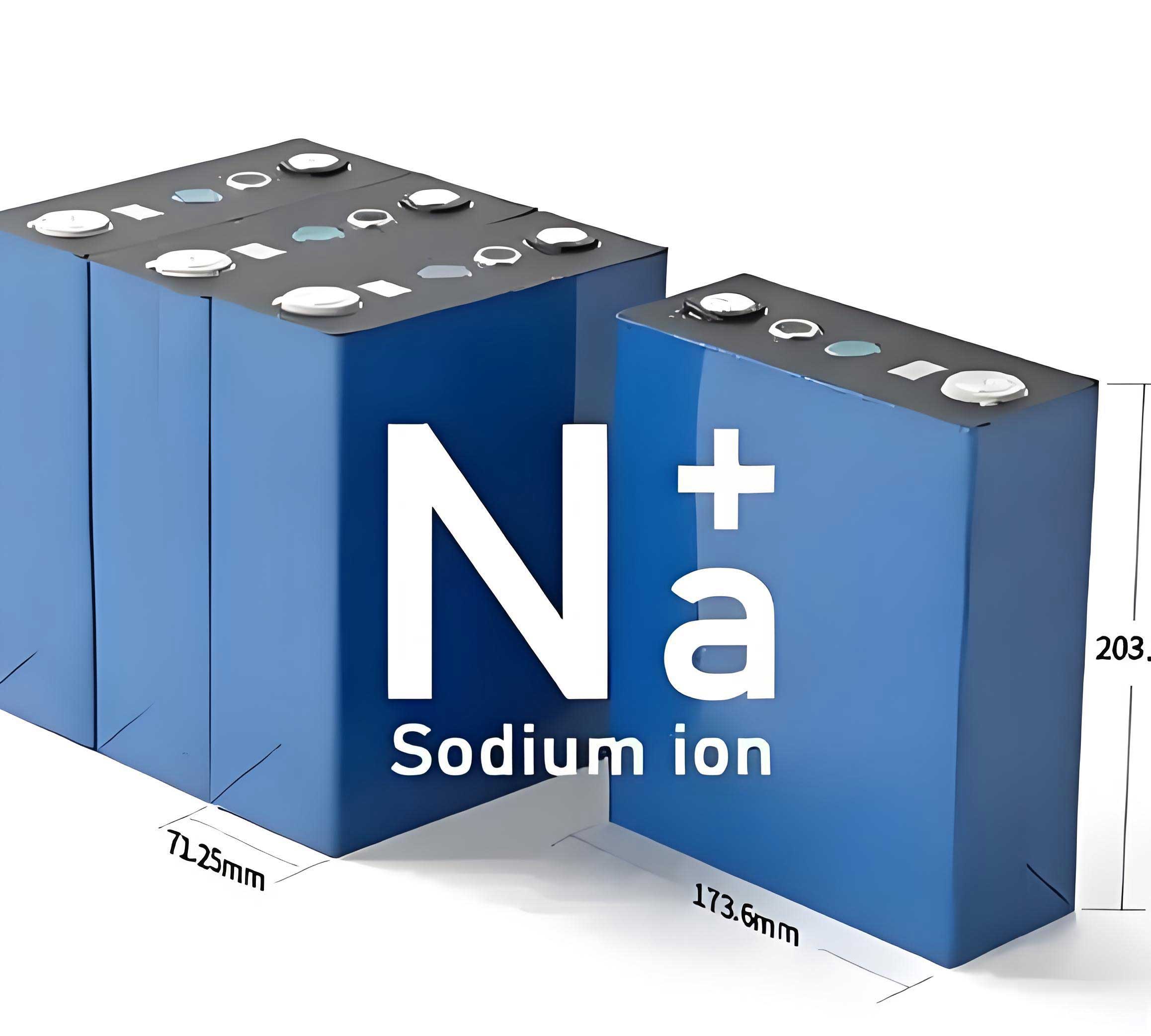
Elemental doping, the partial substitution of Ni or Mn with other cationic species, has proven to be a highly effective and versatile strategy to address these challenges. The introduced dopants can play multiple roles: acting as a structural “pillar” to suppress layer sliding, altering the electronic structure to modify redox behavior, disrupting long-range order to enhance Na+ kinetics, and increasing the covalency of the metal-oxygen bond to improve stability. The efficacy of doping is critically dependent on the ionic radius, charge, and electronic configuration of the dopant ion, as well as its concentration. The general formula for a doped material can be represented as:
$$Na_{2/3}(Ni_{1/3-y}M_y)Mn_{2/3}O_2 \quad \text{or} \quad Na_{2/3}Ni_{1/3}(Mn_{2/3-z}M_z)O_2$$
where M is the dopant element. The following sections will delve into the mechanisms and effects of various doping strategies, categorized by their primary function in improving the performance of P2-type cathodes for sodium-ion battery systems.
Dopants for Phase Transition Control and Structural Stabilization
Inhibiting or modifying the high-voltage P2-O2 phase transition is paramount for achieving long-term cyclability. Several dopants have been identified that effectively mitigate this detrimental transformation through distinct mechanisms.
Lithium (Li) Doping: The incorporation of Li+ ions into the transition metal layer has a profound effect on the electrochemical behavior. Research has shown that Li-doped materials, such as Na0.8Li0.12Ni0.22Mn0.66O2, exhibit a smooth, sloping voltage profile instead of the distinct plateaus associated with two-phase reactions. Advanced characterization techniques, including in-situ synchrotron X-ray diffraction and solid-state NMR, revealed that this is due to a solid-solution (single-phase) reaction mechanism throughout the charge-discharge cycle. The Li+ ions, which are mobile under electrochemical cycling, migrate into the Na layer at high states of charge. This migration acts to “pin” the oxygen framework, physically preventing the gliding of the TM-O slabs that leads to the O2 phase. Consequently, the damaging P2-O2 transition is entirely suppressed, replaced by a more benign and reversible solid-solution reaction, leading to significantly improved cycling stability in high-voltage sodium-ion battery operation.
Magnesium (Mg), Copper (Cu), and Iron (Fe) Doping: These elements often promote a different, more favorable transformation pathway. Instead of a direct P2-to-O2 shift, doping with Mg, Cu, or Fe leads to the formation of an intermediate “OP4” phase or a coherently stacked “Z” phase during high-voltage charging. The OP4 phase is characterized by an ordered intergrowth of P2 and O2 stacking sequences along the c-axis. This phase represents a compromise; it accommodates the structural strain associated with Na+ extraction without fully committing to the high-energy O2 structure. The transformation from P2 to OP4 involves a smaller lattice strain and exhibits much better reversibility upon discharge. For instance, in Mg-doped Na0.67Ni0.28Mg0.05Mn0.67O2, the reversible P2-OP4 transition contributes to a high capacity retention of over 90% after 50 cycles. Fe doping offers an additional benefit: the hybridization of Fe 3d and O 2p orbitals at high voltages stabilizes the lattice oxygen, suppressing the irreversible oxygen loss and surface densification that often plague high-voltage layered oxides in sodium-ion battery cathodes.
Zinc (Zn) and Titanium (Ti) Doping: Zn2+ doping, particularly at the Ni site, has been shown to enhance the reversibility of the phase transition itself. Studies using in-situ high-energy X-ray diffraction indicate that Zn incorporation reduces the Jahn-Teller distortion of NiO6 octahedra and minimizes the detrimental Ni2+ migration into the Na layer. This stabilizes the host structure, making the inevitable P2-O2 shift more reversible and less destructive. Ti4+ doping, on the other hand, acts as a stabilizer by virtue of its strong Ti-O bonds and its fixed 4+ oxidation state. Ti4+ does not participate in redox reactions within the typical voltage window, providing a robust and electrochemically inert framework. It effectively “dilutes” the active Ni and Mn, reducing the overall lattice parameter changes during cycling and reinforcing the structure against collapse at high voltages.
Cobalt (Co) and Aluminum (Al) Doping: Co3+ is an excellent dopant that combines structural and electronic benefits. Its smaller ionic radius compared to Ni2+ leads to a contraction of the TM-O and O-O bond lengths, strengthening the crystal lattice. This contraction also expands the interlayer spacing, which facilitates faster Na+ diffusion, thereby improving rate capability. Unlike many other stabilizing dopants, Co can also participate in redox activity (Co3+/Co4+), helping to maintain a high specific capacity. Al3+ doping serves a dual purpose. In the bulk, the strong Al-O bond provides structural reinforcement. At the surface, Al tends to segregate, forming a protective layer that mitigates side reactions with the electrolyte, a common failure mode in sodium-ion battery cathodes. This dual bulk/surface effect makes Al a highly effective dopant for enhancing overall cycle life.
| Dopant Element | Primary Role | Key Mechanism | Typical Formula Example |
|---|---|---|---|
| Li+ | Phase Transition Suppressor | Induces solid-solution reaction; Li+ migrates to pin structure. | Na0.8Li0.12Ni0.22Mn0.66O2 |
| Mg2+ | Phase Transition Modifier | Promotes reversible P2-OP4 transition instead of P2-O2. | Na0.67Ni0.28Mg0.05Mn0.67O2 |
| Ti4+ | Structural Pillar | Provides inert, strong framework; stabilizes Mn as Mn4+. | Na2/3Ni1/3Mn1/3Ti1/3O2 |
| Co3+ | Multi-functional Stabilizer | Strengthens lattice, improves conductivity, maintains capacity. | Na2/3Ni0.3Co0.1Mn0.6O2 |
| Al3+ | Bulk & Surface Stabilizer | Reinforces bulk structure; forms protective surface layer. | Na0.78Al0.05Ni0.33Mn0.6O2 |
Dopants for Disordering Na+/Vacancy Arrangements and Enhancing Kinetics
The second major thrust of doping research aims to disrupt the long-range ordering of Na+ ions and vacancies. This disorder is desirable as it creates a more uniform energy landscape for Na+ diffusion, eliminating the kinetic bottlenecks associated with ordered superstructures and leading to superior rate performance and smoother voltage profiles.
Titanium (Ti) and Magnesium (Mg) for Cationic Disorder: As previously mentioned, Ti4+ doping is highly effective here. When substituted for Mn, the introduction of Ti4+ (with a different Fermi level) into the transition metal layer disrupts the charge order that often couples with Na+ vacancy order. Materials like Na2/3Ni1/3Mn1/3Ti1/3O2 exhibit completely disordered Na+ arrangements. First-principles calculations confirm that Ti doping reduces the energy difference between adjacent Nae and Naf sites, lowering the activation barrier for Na+ hopping and effectively suppressing ordered phase formation. Similarly, Mg2+ doping, especially at higher concentrations, introduces disorder. Studies combining diffraction and molecular dynamics simulations on P2-Na2/3Ni1/3-xMgxMn2/3O2 show that with x ≥ 0.1, the material displays solid-solution behavior and a disordered Na+ sublattice, translating to enhanced Na+ diffusion coefficients.
Fluorine (F) Anion Doping: An innovative approach involves anion doping, where O2- is partially replaced by F–. Fluorination of the lattice, creating Na2/3Ni1/3Mn2/3O2-xFx, has multiple beneficial effects. The introduction of F–, with its higher electronegativity, can induce the reduction of some Mn4+ to Mn3+ for charge compensation. This creates a degree of Mn3+/Mn4+ disorder in the TM layer. More importantly, neutron diffraction reveals that F doping promotes a random distribution of Ni and Mn cations, which in turn disrupts the periodic potential felt by Na+ ions, effectively suppressing their ordering. This disordered configuration contributes to remarkable long-term cycling stability, even at high rates and elevated temperatures, a key requirement for practical sodium-ion battery applications.
Zinc (Zn) and Molybdenum (Mo): Zn doping at the Ni site has been shown to promote a Na+ vacancy disordered state, particularly when cycled in specific voltage ranges. This disorder is reflected in featureless, smooth differential capacity curves. Mo doping is another promising strategy, with reports indicating that it can induce a solid-solution type Na+ (de)intercalation process, effectively circumventing the two-phase regions associated with Na+ ordering.
The improvement in kinetics due to disorder can be conceptually described by the Na+ chemical diffusion coefficient, which is significantly higher in a disordered system. The activation energy (Ea) for Na+ hopping in an ordered structure involves overcoming a large periodic energy barrier, whereas in a disordered one, the barriers are smaller and more randomly distributed:
$$D_{Na} \propto \exp\left(\frac{-E_a}{k_B T}\right)$$
where a lower effective Ea in the disordered phase leads to a higher DNa.
Synergistic Co-doping and High-Entropy Design
Recognizing that single dopants often address one challenge while potentially introducing another (e.g., capacity loss), the field has evolved towards co-doping strategies. By combining two or more dopants with complementary functions, researchers aim to achieve a more balanced optimization of the cathode’s properties for sodium-ion battery use.
Mg-Ti Co-doping: This is a classic example of synergy. In materials like P2-Na2/3Ni0.25Mg0.083Mn0.55Ti0.117O2, Mg2+ primarily acts as a pillar to prevent slab sliding and suppress ordering, while Ti4+ stabilizes the Mn in the +4 state and further disrupts charge order in the TM layer. The combined effect successfully addresses both the high-voltage phase transition and the Na+ ordering issue simultaneously, yielding excellent cycle life and rate capability.
Li-Cu Co-doping: In systems such as Na0.8Li0.1Mn0.6Ni0.2Cu0.1O2, Li provides structural support via the migration-pinning mechanism, and Cu introduces an additional redox couple (Cu2+/Cu3+) at a high potential. This not only stabilizes the structure but also helps maintain a high average discharge voltage and energy density for the sodium-ion battery.
High-Entropy Oxide Cathodes: Pushing the co-doping concept to its extreme leads to the emerging field of high-entropy oxides (HEOs) for battery electrodes. These materials incorporate a multitude of different metal cations (five or more) in near-equimolar ratios into a single crystal lattice. The high configurational entropy stabilizes the simple solid-solution structure. A pioneering example is NaNi0.12Cu0.12Mg0.12Fe0.15Co0.15Mn0.1Ti0.1Sn0.1Sb0.04O2. The diverse cocktail of elements creates a complex local environment that can dynamically adapt to the local stresses and bonding changes during Na+ insertion/extraction. This results in extraordinary structural robustness and exceptional long-term cycling stability at high rates, presenting a novel and promising paradigm for designing ultra-stable cathodes for next-generation sodium-ion battery systems.
| Co-doping System | Dopant Roles | Synergistic Effect | Electrochemical Outcome |
|---|---|---|---|
| Mg & Ti | Mg: Pillar, anti-ordering Ti: Mn stabilizer, charge disrupter |
Simultaneously tackles phase transition and Na+ ordering. | High capacity retention (~88% after 100 cycles at 1C). |
| Li & Cu | Li: Structural pin Cu: High-voltage redox |
Stabilizes structure while maintaining high energy density. | Good rate performance and stable high-voltage cycling. |
| High-Entropy Oxides | Multiple (5+): Configurational entropy stabilization | Ultra-robust structure that adapts to cycling stress. | Outstanding long-term cyclability (>80% after 500 cycles at 5C). |
Conclusion and Perspectives
P2-Na2/3Ni1/3Mn2/3O2 remains a cornerstone material in the quest for high-energy-density sodium-ion battery cathodes. Its inherent challenges—destructive phase transitions, Jahn-Teller distortions, and Na+/vacancy ordering—are significant but not insurmountable. As this review has detailed, strategic elemental doping has emerged as a powerful and nuanced tool to engineer its properties. From Li and Mg that alter phase transformation pathways, to Ti and F that disrupt long-range order, to Co and Al that provide multifunctional stabilization, each dopant offers a unique lever to tune performance.
The evolution from single-element doping to synergistic co-doping and, most recently, to high-entropy design reflects a growing sophistication in materials engineering for sodium-ion battery technology. These approaches move beyond simple substitution towards the deliberate creation of complex, disordered, and resilient crystal structures capable of withstanding the rigors of repeated Na+ (de)intercalation. Future research will likely focus on optimizing these multi-component systems, deepening the fundamental understanding of local structure-property relationships through advanced in-situ and atomic-resolution characterization, and scaling up synthesis for practical cell fabrication. Through continued innovation in doping strategies, P2-type layered oxides are poised to play a critical role in enabling the widespread adoption of cost-effective and high-performance sodium-ion battery technology for grid storage and beyond.