
The relentless pursuit of efficient and cost-effective energy storage solutions has positioned rechargeable batteries at the forefront of technological advancement. For decades, lithium-ion batteries (LIBs) have reigned supreme, powering everything from portable electronics to electric vehicles due to their high energy density and established performance. However, the geopolitical and economic concerns surrounding the limited and unevenly distributed global reserves of lithium, alongside the high cost of cobalt and nickel used in common cathodes, have spurred intensive research into alternative chemistries. Among the various contenders, the sodium-ion battery stands out as the most promising and viable successor, particularly for large-scale stationary energy storage. Sodium shares similar electrochemical properties with lithium but is abundant, inexpensive, and geographically ubiquitous, derived from resources like seawater and soda ash. This fundamental advantage underpins the potential of sodium-ion battery technology to offer a sustainable and economical pathway for grid storage, renewable energy integration, and other applications where weight and ultra-high energy density are secondary to cost, safety, and longevity.
The performance and cost of a sodium-ion battery are predominantly dictated by its electrode materials. While anode research has largely converged on hard carbon as a commercially viable option, the cathode remains a primary focal point for innovation and optimization. The quest is to develop cathode materials that combine high specific capacity, appropriate operating voltage, exceptional structural stability during repeated sodium (de)intercalation, and inherently low raw material cost. This article delves into the current landscape of sodium-ion battery cathode materials, examining their inherent characteristics, challenges, and the sophisticated optimization strategies being employed to propel them toward commercial viability.
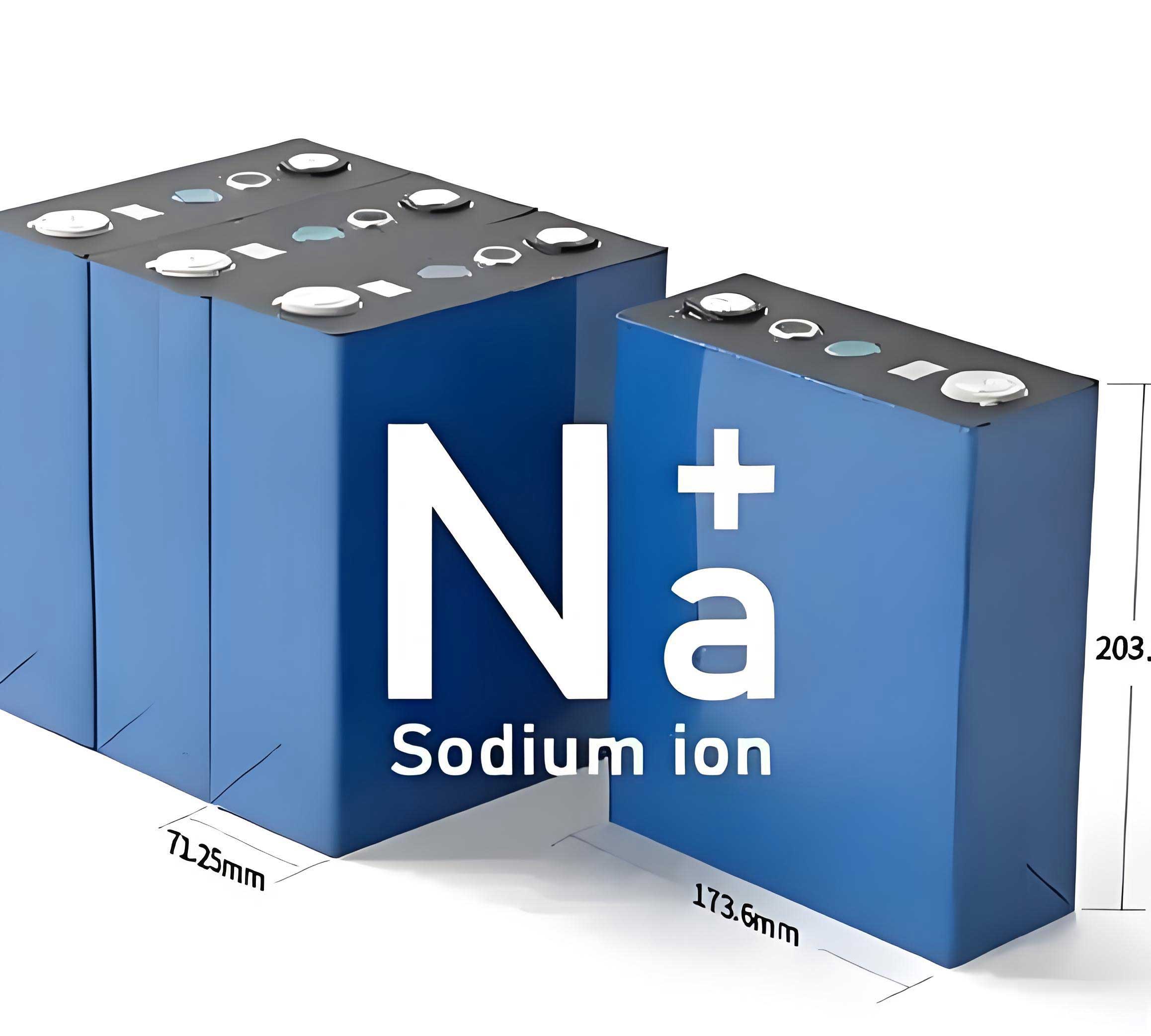
The Energy Density Imperative for Sodium-Ion Battery Competitiveness
For a sodium-ion battery to displace LIBs in any application, it must demonstrate compelling advantages, with cost-per-kilowatt-hour being paramount. A fundamental metric is the volumetric and gravimetric energy density. While SIBs may not initially match the peak energy density of state-of-the-art LIBs, they can achieve cost parity or superiority at lower energy densities if paired with sufficiently long cycle life and lower material costs. The unit cost of energy delivered over a battery’s lifetime can be expressed as:
$$ C_{kWh} = \frac{C_{cell}}{E_d \times L_c} $$
Where \( C_{cell} \) is the total cell cost (\$), \( E_d \) is the deliverable energy density (kWh/kg), and \( L_c \) is the cycle life. The cell cost is heavily influenced by the cathode. Therefore, the target energy density for a sodium-ion battery to be competitive is not a fixed number but a function of its cycle life and electrode cost. Analyses show that with a moderate cycle life (e.g., 500-1000 cycles), SIBs can be economically viable at energy densities significantly below those of current LIBs, especially when using iron- and manganese-based cathodes instead of expensive cobalt and nickel. This makes the development of stable, long-cycling cathode materials the central challenge. The following table illustrates the relationship between required energy density, cycle life, and approximate cathode cost for sodium-ion battery cost-competitiveness.
| Target Cycle Life | Approximate Cathode Cost Range ($/ton) | Required Energy Density for Cost Parity (Wh/kg) | Viability for SIBs |
|---|---|---|---|
| 300 cycles | 900 – 1,400 | 240 – 365 | Challenging |
| 1,000 cycles | 630 – 1,400 | 80 – 180 | Achievable |
| 3,000+ cycles | < 1,000 | 100 – 150 | Highly Favorable |
This analysis underscores why the focus for sodium-ion battery cathodes has shifted towards achieving ultra-long cycle stability, even if it comes at a slight expense to maximum energy density. Materials that can sustain thousands of cycles bring down the levelized cost of storage dramatically, opening the door for massive grid-scale applications.
Landscape of Sodium-Ion Battery Cathode Materials
Cathode materials for sodium-ion battery systems are generally classified into three main categories based on their crystal structure and composition: layered transition metal oxides, polyanionic compounds, and Prussian blue analogues (PBAs). Each class possesses distinct advantages and faces specific challenges.
1. Layered Transition Metal Oxides (NaxTMO2)
These materials are structurally analogous to the ubiquitous LiCoO2 in LIBs. Their general formula is NaxMO2, where M is one or more transition metals (e.g., Mn, Fe, Ni, Co, Cu, Ti) and \( x \leq 1 \). They are categorized into O3 and P2 types based on the coordination of Na+ ions (octahedral or prismatic) and the stacking sequence of oxygen layers. The electrochemical reaction involves the (de)intercalation of Na+ alongside the redox activity of the transition metals.
$$ \text{Na}_x\text{MO}_2 \rightleftharpoons \text{Na}_{x-\Delta}\text{MO}_2 + \Delta\text{Na}^+ + \Delta e^- $$
Advantages: High theoretical specific capacity (typically 200-250 mAh/g), high tap density, and relatively simple synthesis. P2-type structures often show better Na+ mobility.
Challenges: They often suffer from phase transitions upon deep (de)sodiation, leading to capacity fade and voltage decay. Many contain hygroscopic phases, complicating handling. The use of expensive metals like Co and Ni undermines the cost advantage of the sodium-ion battery. Jahn-Teller distortion with Mn3+ can also destabilize the structure.
Representative Materials: P2-Na2/3Ni1/3Mn2/3O2, O3-NaFeO2, Na0.67Mn0.67Ni0.33O2.
2. Polyanionic Compounds
These materials feature a three-dimensional framework built from transition metal octahedra (MO6) linked by polyanion groups (XO4)n- (X = P, S, Si, Mo, etc.). The strong inductive effect of the (XO4)n- groups raises the operating voltage of the transition metal redox couple.
$$ \text{Na}_y\text{M}_2(\text{XO}_4)_3 / \text{Na}_y\text{M}(\text{XO}_4) \rightleftharpoons \text{Na}_{y-\Delta}\text{M}_2(\text{XO}_4)_3 / \text{Na}_{y-\Delta}\text{M}(\text{XO}_4) + \Delta\text{Na}^+ + \Delta e^- $$
Advantages: Excellent thermal and structural stability, leading to outstanding safety and long cycle life. Tuneable and high operating voltage (often 3.0-4.0 V vs. Na/Na+). Many utilize low-cost elements like Fe and Mn.
Challenges: Lower intrinsic electronic conductivity, leading to poor rate capability. Often have lower theoretical gravimetric capacity due to the heavy polyanion group. Some frameworks have limited Na+ diffusion pathways.
Representative Materials: NASICON-type Na3V2(PO4)3 (NVP), Na4Fe3(PO4)2(P2O7) (NFPP), Fluorophosphates like Na3V2(PO4)2F3 (NVPF).
3. Prussian Blue Analogues (PBAs)
PBAs are open-framework materials with a general formula AxM[M'(CN)6]1-y·□y·nH2O, where A is an alkali metal (Na, K), M and M’ are transition metals (Fe, Mn, Ni, Cu, etc.), □ represents a [M'(CN)6] vacancy, and n is water molecules. They possess large interstitial sites ideal for fast Na+ diffusion.
Advantages: Very high rate capability due to open channels, potentially high capacity (≈170 mAh/g), low-cost aqueous synthesis, and versatile composition tuning.
Challenges: The presence of coordinated water and lattice vacancies, which are difficult to eliminate completely, can degrade electrolyte stability, cause gas evolution, and reduce Coulombic efficiency. Control over crystallinity and morphology during rapid precipitation is difficult.
Representative Materials: Prussian White (Na2Fe[Fe(CN)6]), Mn/Fe-based PBAs, Ni/Fe-based PBAs.
The table below summarizes the key electrochemical characteristics of representative materials from each class, highlighting the performance-cost trade-offs inherent to sodium-ion battery cathode development.
| Material Class | Specific Example | Avg. Voltage (V vs. Na/Na+) | Specific Capacity (mAh/g) | Cycle Life (Capacity Retention) | Key Advantages | Primary Challenges |
|---|---|---|---|---|---|---|
| Layered Oxide (P2) | Na0.67Ni0.33Mn0.67O2 | ~3.2 | ~160-180 | ~80% after 100 cycles | High capacity, good kinetics | Phase transitions, Ni/Co cost |
| Layered Oxide (O3) | NaFe0.5Mn0.5O2 | ~2.8 | ~180-200 | Poor without modification | Low cost (Fe, Mn) | Low voltage, hygroscopic, Jahn-Teller |
| Polyanionic (NASICON) | Na3V2(PO4)3 | ~3.4 | ~117 | >95% after 1000 cycles | Superb stability, high voltage | Moderate capacity, V cost/toxicity |
| Polyanionic (Mixed-poly) | Na4Fe3(PO4)2(P2O7) | ~3.2 | ~129 | >90% after 1000 cycles | Very low cost, safe, stable | Low electronic conductivity |
| Prussian Blue Analogue | Na2Fe[Fe(CN)6] | ~3.1 | ~150-160 | Varies greatly (70-90% after 500) | Ultra-fast charging, very low cost | Water content, vacancies, efficiency |
Advanced Optimization Strategies for Sodium-Ion Battery Cathodes
To overcome the intrinsic limitations of each cathode class and push the boundaries of sodium-ion battery performance, a multifaceted approach to material optimization is essential. These strategies often involve atomic-scale doping, nanostructuring, surface engineering, and compositional design.
1. Cationic and Anionic Doping/Substitution
This is the most prevalent strategy to stabilize crystal structures, enhance ionic/electronic conductivity, and suppress undesirable phase transitions. The principle is to substitute a small fraction of ions in the host lattice with foreign ions possessing different charge, size, or bonding characteristics.
In Layered Oxides: Doping with inert ions (e.g., Mg2+, Zn2+, Ti4+, Al3+) into the transition metal layer can strengthen the metal-oxygen bond, suppress transition metal migration, and mitigate layer sliding. For example, Mg doping in Na0.67Ni0.33Mn0.67O2 significantly improves cyclability by stabilizing the P2 phase. Doping with Ca2+ or Sr2+ into the Na layer can act as a “pillar” to reduce detrimental volume changes during cycling.
In Polyanionic Compounds: Multi-ion doping is highly effective. In Na4Fe3(PO4)2(P2O7), co-doping with Mn2+ (for Fe2+) and F– (for O2-) simultaneously modulates the electronic structure (eg orbital occupancy) to improve electronic conductivity and strengthens the crystal lattice, yielding superior rate performance and cycle life. The effect can be conceptualized as tuning the band gap \(E_g\):
$$ E_g(\text{doped}) < E_g(\text{pristine}) \quad \Rightarrow \quad \sigma_e(\text{doped}) > \sigma_e(\text{pristine}) $$
In PBAs: Introducing a second alkali metal like K+ during synthesis can template a specific crystal orientation and reduce lattice defects and water content, leading to higher capacity and stability.
2. Morphological Control and Nanostructuring
The kinetics of a sodium-ion battery are often limited by solid-state diffusion of the relatively large Na+ ion. Designing materials with optimized morphology is crucial.
- Nanoparticles: Shorten the diffusion path length for both Na+ and electrons, improving rate capability. The diffusion time \( \tau \) is proportional to the square of the diffusion length \( L \):
$$ \tau \propto \frac{L^2}{D} $$
where \( D \) is the diffusion coefficient. Reducing particle size from micro- to nano-scale dramatically reduces \( \tau \).
- Hollow/ Porous Structures: These architectures, such as hollow spheres or hierarchical porous frameworks, accommodate volume strain during cycling, provide a large electrode-electrolyte contact area, and facilitate electrolyte infiltration. A hollow spherical Na4Fe3(PO4)2(P2O7)@C composite, for instance, exhibits excellent cycling stability.
- Oriented Growth: Controlling crystal growth to expose facets with faster Na+ diffusion channels (e.g., the (010) plane in layered oxides) can enhance rate performance without the drawbacks of excessive nanoscale surfaces.
3. Conductive Surface Coating and Composite Engineering
Most cathode materials, especially polyanionic types, are poor electronic conductors. Encapsulating particles with a thin, uniform layer of conductive carbon (amorphous carbon, graphene, carbon nanotubes) is a standard and effective practice. This coating creates a percolating network for electrons, protects the surface from side reactions with the electrolyte, and can sometimes limit particle growth during synthesis. Furthermore, constructing 2D or 3D composites with conductive scaffolds—like embedding active material within a graphene foam or interweaving with CNTs—ensures both electronic and ionic pathways are optimized. For organic-based cathodes, forming composites with conductive polymers or carbon materials is essential to overcome their inherent insulating nature.
4. Compositional Tailoring and High-Entropy Design
Moving beyond simple doping, designing cathodes with multiple principal elements in the transition metal site is a cutting-edge strategy. “High-entropy” or “compositionally complex” layered oxides, such as NaNi0.2Cu0.2Mg0.2Mn0.2Ti0.2O2, leverage configurational entropy to stabilize the crystal structure, suppress ordering and phase transitions, and enable smoother electrochemical profiles. In PBAs, careful selection of the two transition metals (M and M’) allows for tuning the operating voltage and capacity.
5. Anion Redox Activation
To break the capacity ceiling imposed by transition metal redox alone, researchers are exploring anionic redox activity in Li-rich and Na-rich layered oxides. In materials like Na2/3Mn2/3TM1/3O2 (TM = Li, Mg, Zn), oxygen anions (O2-/On-) participate in the charge compensation mechanism, providing extra capacity beyond that available from the transition metals:
$$ \text{M}^{4+} + \text{O}^{2-} \rightarrow \text{M}^{3+} + \text{O}^{-} \quad \text{(or } \text{O}_2^{n-}\text{)} $$
While promising for high energy density sodium-ion battery cathodes, anion redox often leads to oxygen release, structural degradation, and voltage hysteresis, requiring stabilization strategies like surface coatings and specific structural motifs.
The following table synthesizes these optimization strategies with their primary mechanisms and target material classes.
| Optimization Strategy | Primary Mechanism/Goal | Key Techniques/Examples | Most Relevant Cathode Class |
|---|---|---|---|
| Elemental Doping | Stabilize structure, suppress phase transitions, enhance conductivity. | Mg/Al/Ti doping in layered oxides; Mn/F co-doping in NFPP. | Layered Oxides, Polyanionic |
| Nanostructuring & Morphology Control | Shorten ion diffusion paths, accommodate strain, increase surface area. | Hollow spheres, nanoparticles, nanorods, porous frameworks. | All (Polyanionic, PBAs especially) |
| Conductive Coating/Compositing | Improve electronic conductivity, protect surface. | Carbon coating (glucose, CVD), graphene wrapping, CNT networks. | All (Essential for Polyanionic) |
| Compositional Design (High-Entropy) | Enhance structural stability via configurational entropy. | Multi-principal element transition metal sites. | Layered Oxides |
| Crystal Structure & Defect Engineering | Control Na+ site occupancy, vacancies, and orientation. | Synthesis control for P2 vs. O3; reducing vacancies/H2O in PBAs. | Layered Oxides, PBAs |
| Anion Redox Utilization | Access extra capacity beyond cation redox limits. | Design of Na-rich/Mn-rich layered oxides. | Layered Oxides |
Future Perspectives and Commercial Trajectory
The development of cathode materials for the sodium-ion battery is rapidly transitioning from laboratory curiosity to commercial reality. The optimization strategies discussed are no longer merely academic exercises but are being implemented by companies worldwide to manufacture viable products. The future trajectory will focus on several key areas:
1. Cost-Driven Material Dominance: Cathodes based on extremely abundant elements—iron, manganese, aluminum, and copper—will be favored. Materials like Prussian White (Na2Fe[Fe(CN)6]) and mixed polyanion compounds (Na4Fe3(PO4)2(P2O7)) are front-runners due to their low raw material cost and steadily improving performance through the optimization methods described.
2. Beyond Energy Density – The Total Cost of Ownership: The success metric for grid-storage sodium-ion battery systems is the levelized cost of storage (LCOS), which factors in capital cost, cycle life, efficiency, and maintenance. A cathode that delivers 120 mAh/g for 5000 cycles is far more valuable than one delivering 180 mAh/g for 500 cycles. Thus, the relentless pursuit of ultra-long cycle life (>3000-5000 cycles) will be paramount.
3. Solid-State Sodium-Ion Batteries: The ultimate goal for safety and energy density is the development of all-solid-state sodium-ion battery systems. This places new demands on cathode materials, requiring ultra-stable interfaces with solid electrolytes and potentially enabling the use of high-voltage, high-capacity cathodes that are unstable in liquid electrolytes. Cathode optimization will then include interface engineering and composite cathode design (active material + solid electrolyte + conductive agent).
4. Sustainability and Circularity: As production scales, the environmental footprint of cathode synthesis (energy, water, chemical use) and end-of-life recycling will become critical. Aqueous synthesis routes for PBAs and low-temperature processes for some polyanionic materials offer green advantages. Designing cathodes for easy disassembly and material recovery will be a future optimization parameter.
In conclusion, the sodium-ion battery represents a paradigm shift towards sustainable and equitable electrochemical storage. While challenges remain, the continuous and ingenious optimization of cathode materials—through doping, nanostructuring, coating, and compositional innovation—is steadily closing the performance gap with LIBs in key metrics relevant for stationary storage. The path forward is not simply to mimic lithium-ion chemistry but to leverage sodium’s unique properties to create a durable, safe, and profoundly low-cost battery technology. The progress in cathode materials is the cornerstone of this endeavor, paving the way for the sodium-ion battery to become a fundamental pillar of the future decarbonized energy infrastructure.