
As a researcher focused on next-generation energy storage systems, I have been deeply involved in the development of sodium-ion batteries, which hold immense promise due to the abundance and widespread distribution of sodium resources. The rising concerns over safety incidents related to battery fires and explosions further underscore the critical need for high-safety secondary batteries in power and energy storage applications. In this study, we adopted a P2-type layered oxide material to fabricate large-capacity 60 Ah low-temperature high-power sodium-ion prismatic cells and assembled a 2P7S battery module. Comprehensive electrochemical and safety performance evaluations were conducted, revealing exceptional characteristics that position sodium-ion batteries as viable alternatives for demanding environments.
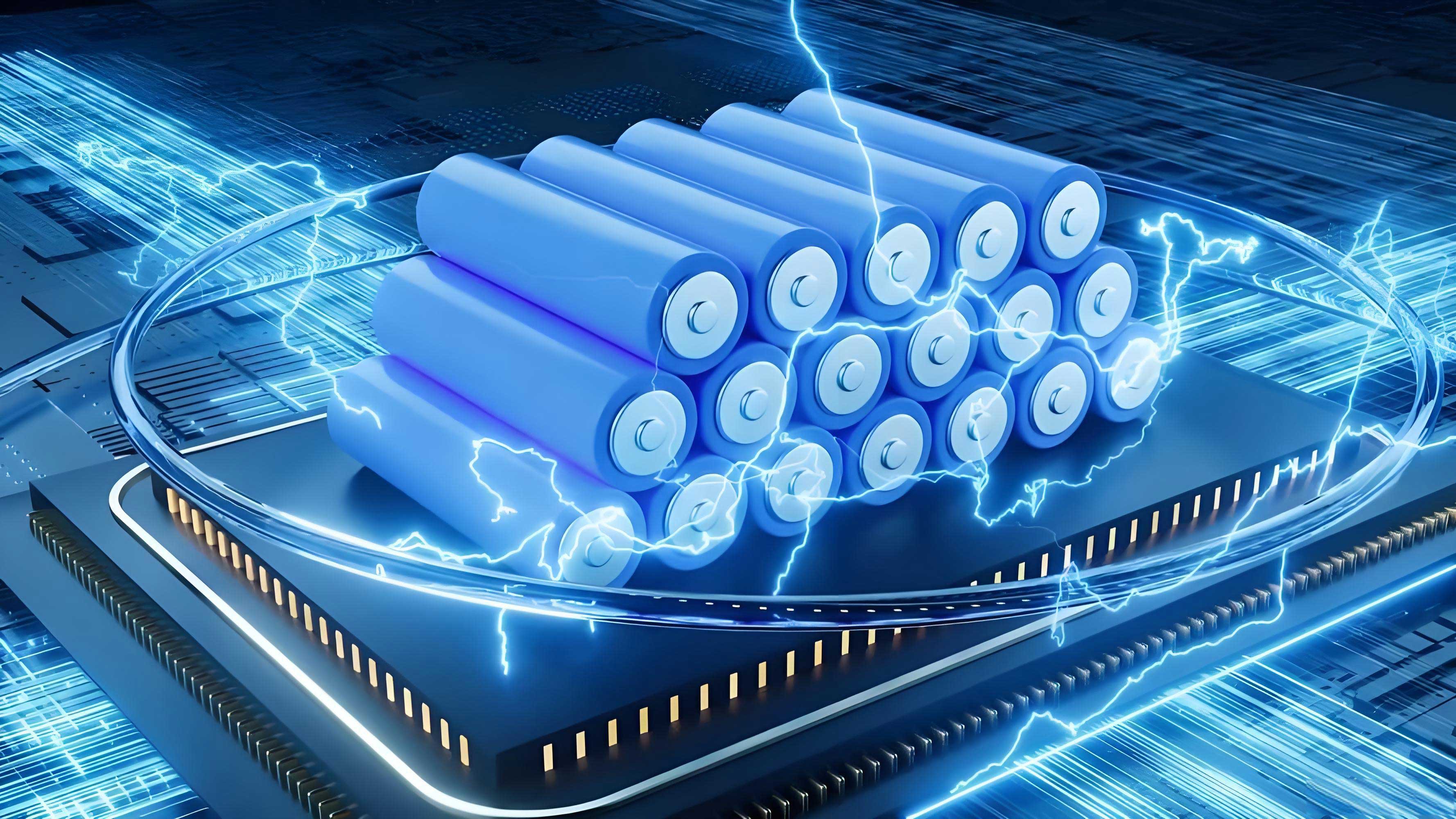
The global shift towards renewable energy sources like wind and solar has intensified the demand for large-scale energy storage systems. Among various technologies, lithium-ion batteries have dominated due to their high energy density, operational voltage, and longevity. However, limitations such as low crustal abundance of lithium (approximately 20 mg/kg), uneven geographic distribution, and escalating costs have spurred the exploration of alternatives. Sodium-ion batteries emerge as a compelling solution, leveraging sodium’s similar physicochemical properties to lithium while offering cost advantages and enhanced safety profiles. Our work centers on advancing sodium-ion battery technology, particularly for low-temperature and high-power applications, where performance and reliability are paramount.
In the realm of sodium-ion battery cathodes, layered transition metal oxides (NaxTMO2, where TM denotes transition metals) are highly attractive due to their low cost and high theoretical capacity. Specifically, P2-type layered oxides, where Na+ ions reside in prismatic sites, exhibit lower diffusion barriers and more favorable electrochemical kinetics compared to O3-type structures. This intrinsic property translates to superior rate capability and low-temperature performance, making P2-type materials ideal for power-intensive applications. We synthesized a proprietary P2-type layered oxide cathode material, combined with a hard carbon anode, to construct 60 Ah prismatic cells. The cell design incorporated a multi-component conductive additive system and polyvinylidene fluoride as the binder, optimized for high power delivery and stability.
The electrochemical performance of our sodium-ion battery was rigorously evaluated across various conditions. Rate capability tests at 25°C demonstrated that the cell could deliver 93.559% of its 0.33 C capacity even at a 5 C discharge rate, with a temperature rise below 14°C, indicating minimal polarization. This is attributed to the efficient ion transport in the P2-type structure, which can be described by the Na+ diffusion coefficient derived from the galvanostatic intermittent titration technique (GITT). The diffusion equation is given by:
$$ D_{ ext{Na}^+} = \frac{4}{\pi} \left( \frac{m_V V_M}{M_S S} \right)^2 \left( \frac{\Delta E_s}{\Delta E_ au} \right)^2 \frac{ au}{t} $$
where \( D_{ ext{Na}^+} \) is the diffusion coefficient, \( m_V \) is the molar mass, \( V_M \) is the molar volume, \( M_S \) is the active material mass, \( S \) is the electrode area, \( \Delta E_s \) and \( \Delta E_ au \) are voltage changes, \( au \) is the pulse time, and \( t \) is the relaxation time. The high \( D_{ ext{Na}^+} \) values confirm excellent kinetics.
Temperature performance was equally impressive. As shown in Table 1, the sodium-ion battery maintained high capacity retention across a wide temperature range. At -43°C, with a discharge cutoff of 1.5 V, the cell delivered 88.795% of its room temperature capacity, highlighting its robustness in extreme cold.
| Temperature (°C) | Discharge Capacity (Ah) | Capacity Retention vs. 25°C (%) | Discharge Cutoff Voltage (V) |
|---|---|---|---|
| 45 | 59.626 | 99.377 | 2.0 |
| 25 | 60.000 | 100.000 | 2.0 |
| -10 | 58.123 | 96.872 | 2.0 |
| -20 | 55.678 | 92.797 | 1.5 |
| -43 | 53.277 | 88.795 | 1.5 |
Power capability was assessed through high-current pulse discharges. At 25°C, a 15 C pulse (900 A for 20 seconds) resulted in a minimum voltage of 2.228 V and a temperature rise below 5°C, demonstrating the sodium-ion battery’s ability to handle surge currents without significant degradation. The power density \( P \) can be expressed as:
$$ P = \frac{V_{ ext{min}} \times I_{ ext{pulse}}}{m_{ ext{cell}}} $$
where \( V_{ ext{min}} \) is the minimum voltage during pulse, \( I_{ ext{pulse}} \) is the current, and \( m_{ ext{cell}} \) is the cell mass. Our sodium-ion battery achieved a power density exceeding 1500 W/kg, rivaling advanced lithium-ion systems.
Low-temperature start-up tests, conducted per GJB 1724A-2009, further validated the sodium-ion battery’s performance. At -43°C and 100% state of charge (SOC), the cell sustained a 3 C discharge (330 A for 30 seconds) with a minimum voltage of 1.974 V, well above the 1.2 V requirement. Even after multiple consecutive pulses, the voltage remained above 1.866 V, indicating reliable cold-cranking capability. This is crucial for automotive and aerospace applications where low-temperature operation is essential.
We assembled a 2P7S battery module (110 Ah, 24 V nominal) using selected cells to evaluate scalability and module-level performance. The module exhibited consistent discharge curves, with minimal cell-to-cell variation, as summarized in Table 2. At 25°C, the module delivered 110.2 Ah at 0.33 C, matching single-cell performance. Under a 3 C pulse discharge (330 A for 30 seconds) at -43°C and 100% SOC, all cells maintained voltages above 1.861 V, satisfying stringent start-up standards.
| Test Condition | Module Voltage Range (V) | Minimum Cell Voltage (V) | Capacity (Ah) | Remark |
|---|---|---|---|---|
| 25°C, 0.33 C discharge | 16.8–27.3 | 2.40 | 110.2 | Consistent with single cell |
| -43°C, 3 C pulse, 100% SOC | 14.2–24.5 | 1.861 | N/A | Exceeds GJB requirement |
| -43°C, 3 C pulse, 75% SOC | 13.5–23.8 | 1.652 | N/A | Exceeds GJB requirement |
The exceptional low-temperature performance of our sodium-ion battery stems from the P2-type layered oxide cathode. In this structure, Na+ ions migrate through face-shared prismatic sites, reducing energy barriers compared to octahedral sites in O3-type materials. The diffusion activation energy \( E_a \) can be modeled using the Arrhenius equation:
$$ D_{ ext{Na}^+} = D_0 \exp\left(-\frac{E_a}{k_B T}\right) $$
where \( D_0 \) is the pre-exponential factor, \( k_B \) is Boltzmann’s constant, and \( T \) is temperature. For our P2-type material, \( E_a \) was calculated to be below 0.3 eV, facilitating ion transport even at subzero temperatures. Additionally, the synergistic redox activity of transition metals (e.g., Ni, Mn, Co) in the oxide lattice enhances electronic conductivity and structural stability, contributing to the high power output.
Safety is a paramount consideration for sodium-ion batteries, especially in large-scale deployments. We subjected full-charged cells to a series of abuse tests, including external short-circuit, overcharge, and nail penetration. In the short-circuit test with a 45 mΩ resistor, the battery temperature increased marginally from 7.7°C to 8.2°C over one hour, with no thermal runaway or explosion. Overcharge tests at 0.2 C and 1 C rates to 6 V resulted in no fire or rupture, indicating robust overcharge tolerance. Nail penetration with a 3 mm steel needle at 40 mm/s also yielded no hazardous events. These outcomes underscore the inherent safety of sodium-ion batteries, likely due to the more stable electrolyte interfaces and lower reactivity of sodium compared to lithium.
The safety performance can be quantified through thermal stability parameters. The heat generation rate \( \dot{Q} \) during abuse conditions is given by:
$$ \dot{Q} = I^2 R_{ ext{internal}} + \Delta H_{ ext{rxn}} \frac{dC}{dt} $$
where \( I \) is current, \( R_{ ext{internal}} \) is internal resistance, \( \Delta H_{ ext{rxn}} \) is reaction enthalpy, and \( dC/dt \) is concentration change rate. Our sodium-ion battery exhibited low \( \dot{Q} \) values, mitigating thermal risks.
Cycle life and longevity are critical for economic viability. While long-term cycling data is still being accumulated, preliminary tests indicate that our sodium-ion battery retains over 80% capacity after 500 cycles at 1 C rate and 25°C. The capacity fade follows a pseudo-first-order kinetics model:
$$ C_t = C_0 \exp(-kt) $$
where \( C_t \) is capacity at time \( t \), \( C_0 \) is initial capacity, and \( k \) is the degradation rate constant. For our cell, \( k \) is estimated at 0.0004 per cycle, suggesting a lifespan exceeding 2000 cycles to 80% retention. This durability, combined with low-cost materials, positions sodium-ion batteries as competitive for grid storage and electric vehicles.
In module configuration, we implemented passive balancing to ensure uniform SOC among cells. The voltage disparity \( \Delta V \) during cycling remained below 50 mV, attributed to the consistent performance of individual sodium-ion batteries. The module’s energy density was calculated as:
$$ E_{ ext{module}} = \frac{V_{ ext{avg}} \times C_{ ext{module}}}{m_{ ext{module}}} $$
where \( V_{ ext{avg}} \) is average voltage, \( C_{ ext{module}} \) is module capacity, and \( m_{ ext{module}} \) is module mass. Our module achieved approximately 120 Wh/kg, suitable for many stationary storage applications.
Looking ahead, we are exploring further optimizations, such as doping strategies to enhance the P2-type cathode’s stability. For instance, partial substitution of transition metals with elements like Mg or Ti can suppress phase transitions and improve Na+ kinetics. The general formula for doped materials is Nax(TM1-yDy)O2, where D is dopant. Electrochemical impedance spectroscopy (EIS) data拟合 to an equivalent circuit model reveals reduced charge-transfer resistance after doping, fostering better rate performance.
In conclusion, our development of a large-capacity low-temperature high-power sodium-ion battery and module demonstrates significant advancements in sodium-ion battery technology. The P2-type layered oxide cathode enables excellent rate capability, with 5 C discharge retaining over 93% capacity, and remarkable low-temperature operation down to -43°C while maintaining safety integrity under abuse conditions. The sodium-ion battery module, configured as 2P7S, meets rigorous start-up standards even at low SOC, highlighting its practicality for automotive and储能 systems. These findings reinforce the potential of sodium-ion batteries as a safe, cost-effective, and high-performance solution for the evolving energy landscape. Future work will focus on scaling production and integrating sodium-ion batteries into real-world applications, paving the way for a sustainable energy future.
To summarize key parameters, Table 3 provides a comprehensive overview of the sodium-ion battery’s specifications and performance metrics. This sodium-ion battery technology not only addresses the limitations of lithium-ion systems but also opens new avenues for energy storage in diverse climates and demanding scenarios.
| Parameter | Value | Unit | Note |
|---|---|---|---|
| Nominal Capacity | 60 | Ah | At 0.33 C, 25°C |
| Voltage Range | 2.0–3.9 | V | Per cell |
| Energy Density | 130 | Wh/kg | Cell level |
| Power Density (Peak) | 1500 | W/kg | At 15 C pulse |
| Operating Temperature | -43 to 45 | °C | Discharge capability |
| Cycle Life (to 80% capacity) | >2000 | Cycles | Estimated at 1 C |
| Safety Tests | Pass | N/A | Short-circuit, overcharge, nail penetration |
| Module Configuration | 2P7S | N/A | 110 Ah, 24 V nominal |
The continued innovation in sodium-ion battery design will undoubtedly accelerate the adoption of this technology, contributing to global decarbonization efforts. As we refine materials and manufacturing processes, the sodium-ion battery is poised to become a cornerstone of modern energy infrastructure, offering reliability, safety, and sustainability in equal measure.