
The pursuit of sustainable and safe energy storage technologies has become paramount in the era of energy decarbonization and electrification. While lithium-ion batteries have dominated the landscape, concerns over lithium resource scarcity and geopolitical distribution have spurred significant interest in alternative chemistries. Sodium-ion batteries, leveraging the abundant and geographically widespread sodium resources, have emerged as a promising and cost-effective candidate for large-scale energy storage applications, owing to their similar working principles and manufacturing compatibility with existing lithium-ion technology.
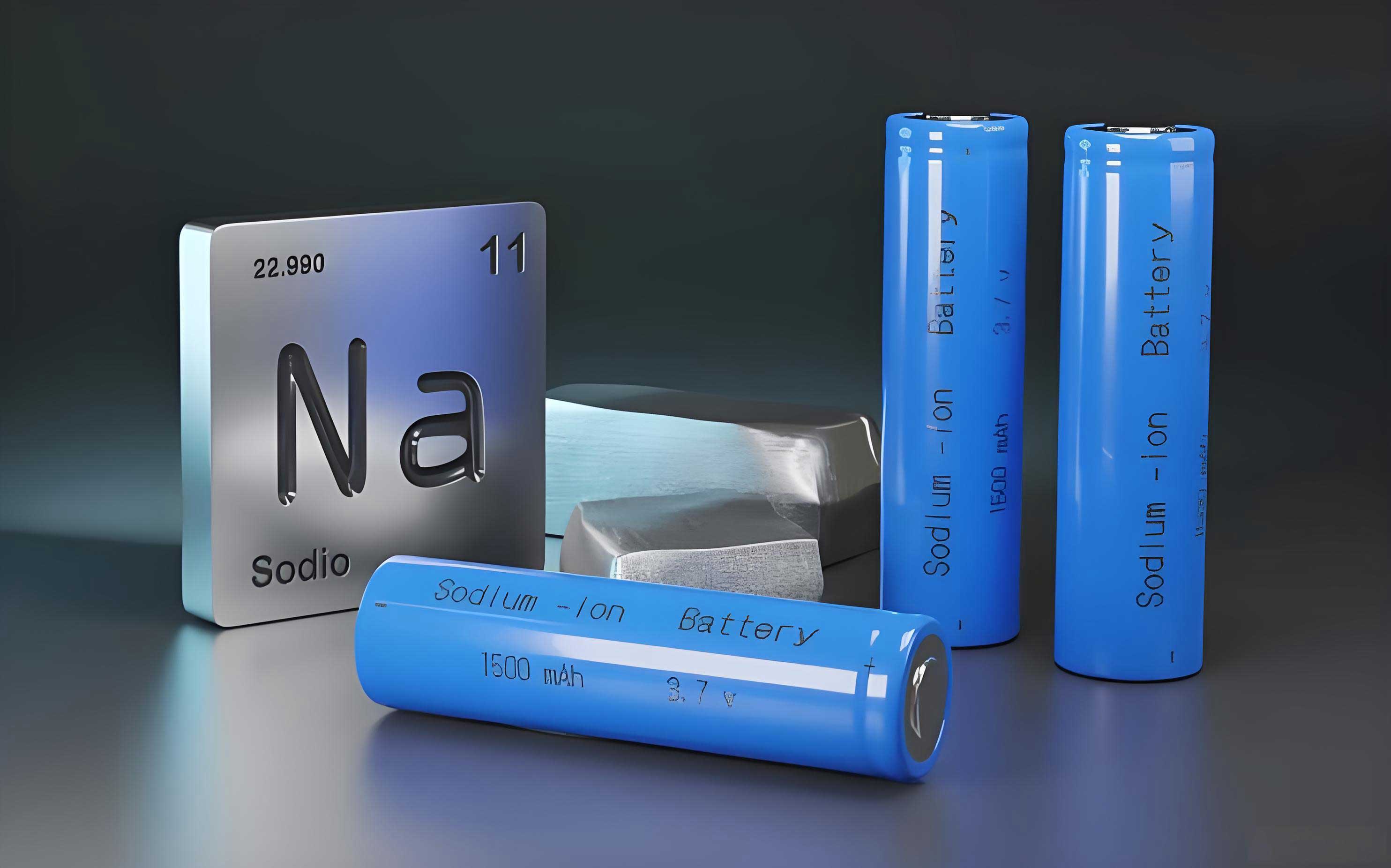
However, conventional sodium-ion batteries employing organic liquid electrolytes inherit inherent safety risks such as flammability, volatility, and leakage. The substitution of liquid electrolytes with solid electrolytes to construct solid-state sodium-ion batteries is considered a fundamental strategy to mitigate these safety hazards. Solid electrolytes, the core component, are required to possess high ionic conductivity (preferably >10–4 S cm–1 at room temperature), electronic insulation, excellent electrochemical stability, good interfacial contact with electrodes, and sufficient mechanical strength. Among the various solid electrolyte candidates, polymer-based systems offer unique advantages including ease of processing, good flexibility, and favorable interfacial compatibility. Poly(ethylene oxide) (PEO) has been extensively investigated as a host matrix for solid polymer electrolytes (SPEs) due to its high solvating power for sodium salts, favorable chain flexibility, and good electrochemical stability. This article provides a comprehensive review of PEO-based solid electrolytes for solid-state sodium-ion batteries, covering their fundamental properties, ion transport mechanisms, preparation methods, and advanced modification strategies.
Fundamentals of PEO-Based Solid Polymer Electrolytes
Physicochemical Properties of PEO
PEO is a semi-crystalline, thermoplastic polyether characterized by a linear chain structure with repeating –CH2CH2O– units. Its molecular structure facilitates the solvation of alkali metal cations like Na+ through coordination interactions between the cation and the lone electron pairs on the ether oxygen atoms. The key properties making PEO attractive for solid-state sodium-ion battery electrolytes include:
- High Dielectric Constant: Promotes the dissociation of sodium salts into mobile ions.
- Low Glass Transition Temperature (Tg): Implies high segmental mobility of the polymer chains above Tg, which is crucial for ion transport.
- Excellent Film-Forming Ability: Enables the fabrication of thin, flexible electrolyte membranes.
The primary limitation of pure PEO is its high degree of crystallinity at room temperature. Ion conduction is predominantly restricted to the amorphous regions of the polymer, as the crystalline domains exhibit slow chain dynamics, severely limiting ionic mobility. Therefore, the central design principle for enhancing the performance of PEO-based electrolytes is to suppress crystallinity and maximize the amorphous phase content.
Ion Transport Mechanism
Ion transport in PEO-based electrolytes is intrinsically linked to the segmental motion of the polymer chains. The widely accepted mechanism involves the coordinated hopping of cations between coordination sites provided by the ether oxygen atoms. The process can be described as follows:
- Dissociation of the sodium salt (e.g., NaTFSI, NaClO4) within the PEO matrix.
- Coordination of Na+ ions with the ether oxygen atoms of PEO chains.
- Under an applied electric field, local segmental motion of the polymer chains creates a dynamic coordination environment.
- Na+ ions hop from one coordination site to an adjacent vacant site, facilitated by the rearrangement of polymer segments.
This mechanism underscores that ionic conductivity ($\sigma$) is thermally activated and strongly dependent on the viscosity and segmental mobility of the polymer. The temperature dependence of conductivity typically follows the Vogel–Tammann–Fulcher (VTF) equation for amorphous polymers above Tg:
$$ \sigma = A T^{-1/2} \exp\left(\frac{-B}{T – T_0}\right) $$
where $A$ is a pre-exponential factor related to the charge carrier concentration, $B$ is the pseudo-activation energy, and $T_0$ is the ideal glass transition temperature (often close to $T_g – 50$ K). At temperatures below $T_g$, where chain motion is frozen, conductivity may follow an Arrhenius-type behavior:
$$ \sigma = \sigma_0 \exp\left(\frac{-E_a}{k_B T}\right) $$
where $\sigma_0$ is a pre-exponential factor, $E_a$ is the activation energy, and $k_B$ is the Boltzmann constant. The transition between these regimes highlights the critical role of polymer amorphousness in achieving practical ionic conductivity for solid-state sodium-ion battery operation.
Preparation Methods for PEO-Based Electrolyte Membranes
The fabrication method significantly influences the microstructure, homogeneity, and final properties of the electrolyte membrane. Several techniques are commonly employed:
Solution Casting
This is the most prevalent method. PEO and sodium salt are dissolved in a volatile organic solvent (e.g., acetonitrile, methanol). The homogeneous solution is poured onto a substrate (e.g., PTFE mold) and the solvent is slowly evaporated, leaving behind a freestanding polymer electrolyte film.
Advantages: Simple, yields uniform and thin films with controlled thickness.
Disadvantages: Time-consuming, potential for solvent residue affecting long-term stability, environmental concerns.
Hot Pressing
A solvent-free method where dried mixtures of PEO, salt, and any additives are pressed under heat and pressure to form a dense membrane.
Advantages: Rapid, avoids solvent-related issues, cost-effective.
Disadvantages: Requires precise control of temperature and pressure to prevent polymer degradation or incomplete mixing.
Electrospinning
Involves creating a polymer/salt solution and using a high-voltage electric field to draw ultrafine fibers, which are collected as a non-woven mat. This method can create a three-dimensional interconnected porous structure.
Advantages: High surface area, tunable porosity, can provide continuous ion transport pathways.
Disadvantages: Sensitive to environmental conditions (humidity, temperature), may require post-treatment to ensure mechanical integrity.
In Situ Polymerization
A precursor solution containing polymerizable monomers (e.g., PEGDMA), initiator, and sodium salt is injected into the battery cell or cast onto an electrode, followed by polymerization triggered by heat or UV light.
Advantages: Excellent interfacial contact with electrodes, can form cross-linked networks.
Disadvantages: Limited by monomer chemistry, risk of initiator residue, may involve volumetric shrinkage.
Modification Strategies to Enhance Performance
To overcome the intrinsic limitations of pristine PEO-based electrolytes, particularly low room-temperature ionic conductivity, numerous modification strategies have been developed. The overarching goal is to disrupt PEO crystallinity, enhance chain mobility, and improve electrochemical stability for robust solid-state sodium-ion battery operation.
1. Polymer Structural Engineering: Blending, Copolymerization, and Crosslinking
Modifying the polymer architecture is a direct approach to tailor properties.
- Blending: Mixing PEO with other polymers (e.g., PVP, PVDF-HFP) can reduce overall crystallinity. The complementary properties of the blend can improve mechanical strength and ionic conductivity.
- Copolymerization: Synthesizing block or graft copolymers containing PEO segments and other functional blocks (e.g., fluorinated polymers for electrochemical stability) can create self-assembled nanostructures that decouple mechanical strength from ion transport.
- Crosslinking: Forming a three-dimensional polymer network via chemical or physical crosslinks inhibits polymer chain recrystallization, enhances mechanical robustness, and stabilizes the amorphous phase.
The following table summarizes the ionic conductivity of selected electrolytes modified through polymer engineering.
| Electrolyte Composition | Test Temp. (°C) | Conductivity (S cm–1) | Key Feature |
|---|---|---|---|
| PEO/PVP/NaPO3 | RT | ~1 × 10⁻⁵ | Blend reduces crystallinity |
| PEO/P(VDF-HFP)/NASICON | 30 | 2.4 × 10⁻⁴ | Semi-IPN network with active filler |
| PEO-b-PFPE block copolymer | 80 | > 1 × 10⁻⁴ | Nanostructured, high tNa+ |
| PEO/Na-CMC/NaClO4 | 55 | > 1 × 10⁻⁵ | 3D crosslinked skeleton |
2. Addition of Plasticizers
Incorporating low-molecular-weight compounds with high dielectric constant and low viscosity can effectively plasticize the PEO matrix, lowering Tg and crystallinity.
- Organic Solvents (EC, PC): Traditional plasticizers that significantly boost conductivity but compromise safety due to flammability.
- Solid Plasticizers (e.g., Succinonitrile, SN): Non-ionic plastic crystals that remain solid yet provide high ion mobility, offering a safer alternative.
- Ionic Liquids (ILs): Salts that are liquid at room temperature. ILs act as dual-function additives: they plasticize the polymer and provide additional charge carriers. They often improve thermal and electrochemical stability. The conductivity of an IL-containing electrolyte can be described by considering the contribution of both the polymer segmental motion and the ion mobility within the IL phase.
Table: Ionic Conductivity of Plasticized PEO-Based Electrolytes.
| Electrolyte | Plasticizer | Conductivity @ RT (S cm–1) |
|---|---|---|
| PEO/NaClO4/EC-PC | EC/PC mixture | ~9.5 × 10⁻³ |
| PEO/NaClO4/SN | Succinonitrile | ~3.6 × 10⁻⁵ |
| PEO/NaTFSI/Pyr13FSI | Ionic Liquid (Pyr13FSI) | ~6.8 × 10⁻⁵ |
3. Composite Polymer Electrolytes (CPEs) with Inorganic Fillers
Dispersing inorganic fillers into the PEO matrix to form Composite Polymer Electrolytes (CPEs) is one of the most effective strategies. Fillers are categorized as:
- Passive Fillers: Electrochemically inert oxides (e.g., Al2O3, SiO2, TiO2). Their primary roles are:
- Disrupting polymer chain packing to reduce crystallinity.
- Acting as Lewis acid/base centers to trap anions, increasing the transference number (tNa+).
- Enhancing mechanical and thermal stability.
- Active Fillers: Sodium-ion conducting ceramics (e.g., NASICON-type Na3Zr2Si2PO12 (NZSP), Na-β”-Al2O3, sulfide-based Na3PS4). These provide additional functions:
- Offering fast ion-conducting pathways percolating through the polymer matrix.
- Synergistically enhancing bulk ionic conductivity.
- Often improving interfacial stability against Na metal.
The overall conductivity of a composite electrolyte can be modeled considering the conductivity of the polymer phase ($\sigma_p$), the filler phase ($\sigma_f$), and their volume fractions ($\phi$), often using effective medium theories like the Maxwell-Garnett equation for dilute systems:
$$ \sigma_{eff} = \sigma_p \left[ \frac{2(1-\phi)\sigma_p + (1+2\phi)\sigma_f}{(2+\phi)\sigma_p + (1-\phi)\sigma_f} \right] $$
For high filler loadings, percolation theory becomes more relevant:
$$ \sigma_{eff} \propto (\phi – \phi_c)^t $$
where $\phi_c$ is the percolation threshold and $t$ is a critical exponent.
Table: Performance of Selected PEO-Based Composite Electrolytes.
| Composite Electrolyte | Filler Type | Conductivity @ Elevated Temp. (S cm–1) | Remarks |
|---|---|---|---|
| PEO/NaClO4/SiO2 | Passive (SiO2) | 7.6 × 10⁻⁶ @ RT | High tNa+ (~0.92) |
| PEO/NaClO4/NASICON | Active (NASICON) | 5.6 × 10⁻⁴ @ 60°C | Enhanced mechanical strength, stable cycling |
| PEO/NaTFSI/Na2Zn2TeO6 | Active (NZTO) | 1 × 10⁻³ @ 80°C | Flexible membrane, good interfacial contact |
| PEO/NaClO4/Na3PS4 | Active (Sulfide) | ~10–3 @ RT | High conductivity, interfacial stabilization needed |
Conclusion and Future Outlook
PEO-based solid polymer electrolytes represent a pivotal research direction for enabling safe and high-energy-density solid-state sodium-ion batteries. Significant progress has been made in understanding the ion transport mechanisms and developing sophisticated modification strategies. The integration of PEO with inorganic fillers to form composite electrolytes appears particularly promising, as it synergistically combines the flexibility and processability of polymers with the high ionic conductivity and mechanical strength of ceramics.
Future research efforts should focus on several critical challenges to propel the technology towards commercialization:
- Achieving High Room-Temperature Performance: While conductivities >10–4 S cm–1 are attainable at elevated temperatures (60-80°C), achieving similar performance at ambient temperature remains a key hurdle. Advanced composite designs, novel plasticizers, and polymer nanostructuring are essential.
- Interfacial Engineering: The unstable interface between the electrolyte and the sodium metal anode (or high-voltage cathode) leads to high impedance and dendrite growth. Constructing artificial interfacial layers or developing intrinsically stable electrolyte formulations is crucial.
- Scalable and Sustainable Manufacturing: Developing solvent-free or aqueous processing routes that are scalable, cost-effective, and environmentally benign is necessary for large-scale production of solid-state sodium-ion battery components.
- Deepening Fundamental Understanding: Combining advanced characterization techniques (solid-state NMR, in situ TEM, X-ray tomography) with computational modeling will provide deeper insights into structure-property relationships, ion transport dynamics at interfaces, and degradation mechanisms.
In conclusion, despite existing challenges, the continuous innovation in PEO-based electrolyte materials holds great promise for realizing the next generation of safe, durable, and high-performance solid-state sodium-ion batteries, potentially revolutionizing energy storage for applications ranging from grid storage to electric vehicles.