
The quest for sustainable and cost-effective energy storage solutions has positioned sodium-ion battery technology as a formidable contender to complement, and in some applications potentially replace, incumbent lithium-ion systems. The abundance and lower cost of sodium resources present a compelling economic advantage. Within the sodium-ion battery architecture, the cathode material is a pivotal component, dictating key performance metrics such as energy density, cycle life, rate capability, and safety. Among various cathode families, phosphate-based materials have garnered significant research attention due to their robust structural frameworks, excellent thermal stability, and favorable electrochemical profiles. This article provides a comprehensive overview of several key phosphate cathode materials for sodium-ion batteries, including orthophosphates, pyrophosphates, fluorophosphates, and their composite derivatives. By delving into their crystal structures, electrochemical behaviors, and material modification strategies, this discussion aims to furnish scientific insights and technical perspectives to propel the advancement of sodium-ion battery technology.
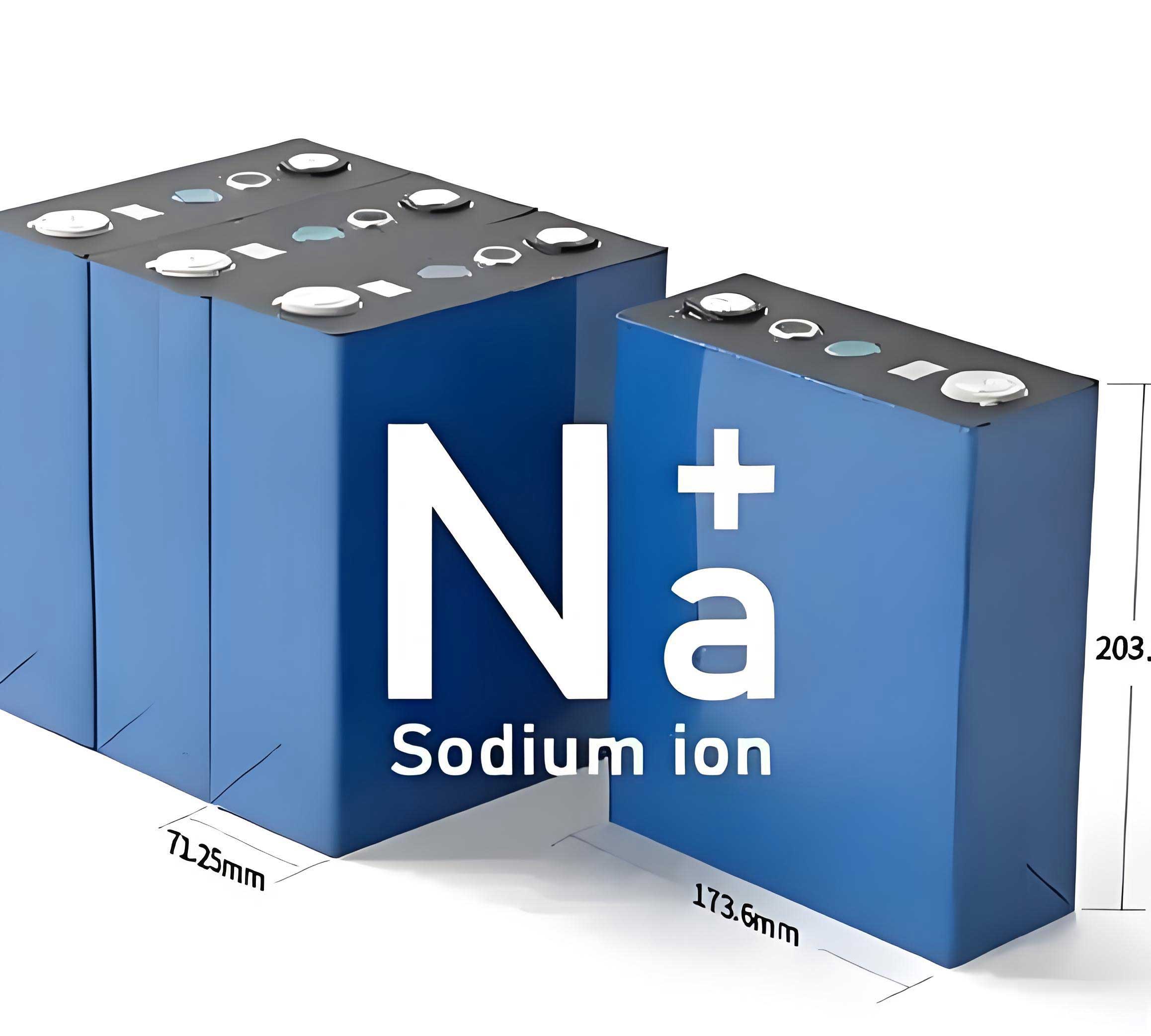
Working Principles of Phosphate Cathodes in Sodium-Ion Batteries
The fundamental operation of a sodium-ion battery revolves around the reversible extraction/insertion (de-intercalation/intercalation) of Na+ ions between the cathode and anode, coupled with the concomitant flow of electrons through an external circuit to maintain charge neutrality. Phosphate cathodes are active hosts for these Na+ ions.
1. Sodium Ion (De)intercalation: During charging, Na+ ions are extracted from the cathode lattice, migrate through the electrolyte, and are inserted into the anode. The process reverses during discharge. The kinetics and reversibility of this reaction are paramount.
2. Electron Transfer: The extraction of Na+ from the cathode oxidizes the transition metal (e.g., Fe, V), liberating electrons that travel via the external circuit to the anode. During discharge, electrons flow back as the transition metal is reduced upon Na+ re-insertion.
3. Critical Role of Crystal Structure: The crystal structure of the phosphate host must possess open channels or interstitial sites to facilitate rapid and reversible Na+ diffusion. Structural stability during this repeated ion insertion/extraction is crucial for long-term cyclability. Many phosphate materials benefit from the strong covalent P-O bonds, which stabilize the framework against collapse or undesired phase transitions.
4. Voltage Profile: The operating voltage of the cathode is determined by the redox potential of the active transition metal ion within the specific crystal field and coordination environment provided by the phosphate polyanion (PO43-). This can be approximated by considering the inductive effect, where the highly electronegative (PO4)3- group raises the redox potential of the metal center compared to its oxide counterpart, often enhancing safety.
Material Types, Structures, and Key Properties
Phosphate-based cathodes for sodium-ion batteries can be categorized based on their anionic composition. Their structural attributes directly influence their electrochemical performance.
1. Orthophosphates (e.g., NaFePO4)
Sodium iron phosphate (NaFePO4) crystallizes in an olivine structure (orthorhombic, Pnma space group), analogous to the commercially successful LiFePO4 in lithium-ion batteries. The structure consists of corner- and edge-sharing FeO6 octahedra and PO4 tetrahedra, forming a rigid three-dimensional framework with one-dimensional channels for Na+ diffusion.
Electrochemical Reaction:
$$ \text{NaFePO}_4 \rightleftharpoons \text{Na}_{1-x}\text{FePO}_4 + x\text{Na}^+ + x\text{e}^- $$
Advantages: High theoretical specific capacity (~154 mAh g-1), excellent structural and thermal stability, low cost, and environmental friendliness.
Challenges: Poor intrinsic electronic conductivity and relatively low operating voltage (~2.8-3.0 V vs. Na/Na+), leading to modest energy density. The one-dimensional Na+ diffusion path can also limit rate capability.
2. NASICON-type Phosphates (e.g., Na3V2(PO4)3)
Materials with the NASICON (Na Superionic Conductor) structure, such as Na3V2(PO4)3 (NVP), feature a robust three-dimensional framework built from VO6 octahedra sharing corners with PO4 tetrahedra. This creates a interconnected three-dimensional network of spacious conduction pathways for Na+ ions.
Electrochemical Reaction: Involves the V3+/V4+ redox couple.
$$ \text{Na}_3\text{V}_2(\text{PO}_4)_3 \rightleftharpoons \text{Na}_{3-x}\text{V}_2(\text{PO}_4)_3 + x\text{Na}^+ + x\text{e}^- $$
Typically, two Na+ can be extracted, leading to a theoretical capacity of ~117 mAh g-1 at an average voltage of ~3.4 V.
Advantages: Excellent ionic conductivity due to 3D diffusion channels, good structural stability, and moderate operating voltage.
Challenges: Moderate specific capacity and limited electronic conductivity.
3. Fluorophosphates (e.g., Na3V2(PO4)2F3 & NaVPO4F)
Introducing fluorine into the phosphate structure leads to materials like Na3V2(PO4)2F3 (NVPF) and NaVPO4F. NVPF has a 3D NASICON-related structure, while NaVPO4F adopts a layered/tunnel structure. The highly electronegative F– ion increases the ionic character of the V-O bond, thereby raising the redox potential of the V3+/V4+ couple.
Electrochemical Reaction for NVPF: Involves the extraction/insertion of two Na+ via the V3+/V4+ redox.
$$ \text{Na}_3\text{V}_2(\text{PO}_4)_2\text{F}_3 \rightleftharpoons \text{Na}_{3-2x}\text{V}_2(\text{PO}_4)_2\text{F}_3 + 2x\text{Na}^+ + 2x\text{e}^- $$
This occurs at a high average voltage of ~3.9 V, yielding a theoretical capacity of ~128 mAh g-1.
Advantages: High operating voltage leading to high energy density, good structural stability, and reasonable Na+ mobility.
Challenges: Synthesis can be complex, and some fluorophosphate materials may exhibit voltage hysteresis or multi-phase reactions that can impact kinetics.
4. Pyrophosphates (e.g., Na2FeP2O7)
Pyrophosphates contain the (P2O7)4- anion. Na2FeP2O7 typically has a 3D framework offering good Na+ conductivity. The Fe2+/Fe3+ redox couple operates at a moderate voltage.
Advantages: Good thermal stability, low cost (using iron), and relatively good rate capability due to 3D ion channels.
Challenges: Lower specific capacity (~100 mAh g-1) and energy density compared to some other phosphates.
| Material Class | Example | Crystal Structure | Theoretical Capacity (mAh g-1) | Avg. Voltage (V vs. Na/Na+) | Key Advantages | Primary Challenges |
|---|---|---|---|---|---|---|
| Orthophosphate | NaFePO4 | Olivine (1D channels) | ~154 | ~2.9 | High capacity, stable, safe, low cost | Low conductivity, low voltage |
| NASICON Phosphate | Na3V2(PO4)3 | NASICON (3D channels) | ~117 | ~3.4 | Fast ion diffusion, stable framework | Moderate capacity |
| Fluorophosphate | Na3V2(PO4)2F3 | NASICON-type (3D) | ~128 | ~3.9 | High voltage & energy density | Synthesis, potential hysteresis |
| Pyrophosphate | Na2FeP2O7 | 3D Framework | ~100 | ~3.0 | Stable, cost-effective, good rate | Low capacity |
Material Modification Strategies
To overcome inherent limitations like low electronic/ionic conductivity or structural instability during cycling, sophisticated material engineering strategies are employed for phosphate cathodes in sodium-ion batteries.
1. Cation/Anion Doping
Doping involves substituting a fraction of the host cations or anions with foreign ions to tailor electronic structure, ionic conductivity, and lattice parameters.
- Metal-Ion Doping (e.g., Mg2+, Ti4+, Mn2+): Substituting for Fe in NaFePO4 or V in Na3V2(PO4)3 can enhance electronic conductivity by creating charge carriers or widening Na+ diffusion pathways. For instance, Mg doping in NaFePO4 can stabilize the structure and improve rate performance. The effect on voltage can be estimated from changes in the Madelung energy and local bonding.
- Anion Doping (e.g., F– for O2-): As seen in fluorophosphates, F doping raises the operating voltage. Partial F substitution in phosphates like Na3V2(PO4)3-xFx can fine-tune the voltage profile and improve stability.
The change in unit cell volume (∆V) upon doping, which affects Na+ migration energy, can be conceptually linked to performance:
$$ \text{Na}^+ \text{Migration Barrier} \propto f(\text{Lattice Strain}, \text{Channel Size}) \approx k \cdot \frac{1}{\sqrt[3]{\Delta V}} $$
where a larger effective channel size (often from increased unit cell volume) typically lowers the activation barrier for Na+ hopping.
2. Surface Coating/Encapsulation
Applying a thin, conformal coating on cathode particles is a highly effective strategy.
- Carbon Coating: This is the most prevalent method. A carbon layer (from sucrose, citric acid, etc.) significantly enhances surface electronic conductivity, facilitates electron transfer at the particle interface, and can protect the active material from direct contact with the electrolyte, suppressing side reactions and transition metal dissolution. The improvement in effective conductivity (σeff) can be modeled as a composite:
$$ \sigma_{\text{eff}} \approx \phi_c \sigma_c + (1-\phi_c) \sigma_{\text{bulk}} $$
where φc and σc are the volume fraction and conductivity of the carbon coating, and σbulk is the intrinsic conductivity of the phosphate.
- Metal Oxide Coatings (e.g., Al2O3, ZrO2): These inert coatings primarily act as a physical barrier to mitigate electrolyte decomposition at high voltages and inhibit surface phase transitions, thereby improving cycle life, especially for high-voltage fluorophosphates.
3. Nano-structuring and Morphology Control
Reducing particle size to the nanoscale shortens the diffusion path length for both Na+ and electrons, dramatically improving rate capability. The time constant (τ) for solid-state diffusion is given by:
$$ \tau \approx \frac{L^2}{D} $$
where L is the diffusion length (particle radius) and D is the diffusion coefficient. Reducing L from micrometers to nanometers can decrease τ by several orders of magnitude, enabling fast charging. However, nano-particles have higher surface energy and may exhibit more pronounced side reactions, often necessitating a protective coating.
4. Development of Composite Materials
Creating composites that synergistically combine different phosphate materials is an advanced strategy. For example, a composite of a high-capacity material (like NaFePO4) with a high-voltage material (like a fluorophosphate) can potentially yield a cathode with both high capacity and high average voltage. Another approach is creating carbon-phosphate nanocomposites where active material nanoparticles are intimately embedded within a conductive carbon matrix, ensuring excellent electrical wiring and buffering volume changes.
| Modification Strategy | Target Property | Typical Agents/Methods | Expected Outcome | Performance Metric Impact |
|---|---|---|---|---|
| Cation Doping | Electronic/Ionic Conductivity, Structural Stability | Mg, Ti, Mn, Cr salts | Wider ion channels, stabilized lattice, enhanced charge transfer | ↑ Rate Capability, ↑ Cycle Life |
| Carbon Coating | Surface Electronic Conductivity, Interface Stability | Sucrose, Citric Acid, Glucose (pyrolysis) | Improved electron percolation, reduced surface degradation | ↑ Rate Capability, ↑ Initial Coulombic Efficiency, ↑ Cycle Life |
| Nano-structuring | Ion Diffusion Kinetics | Sol-gel, Hydrothermal, Ball-milling | Shortened diffusion pathways | ↑↑ Rate Capability |
| Composite Design | Overall Energy Density & Stability | Mechanical mixing, Co-precipitation | Synergy between high capacity and high voltage/stability | ↑ Energy Density, ↑ Cycle Life |
Research and Application Progress: A Case Study on Advanced Materials
Recent research has led to the development of advanced phosphate materials with performance metrics approaching practical requirements for sodium-ion batteries. One prominent example is the iron-based sodium mixed phosphate-pyrophosphate system, often denoted as Na4Fe3(PO4)2(P2O7) or similar compositions (sometimes reported as NFPP-4.5 in literature).
Material Design: This material ingeniously combines the (PO4)3- and (P2O7)4- polyanions within a single structure. The composite polyanion framework creates a stable 3D network for Na+ transport while utilizing the Fe2+/Fe3+ redox couple.
Synthesis & Optimization: It is typically synthesized via solid-state or sol-gel methods, followed by careful calcination under controlled atmosphere. A key step is the application of a uniform carbon coating during synthesis to address the inherent low conductivity of the iron-based phosphate.
Electrochemical Performance: This class of material demonstrates a compelling combination of properties:
- Moderate High Voltage: It operates at an average voltage of ~3.2 V vs. Na/Na+, higher than NaFePO4.
- High Theoretical Capacity: Involving multiple Na+ extraction/insertion, it can deliver a specific capacity of ~130-140 mAh g-1.
- Excellent Cyclability: The robust framework and carbon coating enable outstanding long-term stability. Reports show capacity retention exceeding 90% after 1000 cycles at 1C rate.
- Good Rate Performance: The 3D Na+ diffusion paths allow for respectable capacity retention at high charge/discharge rates (e.g., >80% at 5C).
The energy density (Egrav) of such a cathode can be calculated as:
$$ E_{\text{grav}} (\text{Wh kg}^{-1}) = \frac{\text{Average Voltage (V)} \times \text{Specific Capacity (mAh g}^{-1})}{1000} \times 1000 $$
$$ E_{\text{grav}} \approx 3.2 \, \text{V} \times 130 \, \text{mAh g}^{-1} \approx 416 \, \text{Wh kg}^{-1}_{\text{cathode}} $$
This represents significant progress for phosphate-based cathodes in sodium-ion batteries, making them strong candidates for applications in stationary energy storage and low-to-medium speed electric vehicles where cost, safety, and cycle life are prioritized.
Future Directions and Challenges
While significant strides have been made, the path to widespread commercialization of sodium-ion batteries with phosphate cathodes involves addressing several key challenges and exploring new frontiers.
1. Development of Higher-Energy-Density Materials
The quest for higher energy density continues. Future research directions include:
- Exploring New Poly-anion Systems: Moving beyond phosphates to materials like sulfates, silicates, or mixed polyanions to access higher redox potentials or multi-electron reactions.
- Multi-Electron Redox Couples: Designing materials that utilize more than one electron transfer per transition metal (e.g., V3+/V5+), though this often involves challenging structural changes.
- Voltage and Capacity Optimization: The ultimate goal is to push the specific energy. This requires a holistic material design approach balancing capacity (C) and voltage (V). Research focuses on finding stable hosts for high-potential couples (e.g., Mn3+/Mn4+, Co3+/Co4+) within polyanion frameworks.
2. Understanding and Mitigating Interfacial Degradation
The cathode-electrolyte interface (CEI) in sodium-ion batteries is complex and less understood than in lithium-ion systems. Continuous electrolyte decomposition, transition metal dissolution, and gas evolution at high voltages (>4.0 V vs. Na/Na+) are critical issues. Future work must involve:
- Advanced in-situ/operando characterization techniques to probe interfacial evolution.
- Development of novel electrolyte formulations (e.g., concentrated electrolytes, ionic liquids, functional additives) specifically tailored for high-voltage phosphate cathodes.
- Engineering artificial CEI layers via atomic layer deposition (ALD) or molecular layer deposition (MLD).
3. Scalable and Cost-Effective Manufacturing
For sodium-ion batteries to fulfill their promise of low cost, production processes must be scalable and economical.
- Green Synthesis Routes: Developing water-based or low-temperature synthesis methods to reduce energy consumption and environmental impact.
- Precursor Economics: Maximizing the use of low-cost, abundant raw materials (Fe, Mn) and minimizing reliance on expensive or critical ones (V, Co).
- Process Integration: Designing synthesis routes that seamlessly integrate doping and coating steps to simplify manufacturing.
The total cost per kWh of the cathode active material (CAMcost) is a function of raw material cost (RM), synthesis yield (Y), and performance (P):
$$ \text{CAM}_{\text{cost}} (\$/kWh) \propto \frac{\text{RM} (\$/kg)}{Y \times P (kWh/kg)} $$
Future research must optimize all three variables—lowering RM, increasing Y, and enhancing P—simultaneously.
4. System-Level Integration and Performance Validation
Beyond material-level metrics, successful application requires:
- Demonstrating long-term cycling (>5000 cycles) under realistic conditions (temperature, depth-of-discharge).
- Integrating advanced cathodes with compatible anodes (hard carbon, alloying materials) and electrolytes to build full cells with competitive energy density (>120 Wh kg-1 at cell level) and safety.
- Addressing challenges like sodium plating at the anode during fast charging and developing effective battery management systems (BMS) for sodium-ion battery packs.
In conclusion, phosphate-based cathode materials are at the forefront of the development of practical and competitive sodium-ion batteries. Through continuous innovation in material design, sophisticated modification strategies, and a deepening understanding of interfacial phenomena, their performance is steadily approaching the benchmarks required for large-scale energy storage and specific mobility applications. The future of this field lies in a multidisciplinary approach that bridges fundamental solid-state chemistry, electrochemistry, and scalable engineering to unlock the full potential of sodium-ion battery technology.