
The global push for sustainable energy solutions, particularly under strategic carbon neutrality goals, has propelled electrochemical energy storage to the forefront. While lithium-ion batteries have dominated this landscape due to their high energy density and established performance, their long-term viability is challenged by resource scarcity and rising costs. Sodium-ion batteries, leveraging the abundant natural reserves and similar electrochemistry of sodium, present a compelling and cost-effective alternative for large-scale energy storage applications. The performance, safety, and longevity of a sodium-ion battery are critically dependent on its electrolyte, which serves as the vital conduit for ion transport between the cathode and anode. The electrolyte formulation, comprising solvents, sodium salts, and crucially, functional additives, directly governs key metrics such as initial Coulombic efficiency, cycle stability, rate capability, and operational temperature range. This article provides a comprehensive, first-person perspective on the recent advancements in electrolyte additives for sodium-ion batteries, delving into their working mechanisms, synergistic effects, and the scientific principles behind interphase engineering.
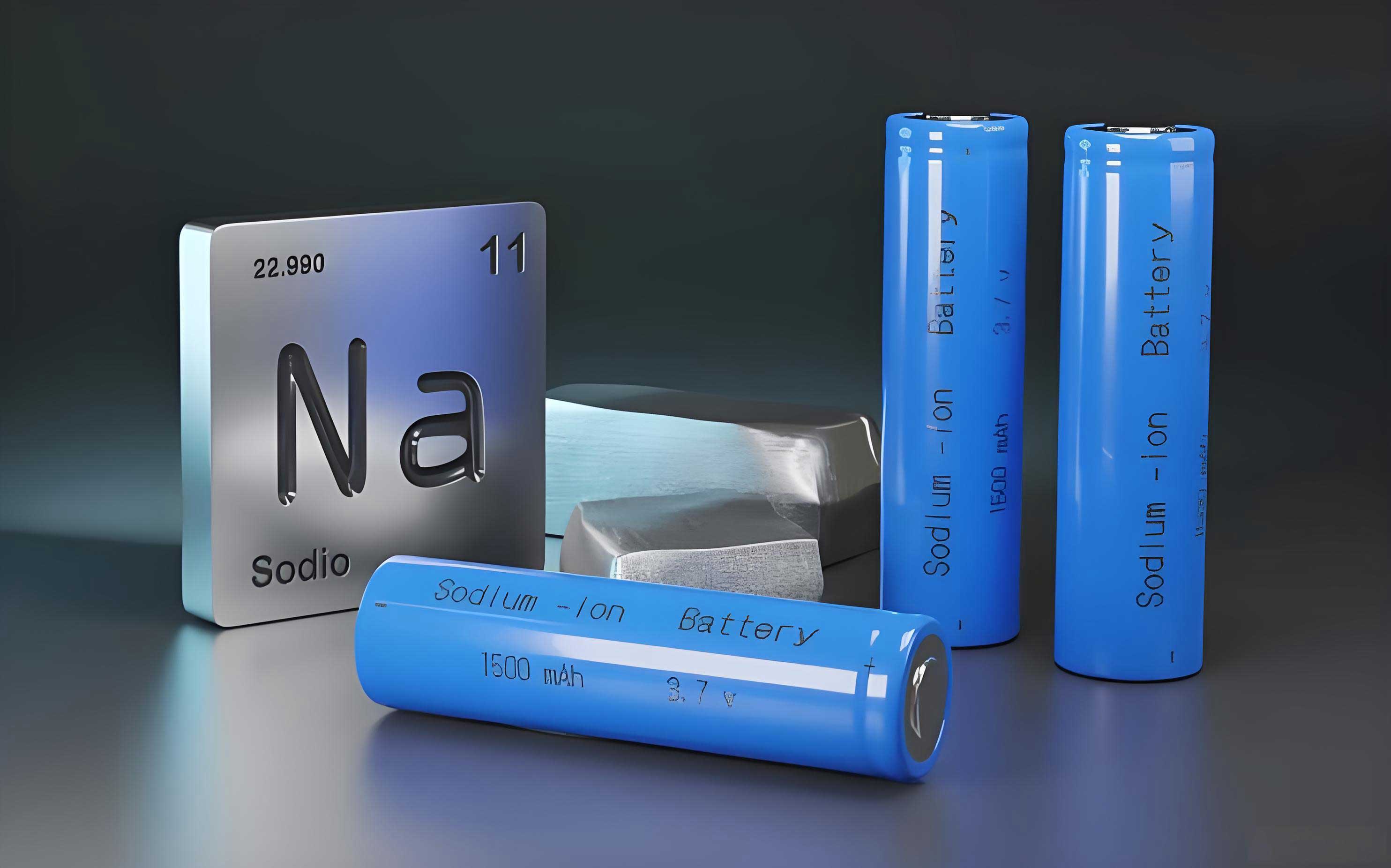
The fundamental operation of a sodium-ion battery is often described as a “rocking-chair” mechanism. During charging, sodium ions are extracted from the cathode host material, travel through the electrolyte, and are inserted into the anode material. The discharge process reverses this flow. The electrolyte’s role is paramount in facilitating this ion shuttle. Its ionic conductivity, viscosity, electrochemical stability window, and compatibility with electrode materials are defining factors. A typical organic liquid electrolyte consists of a sodium salt (e.g., NaPF6, NaClO4, NaFSI) dissolved in a mixture of cyclic (e.g., ethylene carbonate, EC) and linear (e.g., dimethyl carbonate, DMC, diethyl carbonate, DEC) carbonate solvents. While this base formulation provides a foundation, it often falls short in forming stable interphases, leading to continuous electrolyte decomposition, poor cyclability, and safety concerns. This is where additives, typically constituting less than 5 wt% of the total electrolyte, exert a transformative influence.
The primary function of many additives is to participate in the controlled electrochemical decomposition at the electrode-electrolyte interface during the initial cycles, forming a passivating layer known as the Solid Electrolyte Interphase (SEI) on the anode or the Cathode Electrolyte Interphase (CEI) on the cathode. An ideal SEI/CEI should be electronically insulating to prevent further electrolyte reduction/oxidation, while being highly conductive to sodium ions to allow facile transport. It must also be mechanically robust to accommodate volume changes in electrodes during cycling. The formation and properties of these interphaces can be conceptually linked to the frontier molecular orbital theory. Effective SEI-forming additives for the anode typically possess a low Lowest Unoccupied Molecular Orbital (LUMO) energy, making them more susceptible to reduction at the anode potential before the main solvent components. Conversely, effective CEI-forming additives for the cathode possess a high Highest Occupied Molecular Orbital (HOMO) energy, leading to preferential oxidation at the high-voltage cathode surface.
The general electrochemical reactions governing the initial decomposition of an additive ‘A’ to form the SEI can be simplified as:
$$ A + ne^- + nNa^+ \rightarrow (SEI \ Components)_{solid} $$
The nature of these components—whether inorganic (e.g., NaF, Na2O, Na2CO3) or organic (e.g., sodium alkyl carbonates, polymers)—dictates the SEI’s properties. The ionic conductivity ($\sigma_{ion}$) through such a layer can be described by an Arrhenius-type relationship:
$$ \sigma_{ion} T = A \exp\left(-\frac{E_a}{k_B T}\right) $$
where $E_a$ is the activation energy for ion migration, $k_B$ is Boltzmann’s constant, and $T$ is temperature. Additives aim to form an interphase with a low $E_a$ for Na+ transport.
Classification and Mechanisms of Key Additive Families
1. Fluorinated Additives: Building Robust Inorganic-Rich Interphases
Fluorinated additives are the most extensively studied class due to their ability to form inorganic-rich, stable interphases. The strong electronegativity of fluorine leads to a lowered LUMO energy, ensuring preferential reduction. Fluorinated ethylene carbonate (FEC) is the quintessential example. In a sodium-ion battery, FEC decomposes to form a NaF-rich SEI on anode materials like hard carbon or sodium metal. NaF possesses high mechanical strength and a large band gap, providing excellent electronic insulation. The decomposition pathway likely involves ring-opening and defluorination reactions. However, a critical limitation of FEC is its continuous consumption during prolonged cycling, as the SEI may dynamically break and reform. This has led to strategies using blends, such as FEC with difluorinated ethylene carbonate (DFEC). DFEC, with even lower LUMO energy, forms the primary SEI skeleton, while FEC modifies it, leading to a denser and more sustainable film. The table below summarizes the performance impact of key fluorinated additives.
| Additive | Chemical Formula / Type | Primary Function & Mechanism | Key Impact on Sodium-Ion Battery Performance | Notable Challenge |
|---|---|---|---|---|
| Fluoroethylene Carbonate (FEC) | $$ C_3H_3FO_3 $$ | Preferential reduction to form NaF-rich, dense SEI. Lowers LUMO. | Dramatically improves first-cycle CE and cycle life of hard carbon anodes. Supports Na metal plating/stripping. | Gradual consumption; thermal instability can generate HF. |
| Bis(fluorosulfonyl)imide (FSI–) Anion | $$ N(SO_2F)_2^- $$ (in NaFSI) | Forms flexible, ion-conductive SEI/CEI rich in SOx, N-S species and NaF. | Enables stable cycling of high-voltage cathodes and sodium metal anodes. Good low-temperature performance. | Can be corrosive to Al current collectors at high voltages (>4.2V vs. Na/Na+). |
| Tris(trimethylsilyl) Phosphite (TMSPi) | $$ P(OSi(CH_3)_3)_3 $$ | Scavenges HF and PF5; oxidizes to form phosphate-rich CEI on cathodes. | Suppresses transition metal dissolution, improves high-voltage (>>4.0V) cathode stability and cycle life. | Optimal dosage is critical; excess can increase impedance. |
| 1,3,5-Trifluorobenzene (F3B) | $$ C_6H_3F_3 $$ | Oxidizes at high potential to form a thin, fluorinated polymer-like CEI. | Enhances thermal stability of the cathode/electrolyte interface, improving safety and high-temperature cycling. | Limited solubility in carbonate electrolytes. |
2. Boron-Based Additives: Dual-Function Passivation
Boron-based additives, such as sodium bis(oxalato)borate (NaBOB) and sodium difluoro(oxalato)borate (NaDFOB), serve multiple functions. They can act as film-forming agents due to their oxalate groups, but a particularly valuable trait is their ability to mitigate aluminum current collector corrosion. This is a significant issue when using salts like NaTFSI or NaFSI at high potentials. The mechanism involves the decomposition of the anion to form protective species like B2O3 or boron fluorides on the Al surface, which suppress pitting corrosion. NaDFOB combines the benefits of both fluorination and borate complexation, often leading to the formation of a hybrid interphase containing both NaF and boron-oxygen species. This interphase is highly conducive to sodium-ion transport and stable over wide voltage windows. The ionic conductivity of electrolytes with NaBOB can be remarkably high, sometimes exceeding that of conventional NaPF6-based electrolytes, as described by:
$$ \Lambda = \frac{\sigma}{c} $$
where $\Lambda$ is the molar conductivity, $\sigma$ is the measured conductivity, and $c$ is the molar concentration. NaBOB-based systems often show favorable $\Lambda$ values, especially in unconventional solvents like N-methyl-2-pyrrolidone (NMP).
3. Inorganic Sodium Salt Additives: Synergistic Interphase Engineering
Using additional sodium salts as additives in a primary electrolyte is a sophisticated strategy to tailor interphase composition. Salts like NaPF6 or sodium difluorophosphate (NaDFP) can decompose to generate species that reinforce the SEI/CEI. For instance, NaPF6 decomposition yields PF5, a strong Lewis acid that can catalyze the polymerization of solvent molecules like EC, forming polycarbonate species within the interphase. This organic polymer matrix can improve flexibility and adhesion. NaDFP additive decomposes to incorporate phosphorus-oxygen-fluorine (POyF) compounds into the film. These compounds have strong binding energy with inorganic components like NaF, promoting the formation of a denser, more cohesive layer. The enhanced stability can be quantified by the cycle life extension, often following a logarithmic degradation relationship in its early stages:
$$ Q_n = Q_0 – k \log(n) $$
where $Q_n$ is the capacity at cycle $n$, $Q_0$ is the initial capacity, and $k$ is the degradation rate constant. A well-designed additive significantly reduces the value of $k$.
4. Nitrile-Based and Other Functional Additives
Nitrile-group containing additives, such as succinonitrile (SN) or adiponitrile (ADN), function primarily as cathode stabilizers and high-voltage enablers. The cyano group (-C≡N) has a high dipole moment and excellent coordination ability. It can strongly adsorb onto or coordinate with the cathode surface, particularly with transition metal ions, creating a protective layer that minimizes direct contact with the aggressive electrolyte and suppresses catalytic decomposition at high voltages. This effectively raises the oxidative stability limit of the electrolyte system. Furthermore, some phosphorus-nitrogen compounds like ethoxy(pentafluoro)cyclotriphosphazene (PFPN) are multi-functional. They not only contribute to film formation but also act as flame retardants by releasing non-flammable gases (e.g., N2, NH3) upon heating, addressing critical safety concerns in sodium-ion battery technology.
Other notable categories include:
- Unsaturated Carbonates: Like vinyl ethylene carbonate (VEC), which polymerizes to form a flexible polymeric SEI layer capable of accommodating anode volume expansion.
- Silane-Based Additives: Such as N,N-diethyltrimethylsilylamine (DETMSA), which act as effective scavengers of protic impurities (H2O, HF) that degrade battery performance.
- Anhydride Additives: Like diglycolic anhydride (DGA), which offer novel decomposition pathways to form robust, adhesive interface films rich in organic sodium salts.
Interphase Characterization and Performance Correlation
Understanding the precise composition and morphology of the SEI/CEI formed by additives is crucial. Advanced characterization techniques like X-ray photoelectron spectroscopy (XPS), time-of-flight secondary ion mass spectrometry (ToF-SIMS), and cryogenic electron microscopy (cryo-EM) have revealed that the most effective interphases are often multilayer or mosaic structures. A common high-performance model features a thin, dense inner layer rich in inorganic components (NaF, Na2O) adjacent to the electrode, providing rigidity and ion selectivity, covered by a thicker, more flexible outer layer rich in organic polymeric species (polycarbonates, sodium alkoxides). The role of the additive is to dictate this structure from the very first reduction/oxidation peak observed in differential capacity (dQ/dV) analysis:
$$ \frac{dQ}{dV} = f(V) $$
The shift or suppression of peaks related to solvent decomposition in the presence of an additive is direct electrochemical evidence of its preferential reaction.
Future Perspectives and Concluding Remarks
The development of electrolyte additives is a dynamic and essential frontier in sodium-ion battery research. Future directions are poised to become more sophisticated and targeted:
- Multi-Additive Synergistic Systems: The future lies not in single “magic” additives but in carefully formulated cocktails where different additives perform specific, complementary functions. For example, a blend might include one additive for anode SEI formation (FEC), another for cathode CEI stabilization (TMSPi), a third for Al corrosion inhibition (NaDFOB), and a fourth for safety (PFPN). Understanding the interactions between these components is key.
- Additives for Next-Generation Electrodes: As sodium-ion battery technology evolves, new cathode materials (e.g., layered oxides with high Mn or Ni content, polyanionic compounds) and anode materials (e.g., alloy-based anodes, phosphorus) present new interfacial challenges. Additive design must evolve in tandem to address specific issues like oxygen release, large volume expansion, or poor initial Coulombic efficiency.
- Quantitative Structure-Property Relationships (QSPR): Leveraging computational chemistry and machine learning to predict the HOMO/LUMO levels, reduction potentials, and decomposition pathways of novel molecules will accelerate the discovery of next-generation additives tailored for sodium-ion battery chemistries.
- Additives for Solid-State and Concentrated Electrolytes: The rise of solid-state and highly concentrated “water-in-salt” or “solvent-in-salt” electrolytes for sodium-ion batteries requires a new paradigm in additive science. Interfaces in these systems are fundamentally different, and additives may be needed to improve interfacial wetting, suppress dendrite growth in solid electrolytes, or enhance the stability of the anion-derived interphases prevalent in concentrated systems.
In conclusion, electrolyte additives are powerful, low-dose modifiers that hold the key to unlocking the full potential of sodium-ion batteries. By enabling the in-situ construction of stable, ionically conductive, and mechanically resilient interphases, they directly tackle the core challenges of cycling life, efficiency, and safety. The ongoing research elucidates not just empirical formulas but the fundamental electrochemical and chemical principles governing interface behavior. As the sodium-ion battery industry moves from the laboratory to commercialization, the rational design and deployment of advanced additive packages will be a critical differentiator, ensuring that this abundant-element-based technology can reliably and safely meet the growing demands of global energy storage.