
The pursuit of sustainable and cost-effective energy storage solutions has positioned sodium-ion batteries as a compelling alternative to the dominant lithium-ion technology. The fundamental appeal of sodium-ion batteries lies in the natural abundance and low cost of sodium resources, coupled with similar intercalation chemistry to lithium. The cathode material is a pivotal component dictating the energy density, longevity, and overall cost of a sodium-ion battery. However, mainstream cathode families—layered transition metal oxides, polyanionic compounds, and Prussian blue analogues—face intrinsic challenges that severely compromise their cyclic stability. These include irreversible phase transitions, Jahn-Teller distortions, and interfacial instabilities. This article synthesizes recent advancements and industrial progress, focusing on strategic material engineering to overcome these hurdles and propel sodium-ion batteries toward widespread commercialization.
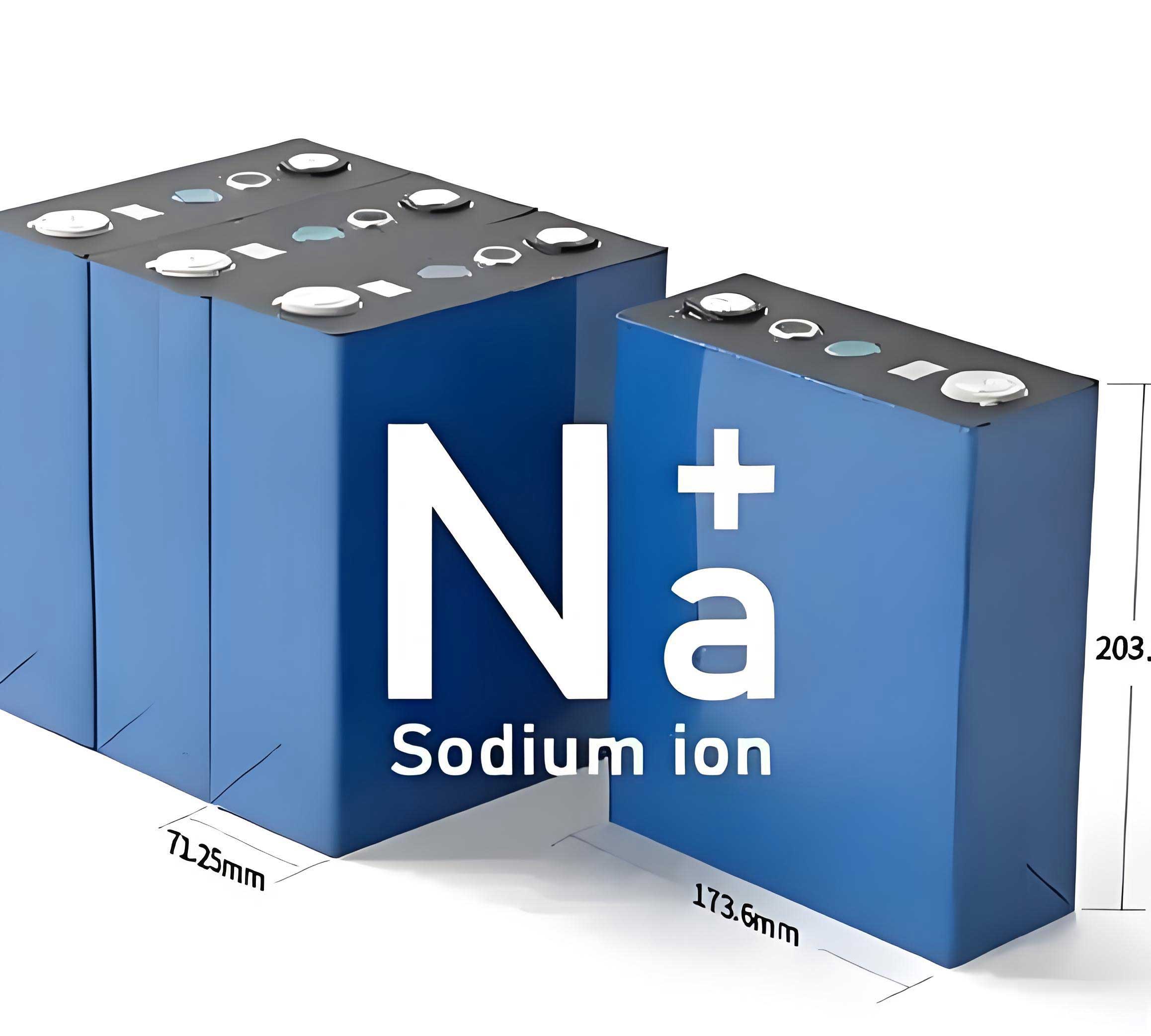
The performance of a sodium-ion battery is intrinsically linked to the structural and electrochemical properties of its cathode. The three primary families offer distinct advantages and trade-offs concerning capacity, voltage, stability, and cost. Layered oxides (NaxTMO2) offer high specific capacities and straightforward synthesis but suffer from complex phase evolution and moisture sensitivity. Polyanionic compounds (e.g., NASICON, phosphates) boast exceptional structural and thermal stability, leading to outstanding cycle life, but often at the expense of lower electronic conductivity and specific capacity. Prussian blue analogues (AxM1[M2(CN)6]·nH2O) feature an open framework for rapid ion transport and potentially low-cost production, yet they are plagued by issues related to crystal water, lattice vacancies, and poor electronic conduction. The cyclic stability of a sodium-ion battery cathode is quantitatively linked to its capacity retention over numerous charge-discharge cycles, often expressed as a function of cycle number (N): $$Q_N = Q_0 \times (1 – \alpha)^{N}$$ where $Q_N$ is the capacity at cycle N, $Q_0$ is the initial capacity, and $\alpha$ is the average fractional capacity decay per cycle. Minimizing $\alpha$ is the central goal of stability enhancement strategies.
A major source of instability in layered oxide cathodes for sodium-ion batteries is the irreversible slip of transition metal layers and associated phase transformations during Na+ (de)intercalation. The P2 and O3 phases are most common, with P2-types generally offering better rate capability but lower initial capacity. The phase transition, such as from P2 to O2, often involves a large volume change, inducing mechanical strain and particle cracking. This degradation mechanism accelerates capacity fade. Furthermore, the presence of Mn3+ ions can trigger a cooperative Jahn-Teller distortion, destabilizing the local crystal structure and leading to rapid electrochemical deterioration. In polyanionic cathodes, while the robust polyanion framework (e.g., (PO4)3-) minimizes phase changes, their inherently low electronic conductivity can limit active material utilization and promote inhomogeneous reactions, leading to localized stress. For Prussian blue cathodes, coordinated water molecules within the large interstitial sites can participate in detrimental side reactions with the electrolyte. Additionally, [Fe(CN)6] vacancies and the dissolution of transition metal ions from the framework are critical issues that degrade the interface and bulk structure over cycling.
Material Engineering Strategies for Cyclic Stability
To combat these degradation pathways, researchers have developed sophisticated material engineering strategies, primarily categorized into structural optimization and chemical element doping.
Structural Optimization
This approach focuses on designing the cathode’s architecture at the nano- and micro-scale, as well as engineering its crystal phase composition, to inherently improve mechanical integrity and reaction homogeneity.
Layered Oxides: Designing biphasic or high-entropy structures is a powerful trend. Combining P2 and O3 phases in a single particle can harness the high capacity of O3 and the kinetic superiority of P2, while the phase boundary can inhibit detrimental sliding. High-entropy design, involving the incorporation of five or more principal metal cations in near-equimolar ratios into the transition metal layer, utilizes the configurational entropy stabilization effect. The high-entropy mixing ($\Delta S_{config}$) contributes to a lowered Gibbs free energy of mixing ($\Delta G_{mix} = \Delta H_{mix} – T\Delta S_{mix}$), promoting phase stability and suppressing ordering and phase segregation during cycling. This results in solid-solution-like (de)intercalation behavior with minimal lattice parameter change, as shown by in-situ X-ray diffraction where peak shifts are continuous and reversible.
Polyanionic Compounds: Nanostructuring and carbon compositing are critical. Synthesizing nano-sized particles and coating them with a conformal, conductive carbon layer drastically shortens the Na+ and electron transport paths. This mitigates polarization and ensures more uniform volume change throughout the particle, preventing fracture. The carbon coating also acts as a protective barrier against electrolyte corrosion. Furthermore, novel synthesis routes like room-temperature mechanochemical methods can produce highly crystalline materials with integrated carbon networks, avoiding high-temperature treatments that may induce impurities.
Prussian Blue Analogues: The key is to control crystallinity and reduce defects. Synthesis methods using “water-in-salt” nanoreactors or optimized chelating agents promote the growth of highly crystalline, low-defect particles with minimal water content. Increasing the material’s entropy by incorporating multiple transition metals (e.g., Mn, Fe, Ni, Cu, Zn) into the framework also enhances structural stability and cyclability. Growing single-crystal particles minimizes grain boundaries, which are typical sites for crack initiation and electrolyte penetration.
Chemical Element Doping/Substitution
This strategy involves the aliovalent or isovalent substitution of ions within the host lattice to tune electronic structure, strengthen the lattice, and suppress specific degradation mechanisms.
Layered Oxides: Doping with electrochemically inactive “pillar” ions (e.g., Mg2+, Ti4+, Sn4+, Li+) is highly effective. These ions, often with strong M-O bonds, act as structural pillars to suppress layer sliding and the associated P2-O2 transition. For instance, Li+ doping can also modulate the local oxygen environment, stabilizing the anionic redox activity and preventing irreversible oxygen loss at high voltages. Doping to suppress Jahn-Teller active ions is another key tactic. Partial substitution of Mn with ions like Fe, Ni, or Mg reduces the Mn3+ content, thereby mitigating the distortive effect and improving structural reversibility. The average discharge voltage ($\overline{V}$) and practical energy density ($E_d$) of a cathode are critical metrics: $$E_d = \int_{V_{\min}}^{V_{\max}} Q(V) dV \approx \overline{V} \times Q_{rev}$$ where $Q(V)$ is the differential capacity. Doping strategies aim to maximize $Q_{rev}$ while maintaining a high $\overline{V}$ over long-term cycling.
Polyanionic Compounds: Multi-cation substitution in NASICON-type structures (e.g., Na3V2(PO4)3) is a prominent approach. Co-doping with metals like Fe, Al, or Ti for V can optimize the crystal field, activate additional redox couples (e.g., V4+/V5+), and enhance Na+ diffusion kinetics. The Na+ diffusion coefficient ($D_{Na^+}$), a key parameter for rate capability, can be estimated from Galvanostatic Intermittent Titration Technique (GITT) data: $$D_{Na^+} = \frac{4}{\pi \tau} \left( \frac{m_B V_M}{M_B S} \right)^2 \left( \frac{\Delta E_s}{\Delta E_\tau} \right)^2$$ where $\tau$ is the current pulse duration, $m_B$, $M_B$, $V_M$ are the mass, molar mass, and molar volume of the active material, $S$ is the electrode/electrolyte contact area, and $\Delta E_s$ and $\Delta E_\tau$ are voltage changes. Doping often increases $D_{Na^+}$ by widening diffusion pathways.
Prussian Blue Analogues: Precise control of the A-site (Na) and M-site composition is crucial. Enriching the sodium content in the as-synthesized material (e.g., Na2-xFeFe(CN)6) provides a buffer against active Na loss. Substituting part of the Fe in hexacyanoferrate with other transition metals (e.g., Mn, Ni) can not only adjust the operating voltage but also strengthen the metal-cyanide bonds and improve the electronic conductivity of the framework.
The following table summarizes representative studies on enhancing the cyclic stability of sodium-ion battery cathodes through these strategies.
| Cathode Type | Material Composition | Strategy Applied | Key Performance Enhancement |
|---|---|---|---|
| Layered Oxide (High-Entropy) | Na0.89Li0.05Cu0.11Ni0.11Fe0.3Mn0.43O1.97F0.03 | Multi-cation (Li, Cu, Ni, Fe, Mn) & Anion (F) doping; High-entropy stabilization. | Suppressed Jahn-Teller effect & phase change; High capacity retention (~87% after 200 cycles). |
| Layered Oxide (Biphasic) | P2/O3-NaMnNiCuFeTiO2F | Design of biphasic P2/O3 structure; Multi-cation doping. | Reversible structural evolution; Excellent low-temperature performance (97.4% retention at -20°C after 300 cycles). |
| Polyanionic (NASICON) | Carbon-coated Na4Fe3(PO4)2(P2O7) nanoplates | Nanostructuring & Carbon coating. | Superior air/thermal stability; Stable cycling under various conditions (small 4% volume change). |
| Polyanionic (NASICON) | Na3.5V1.5Fe0.5(PO4)3 | Fe substitution for V; Multi-electron redox activation. | High voltage operation; Long cycle life (63.5% retention after 3000 cycles at 50C). |
| Prussian Blue (High-Entropy) | Single-crystal, high-entropy PBA (Multiple transition metals) | Single-crystal growth & High-entropy composition. | Minimized defects/water; Suppressed metal dissolution; “Zero-strain” like storage mechanism. |
| Prussian Blue | K2Mn[Fe(CN)6] (KMF) single-crystal octahedra | Topotactic epitaxy; Single-crystal morphology. | Reduced surface area/electrolyte contact; Inhibited Jahn-Teller effect; 80% capacity retention after 1500 cycles. |
Industrialization Landscape of Sodium-Ion Batteries
The journey of sodium-ion batteries from lab to market has gained significant momentum in the past decade. The industrial landscape features companies championing different cathode chemistries based on their target applications, be it energy storage, electric mobility, or high-power needs.
International Players: Pioneers like the UK’s Faradion (acquired by Reliance Industries) have focused on layered oxide cathodes, developing O3 and O3/P2-type materials offering energy densities competitive with some lithium iron phosphate batteries. Their cells demonstrate long cycle life (>3000 cycles) and have been deployed in energy storage systems and e-bikes. France’s Tiamat commercializes polyanionic Na3V2(PO4)2F3-based cells, emphasizing ultra-fast charging capabilities (minutes) and high power density, targeting power tool and automotive start-stop applications. In the US, Natron Energy utilizes Prussian blue analogue chemistry in aqueous electrolyte systems, achieving exceptional power and cycle life (tens of thousands of cycles), making them suitable for data center backup power and grid stabilization.
Domestic Progress in China: China has emerged as a hotbed for sodium-ion battery development and manufacturing. CATL (Contemporary Amperex Technology Co., Limited) made a significant splash by announcing its first-generation Prussian white-based cell with an energy density of 160 Wh/kg and remarkable low-temperature performance. HiNa Battery (spun off from Chinese Academy of Sciences) has been a trailblazer, commercializing copper-iron-manganese-based layered oxides. They have deployed the world’s first sodium-ion battery energy storage station (30 kW/100 kWh) and are operating GWh-scale production lines. Companies like ZOOLNASH (focusing on polyanionic materials) and numerous others are rapidly scaling up production of cathodes and cells, driven by strong policy support and supply chain development for large-scale energy storage and light-electric vehicle markets.
The commercialization of sodium-ion batteries is increasingly seen not as a wholesale replacement for lithium-ion, but as a complementary technology perfect for specific niches where cost, safety, low-temperature performance, and abundant resources are paramount.
Future Perspectives and Concluding Remarks
Substantial progress has been made in understanding and mitigating the degradation mechanisms in sodium-ion battery cathodes. Structural optimization through entropy engineering, biphasic design, and nanostructuring, combined with targeted chemical doping, has yielded materials with dramatically improved cyclic stability. These advancements are now translating into commercial products. However, for sodium-ion batteries to achieve their full potential, several frontiers require continued exploration. First, the development of ultra-stable, high-voltage cathodes that can push the energy density closer to that of advanced lithium-ion systems is crucial. This involves deeper understanding and harnessing of anionic redox activity without triggering oxygen release. Second, the interface between cathode and electrolyte remains a critical battlefield. Designing novel electrolyte formulations or constructing artificial cathode-electrolyte interphase (CEI) layers that are thin, stable, and ionically conductive could further suppress transition metal dissolution and parasitic reactions. Third, while material costs are inherently lower, simplifying synthesis routes and integrating production with existing lithium-ion battery manufacturing infrastructure are key to realizing the full cost advantage. Finally, the exploration of next-generation systems, such as all-solid-state sodium-ion batteries using stable sodium metal anodes, could unlock even higher energy densities and safety levels. In conclusion, through sustained multidisciplinary research bridging materials science, electrochemistry, and engineering, the cyclic stability and overall performance of sodium-ion batteries will continue to improve, solidifying their role in the future diversified energy storage ecosystem.