
The quest for sustainable and cost-effective energy storage solutions has never been more urgent. In this landscape, sodium-ion batteries have emerged as a formidable complement to lithium-ion technology, primarily due to the natural abundance and wide geographical distribution of sodium resources. However, the performance and economic viability of a sodium-ion battery are intrinsically tied to the development of advanced electrode materials. Among the various candidates for anodes, hard carbon stands out due to its high capacity, low working potential, and relatively simple synthesis. Yet, not all hard carbons are created equal. The journey to find the ideal precursor—one that is sustainable, low-cost, and structurally advantageous—has led me to deeply appreciate the unique value proposition of lignocellulosic biomass, particularly wood and bamboo.
My perspective is that wood and bamboo are not merely alternative feedstocks; they are structurally pre-designed by nature to become high-performance carbon matrices. Their innate hierarchical porosity, from the macroscopic vascular channels down to the nanoscale fibrils within the cell wall, provides a natural template that is incredibly difficult and expensive to replicate synthetically. This inherent structure, combined with their renewable and carbon-neutral lifecycle, positions them as quintessential green precursors for the next generation of sodium-ion battery anodes. In this commentary, I will explore the journey from forest to battery, dissecting the interplay between the biological structure of wood/bamboo, the synthesis of derived hard carbons, their sodium storage mechanisms, and the strategic tuning required to overcome current limitations.
The Natural Blueprint: Structure and Chemistry of Wood and Bamboo
To engineer a material effectively, one must first understand its raw form. Wood and bamboo possess a sophisticated architecture that dictates the properties of their carbonized products. This multiscale structure, often described as a hierarchical composite, is a masterpiece of natural engineering.
At the macroscopic and microscopic levels, wood features aligned tracheids or vessels that facilitate fluid transport. Bamboo, with its distinctive nodes and internodes, exhibits a gradient distribution of vascular bundles—denser near the outer wall and sparser towards the inner cavity. These features translate into anisotropic, open channels in the resulting carbon monoliths, which are crucial for rapid electrolyte infiltration and ionic transport within a sodium-ion battery electrode.
The true magic, however, occurs at the cell wall level. The cell wall is a nanocomposite primarily consisting of three polymeric components: cellulose, hemicellulose, and lignin. Cellulose, a linear polymer of glucose, forms crystalline microfibrils that act as the primary load-bearing skeleton. Hemicellulose, a branched and amorphous polymer, acts as a compatibilizer, binding cellulose and lignin. Lignin, a complex, cross-linked aromatic polymer, provides rigidity and decay resistance. The proportions and interactions of these components vary between species (softwood, hardwood, bamboo) and significantly influence the carbonization pathway. For instance, the high lignin content in softwoods often leads to denser, more mechanically robust carbons with lower specific surface area, while bamboos and hardwoods, with different hemicellulose and lignin compositions, can yield carbons with distinct pore architectures.
| Biomass Type | Typical Cellulose Content (%) | Typical Hemicellulose Content (%) | Typical Lignin Content (%) | Key Structural Note |
|---|---|---|---|---|
| Softwood (e.g., Pine) | 40-45 | 25-30 | 27-30 | High G-type lignin; aligned tracheids. |
| Hardwood (e.g., Oak) | 40-55 | 24-40 | 18-25 | S/G-type lignin; contains vessels. |
| Bamboo (e.g., Moso) | 40-50 | 15-30 | 20-25 | Rich in xylan; gradient vascular bundles. |
This natural variation provides a powerful toolkit. By selecting specific wood or bamboo species—or even specific parts like bark versus stem—we can inherently bias the resulting hard carbon towards desired structural features, such as crystallinity, pore size distribution, and defect density, all critical for optimizing performance in a sodium-ion battery.
Synthesis Pathways: From Biomass to Functional Carbon
The transformation of raw biomass into a functional hard carbon anode is a critical step where process parameters dictate final structure. The two predominant methods are direct pyrolysis (high-temperature carbonization) and hydrothermal carbonization followed by pyrolysis.
Direct Pyrolysis
This is the most straightforward approach, involving the thermal treatment of the precursor in an inert atmosphere (e.g., N2, Ar). The temperature profile is the master variable. Generally, carbonization at moderate temperatures (800–1200 °C) yields hard carbons with abundant defects and open pores, contributing to high slope capacity but often at the expense of Initial Coulombic Efficiency (ICE). Higher temperatures (1400–1600 °C) promote structural ordering, reduce surface area and open porosity, and can enhance the development of closed pores, which is beneficial for improving ICE and plateau capacity in sodium-ion batteries. A two-step pyrolysis process, involving a low-temperature stabilization/pre-carbonization step (300–500 °C) followed by high-temperature treatment, is often superior. This method allows for controlled decomposition, better retention of morphology, and often leads to a more favorable pore structure for sodium storage.
Hydrothermal Carbonization (HTC) + Pyrolysis
HTC treats the biomass in subcritical water (typically 180–250 °C). This process breaks down the biopolymers and leads to the formation of carbonaceous microspheres (“hydrochar”) through dehydration and condensation reactions. The hydrochar is then pyrolyzed. The HTC step offers excellent control over the microstructure and surface chemistry at a nanoscale. It can be used to homogenize different biomass sources and to introduce or remove specific functional groups. Acidic or alkaline environments during HTC can also be used for demineralization or to tailor the surface properties of the final carbon, which directly impacts its electrochemical behavior in a sodium-ion battery.
The choice of method depends on the target properties. The table below summarizes the general impact of key synthesis parameters on hard carbon structure.
| Synthesis Parameter | Typical Effect on Hard Carbon Structure | Primary Impact on Sodium-ion Battery Performance |
|---|---|---|
| Carbonization Temperature (↑) | Increased graphitic ordering, reduced open porosity & surface area, possible growth of closed pores. | ICE tends to increase; Plateau capacity may increase; Rate capability may decrease. |
| Heating Rate (Slower) | More controlled decomposition, fewer open micropores, denser structure. | Can significantly improve ICE by minimizing SEI-forming surfaces. |
| Atmosphere (e.g., with H2O, CO2) | Can act as mild activating agents, tuning pore size and introducing edge defects. | May increase slope capacity via defect adsorption; Requires balance to maintain ICE. |
| Pre-treatment (Acid/Washing) | Removal of inorganic impurities (ash), leading to purer carbon and lower surface area. | Major improvement in ICE and cycle stability by reducing parasitic reactions. |
| HTC Pre-processing | Forms uniform spherical particles, allows chemical modification, controls oxygen content. | Enhances homogeneity, can tailor surface chemistry for better kinetics or specific capacity. |
Unraveling the Sodium Storage Mechanism
The electrochemical profile of a hard carbon anode in a sodium-ion battery is deceptively simple: a sloping region above approximately 0.1 V (vs. Na+/Na) and a flat plateau region below 0.1 V during discharge. Interpreting this profile has been a central debate, as it informs material design. Several models exist, reflecting the complex, “short-range ordered, long-range disordered” structure of hard carbon.
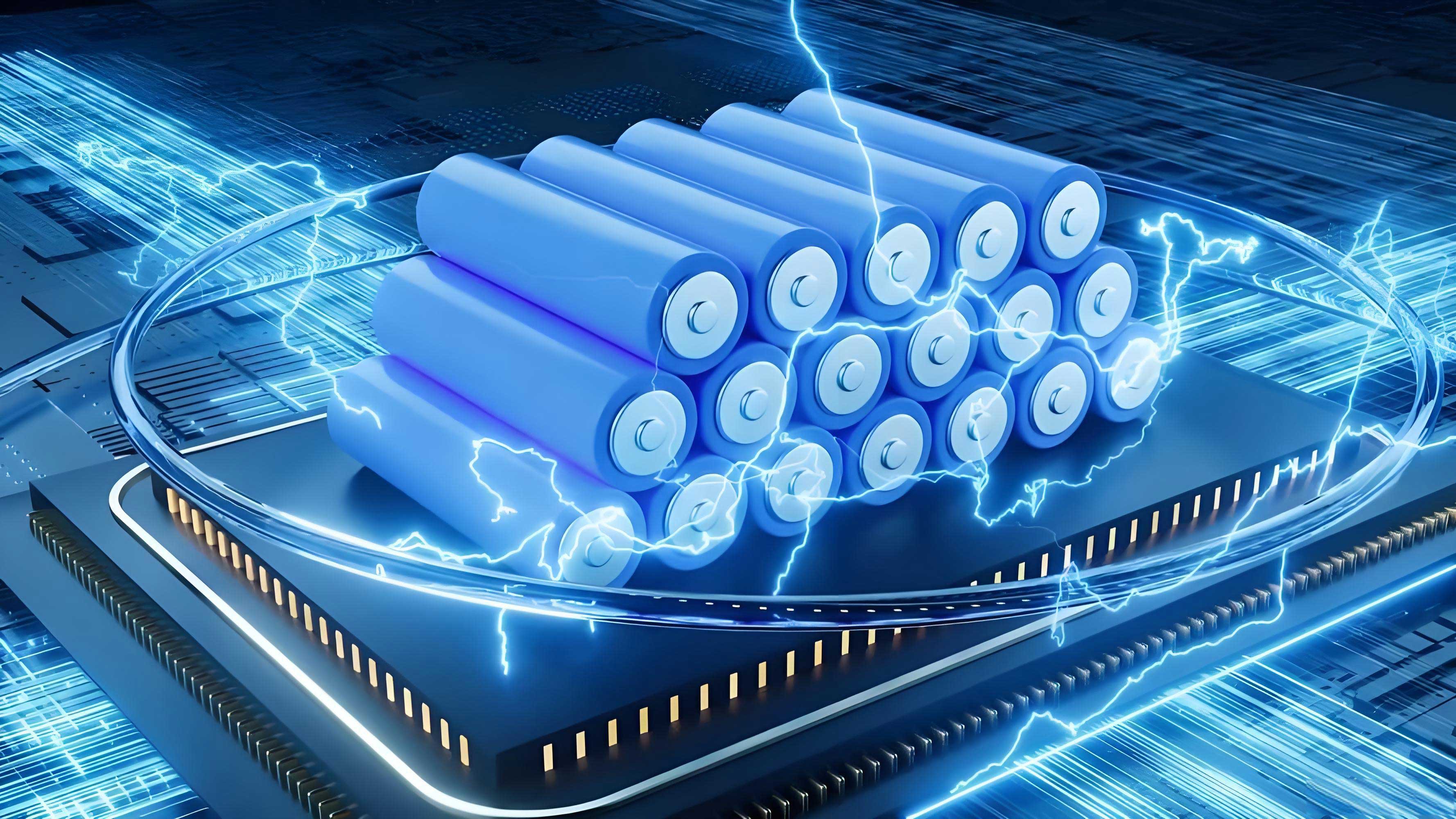
From my analysis of the literature, I view the storage process as a multi-mechanism sequence that can be described by a combination of equations, where the dominant mechanism in each voltage range depends on the local carbon structure. The following image provides a conceptual view of where sodium might reside within the disordered carbon matrix during the operation of a sodium-ion battery.
- Adsorption on Defective Sites (High-Voltage Slope, ~0.1-2.0 V): Sodium ions are reversibly adsorbed on surface defects, heteroatom sites (like O, N, S), and the edges of graphene-like fragments. This process is capacitive-like and contributes to the sloping capacity. The associated reaction can be seen as a surface binding:
$$ \text{C}_\text{defect} + \text{Na}^+ + e^- \rightleftharpoons \text{C}_\text{defect}-\text{Na} $$
The binding energy here is typically lower than in graphite intercalation, allowing for reversible (de)sodiation over a wide voltage range. - Intercalation into Expanded Graphitic Layers (Low-Voltage Plateau & Slope): Sodium ions insert into the expanded interlayer spaces between randomly oriented turbostratic nanodomains. The average interlayer spacing (d002) in hard carbon is usually between 0.36 and 0.40 nm, larger than that of graphite (0.335 nm), which is necessary to accommodate Na+.
$$ \text{C}_x + \text{Na}^+ + e^- \rightleftharpoons \text{NaC}_x $$
This process is believed to contribute to both the lower part of the slope and the plateau. - Pore Filling (Low-Voltage Plateau, <0.1 V): This is the most debated but crucial mechanism. I subscribe to the view that sodium clusters (quasi-metallic) or ions fill in the internal, inaccessible closed pores. These pores are not connected to the external surface and are therefore not probed by gas adsorption. Their filling corresponds to the flat plateau and is responsible for the high reversible capacity of the best hard carbons. This can be conceptually represented as a phase-filling process within pores of effective radius r:
$$ n\text{Na}^+ + ne^- + \text{Pore}(r) \rightleftharpoons \text{Na}_n@\text{Pore}(r) $$
where the energetics are highly dependent on the pore size and local electronic environment.
The “Three-Stage Model” effectively synthesizes these ideas: Stage I (high slope) is dominated by adsorption on defects and possibly intercalation into the most accessible layers. Stage II (low slope/onset of plateau) involves intercalation into less accessible graphitic regions. Stage III (flat plateau) is primarily the filling of nanopores, especially closed pores. The capacity contribution from each stage depends on the specific structural parameters of the hard carbon, which are in turn dictated by the precursor and synthesis.
Critical Structural Factors Governing Performance
The performance of a wood/bamboo-derived hard carbon in a sodium-ion battery is a direct function of three interlinked structural characteristics: defect state, pore structure, and specific surface area. Optimizing a material is essentially an exercise in managing the trade-offs between these factors.
1. Defect Engineering
Defects, including intrinsic topological defects (e.g., vacancies, dislocations) and extrinsic heteroatom dopants (O, N, S, P), are a double-edged sword. They provide active sites for the adsorption mechanism, increasing the slope capacity. The capacity contribution from defect adsorption (Cads) can be roughly correlated with the defect concentration [D] and the sodium ion activity:
$$ C_{ads} \propto k_{ads} [D] a_{\text{Na}^+} $$
where kads is a proportionality constant related to the binding energy. However, overly strong binding at certain defect sites (e.g., some oxygen functional groups like carboxyls) can lead to irreversible sodium trapping, reducing ICE. Furthermore, some defects can catalyze electrolyte decomposition. The goal is to introduce “favorable” defects that offer moderate, reversible binding energy.
2. Porosity: The Open vs. Closed Pore Dilemma
This is perhaps the most critical design parameter. Open pores (meso- and macropores) facilitate ion transport but also create high surface area for SEI formation. Micropores (<2 nm) can contribute to capacity via adsorption or filling, but if they are open, they devastate ICE. Closed pores, typically in the sub-nanometer to few-nanometer range, are considered the holy grail for high plateau capacity without sacrificing ICE. They are essentially internal voids surrounded by carbon walls, inaccessible to gas or electrolyte molecules but accessible to Na+ through the carbon matrix during electrochemical polarization. The total pore volume dedicated to sodium storage (VNa) can be considered as:
$$ V_{Na} \approx V_{closed} + \alpha V_{open,mic} $$
where Vclosed is the closed pore volume, Vopen,mic is the open micropore volume, and α is a factor (much less than 1) representing the irreversible loss associated with open micropores. Maximizing Vclosed is therefore a primary objective.
3. Specific Surface Area (SSA)
A high SSA, typically resulting from abundant open microporosity, is detrimental to ICE in a sodium-ion battery. The irreversible capacity loss (Qirr) in the first cycle is strongly correlated with the electrochemically active surface area (EASA) where the SEI forms:
$$ Q_{irr} \approx \gamma \cdot \text{EASA} $$
where γ is the charge density required to form a stable SEI layer. Since EASA is proportional to SSA measured by gas adsorption (especially microporous surface area), a key synthesis goal is to minimize SSA while maintaining sufficient active sites and pore volume for sodium storage. This is why high-temperature treatments and precursor purification (ash removal) are so effective—they reduce SSA by promoting graphitic ordering and removing pore-forming impurities.
Strategic Structural Tuning of Wood/Bamboo-Derived Hard Carbons
Leveraging the natural template of wood and bamboo requires deliberate strategies to steer the carbonization process towards an optimal structure. The following approaches are at the forefront of research.
Closed Pore Engineering
Given its importance, creating and controlling closed porosity is a major focus. Natural precursors like high-crystallinity cellulose sources (e.g., certain woods) tend to form longer graphitic ribbons upon carbonization, which can curl and enclose spaces, forming closed pores. Deliberate strategies include:
- Precursor Selection and Pre-treatment: Using lignin-rich precursors or applying partial delignification can alter the carbonization dynamics to favor the formation of closed pores over open ones.
- Composite/Templating Approaches: Introducing a secondary carbon source (e.g., pitch) during pyrolysis. The pitch acts as a soft carbon filler that can coat and seal open pores in the biomass-derived hard carbon framework, effectively converting them into closed pores or creating new ones at interfaces.
- Vapor Deposition Techniques: Post-synthesis treatment with carbon-containing vapors (CVD) can deposit a thin carbon layer, sealing the entrances to open micropores and creating a “closed-pore” shell.
Heteroatom Doping
Introducing heteroatoms like N, S, and P is a powerful way to tailor the electronic structure and defect landscape. Doping can expand the interlayer distance, enhance electronic conductivity, and create new active sites. Each dopant has a characteristic effect:
| Dopant | Common Source | Primary Effect on Carbon Structure | Impact on Sodium-ion Battery Performance |
|---|---|---|---|
| Nitrogen (N) | Urea, NH3, Melamine | Introduces pyridinic N (defect), pyrrolic N, graphitic N. Increases electronic conductivity. | Enhances slope capacity via reversible adsorption; can improve rate capability. |
| Sulfur (S) | Elemental S, Thiophene | Larger atomic radius expands interlayer spacing. Creates thiophene-like structures. | Increases both slope and plateau capacity by facilitating intercalation and creating defects. |
| Phosphorus (P) | Phytic Acid, (NH4)2HPO4 | Introduces P-C and P-O-C bonds, creates topological defects and enlarges d-spacing. | Significantly boosts plateau capacity; believed to promote sodium cluster formation in pores. |
| Co-doping (e.g., N,S) | Mixed precursors | Synergistic effects, creating more complex and active defect sites. | Often leads to superior comprehensive performance than single doping. |
Constructing Hard-Soft Carbon Composites
This is an elegant solution that combines the strengths of both carbon types. The biomass-derived hard carbon provides a robust, porous scaffold with plenty of storage sites. Infiltrating it with a soft carbon precursor (like pitch or resin) that carbonizes into a more graphitic, conductive phase serves multiple purposes: it enhances overall electrical conductivity, fills some open pores to reduce SSA and boost ICE, and at the interface, it can create unique nano-environments beneficial for sodium storage. The composite’s capacity can be approximated by a linear combination rule, but synergies often lead to better-than-expected results:
$$ C_{composite} = x C_{hard} + (1-x) C_{soft} + \Delta C_{synergy} $$
where x is the mass fraction of hard carbon, and ΔCsynergy represents the additional capacity from interfacial effects.
Application-Oriented Development and Performance
The ultimate test of these tuning strategies is their ability to solve the core challenges facing hard carbon anodes in commercial sodium-ion batteries: achieving high reversible capacity, high ICE, and long cycle life simultaneously. Research has progressed along several targeted pathways.
Pursuing High Closed-Pore Content for Energy Density
Materials engineered for high closed-pore volume aim to maximize the low-voltage plateau capacity, which is key for high energy density. Success in this area often involves precursor selection (e.g., dense woods), precise two-stage pyrolysis, and composite strategies. Reported capacities in the plateau region for such optimized bio-derived hard carbons can exceed 250 mAh g-1, contributing to total capacities over 350 mAh g-1. The ICE for these materials is also pushed above 80-85%, making them viable for full-cell pairing.
Engineering Defect-Rich Carbons for Power Density
For applications requiring high power, the focus shifts to enhancing the kinetics of the slope region. Creating carbons with abundant but “friendly” defects (like certain N-configurations or engineered oxygen groups) and a hierarchical open pore network for fast ion transport is crucial. These materials may sacrifice some ICE and plateau capacity but demonstrate excellent rate capability, retaining high capacity at current densities of several A g-1. The capacitive contribution, which is fast, can be quantified from cyclic voltammetry data:
$$ i = k_1 v + k_2 v^{1/2} $$
where i is the current, v is the scan rate, k1v represents the surface-capacitive contribution, and k2v1/2 represents the diffusion-controlled contribution. A high k1 indicates dominant capacitive behavior, desirable for high power.
Minimizing Surface Area for Efficiency and Stability
The pursuit of low-SSA carbons is fundamentally about maximizing ICE and cycle life. This is achieved through high-temperature carbonization (≥1400°C), thorough ash removal via acid washing, and the use of pore-filling composite strategies. State-of-the-art wood/bamboo-derived hard carbons can achieve SSA values below 5 m² g⁻¹ while maintaining substantial closed porosity. This directly translates to ICE values consistently above 85-90%, a critical milestone for commercial viability, as it minimizes the need for sodium-rich cathode compensation in a full sodium-ion battery cell.
| Design Focus | Key Tuning Strategy | Typical Achieved Metrics | Primary Application Target |
|---|---|---|---|
| High Energy Density | Closed-pore engineering via precursor selection, composite formation. | Capacity: >350 mAh g-1; ICE: 80-88%; Plateau Cap. >250 mAh g-1. | Electric vehicles, grid storage (long duration). |
| High Power Density | Controlled heteroatom doping (N,S), creation of hierarchical macro/mesopores. | Capacity @ high rate (2 A g-1): >150 mAh g-1; High capacitive contribution. | Power tools, fast-charging applications. |
| High Efficiency/Stability | High-temp. pyrolysis + ash removal, SSA minimization. | ICE: 88-92%; SSA: <10 m² g⁻¹; Stable cycling over 1000+ cycles. | Commercial full-cell batteries, long-life cycle storage. |
Future Perspectives and Concluding Thoughts
Looking forward, the development of wood and bamboo-derived hard carbons for sodium-ion batteries is poised at an exciting intersection of green chemistry, materials science, and electrochemical engineering. In my view, several key directions will define the next chapter of research and development.
First, we must move from empirical optimization to predictive design. This requires building more accurate structure-property-performance models that connect the molecular composition of a specific biomass precursor, through its decomposition kinetics under different pyrolysis conditions, to the final carbon’s defect spectrum, pore topology (open vs. closed), and electrochemical signature. Computational modeling and advanced in-situ characterization will be indispensable here.
Second, the challenge of scalability and consistency must be front and center. The natural variability of biomass is a double-edged sword—it offers diversity but threatens batch-to-batch reproducibility. Developing robust pre-processing and classification standards for wood and bamboo feedstocks, coupled with tightly controlled, continuous pyrolysis processes, will be crucial for industrial adoption. The goal is to transform a naturally variable resource into a highly consistent engineering material for sodium-ion batteries.
Third, the full-cell integration of these anodes needs much more attention. Most studies focus on half-cell performance. Research must increasingly evaluate these hard carbons in practical full sodium-ion battery configurations, paired with realistic cathode materials (e.g., layered oxides, polyanionic compounds), and with optimized electrolytes and cycling protocols. Understanding and minimizing the sodium inventory loss over the entire cell’s lifetime is critical.
Finally, the sustainability narrative must be quantified and validated through comprehensive lifecycle assessments (LCA). While inherently green, the carbonization process and any chemical treatments involve energy and potential emissions. Developing low-energy pyrolysis methods, using green activating agents, and implementing closed-loop systems for by-product recovery will further solidify the environmental credentials of this technology.
In conclusion, wood and bamboo are far more than just cheap carbon sources. They are genetically encoded, structurally sophisticated templates that, when understood and manipulated through advanced synthesis, can yield hard carbon anodes with tailored properties to meet diverse demands of the sodium-ion battery market. By marrying the wisdom inherent in these natural materials with the precision of modern materials engineering, we are not just building better batteries; we are learning to store energy in harmony with the natural world’s own design principles. The path forward is challenging but clear: to refine, understand, and scale the transformation of these abundant resources into the high-performance, sustainable heart of tomorrow’s energy storage systems.