
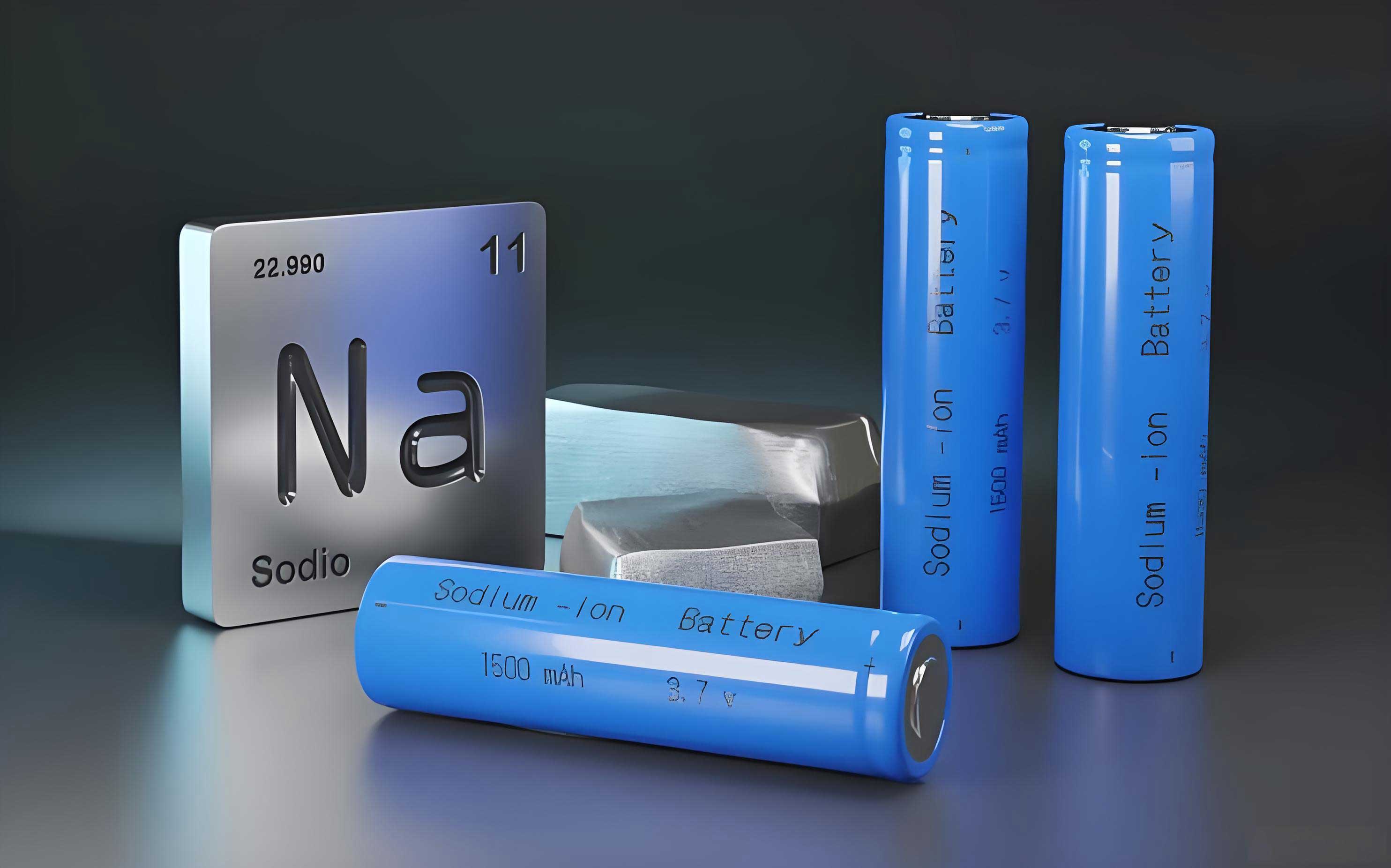
The escalating demand for efficient and sustainable energy storage systems has brought rechargeable batteries to the forefront of modern technology. While lithium-ion batteries have dominated the market for decades, concerns regarding lithium resource scarcity, geographical concentration, and rising costs have intensified the search for alternative chemistries. In this context, the sodium-ion battery has re-emerged as a compelling candidate for large-scale stationary storage and specific mobility applications. Sodium offers compelling advantages: exceptional abundance (2.74% in Earth’s crust compared to 0.0065% for lithium), low cost, and environmental benignity. Furthermore, the working principles and manufacturing processes for sodium-ion batteries share significant similarities with their lithium-ion counterparts, facilitating a smoother technological transition.
However, the larger ionic radius of Na+ (1.02 Å) compared to Li+ (0.76 Å) poses a fundamental challenge for electrode material design. Many successful lithium-ion cathode materials cannot readily accommodate reversible sodium insertion/extraction due to structural instability or sluggish ion diffusion. Consequently, discovering and engineering host structures with sufficiently large interstitial spaces and robust frameworks is critical for advancing sodium-ion battery technology. Among the various cathode material families explored—including layered oxides, polyanionic compounds, and organic materials—Prussian Blue Analogues (PBAs) have distinguished themselves as one of the most promising candidates.
PBAs are a large class of metal-organic frameworks (MOFs) with the general formula AxM[M'(CN)6]1-y·□y·zH2O, where A is an alkali metal (Na+, K+), M and M’ are transition metals (e.g., Fe, Mn, Co, Ni, Cu), □ represents [M'(CN)6] vacancies, and zH2O denotes zeolitic and coordinated water. Their crystal structure consists of a three-dimensional open framework formed by M-N≡C-M’ linkages, creating large interstitial sites and spacious channels ideal for the rapid insertion and extraction of sizable Na+ ions. This unique architecture underpins their high theoretical capacity (up to ~170 mAh g-1 for two Na+ insertion), excellent rate capability, and potentially long cycle life. This article provides a comprehensive review of PBAs as cathodes for sodium-ion batteries, delving into their structural and electrochemical fundamentals, synthesizing various preparation and modification strategies, and outlining future research directions to overcome existing challenges.
Structural Fundamentals and Electrochemical Characteristics
The archetypal PBA crystal structure is face-centered cubic (FCC, space group Fm$\bar{3}$m), where transition metal ions M and M’ occupy alternating corners of a cube, bridged by linear cyanide (CN–) ligands. The large cavities at the body center and face centers can host alkali ions (A+) and water molecules. The structural formula can be more precisely written as:
$$ \text{A}_x\text{M}^{II/III}[\text{M’}^{II/III}(\text{CN})_6]_{1-y} \cdot \square_y \cdot z\text{H}_2O $$
The electrochemical activity depends primarily on the transition metal M. When M is an electrochemically inert ion (e.g., Ni2+, Zn2+, Cu2+), only the redox couple of the [M'(CN)6] site (typically Fe3+/Fe2+) is active, leading to the insertion/extraction of approximately one Na+ per formula unit and a theoretical capacity near 85-90 mAh g-1. Conversely, when M is an electrochemically active ion (e.g., Fe2+, Mn2+, Co2+), both the M and M’ sites can undergo redox reactions, enabling a two-Na+ storage mechanism and a theoretical capacity approaching 170 mAh g-1. The representative redox reactions in a half-cell vs. Na/Na+ are:
$$ \text{Na}_x\text{M}^{II}[\text{Fe}^{III}(\text{CN})_6] \rightleftharpoons \text{Na}_{x-1}\text{M}^{III}[\text{Fe}^{III}(\text{CN})_6] + \text{Na}^+ + e^- $$
$$ \text{Na}_{x-1}\text{M}^{III}[\text{Fe}^{III}(\text{CN})_6] \rightleftharpoons \text{Na}_{x-2}\text{M}^{III}[\text{Fe}^{II}(\text{CN})_6] + \text{Na}^+ + e^- $$
The operational voltage is dictated by the redox potentials of the Mn+/M(n+1)+ and Fe3+/Fe2+ couples, typically ranging from 2.5 to 3.8 V.
However, the ideal structure is often compromised by two inherent issues stemming from aqueous synthesis: (i) the presence of zeolitic and coordinated water (zH2O), which can block Na+ diffusion pathways and participate in detrimental side reactions, and (ii) [M'(CN)6] vacancies (□y), which reduce the number of active sites and framework stability. Furthermore, depending on the Na content and water content, the structure can distort from cubic to rhombohedral or monoclinic symmetries, influencing Na+ migration kinetics and structural resilience during cycling. Therefore, the central theme in PBA research for sodium-ion batteries revolves around synthesizing materials with high crystallinity, low defect/vacancy concentration, minimal water content, and optimal sodium stoichiometry.
Synthesis Strategies for High-Performance PBAs
The electrochemical performance of PBAs is profoundly sensitive to their synthesis conditions. The primary goal is to control crystallization kinetics to minimize defects and water incorporation.
Co-precipitation Method: This is the most widely adopted technique due to its simplicity and scalability. It involves the controlled reaction between a transition metal salt (e.g., MCl2) and a hexacyanometallate precursor (e.g., Na4[Fe(CN)6]) in an aqueous solution.
| Synthesis Variant | Key Feature / Additive | Objective | Typical Outcome |
|---|---|---|---|
| Fast Precipitation | Rapid mixing of reactants | Simple, fast synthesis | High defect/water content, poor crystallinity, moderate capacity. |
| Chelator-Assisted Slow Precipitation | Citrate, EDTA, PVP; Slow reactant addition (e.g., via syringe pump) | Control crystallization rate, improve crystallinity, reduce defects | Enhanced capacity (e.g., 150 mAh g-1 for Na2CoFe(CN)6), better cycle life. |
| Solvent Engineering | Use of mixed solvents (e.g., H2O/EtOH) | Reduce water activity in synthesis medium | Lower interstitial water content in final product, improved stability. |
| Acid-Assisted Synthesis | Addition of acetic acid, HCl | Modify precursor state, control particle morphology | Can yield high Na-content phases or specific morphologies (cubes, spheres). |
| Low-Temperature Synthesis | Reaction at 0-10 °C | Suppress water incorporation, favor specific phases | Formation of rhombohedral phases with improved kinetics and stability. |
The chelator (e.g., sodium citrate) plays a crucial role by complexing with the M2+ ions, slowing down their release and allowing for more orderly framework assembly, which results in fewer vacancies. Post-synthesis treatments like vacuum drying or low-temperature annealing are often employed to remove zeolitic water.
Hydrothermal/Solvothermal Method: This method involves a reaction in a sealed vessel at elevated temperature and pressure. It often yields products with high crystallinity and unique morphologies. For instance, hollow hierarchical nanotubes of sodium iron hexacyanoferrate (Prussian White) have been synthesized hydrothermally. These structures provide short diffusion paths and robust frameworks, leading to exceptional rate performance and ultra-long cycle life (>10,000 cycles). However, this method is less common for PBAs due to equipment requirements and potential challenges in controlling defects under hydrothermal conditions.
Ball-Milling (Solid-State) Method: To circumvent issues with water-based synthesis, solid-state reactions via ball milling have been explored. Typically, precursors like Fe4[Fe(CN)6]3 and Na4Fe(CN)6 are milled together, sometimes followed by low-temperature annealing. This method can produce PBAs with very low water content and nano-sized primary particles (~40 nm), which enhance rate capability. However, challenges include incomplete reaction, particle agglomeration, and difficulty in achieving homogeneous mixing of precursors.
Each synthesis method offers distinct advantages and trade-offs between crystallinity, defect concentration, particle size/morphology, and scalability for sodium-ion battery applications.
Modification Strategies to Enhance Electrochemical Performance
Beyond optimizing synthesis, post-synthesis modifications and composite engineering are powerful tools to address the intrinsic limitations of PBAs, such as moderate electronic conductivity, framework instability during deep cycling, and side reactions at the electrode/electrolyte interface.
Composite Formation with Conductive Matrices: Coating or integrating PBA particles with conductive materials is a direct approach to improve electron transport and structural integrity.
| Matrix Material | Formation Strategy | Key Benefits | Performance Enhancement |
|---|---|---|---|
| Carbon Nanotubes (CNT), Graphene Oxide (GO)/Reduced GO (rGO) | In-situ growth on carbon network; ex-situ mixing and reduction | 3D conductive network, inhibits particle aggregation, may limit water access | Significant boost in rate capability and cycle stability (e.g., >90% retention after 2,000 cycles). |
| Conductive Polymers (PEDOT, PPy, Polydopamine) | In-situ polymerization on PBA surface | Enhances electronic conductivity, provides elastic buffer for volume change, protects surface | Improved cycling stability, especially for Mn-based PBAs prone to Jahn-Teller distortion. |
| Other Functional Coatings (ZnO, Na3(VOPO4)2F) | Post-synthesis coating or in-situ reaction | Acts as a protective layer to suppress side reactions and transition metal dissolution | Enhanced high-temperature and long-term cycling performance. |
The composite design often creates synergistic effects. For example, a polydopamine coating not only improves conductivity but also strongly couples with Fe ions on the PBA surface, promoting faster Na+ diffusion kinetics.
Elemental Doping and Gradient Structures: Substituting a fraction of the transition metal ions (M site) in the PBA lattice is a highly effective strategy to tailor the electronic structure, lattice parameters, and structural stability.
| Doping Strategy | Role of Dopant | Impact on PBA Properties |
|---|---|---|
| Ni2+ Doping (into Fe, Mn, Co sites) | Electrochemically inert “pillar”; induces low-strain characteristics | Stabilizes framework, reduces volume change during cycling, improves cycle life dramatically. May activate low-spin Fe redox. |
| Mn2+ or Co2+ Doping | Electrochemically active; alters redox potentials | Can increase average voltage or specific capacity. Co doping may enhance kinetics via charge-spin-lattice coupling. |
| Multi-metal Co-doping (e.g., Mn/Ni/Co) | Combines benefits of different ions | Larger Mn2+ expands channels, Co2+ boosts capacity/voltage, Ni2+ ensures stability. Synergistic effect leads to high capacity and long life. |
| Concentration-Gradient Structures | Radial variation in composition (e.g., Mn-rich core, Ni-rich shell) | Core provides high capacity, rigid shell minimizes surface degradation and strain. Effectively manages mechanical stress. |
The underlying mechanism can be understood through the stabilization energy and the change in lattice parameter. Doping with larger ions (like Mn2+) increases the unit cell volume (ΔV), which can be approximated by considering ionic radii (r):
$$ \Delta V \propto \sum (r_{\text{dopant}}^3 – r_{\text{host}}^3) $$
A larger channel facilitates Na+ diffusion, reducing the activation energy (Ea) for hopping, as described in a simplified form of the Nernst-Einstein relation for solid-state diffusion:
$$ D \propto \exp\left(\frac{-E_a}{k_B T}\right) $$
where D is the diffusion coefficient, kB is Boltzmann’s constant, and T is temperature. A lower Ea leads to better rate performance. Furthermore, doping can modify the electronic band gap (Eg), enhancing electronic conductivity.
Challenges and Future Perspectives
Despite remarkable progress, several challenges must be addressed to realize the full commercial potential of PBA cathodes in sodium-ion batteries.
1. Defect and Water Control at Scale: While lab-scale synthesis can produce high-quality PBAs, developing cost-effective, scalable processes that consistently yield materials with low vacancy concentration and minimal coordinated water remains a significant hurdle. Continuous flow reactors or advanced precipitation techniques need to be explored for industrial-scale production.
2. Understanding and Mitigating Capacity Fade Mechanisms: For high-capacity materials like MnHCF and FeHCF, capacity fade can arise from multiple factors: dissolution of transition metals, irreversible phase transitions, electrolyte decomposition at high voltages, and persistent side reactions with residual water. Developing advanced in-situ/operando characterization tools (XRD, XAS, NMR) is crucial to deconvolute these mechanisms. The use of optimized electrolyte formulations (e.g., concentrated electrolytes, functional additives) specifically designed for PBA cathodes is a critical, yet underexplored, research direction.
3. Energy Density Optimization: The practical energy density of a PBA-based sodium-ion battery needs improvement. This involves: (i) Maximizing the reversible capacity by ensuring complete utilization of both redox couples, which is linked to defect minimization. (ii) Increasing the average discharge voltage through strategic doping or using PBAs with inherently higher redox potentials. The full-cell energy density (E) can be estimated as:
$$ E \approx \frac{C_{\text{cathode}} \times V_{\text{avg}} \times \Delta x_{\text{Na}}}{W_{\text{total}}} $$
where Ccathode is the cathode specific capacity, Vavg is the average cell voltage, ΔxNa is the fraction of active Na used, and Wtotal accounts for the mass of all inactive components. Optimizing each parameter is key.
4. Mn-based PBA Stability: Manganese hexacyanoferrate (MnHCF) offers a high operating voltage (~3.4 V) but suffers from capacity fade due to the Jahn-Teller distortion of Mn3+ and manganese dissolution. Future work should focus on advanced stabilization strategies beyond simple doping, such as constructing core-shell structures with stable shells, employing ionic liquid electrolytes, or creating novel heterostructures.
5. Sodium-Ion Full-Cell Engineering: Most research focuses on half-cell performance. Moving forward, more studies are needed on full-cell integration with compatible anodes (hard carbon, alloys), optimizing the positive-to-negative electrode capacity ratio (P/N ratio), and pre-sodiation strategies to compensate for sodium loss during initial cycling.
Conclusion
Prussian Blue Analogues represent a highly promising class of cathode materials for sustainable and cost-effective sodium-ion batteries. Their intrinsic open-framework structure provides ideal architecture for fast and reversible sodium-ion storage. Significant advancements have been made in understanding the structure-property relationships and in developing sophisticated synthesis and modification techniques to combat issues related to crystal water and lattice defects. Through chelator-assisted precipitation, strategic doping, and smart composite design, researchers have achieved PBA materials with high capacity, excellent rate capability, and considerably improved cycling stability.
The future development of PBA cathodes lies in translating laboratory breakthroughs into scalable manufacturing processes while deepening the fundamental understanding of degradation mechanisms. With continued interdisciplinary research in materials science, electrochemistry, and chemical engineering, PBAs are poised to be a cornerstone material, enabling the realization of high-performance, safe, and affordable sodium-ion batteries for large-scale energy storage applications, ultimately contributing to a more sustainable energy landscape.