
As a researcher deeply engaged in the field of energy storage, I have witnessed the growing interest in sodium-ion batteries as a promising alternative to lithium-ion batteries. The abundance of sodium resources and lower cost make sodium-ion batteries a viable solution for large-scale energy storage applications. In particular, hard carbon anode materials have emerged as a focal point due to their excellent cycling stability and high energy density. This article aims to provide a detailed overview of the research progress in hard carbon anodes for sodium-ion batteries, covering material design strategies, electrochemical performance optimization, and future perspectives. Throughout this discussion, I will emphasize the critical role of sodium-ion battery technology in advancing sustainable energy systems.
The working principle of sodium-ion batteries resembles that of lithium-ion batteries, often described as a “rocking-chair” mechanism, where sodium ions shuttle between the cathode and anode during charge and discharge cycles. However, the larger ionic radius of sodium ions (approximately 1.02 Å) compared to lithium ions (approximately 0.76 Å) poses challenges in identifying suitable host materials. Hard carbon, characterized by its disordered microstructure with a mix of graphitic-like domains and nanopores, has proven to be an effective anode material for sodium-ion batteries. Its ability to accommodate sodium ions through adsorption, intercalation, and pore-filling mechanisms contributes to its high reversible capacity. In this review, I will delve into the various strategies employed to enhance the performance of hard carbon anodes, including precursor selection, surface modification, pore structure regulation, and heteroatom doping. The goal is to shed light on the intricate relationship between material properties and electrochemical behavior in sodium-ion batteries.
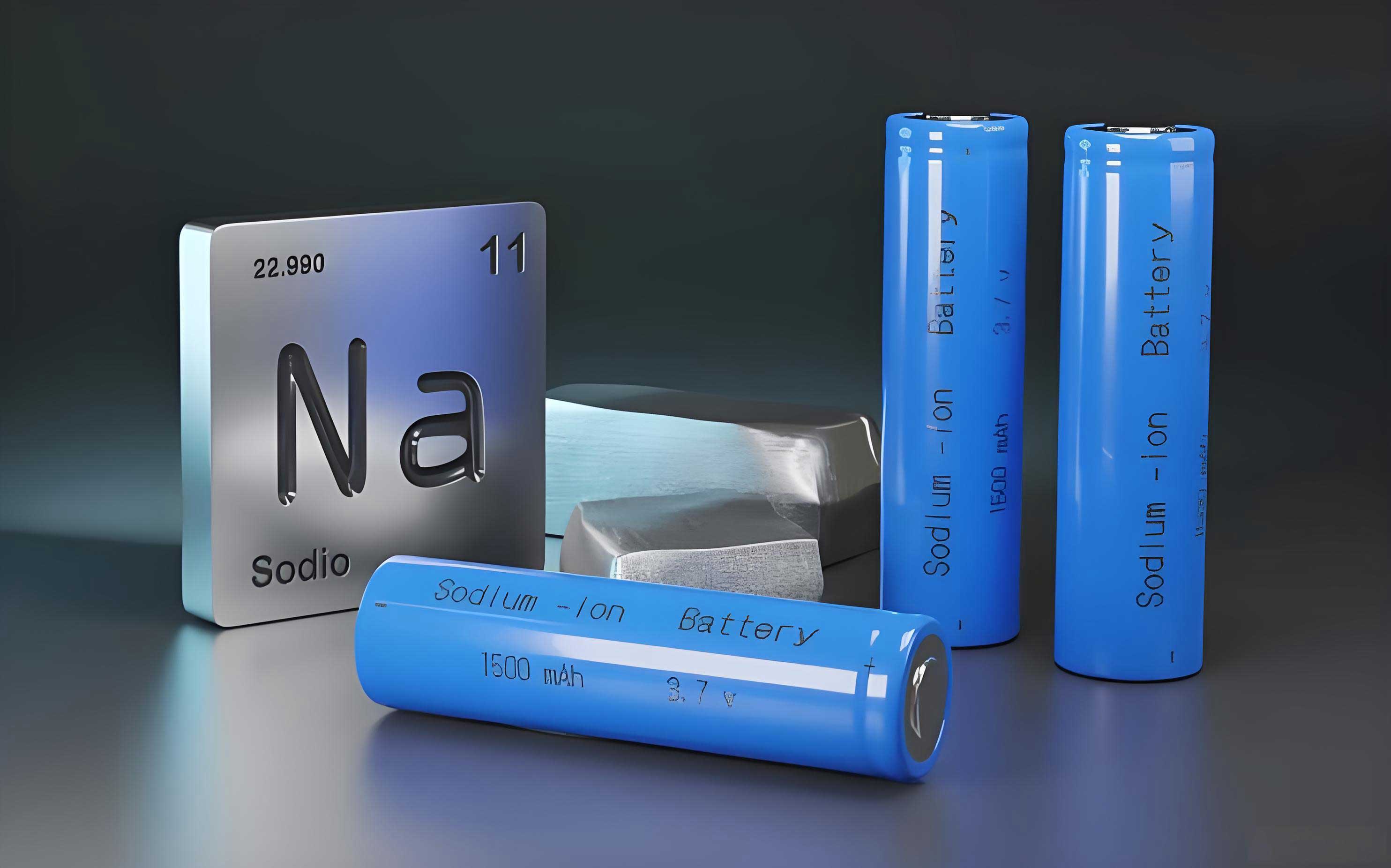
The development of high-performance hard carbon anodes is essential for the commercialization of sodium-ion batteries. One of the key metrics for evaluating anode materials is the initial Coulombic efficiency (ICE), which reflects the irreversible capacity loss during the first cycle. For hard carbon anodes in sodium-ion batteries, ICE is often influenced by factors such as specific surface area, pore structure, and surface functional groups. Optimizing these parameters can significantly improve the overall efficiency and longevity of sodium-ion batteries. In the following sections, I will explore the advancements in hard carbon design, supported by tables and mathematical models that summarize the key findings. The integration of formulas will help elucidate the underlying mechanisms, such as sodium ion diffusion kinetics and storage capacities.
To begin, let us consider the fundamental aspects of hard carbon synthesis. Hard carbon is typically produced via pyrolysis of carbon-rich precursors at temperatures ranging from 800°C to 1500°C. The choice of precursor greatly affects the final microstructure and electrochemical properties. Based on extensive research, precursors can be categorized into biomass-derived, polymer-derived, pitch-based, and coal-based materials. Each category offers distinct advantages and challenges in the context of sodium-ion battery applications. For instance, biomass precursors like cellulose and lignin are abundant and renewable, but they may require additional processing to control porosity. Below, I present a table summarizing the characteristics of different precursor types for hard carbon anodes in sodium-ion batteries.
| Precursor Type | Key Features | Typical Reversible Capacity (mAh/g) | Initial Coulombic Efficiency (%) | Challenges |
|---|---|---|---|---|
| Biomass-derived | Renewable, rich in oxygen functional groups, complex pore structure | 300-360 | 80-90 | High specific surface area leading to SEI formation |
| Polymer-derived | Tunable composition, controlled morphology, low surface area | 250-350 | 70-90 | High cost, complex synthesis |
| Pitch-based | High carbon yield, low cost, prone to graphitization | 240-360 | 60-85 | Need for pre-oxidation to prevent melting |
| Coal-based | Abundant, high carbon content, moderate performance | 220-330 | 80-85 | Impurities affecting porosity |
The data in the table highlight the trade-offs between different precursors. For example, biomass-derived hard carbons often exhibit high capacities but may suffer from low ICE due to excessive surface area. In contrast, polymer-derived hard carbons can achieve better ICE through spherical morphologies that minimize surface area. These insights are crucial for designing hard carbon anodes tailored for sodium-ion batteries. To further understand the storage mechanisms, I often refer to mathematical models that describe sodium ion insertion in hard carbon. One common approach is to use the diffusion equation to model ion transport within the porous structure. The diffusion coefficient \( D \) for sodium ions in hard carbon can be expressed as:
$$ D = D_0 \exp\left(-\frac{E_a}{RT}\right) $$
where \( D_0 \) is the pre-exponential factor, \( E_a \) is the activation energy, \( R \) is the gas constant, and \( T \) is the temperature. This formula underscores the temperature dependence of ion mobility, which is critical for optimizing the carbonization process in sodium-ion battery anodes.
Moving on to surface modification strategies, I have observed that engineering the surface of hard carbon anodes can dramatically improve their performance in sodium-ion batteries. Surface modifications aim to reduce the specific surface area, thereby minimizing the formation of a thick solid electrolyte interphase (SEI) layer, which consumes sodium ions irreversibly. Techniques such as carbon coating, atomic layer deposition of oxides (e.g., Al₂O₃), and polymer network formation have been employed. These coatings act as artificial SEI layers, enhancing the stability and ICE of hard carbon anodes. For instance, Al₂O₃ coatings have been shown to increase ICE from around 65% to over 80% in some studies. The effectiveness of these strategies can be quantified using parameters like the charge transfer resistance \( R_{ct} \), which is often derived from electrochemical impedance spectroscopy (EIS) data. The relationship between \( R_{ct} \) and the coating thickness \( d \) can be approximated by:
$$ R_{ct} = R_0 + k \cdot d $$
where \( R_0 \) is the intrinsic resistance and \( k \) is a constant related to the coating material. This linear model helps in optimizing the coating thickness for sodium-ion battery anodes to balance between protection and ion conductivity.
Another critical aspect is pore structure regulation. Hard carbon anodes possess a combination of open and closed pores, which play distinct roles in sodium ion storage. Open pores contribute to high specific surface area, potentially leading to excessive SEI formation, while closed pores serve as active sites for sodium ion storage, enhancing reversible capacity. By controlling the pore size distribution and volume, researchers can tailor the electrochemical performance of hard carbon anodes for sodium-ion batteries. Methods such as template-assisted synthesis using MgO or SiO₂ nanoparticles, and post-treatment processes like chemical vapor deposition (CVD), have been used to engineer pores. The pore volume \( V_p \) and specific surface area \( S \) are key parameters that influence the storage capacity \( C \) of hard carbon anodes. An empirical formula that relates these factors is:
$$ C = \alpha \cdot V_p + \beta \cdot S $$
where \( \alpha \) and \( \beta \) are coefficients representing the contributions from pore-filling and surface adsorption mechanisms, respectively. For sodium-ion batteries, optimizing \( \alpha \) and \( \beta \) through pore structure design is essential for achieving high capacity and ICE. Below, I provide a table comparing different pore engineering techniques and their outcomes in sodium-ion battery applications.
| Pore Engineering Technique | Mechanism | Resulting Pore Characteristics | Impact on Sodium-Ion Battery Performance |
|---|---|---|---|
| Template-assisted (e.g., MgO) | Removal of template particles creates nanopores | Uniform pore size, high closed pore volume | Increased reversible capacity (up to 478 mAh/g), high ICE (88%) |
| Chemical Activation (e.g., KOH) | Chemical etching expands pores | Increased open porosity, high surface area | Enhanced rate capability but reduced ICE due to SEI growth |
| Carbonization Temperature Control | High temperatures promote pore closure | Reduced open pores, smaller surface area | Improved ICE (up to 95%) but possible capacity decline |
| CVD-based Pore Narrowing | Deposition of carbon at pore entrances | Constructed pore entrances, controlled accessibility | High ICE (77%) and maintained capacity (328 mAh/g) |
The table illustrates how pore structure manipulation directly affects the performance metrics of sodium-ion batteries. For instance, template-assisted methods can yield hard carbons with exceptional capacity, while CVD techniques focus on improving ICE. As a researcher, I often integrate these findings into design principles for next-generation sodium-ion battery anodes.
Carbonization induction and heteroatom doping are also pivotal strategies for enhancing hard carbon anodes in sodium-ion batteries. Carbonization temperature influences the graphitization degree, defect density, and oxygen content of hard carbon. Higher temperatures tend to reduce defects and surface area, boosting ICE, but may decrease capacity due to smaller interlayer spacing. To address this, catalysts like metal ions (e.g., Ni²⁺, Mn²⁺) are introduced to promote graphitic ordering while maintaining favorable porosity. Additionally, heteroatom doping with elements such as nitrogen, sulfur, or phosphorus can modify the electronic structure and create active sites for sodium ion adsorption. The doping effect can be analyzed using the change in Fermi level \( E_F \), which impacts the charge transfer kinetics. The relationship between doping concentration \( x \) and the shift in \( E_F \) can be modeled as:
$$ \Delta E_F = \gamma \cdot x $$
where \( \gamma \) is a constant dependent on the dopant type. This shift enhances the electrical conductivity and sodium ion affinity of hard carbon anodes, crucial for high-rate performance in sodium-ion batteries. Moreover, the introduction of graphene or other carbon nanostructures during carbonization can induce aligned growth, leading to hard carbons with long-range order and minimal defects. For example, graphene-induced graphitization has resulted in hard carbons with ICE exceeding 90% and capacities around 340 mAh/g. These advancements underscore the importance of tailored carbonization processes for sodium-ion battery anodes.
In addition to the above strategies, interface engineering between the hard carbon anode and electrolyte plays a vital role in sodium-ion battery performance. The formation of a stable SEI layer is critical for preventing continuous electrolyte decomposition and ensuring long-term cycling stability. By tailoring electrolyte compositions—such as using ether-based electrolytes or additives—the SEI properties can be optimized for sodium-ion batteries. The interfacial reaction kinetics can be described using the Butler-Volmer equation, which relates the current density \( i \) to the overpotential \( \eta \):
$$ i = i_0 \left[ \exp\left(\frac{\alpha n F \eta}{RT}\right) – \exp\left(-\frac{(1-\alpha) n F \eta}{RT}\right) \right] $$
where \( i_0 \) is the exchange current density, \( \alpha \) is the charge transfer coefficient, \( n \) is the number of electrons transferred, and \( F \) is Faraday’s constant. This equation helps in understanding how interface modifications affect the charge transfer resistance and overall efficiency of sodium-ion batteries.
To synthesize the diverse approaches, I have compiled a comprehensive table that summarizes the key optimization strategies for hard carbon anodes in sodium-ion batteries, along with their mechanisms and typical outcomes.
| Optimization Strategy | Mechanism | Typical Improvement in Sodium-Ion Batteries | Challenges and Considerations |
|---|---|---|---|
| Precursor Selection | Controls inherent microstructure and functional groups | Capacity: 220-360 mAh/g; ICE: 60-90% | Balancing cost, sustainability, and performance |
| Surface Modification | Reduces surface area and SEI formation | ICE boost by 10-20%; enhanced cycling stability | Coating uniformity and scalability issues |
| Pore Structure Regulation | Adjusts open/closed pore ratio for storage vs. ICE | High capacity (up to 478 mAh/g) or high ICE (up to 95%) | Precise control over pore size distribution |
| Heteroatom Doping | Alters electronic structure and creates active sites | Improved rate capability and conductivity | Dopant distribution and potential side reactions |
| Carbonization Control | Influences graphitization and defect density | ICE up to 99.5% with maintained capacity | Trade-off between ordering and porosity |
| Interface Engineering | Stabilizes SEI layer and electrolyte compatibility | Long cycle life (>1000 cycles) and high efficiency | Electrolyte formulation and compatibility with anodes |
This table serves as a quick reference for researchers aiming to design hard carbon anodes for sodium-ion batteries. Each strategy contributes to overcoming the inherent challenges of sodium ion storage, such as large ion size and sluggish kinetics. Furthermore, the integration of multiple strategies—for example, combining heteroatom doping with pore engineering—has shown synergistic effects, leading to hard carbon anodes with superior overall performance in sodium-ion batteries.
Looking ahead, the future of hard carbon anodes in sodium-ion batteries hinges on several key directions. First, nanostructuring hard carbon materials to create hierarchical architectures can enhance ion transport pathways and reduce diffusion lengths. For instance, designing hard carbon nanowires or nanosheets could improve rate capability while maintaining high capacity. Second, advanced surface functionalization techniques, such as covalent bonding of specific functional groups, may further optimize the interface with electrolytes in sodium-ion batteries. Third, green and scalable synthesis methods are essential for commercializing sodium-ion batteries; using waste biomass or low-cost precursors can reduce environmental impact and cost. Fourth, in-situ characterization tools and computational modeling will play a crucial role in understanding the real-time behavior of hard carbon anodes during sodium ion insertion and extraction. For example, density functional theory (DFT) calculations can predict the binding energies of sodium ions on doped carbon surfaces, guiding material design. The binding energy \( E_b \) can be expressed as:
$$ E_b = E_{\text{total}} – (E_{\text{carbon}} + E_{\text{Na}}) $$
where \( E_{\text{total}} \) is the energy of the carbon-sodium system, \( E_{\text{carbon}} \) is the energy of the carbon substrate, and \( E_{\text{Na}} \) is the energy of an isolated sodium atom. By minimizing \( E_b \), researchers can design hard carbon anodes with favorable sodium ion adsorption properties for sodium-ion batteries.
Moreover, the development of full-cell configurations with hard carbon anodes and compatible cathodes is critical for practical sodium-ion battery applications. Matching the capacity ratios and optimizing the electrolyte for both electrodes will ensure balanced performance. I anticipate that with continued innovation, sodium-ion batteries equipped with hard carbon anodes could achieve energy densities comparable to some lithium-ion batteries, making them competitive for grid storage and electric vehicles.
In conclusion, hard carbon anode materials have demonstrated immense potential for sodium-ion batteries, offering a blend of high capacity, good cycling stability, and cost-effectiveness. Through meticulous material design—encompassing precursor selection, surface modification, pore structure regulation, carbonization control, and heteroatom doping—researchers have made significant strides in optimizing electrochemical performance. The interplay between microstructure and sodium ion storage mechanisms is complex, but with the aid of mathematical models and empirical data, we can unravel these relationships to guide future developments. As the demand for sustainable energy storage grows, sodium-ion batteries with advanced hard carbon anodes are poised to play a pivotal role in the global transition to renewable energy. I encourage ongoing research into multifunctional hard carbon designs that address the remaining challenges, such as improving low-temperature performance and scaling up production. The journey from lab-scale innovations to commercial sodium-ion battery systems is fraught with hurdles, but with collaborative efforts, I am confident that hard carbon technology will unlock new horizons for sodium-ion batteries.
To encapsulate the core principles, I often reflect on the fundamental equation for the capacity of a hard carbon anode in a sodium-ion battery, which integrates various factors:
$$ C_{\text{total}} = C_{\text{intercalation}} + C_{\text{adsorption}} + C_{\text{pore-filling}} $$
where \( C_{\text{intercalation}} \) represents capacity from ion intercalation into graphitic domains, \( C_{\text{adsorption}} \) from surface adsorption, and \( C_{\text{pore-filling}} \) from sodium cluster formation in closed pores. Maximizing each component through tailored material engineering is the essence of advancing sodium-ion battery technology. As I continue my research in this field, I remain committed to exploring novel avenues that enhance the efficiency and sustainability of sodium-ion batteries, ultimately contributing to a cleaner energy future.