
As I reflect on the evolution of energy storage systems, it is clear that batteries have been pivotal in powering human progress for over two centuries. Since Alessandro Volta invented the first battery, the voltaic pile, in 1800, numerous battery technologies have emerged, each striving to meet the growing demand for portable and reliable electricity. Among these, lithium-ion batteries have dominated the market since their commercialization by Sony in 1991, owing to their high energy density and efficiency. They are now integral to consumer electronics, electric vehicles, and grid storage, forming the backbone of modern energy solutions. However, this reliance on lithium-ion batteries comes with a critical vulnerability: the scarcity and uneven distribution of lithium resources. Globally, lithium reserves are concentrated in South America, with Argentina, Bolivia, and Chile holding over half of the known deposits. While China ranks high in lithium reserves, most are located in remote, high-altitude regions, making extraction challenging and costly. Consequently, China imports more than 80% of its lithium, creating a high dependency that poses risks to its strategic industries like electric vehicles and renewable energy. This situation necessitates exploring alternative battery technologies, and from my perspective, the sodium-ion battery stands out as a promising solution to mitigate these risks and ensure long-term energy security.
The sodium-ion battery, although proposed in the 1970s, saw limited research for decades due to the superior performance of lithium-ion systems. Sodium, as an alkali metal adjacent to lithium on the periodic table, shares similar chemical properties, but its larger ionic radius and mass result in lower energy density. Specifically, sodium-ion batteries typically achieve only about half the volumetric and gravimetric energy density of lithium-ion batteries, which initially hindered their adoption. However, recent advancements have reignited interest, driven by the need for cost-effective and safe storage solutions in applications where high energy density is not paramount. In the past decade, research on sodium-ion batteries has surged, with over 3,500 academic papers published globally in 2019 alone. China leads this effort, accounting for more than 88% of related patents, focusing on electrode materials, electrolyte systems, and reaction mechanisms to harness the inherent advantages of sodium. The core appeal lies in sodium’s abundance; it is one of the most plentiful elements in Earth’s crust, which could translate into lower bill-of-materials (BOM) costs compared to lithium. From my analysis, the sodium-ion battery represents not just a backup option but a strategic asset that could diversify energy storage portfolios and reduce geopolitical vulnerabilities.
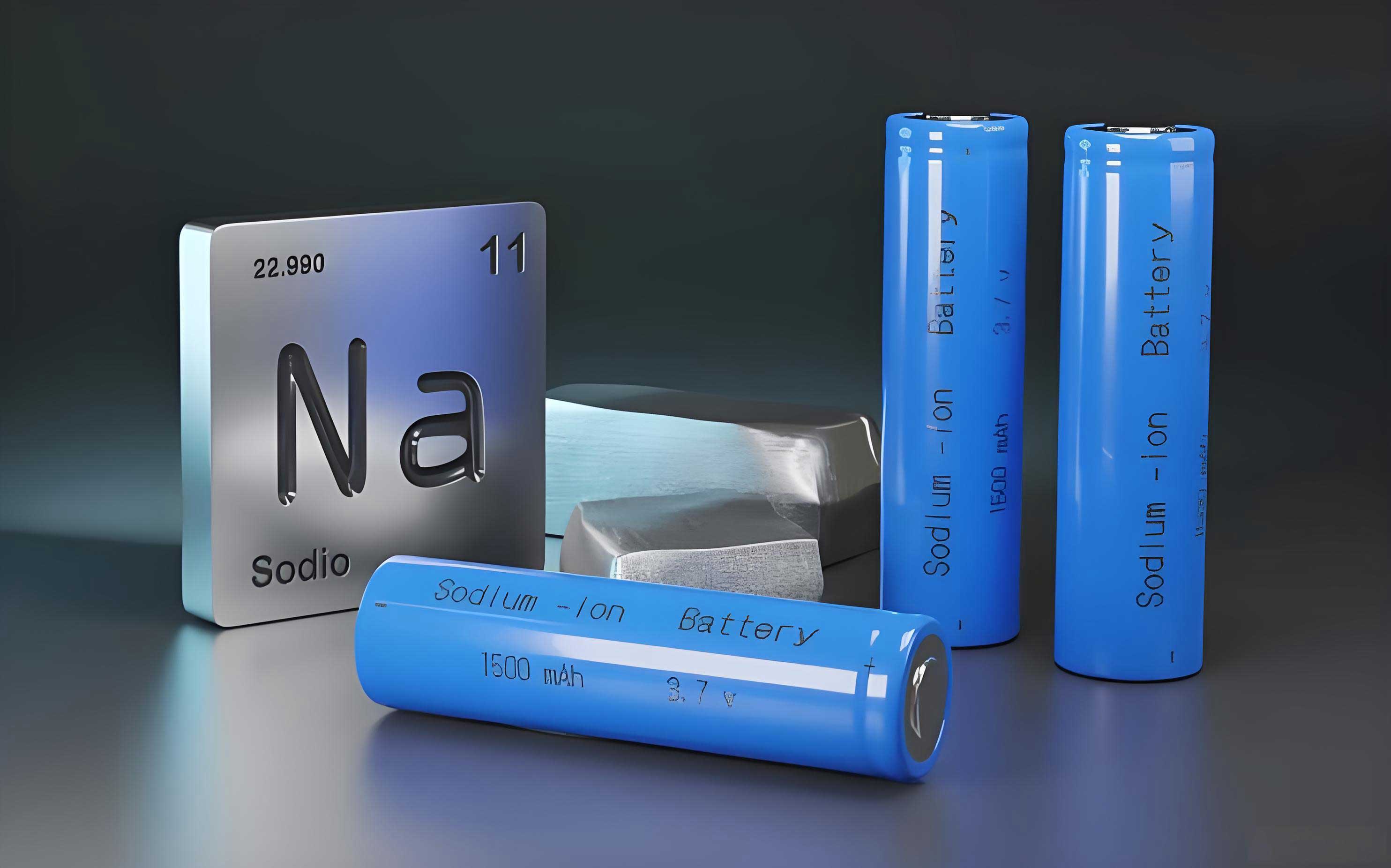
To understand the potential of sodium-ion batteries, it is essential to delve into their technical fundamentals. The working principle parallels that of lithium-ion batteries, involving the shuttling of ions between cathode and anode during charge and discharge cycles. For a sodium-ion battery, the general reaction can be expressed as:
$$ \text{Cathode: Na_xMO_2 \rightleftharpoons Na_{x-y}MO_2 + yNa^+ + ye^-} $$
$$ \text{Anode: C + yNa^+ + ye^- \rightleftharpoons Na_yC} $$
where M represents transition metals like iron, manganese, or nickel, and C denotes carbon-based materials. The energy density (E) of a sodium-ion battery depends on the electrode materials and can be approximated by:
$$ E = \frac{F \times V}{3.6 \times M} $$
where F is Faraday’s constant (96485 C/mol), V is the average cell voltage, and M is the molecular weight of the active materials. Compared to lithium, sodium’s higher atomic weight (23 g/mol vs. 6.9 g/mol for lithium) inherently limits energy density, but this is offset by other factors. For instance, sodium ions exhibit faster diffusion kinetics in certain electrolytes, enabling higher power density, and they are less prone to dendritic formation, enhancing safety. From my evaluation, key performance metrics for sodium-ion batteries include specific energy (Wh/kg), cycle life, cost per kWh, and safety profile. These parameters vary widely based on the chosen materials, as summarized in the table below for major产业化 projects globally. It is crucial to note that while BOM costs for sodium-ion batteries are projected to be 20-30% lower than lithium-ion equivalents, actual production costs remain higher due to immature manufacturing processes and scale. Therefore, continuous innovation in material science and engineering is vital to unlock the full potential of sodium-ion battery systems.
| Country | Battery System | Key Materials | Performance Parameters | Advantages | Challenges |
|---|---|---|---|---|---|
| United Kingdom | Organic electrolyte, layered oxide/hard carbon | Cathode: Cu-Fe-Mn oxide; Anode: Hard carbon | Energy density: 140 Wh/kg; Cycle life: 1000 cycles at 80% DoD | Compatible with existing lithium-ion production lines | Limited cost advantage; safety risks from organic electrolytes |
| United States | Aqueous electrolyte, Prussian blue | Cathode: Prussian blue analog; Anode: Carbon | Energy density: 50 Wh/L; Cycle life: 10,000 cycles at 2C rate | High safety due to aqueous system; excellent rate capability | Low energy density; complex manufacturing process |
| France | Organic electrolyte, polyanion/hard carbon | Cathode: NaVPO4F; Anode: Hard carbon | Energy density: 90 Wh/kg; Cycle life: 4000 cycles at 1C | Long cycle life; production compatibility | Toxic vanadium and fluorine; higher cost; safety concerns |
| China | Organic electrolyte, layered oxide/hard carbon | Cathode: Ni-Fe-Mn oxide; Anode: Hard carbon | Energy density: 120 Wh/kg; Cycle life: 1000 cycles | Good compatibility with current infrastructure | Cost benefits not yet realized; organic electrolyte flammability |
| China | Organic electrolyte, layered oxide/amorphous carbon | Cathode: Cu-Fe-Mn oxide; Anode: Amorphous carbon | Energy density: 135 Wh/kg; Cycle life: 2000 cycles | Improved energy density; manufacturing flexibility | Similar cost and safety issues as other organic systems |
The industrialization of sodium-ion batteries is progressing, with nearly twenty companies worldwide actively developing prototypes and pilot lines. From my observation, the diversity in technical routes—ranging from aqueous to organic electrolytes, and from layered oxides to Prussian blue cathodes—highlights the experimental nature of this field. Each approach targets specific niches: aqueous systems prioritize safety and cycle life, while organic systems aim for higher energy density. However, a unified standard is lacking, making it difficult to compare products directly. I believe that for sodium-ion batteries to gain traction, they must address two core pain points of lithium-ion batteries: cost and safety. The cost advantage can be quantified by analyzing the total cost of ownership (TCO), which includes raw materials, manufacturing, and lifetime performance. For a sodium-ion battery, the TCO per kWh (C_SIB) can be modeled as:
$$ C_{SIB} = C_{BOM} + C_{manuf} + \frac{C_{repl}}{N_{cycles}} $$
where C_{BOM} is the bill-of-materials cost, C_{manuf} is manufacturing cost, C_{repl} is replacement cost, and N_{cycles} is the cycle life. Currently, C_{manuf} for sodium-ion batteries is high due to low production volumes, but economies of scale could reduce this by 15-20% with mass adoption. Safety, on the other hand, is inherently better for sodium-ion batteries because sodium is less reactive than lithium, and some systems use non-flammable electrolytes. In risk-prone applications, this could be a decisive factor. As I assess the landscape, it is clear that sodium-ion battery technology is at a crossroads, with incremental improvements needed to compete with mature lithium-ion alternatives.
Turning to application scenarios, sodium-ion batteries offer compelling use cases where energy density is secondary to cost, safety, and longevity. From my analysis, three areas stand out for early adoption. First, in distributed energy systems paired with renewable sources like solar or wind. Remote regions with poor grid infrastructure, such as parts of Tibet, Africa, or Southeast Asia, could benefit from sodium-ion battery storage due to its potential lower cost and robustness. The levelized cost of storage (LCOS) for such systems can be expressed as:
$$ LCOS = \frac{I_0 + \sum_{t=1}^{n} \frac{O_t}{(1+r)^t}}{\sum_{t=1}^{n} \frac{E_t}{(1+r)^t}} $$
where I_0 is initial investment, O_t is operational cost in year t, E_t is energy output, r is discount rate, and n is system lifetime. Sodium-ion batteries, with their lower BOM costs, could reduce I_0, making decentralized power solutions more affordable. Second, sodium-ion batteries are suitable for electric industrial machinery, such as forklifts and construction equipment. These applications require high power and durability rather than high energy density, and they often use lead-acid batteries today. Sodium-ion batteries could offer faster charging, better low-temperature performance, and longer life, with a total cost advantage over time. Third, fixed installations like telecom base stations and surveillance cameras represent a stable market. Here, sodium-ion batteries could replace lead-acid or lithium iron phosphate (LFP) batteries, providing a middle-ground option with enhanced safety. To illustrate, the table below compares sodium-ion batteries with incumbent technologies across key parameters.
| Application | Current Dominant Technology | Potential for Sodium-Ion Battery | Key Metrics | Sodium-Ion Advantages |
|---|---|---|---|---|
| Distributed Grid Storage | Lithium-ion (LFP), lead-acid | High – for cost-sensitive, low-energy-density needs | LCOS, cycle life, safety | Lower raw material cost, good safety profile |
| Electric Industrial Machinery | Lead-acid, some lithium-ion | Moderate to High – as a drop-in replacement | Power density, cycle life, operating temperature range | Faster charging, better low-temperature performance vs. lead-acid |
| Telecom Backup Power | Lead-acid, LFP | Moderate – in areas with safety or cost constraints | Reliability, maintenance, TCO | Reduced fire risk, potential cost savings at scale |
However, the market demand for sodium-ion batteries remains limited in the short term. From my perspective, this is due to the overwhelming dominance of lithium-ion batteries, which benefit from established supply chains, continuous innovation, and economies of scale. Global lithium resources are currently in oversupply, and lithium-ion battery prices have fallen steadily, making it harder for sodium-ion alternatives to compete on price alone. Moreover, sodium-ion battery production is still in its infancy, with high研发 costs and inconsistent product quality. As a result, early adopters face hurdles in scalability and profitability. I estimate that the global market for sodium-ion batteries will grow slowly, reaching significant penetration only after 2030, once technological maturation and cost reductions are achieved. In the interim, niche applications and pilot projects will be crucial for validating performance and building market confidence.
For investors and policymakers, the sodium-ion battery sector presents both opportunities and risks. Based on my analysis, here are key considerations for strategic engagement. First, selecting the right technology route is paramount. Investors should prioritize systems that emphasize safety and tangible cost reductions, avoiding those reliant on toxic materials or volatile chemistries. For example, aqueous sodium-ion batteries may offer better safety profiles, while organic systems need robust safety mitigations. Second, focus on entities with strong研发 capabilities and proven industrialization experience. Since the industry is in flux, teams that master core materials and manufacturing processes will lead the next wave of innovation. Third, seek investments in companies with downstream integration or full-solution offerings. Sodium-ion battery producers that partner with renewable energy firms or industrial equipment manufacturers can secure stable demand and accelerate product迭代. To quantify investment attractiveness, I propose a simple scoring model (S) for sodium-ion battery ventures:
$$ S = w_1 \cdot T + w_2 \cdot M + w_3 \cdot F $$
where T represents technical maturity (0-10 scale), M is market access (0-10 scale), F is financial stability (0-10 scale), and w_1, w_2, w_3 are weightings based on investor risk appetite. A venture with S > 7 might be considered promising. Additionally, governments can play a role by funding research, setting standards, and creating incentives for sodium-ion battery adoption in public projects. From a macroeconomic view, developing a domestic sodium-ion battery industry could enhance energy independence and create high-tech jobs.
In conclusion, the sodium-ion battery represents a viable pathway to diversify energy storage and reduce reliance on imported lithium. While it cannot replace lithium-ion batteries in high-energy-density applications, its strengths in cost, safety, and sustainability make it a complementary technology for specific markets. From my standpoint, the journey toward widespread adoption will require sustained innovation, strategic investment, and patient capital. As research advances and production scales, sodium-ion batteries could become a cornerstone of resilient energy systems worldwide. For stakeholders, the time is ripe to engage critically—evaluating technical routes, monitoring industry trends, and seizing opportunities that align with long-term energy goals. The sodium-ion battery, once a sidelined concept, now holds the promise of transforming our energy landscape, one charge at a time.