
In recent years, the rapid advancement of energy storage technologies has highlighted the critical need for sustainable and safe battery systems. Among emerging alternatives, the sodium-ion battery has garnered significant attention due to its inherent advantages, such as abundant raw material resources, lower cost, and competitive performance across a wide temperature range. However, as commercialization of sodium-ion batteries accelerates, comprehensive safety assessments, particularly regarding thermal runaway hazards, lag behind. Thermal runaway in batteries—a self-sustaining exothermic reaction leading to catastrophic failure—poses severe risks of fire, explosion, and toxic gas release. This study aims to address this gap by systematically investigating the thermal runaway behavior and gas emission characteristics of a commercial 180 Ah sodium-ion battery under various abuse conditions. Through rigorous experimentation, we seek to elucidate the fundamental mechanisms driving thermal instability in large-format sodium-ion batteries, providing essential data for safety design and risk mitigation in real-world applications.
The sodium-ion battery shares a similar working principle with lithium-ion counterparts, relying on the shuttling of sodium ions between cathode and anode during charge and discharge cycles. Common cathode materials include layered oxides, polyanionic compounds, and Prussian blue analogs, while anodes often utilize hard carbon, soft carbon, or composite carbons. The electrolyte typically consists of sodium salts dissolved in organic carbonates. Despite structural similarities, the distinct electrochemical properties of sodium-ion systems can lead to different thermal response profiles under abuse scenarios. Understanding these differences is paramount for developing effective safety protocols. Prior research has primarily focused on the electrochemical performance and material-level thermal stability of sodium-ion batteries, with limited studies on full-cell thermal runaway, especially for high-capacity designs exceeding 100 Ah. This work bridges that knowledge deficit by examining a 180 Ah sodium-ion battery under adiabatic, overheating, and overcharge conditions, quantifying key parameters such as onset temperatures, maximum temperatures, gas composition, and mass loss.
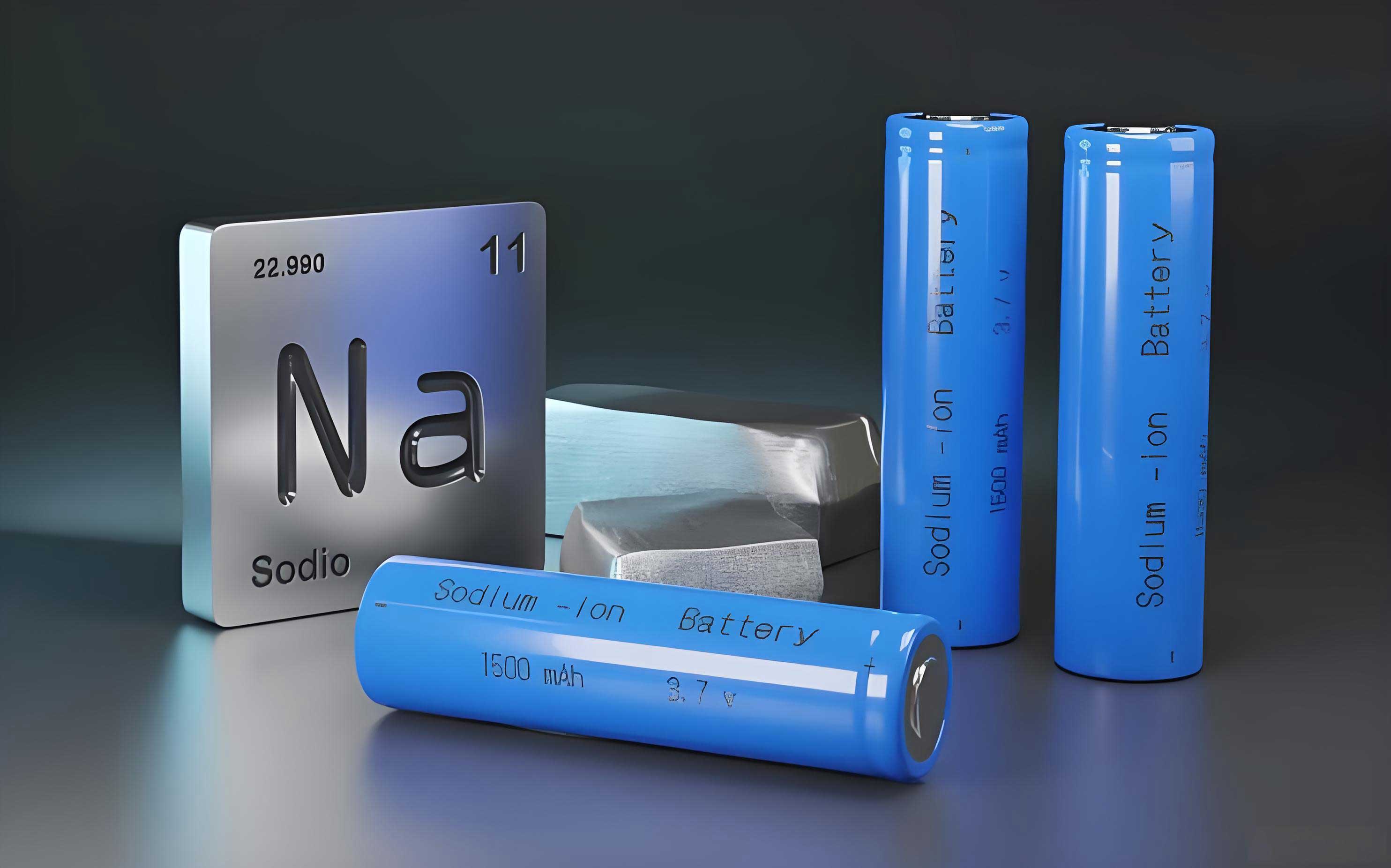
Our experimental approach integrates an adiabatic accelerating rate calorimeter (ARC) and a sealed pressure vessel to simulate different abuse scenarios. The sodium-ion battery under investigation is a square aluminum-shell cell with a nominal capacity of 180 Ah and an energy density of approximately 110 Wh/kg. Key specifications are summarized in Table 1. Before testing, each sodium-ion battery was conditioned to 100% state of charge (SOC) using a standard charge-discharge cycler. This ensures consistency in initial conditions across all experiments, which is critical for reliable comparison of thermal runaway characteristics.
| Parameter | Value |
|---|---|
| Cathode Material | Layered Oxide |
| Anode Material | Soft Carbon |
| Nominal Capacity | 180 Ah |
| Nominal Voltage | 3.0 V |
| Charge Cut-off Voltage | 3.85 V |
| Discharge Cut-off Voltage | 2.0 V |
| Weight | 4900 ± 100 g |
| Dimensions (Width × Height × Thickness) | 174 mm × 205 mm × 72 mm |
The adiabatic tests were conducted using an ARC, which provides a near-zero heat loss environment to study the self-heating behavior of the sodium-ion battery. The instrument was set with a temperature step of 5.0 °C and a self-heating detection threshold of 0.02 °C/min. Thermocouples were attached to multiple locations on the battery surface, including the large faces, positive and negative terminals, and near the safety vent, to capture spatial temperature variations. The battery was clamped between metal plates to simulate constrained conditions. In the overheating tests, the sodium-ion battery was subjected to bilateral heating using 800 W heaters with a controlled ramp rate of 7 °C/min, all within a 320 L sealed pressure vessel equipped with pressure sensors, gas sampling ports, and a vacuum system. For overcharge tests, the sodium-ion battery was charged at a constant current of 0.5C (90 A) beyond its cut-off voltage until thermal runaway occurred. Voltage, temperature, and pressure data were continuously recorded. Post-thermal runaway, gas composition was analyzed via gas chromatography, and mass loss was determined by weighing the battery before and after testing.
The thermal runaway process in a sodium-ion battery can be described by a series of exothermic reactions. Initially, the solid-electrolyte interphase (SEI) on the anode decomposes at elevated temperatures, typically around 90–120 °C, leading to reactions between the anode and electrolyte. This is followed by separator melting, internal short circuits, and decomposition of cathode materials and electrolyte. The overall heat generation rate can be modeled using Arrhenius kinetics: $$ \frac{dQ}{dt} = A \exp\left(-\frac{E_a}{RT}\right) $$ where \( Q \) is the heat released, \( A \) is the pre-exponential factor, \( E_a \) is the activation energy, \( R \) is the universal gas constant, and \( T \) is the absolute temperature. Under adiabatic conditions, the self-accelerating nature of these reactions leads to thermal runaway when the heat generation surpasses the system’s ability to dissipate heat.
In the adiabatic experiment, the sodium-ion battery exhibited a clear three-stage thermal runaway progression. The self-heating onset temperature (\( T_{\text{onset}} \)) was identified as 115.92 °C, marking the point where the internal heat generation rate exceeded 0.02 °C/min. As temperature increased, gas accumulation from electrolyte decomposition and electrode reactions caused the safety vent to open, but unlike some lithium-ion batteries, the venting event coincided closely with the thermal runaway trigger. The thermal runaway trigger temperature (\( T_{\text{tr}} \)), defined as the temperature at which the heating rate exceeds 3 °C/s, was 201.30 °C. The sodium-ion battery then rapidly escalated to a maximum temperature (\( T_{\text{max}} \)) of 444.82 °C, with a peak heating rate of 2353.08 °C/min. Table 2 summarizes the characteristic temperatures and derived parameters for the sodium-ion battery under adiabatic conditions. The high heating rate underscores the violent nature of thermal runaway in this large-format sodium-ion battery.
| Parameter | Value |
|---|---|
| Self-Heating Onset Temperature (\( T_{\text{onset}} \)) | 115.92 °C |
| Thermal Runaway Trigger Temperature (\( T_{\text{tr}} \)) | 201.30 °C |
| Maximum Temperature (\( T_{\text{max}} \)) | 444.82 °C |
| Peak Heating Rate | 2353.08 °C/min |
| Mass Loss Rate | 22.80% |
Under overheating conditions, the sodium-ion battery demonstrated a thermal response initiated by external heat flux. The temperature at which uncontrolled self-heating began was approximately 171.83 °C, slightly higher than the adiabatic \( T_{\text{onset}} \) due to heat transfer delays. The sodium-ion battery reached a \( T_{\text{max}} \) of 484.51 °C, with localized hotspots exceeding 500 °C. Notably, the safety vent opened almost simultaneously with the thermal runaway event, a behavior reminiscent of some lithium nickel manganese cobalt oxide (NMC) batteries, but the maximum temperature was closer to that of lithium iron phosphate (LFP) systems. The sealed vessel allowed for precise measurement of gas production. Using the ideal gas law, the total volume of gas emitted was calculated: $$ n = \frac{pV}{RT} $$ where \( n \) is the amount of substance, \( p \) is pressure, \( V \) is vessel volume, \( R \) is the gas constant, and \( T \) is temperature. For the overheated sodium-ion battery, the gas volume at standard conditions was 123.25 L. Gas chromatography revealed a mixture dominated by hydrogen (35.39%), carbon dioxide (30.95%), carbon monoxide (19.16%), and ethylene (4.34%), as detailed in Table 3. The presence of substantial hydrogen indicates a significant explosion hazard during thermal runaway of a sodium-ion battery. The mass loss was 24.98%, attributable to electrolyte vaporization and ejection of active materials.
| Gas Component | Overheating Volume Percentage | Overcharge Volume Percentage |
|---|---|---|
| Hydrogen (H₂) | 35.39% | 28.10% |
| Carbon Dioxide (CO₂) | 30.95% | 29.08% |
| Carbon Monoxide (CO) | 19.16% | 20.79% |
| Ethylene (C₂H₄) | 4.34% | 14.43% |
| Other Gases (e.g., CH₄, C₂H₆) | 10.16% | 7.60% |
Overcharge abuse represents a severe electrical misuse scenario where the sodium-ion battery is charged beyond its designed capacity. At a constant current of 0.5C, the sodium-ion battery experienced voltage rise and temperature increase until thermal runaway occurred at an SOC of approximately 190.84%. The sudden voltage spike to 11.18 V signaled internal short circuits, followed by a rapid temperature surge to a \( T_{\text{max}} \) of 573.60 °C, the highest among all tests. This elevated temperature suggests more intense exothermic reactions, possibly due to combined electrochemical and thermal degradation pathways. The gas emission volume was 200.26 L, nearly double that of the overheating case, with a distinct shift in composition: carbon dioxide (29.08%), hydrogen (28.10%), carbon monoxide (20.79%), and ethylene (14.43%). The higher ethylene content likely stems from enhanced reduction of carbonate-based electrolytes at elevated temperatures during overcharge. The mass loss rate soared to 47.96%, indicating severe structural disintegration of the sodium-ion battery, consistent with observed carbonaceous residue post-test. Comparative analysis with lithium-ion batteries reveals that the sodium-ion battery’s thermal runaway behavior under overheating aligns more with LFP batteries in terms of temperature magnitude, while its overcharge response, including high SOC tolerance and gas production, shares similarities with NMC batteries. This dual-characteristic underscores the need for tailored safety strategies for sodium-ion battery systems.
The gas generation mechanisms in a sodium-ion battery during thermal runaway involve multiple chemical pathways. Hydrogen primarily originates from the decomposition of organic solvents (e.g., ethylene carbonate) and reaction with residual moisture: $$ \text{C}_2\text{H}_4\text{CO}_3 + \text{H}_2\text{O} \rightarrow \text{CO}_2 + \text{H}_2 + \text{other products} $$ Carbon dioxide and carbon monoxide are products of solvent oxidation and carbonate decomposition: $$ \text{LiPF}_6 \rightarrow \text{PF}_5 + \text{LIF} $$ $$ \text{PF}_5 + \text{H}_2\text{O} \rightarrow \text{POF}_3 + 2\text{HF} $$ $$ \text{EC} \rightarrow \text{CO}_2 + \text{C}_2\text{H}_4 $$ Ethylene is a direct decomposition product of ethylene carbonate. The variation in gas composition between abuse conditions reflects differences in reaction kinetics and temperature profiles. For instance, overcharge induces higher currents and localized heating, promoting more complete decomposition and thus higher ethylene yields. The total gas volume \( V_{\text{gas}} \) can be correlated with the extent of reactions, approximated by: $$ V_{\text{gas}} = k \cdot \Delta m \cdot R T / M $$ where \( k \) is a proportionality constant, \( \Delta m \) is mass loss, \( M \) is average molar mass of gases, and other symbols retain their usual meanings. This relationship highlights the direct link between mass loss and gas emission in a sodium-ion battery thermal event.
To further contextualize our findings, we compare the sodium-ion battery with typical lithium-ion batteries. Table 4 presents a summary of key thermal runaway parameters. The sodium-ion battery exhibits intermediate characteristics, with trigger temperatures lower than LFP but higher than some NMC batteries, and gas production volumes that can exceed both under certain conditions. This positions sodium-ion batteries as having a distinct fire risk profile that necessitates specific safety considerations, such as enhanced venting design, thermal management systems, and gas detection in battery enclosures.
| Battery Type | Typical \( T_{\text{onset}} \) (°C) | Typical \( T_{\text{max}} \) (°C) | Typical Gas Volume (L per cell) | Dominant Gas Components |
|---|---|---|---|---|
| Sodium-Ion (This Study) | 115–172 | 445–574 | 123–200 | H₂, CO₂, CO, C₂H₄ |
| LFP Lithium-Ion | ~150–200 | ~400–500 | ~50–100 | CO₂, CO, H₂ |
| NMC Lithium-Ion | ~100–150 | ~600–800 | ~100–150 | CO₂, CO, H₂, C₂H₄ |
In conclusion, this comprehensive study elucidates the thermal runaway and gas emission characteristics of a high-capacity 180 Ah sodium-ion battery under adiabatic, overheating, and overcharge abuse conditions. The sodium-ion battery demonstrated a self-heating onset at 115.92 °C in adiabatic tests, with a thermal runaway trigger at 201.30 °C and a maximum temperature of 444.82 °C. Under overheating, the sodium-ion battery initiated thermal runaway around 171.83 °C, emitting 123.25 L of gas rich in hydrogen, carbon dioxide, and carbon monoxide. Overcharge abuse led to thermal runaway at 190.84% SOC, with a higher temperature of 573.60 °C and 200.26 L of gas featuring increased ethylene content. The sodium-ion battery’s behavior bridges aspects of both LFP and NMC lithium-ion batteries, indicating a unique hazard profile that demands focused safety engineering. Future work should explore larger-scale propagation in sodium-ion battery modules and the effectiveness of mitigation strategies. These insights contribute to the safe deployment of sodium-ion battery technology in energy storage and electric mobility, ensuring that its advantages are not overshadowed by safety concerns.