
In recent years, the rapid advancement of renewable energy sources and the growing demand for electric vehicles have intensified the search for efficient, safe, and affordable energy storage systems. Among various technologies, the lithium-ion battery has dominated the market due to its high energy density and mature manufacturing processes. However, concerns over limited lithium reserves, geopolitical constraints, and rising costs have spurred interest in alternative battery chemistries. The sodium-ion battery emerges as a promising candidate, leveraging the abundance and low cost of sodium resources. Despite these advantages, conventional sodium-ion battery systems often rely on organic electrolytes, which pose safety risks such as flammability and require stringent assembly conditions. To address these issues, aqueous sodium-ion battery systems have gained attention for their inherent safety, environmental friendliness, and potential for low-cost production. In this work, we explore a novel alkaline sodium-ion battery capacitor (ASIBC) that combines the benefits of sodium-ion battery technology with capacitive storage, offering a compelling solution for large-scale energy storage applications.
The concept of a sodium-ion battery capacitor integrates battery-type electrodes with capacitor-type electrodes, aiming to achieve high energy density akin to batteries and high power density similar to supercapacitors. This hybrid approach can mitigate the trade-offs typically observed in standalone devices. Our focus is on developing an ASIBC system that operates in an alkaline electrolyte, specifically using sodium hydroxide (NaOH) solution. Alkaline environments offer several advantages, including enhanced ionic conductivity, reduced electrode corrosion, and compatibility with inexpensive materials like stainless steel current collectors. Moreover, alkaline electrolytes can facilitate unique electrochemical processes, such as overcharge tolerance, which improves system safety and performance. We present a comprehensive study on an ASIBC constructed with a Na0.44MnO2 cathode, an activated carbon (AC) anode, and a 6 mol·L−1 NaOH electrolyte. This configuration demonstrates remarkable electrochemical properties, including high rate capability, long cycling stability, and a wide operating temperature range, making it a viable option for grid-scale storage.
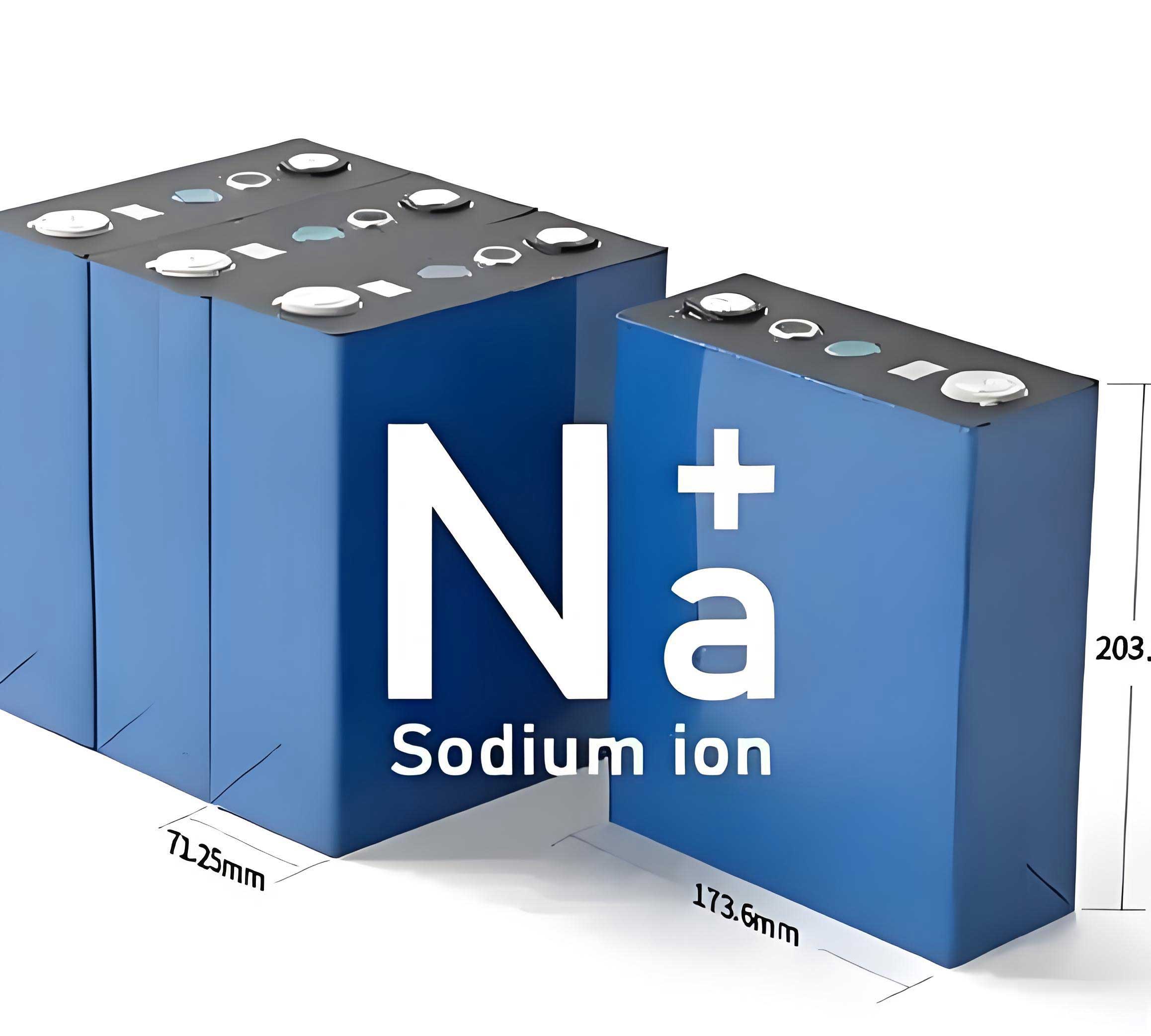
To understand the fundamental principles behind our ASIBC, it is essential to delve into the electrochemistry of sodium-ion battery systems. Sodium-ion battery operation relies on the intercalation and deintercalation of Na+ ions in electrode materials, similar to lithium-ion battery mechanisms. The overall cell reaction can be represented as:
$$ \text{Cathode} + \text{Anode} \rightleftharpoons \text{Cathode}_{(discharged)} + \text{Anode}_{(charged)} $$
For our system, the cathode material Na0.44MnO2 undergoes reversible Na+ insertion/extraction, while the AC anode stores charge via electrical double-layer capacitance and pseudocapacitance. The alkaline electrolyte promotes these processes by providing a high concentration of OH− ions, which can influence the electrode kinetics. The capacity of a sodium-ion battery electrode is determined by the number of Na+ ions that can be accommodated, often expressed as:
$$ C = nF \frac{\Delta x}{M} $$
where \( C \) is the specific capacity (in mAh·g−1), \( n \) is the number of electrons transferred per formula unit, \( F \) is Faraday’s constant, \( \Delta x \) is the change in sodium content, and \( M \) is the molar mass of the active material. In alkaline media, the Na0.44MnO2 cathode exhibits an expanded potential window for Na+ intercalation, leading to increased capacity compared to neutral electrolytes. This phenomenon can be attributed to the stabilization of manganese oxidation states and reduced side reactions.
The design of our ASIBC emphasizes cost-effectiveness and scalability. We utilize commercially available activated carbon for the anode, which offers high surface area and good electrical conductivity. The cathode material, Na0.44MnO2, is synthesized via a simple solid-state reaction, ensuring low production costs. The electrolyte, 6 mol·L−1 NaOH, is prepared by dissolving sodium hydroxide pellets in deionized water. Stainless steel is employed as the current collector for both electrodes, capitalizing on its corrosion resistance in alkaline conditions and affordability. Cell assembly is conducted in ambient atmosphere, eliminating the need for dry rooms or inert gas environments, further reducing manufacturing expenses. The following table summarizes the key components and their advantages in our ASIBC system:
| Component | Material | Advantages in Alkaline Environment |
|---|---|---|
| Cathode | Na0.44MnO2 | High overcharge tolerance, broad Na+ intercalation potential, stable structure |
| Anode | Activated Carbon (AC) | High surface area, low cost, excellent capacitive behavior |
| Electrolyte | 6 mol·L−1 NaOH | High ionic conductivity, enables overcharge protection, non-flammable |
| Current Collector | Stainless Steel | Corrosion-resistant, inexpensive, readily available |
Electrochemical performance evaluation reveals the superior characteristics of our ASIBC. The cell operates within a voltage window of 0 to 1.4 V, optimized to prevent water electrolysis while maximizing energy output. During the initial charging process, an in situ overcharging pre-activation is employed to address the low initial Coulombic efficiency of the AC anode and the half-sodiated state of the Na0.44MnO2 cathode. This pre-activation involves charging the cell beyond its nominal capacity, where oxygen evolution occurs at the cathode. The generated oxygen is then consumed at the anode via reduction reactions, effectively balancing the charge and enhancing the overall efficiency. The overcharge tolerance of Na0.44MnO2 in alkaline electrolyte is a key factor, as it prevents irreversible damage and promotes safety. The pre-activation process can be described by the following reactions:
At cathode (overcharging): $$ 4\text{OH}^- \rightarrow 2\text{H}_2\text{O} + \text{O}_2 + 4e^- $$
At anode (oxygen reduction): $$ \text{O}_2 + 2\text{H}_2\text{O} + 4e^- \rightarrow 4\text{OH}^- $$
This self-protection mechanism ensures that during overcharging, the system remains stable, and any excess energy is dissipated harmlessly. After pre-activation, the ASIBC delivers a stable performance with high Coulombic efficiency. The specific capacity of the Na0.44MnO2 cathode in half-cell configuration increases significantly from approximately 40 mAh·g−1 in neutral electrolyte to 77.3 mAh·g−1 in alkaline electrolyte, as shown in the table below:
| Electrolyte Type | Specific Capacity (mAh·g−1) | Potential Window (V) | Notes |
|---|---|---|---|
| Neutral (e.g., Na2SO4) | ~40 | 0.4–1.2 vs. Na+/Na | Limited Na+ intercalation due to narrow window |
| Alkaline (6 M NaOH) | 77.3 | 0.2–1.4 vs. Hg/HgO | Expanded window enhances capacity |
The full ASIBC cell exhibits impressive energy and power densities. At a power density of 85 W·kg−1, the energy density reaches 26.6 Wh·kg−1, which is competitive with other aqueous sodium-ion battery systems. The Ragone plot below compares our ASIBC with typical devices, highlighting its position in the energy-power landscape. The energy density \( E \) and power density \( P \) are calculated using the formulas:
$$ E = \frac{1}{2} C_{\text{cell}} V^2 $$
$$ P = \frac{E}{\Delta t} $$
where \( C_{\text{cell}} \) is the cell capacitance, \( V \) is the operating voltage, and \( \Delta t \) is the discharge time. For our ASIBC, the capacitance is derived from both faradaic and non-faradaic contributions, leading to a hybrid behavior. The cycling stability is another standout feature, with capacity retention of 89% after 10,000 cycles, underscoring the long-term durability of the system. This exceptional lifespan is attributed to the robust electrode materials and the benign alkaline environment that minimizes degradation.
To further elucidate the electrochemical kinetics, we analyze the charge storage mechanisms using cyclic voltammetry and electrochemical impedance spectroscopy. The voltammograms show quasi-rectangular shapes indicative of capacitive behavior, coupled with redox peaks from Na0.44MnO2. The contribution of capacitive processes can be quantified by the equation:
$$ i(v) = k_1 v + k_2 v^{1/2} $$
where \( i(v) \) is the current at scan rate \( v \), \( k_1 v \) represents the capacitive contribution, and \( k_2 v^{1/2} \) corresponds to diffusion-controlled processes. For our ASIBC, the capacitive contribution dominates at high scan rates, enabling rapid charge/discharge capabilities. The impedance spectra reveal low charge-transfer resistance, facilitated by the high ionic conductivity of the alkaline electrolyte. The equivalent circuit model includes solution resistance \( R_s \), charge-transfer resistance \( R_{ct} \), and Warburg element for diffusion. The Nyquist plot shows a small semicircle at high frequencies, confirming efficient electrode kinetics.
The operating temperature range of our ASIBC is remarkably wide, functioning effectively from -20°C to 50°C. This versatility is crucial for real-world applications where environmental conditions vary. At low temperatures, the ionic conductivity of the electrolyte decreases, but the high concentration of NaOH mitigates this effect. The Arrhenius equation describes the temperature dependence of conductivity:
$$ \sigma = \sigma_0 \exp\left(-\frac{E_a}{kT}\right) $$
where \( \sigma \) is the conductivity, \( \sigma_0 \) is a pre-exponential factor, \( E_a \) is the activation energy, \( k \) is Boltzmann’s constant, and \( T \) is the temperature. For our system, \( E_a \) is relatively low due to the aqueous nature, ensuring performance retention across temperatures. At high temperatures, accelerated kinetics improve rate capability, but long-term stability is maintained through the chemical stability of the electrodes. The table below summarizes the performance metrics at extreme temperatures:
| Temperature (°C) | Capacity Retention (%) | Energy Density (Wh·kg−1) | Cycle Life (cycles to 80% retention) |
|---|---|---|---|
| -20 | 85 | 22.6 | >5000 |
| 25 (room temperature) | 100 (reference) | 26.6 | 10000 |
| 50 | 95 | 25.3 | >8000 |
Comparing our alkaline sodium-ion battery capacitor with other energy storage technologies highlights its unique advantages. Traditional lithium-ion battery systems offer higher energy densities but suffer from safety concerns and higher costs. Organic electrolyte-based sodium-ion battery alternatives are emerging, yet they still face challenges related to flammability and expensive components. Aqueous sodium-ion battery systems using neutral electrolytes often have limited voltage windows and lower capacities. Our ASIBC overcomes these drawbacks by leveraging alkaline chemistry, which enables overcharge protection, enhances electrode performance, and reduces overall costs. The following table provides a comparative analysis:
| Technology | Energy Density (Wh·kg−1) | Power Density (W·kg−1) | Cycle Life | Cost Estimate | Safety |
|---|---|---|---|---|---|
| Lithium-ion Battery | 150–250 | 200–500 | 1000–2000 | High | Moderate (flammable electrolyte) |
| Organic Na-ion Battery | 100–150 | 100–300 | 500–1000 | Medium | Moderate (flammable electrolyte) |
| Aqueous Na-ion Battery (Neutral) | 30–50 | 500–2000 | 2000–5000 | Low | High (non-flammable) |
| Our ASIBC (Alkaline) | 26.6 | 85–1000 | >10000 | Very Low | Very High (overcharge protection) |
The economic feasibility of our ASIBC is a significant aspect. We estimate the material costs based on current market prices for activated carbon, sodium hydroxide, manganese oxides, and stainless steel. The cost per kilowatt-hour is projected to be substantially lower than that of lithium-ion battery systems, making it attractive for grid storage where upfront investment is critical. The scalability of manufacturing processes, such as electrode coating and cell assembly, is straightforward due to the ambient conditions required. Moreover, the use of water-based electrolytes eliminates the need for expensive solvent recovery systems, further driving down costs. The environmental impact is also favorable, as the materials are non-toxic and abundant, aligning with sustainability goals.
Looking ahead, there are several avenues for improving the performance of alkaline sodium-ion battery capacitors. Research could focus on optimizing the electrode materials to increase energy density. For instance, exploring doped or composite versions of Na0.44MnO2 might enhance its capacity and rate capability. Similarly, modifying the activated carbon with functional groups or combining it with pseudocapacitive materials could boost the anode performance. Electrolyte engineering, such as using additives or varying NaOH concentration, may improve ionic conductivity and widen the temperature range further. System integration, including module design and battery management systems tailored for overcharge protection, will be essential for commercial deployment. The potential applications extend beyond grid storage to include uninterruptible power supplies, electric vehicles for short-range travel, and portable electronics where safety is paramount.
In conclusion, we have demonstrated a novel alkaline sodium-ion battery capacitor that exhibits low cost, high rate capability, and long-term lifespan. The synergy between the Na0.44MnO2 cathode and activated carbon anode in an alkaline electrolyte enables unique features such as in situ overcharging pre-activation and self-protection mechanisms. These attributes address common drawbacks of sodium-ion battery systems, such as low initial efficiency and safety concerns. The electrochemical performance, including energy density of 26.6 Wh·kg−1 and capacity retention of 89% after 10,000 cycles, positions this technology as a promising candidate for large-scale energy storage. The wide operating temperature range from -20°C to 50°C adds to its practicality in diverse environments. As the world transitions towards renewable energy, innovations like the alkaline sodium-ion battery capacitor will play a crucial role in enabling a sustainable and resilient power infrastructure. We believe that continued research and development in this area will unlock even greater potentials, making sodium-ion battery technology a cornerstone of future energy solutions.
To encapsulate the key findings, we present a summary of equations and parameters that define our ASIBC system. These mathematical representations help in understanding the underlying principles and optimizing the design for specific applications. The capacity of the cathode is given by:
$$ C_{\text{cathode}} = \frac{nF}{3.6M} $$
where \( n \) is the number of electrons (approximately 0.56 for Na0.44MnO2), \( F \) is 96485 C·mol−1, and \( M \) is the molecular weight (≈141 g·mol−1). This yields a theoretical capacity of about 58 mAh·g−1, but our experimental value of 77.3 mAh·g−1 suggests additional contributions from capacitive storage. The energy density of the full cell is calculated as:
$$ E = \frac{\int V \, dQ}{m_{\text{total}}} $$
where \( V \) is the cell voltage, \( dQ \) is the differential capacity, and \( m_{\text{total}} \) is the total mass of active materials. For our ASIBC, integrating over the discharge curve gives the reported value. The power density follows from:
$$ P = \frac{E}{t_{\text{discharge}}} $$
where \( t_{\text{discharge}} \) is the time for full discharge. At high rates, \( t_{\text{discharge}} \) decreases, but \( E \) remains relatively stable due to the capacitive component. The cycle life is modeled using empirical degradation laws, often expressed as:
$$ C_N = C_0 \exp(-kN) $$
where \( C_N \) is the capacity at cycle \( N \), \( C_0 \) is the initial capacity, and \( k \) is a degradation constant. For our system, \( k \) is very small, leading to prolonged lifespan. These equations provide a framework for further analysis and scaling of the technology.
Ultimately, the success of sodium-ion battery systems hinges on their ability to combine performance, safety, and affordability. Our alkaline sodium-ion battery capacitor represents a significant step forward in this direction. By harnessing the benefits of alkaline electrolytes, we have created a device that not only meets the demands of modern energy storage but also paves the way for innovative applications. As research progresses, we anticipate that sodium-ion battery technologies will become increasingly prevalent, complementing or even surpassing lithium-ion battery in certain domains. The journey towards a sustainable energy future is filled with challenges, but with continued exploration and collaboration, solutions like the alkaline sodium-ion battery capacitor will light the path ahead.