
As the demand for energy storage solutions surges, the limitations of lithium resources have prompted a significant shift toward alternative technologies. Among these, sodium-ion batteries have emerged as a promising candidate due to the abundance of sodium, enhanced safety profiles, and lower cost. The cathode material is pivotal in determining the performance of sodium-ion batteries, and layered transition metal oxides (NaxTMO2) stand out due to their high theoretical capacity and straightforward synthesis. However, a critical hurdle hindering their commercialization is poor air stability. When exposed to ambient conditions, these materials undergo detrimental reactions with moisture, oxygen, and carbon dioxide, leading to structural degradation and electrochemical performance decay. This article, from my perspective as a researcher in the field, delves into the research progress on the air stability of layered oxide cathodes for sodium-ion batteries. I will explore the influencing factors, failure mechanisms, and various strategies employed to mitigate these issues, incorporating tables and formulas to summarize key findings. The goal is to provide a comprehensive overview that underscores the importance of enhancing air stability for the practical deployment of sodium-ion batteries.
The air stability of layered oxides is governed by a complex interplay of intrinsic and extrinsic factors. Intrinsic factors include the chemical composition, crystalline phase, and surface morphology, while extrinsic factors involve environmental conditions such as humidity and temperature. Understanding these elements is crucial for developing robust materials. Below, I summarize the primary influences in Table 1.
| Factor | Description | Impact on Air Stability |
|---|---|---|
| Alkali Metal Content | Higher sodium content (e.g., in O3 phases) increases hygroscopicity due to stronger alkalinity and larger ion radius compared to lithium. | Reduces stability; promotes Na+ extraction and reaction with H2O/CO2. |
| Transition Metal States | Presence of low-valence active ions (e.g., Mn2+, Ni2+, Fe2+) that are prone to oxidation in air. | Decreases stability; facilitates oxidative side reactions. |
| Crystal Phase | P2-type (e.g., Na0.67TMO2) vs. O3-type (e.g., Na0.85TMO2) structures; P2 phases generally have faster Na+ diffusion and better air resistance. | P2 phases often exhibit superior air stability compared to O3 phases. |
| Surface Area and Morphology | Nanomaterials, porous structures, or high-surface-area particles have increased surface energy and defect sites. | Enhances hygroscopicity, accelerating degradation. |
| Environmental Humidity | High relative humidity (%RH) accelerates moisture uptake and reaction kinetics. | Directly correlates with degradation rate; higher RH leads to faster capacity fade. |
The degradation mechanisms when layered oxides are exposed to air are multifaceted, primarily involving hydration and the formation of insulating species. The process can be described through a series of chemical reactions. Initially, water molecules intercalate into the interlayer spacing of the oxide structure, leading to the formation of hydrated phases. This can be represented as:
$$NaxTMO2 + yH2O \rightarrow NaxTMO2 \cdot yH2O$$
This hydration causes lattice expansion, often observed as an increase in the c-axis parameter, and can induce phase transitions. For instance, in P2-type materials, the intercalation of water molecules widens the sodium layer spacing, destabilizing the structure. Concurrently, sodium ions can spontaneously extract from the lattice and exchange with protons from water, generating sodium hydroxide and a protonated phase:
$$NaxTMO2 + H2O \rightarrow Na_{x-1}H TMO2 + NaOH$$
The generated NaOH is highly reactive and readily reacts with atmospheric CO2 to form sodium carbonate or bicarbonate deposits on the particle surface:
$$2NaOH + CO2 \rightarrow Na2CO3 + H2O$$
$$NaOH + CO2 \rightarrow NaHCO3$$
These carbonate species are electronic insulators, increasing interfacial resistance and impeding sodium-ion transport. Moreover, the oxidation of transition metal ions, especially Mn3+, can occur, further compromising structural integrity. The overall degradation pathway significantly undermines the electrochemical performance of sodium-ion batteries, manifesting as irreversible capacity loss, increased polarization, and poor cycle life.
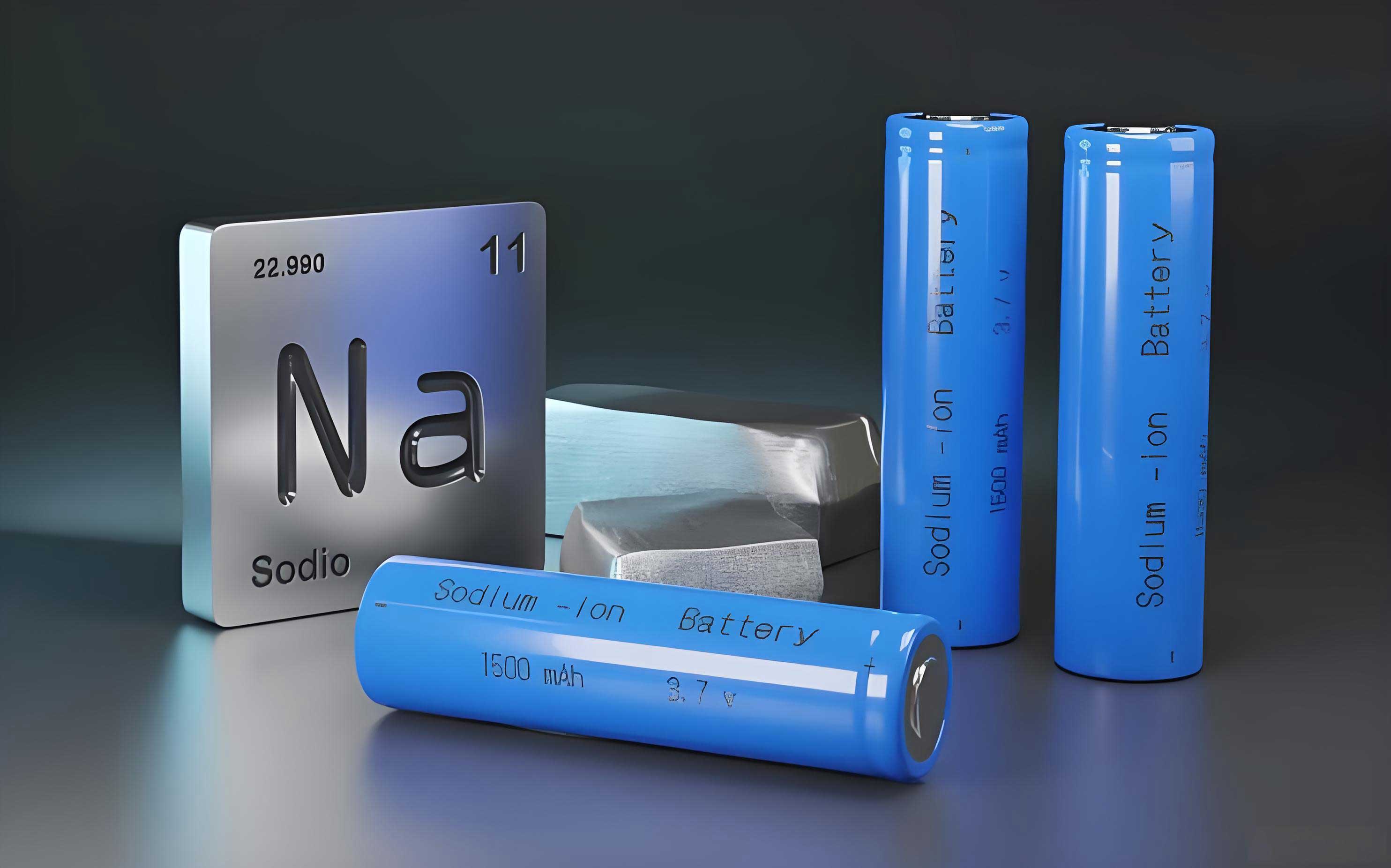
To combat these challenges, researchers have developed several strategies to improve the air stability of layered oxide cathodes for sodium-ion batteries. These approaches can be broadly categorized into compositional tuning, structural design, surface modification, and post-failure regeneration. I will discuss each in detail, supported by empirical data and theoretical considerations.
Compositional Tuning via Doping: Introducing dopant ions into the transition metal or oxygen sites is a prevalent method to enhance intrinsic stability. Dopants can suppress Na+ extraction, inhibit transition metal oxidation, and strengthen the metal-oxygen bonds. Common dopants include inert metal cations like Cu2+, Mg2+, and Ti4+, as well as anions like F–. The effectiveness of various doping strategies is summarized in Table 2.
| Base Material | Doping Strategy | Air Exposure Condition | Capacity Change (mAh/g) | Capacity Retention Improvement | Key Mechanism |
|---|---|---|---|---|---|
| Na0.7MnO2 | Cu2+ doping (Na0.7Mn0.9Cu0.1O2) | 5 days in air | 113 → 77 (after exposure) | ~25% → ~80% after 100 cycles | Suppresses H2O intercalation; reduces TM oxidation. |
| NaNi0.45Mn0.4O2 | Cu2+ & Ti4+ co-doping | 2 hours in water; 7 days in air | 127.1 → 93.1 (after exposure) | 27.2% → 86.6% after 100 cycles | Synergistic effect blocks H2O/CO2 ingress; improves ionic conductivity. |
| NaFe0.5Co0.5O2 | Mg2+ & Ti4+ co-doping | 5 days in air | 101.1 → 137.5 (recovered after treatment) | 80.6% → 91.3% (initial capacity retention) | Enhances Na–O bond strength; inhibits irreversible phase transitions. |
| Na0.67MnO2 | F– substitution (Na0.67MnO1.97F0.03) | 24 hours in water | 208.0 → 227.1 (after exposure) | 50.3% → 84.0% after 100 cycles | Contracts Na–O interlayer spacing; hinders H2O insertion. |
The underlying principle can be explained using crystal field theory and bond energy considerations. For example, doping with larger ions like Cu2+ distorts the local coordination environment, which can be quantified by changes in the bond length. The stabilization energy provided by a dopant can be approximated by:
$$\Delta E_{stab} = \sum_i (k_i \cdot \Delta r_i^2)$$
where $k_i$ is a force constant and $\Delta r_i$ is the change in bond length for bond $i$. Doping also affects the average oxidation state of transition metals, which influences the charge balance and Na+ mobility. For fluorine doping, the stronger M–F bond compared to M–O increases the lattice energy, making the structure less susceptible to hydration. These modifications are crucial for advancing sodium-ion battery technology by prolonging shelf life and reducing processing costs.
Structural Design: Engineering the crystal architecture is another powerful avenue. This includes developing mixed-phase materials (e.g., P2/O3 composites) or creating ordered superstructures. Mixed-phase materials leverage the advantages of different phases: P2 phases offer rapid Na+ kinetics, while O3 phases provide higher Na content. The composite can mitigate phase transitions during cycling and air exposure. Superstructures, such as the hexagonal ordering of transition metals in a 2:1 ratio, create highly symmetric rings that enhance structural rigidity. The formation of such an ordered superstructure can be described by a long-range ordering parameter $\eta$, where $\eta = 1$ indicates perfect order. This ordering reduces the Gibbs free energy for undesirable reactions with air constituents. The voltage profile of a composite material often shows smoother plateaus, indicating suppressed multiphase transformations, which is beneficial for both electrochemical performance and air stability in sodium-ion batteries.
Surface Modification: Applying protective coatings on particle surfaces is a direct method to isolate the active material from ambient gases and moisture. Common coating materials include metal oxides (e.g., Al2O3, TiO2, ZrO2), fluorides (e.g., AlF3), polymers, and carbon layers. These coatings act as physical barriers and can also passivate surface active sites. The effectiveness depends on coating thickness, uniformity, and ionic conductivity. For instance, an ultrathin Al2O3 layer (~2-20 nm) applied via atomic layer deposition significantly reduces residual alkali content after air exposure. The coating process can be modeled using the concept of diffusion barriers. The flux $J$ of reactive species (e.g., H2O) through a coating layer follows Fick’s law:
$$J = -D \frac{dC}{dx}$$
where $D$ is the diffusion coefficient and $dC/dx$ is the concentration gradient. A dense, homogeneous coating minimizes $D$, thereby protecting the core material. Surface modification not only improves air stability but also enhances cycling stability by suppressing side reactions with electrolytes, a critical aspect for long-lasting sodium-ion batteries.
Failure Regeneration: Interestingly, some degradation processes are partially reversible. For materials that have suffered air exposure, post-treatment methods like washing and annealing can restore electrochemical performance. Washing with solvents like ethanol removes surface carbonates and hydroxides, while subsequent thermal treatment can dehydrate hydrated phases and reconstruct the crystal lattice. For example, an O3-type oxide exposed to high humidity showed capacity recovery after ethanol washing and high-temperature calcination. The regeneration efficiency $\xi$ can be defined as:
$$\xi = \frac{C_{recovered}}{C_{pristine}} \times 100\%$$
where $C$ denotes capacity. This approach offers a cost-effective route for recycling or rehabilitating aged cathode materials, contributing to the sustainability of sodium-ion batteries.
Despite significant progress, challenges remain in balancing air stability with other performance metrics like high capacity and fast kinetics. Traditional doping or coating often sacrifices specific capacity or ionic conductivity. Future research directions should focus on developing synergistic strategies. For instance, combining cationic and anionic doping with nanostructured coatings could yield multi-faceted improvements. Advanced characterization techniques, such as in situ X-ray diffraction and transmission electron microscopy, are essential to unravel real-time degradation mechanisms. Moreover, computational modeling using density functional theory (DFT) can predict stable compositions and guide material design. The pursuit of high-energy-density and air-stable cathodes is paramount for the commercialization of sodium-ion batteries, especially for large-scale energy storage applications where cost and reliability are critical.
In conclusion, the air stability of layered oxide cathodes is a pivotal concern for the development of practical sodium-ion batteries. The degradation primarily stems from hydration and carbonate formation, driven by material composition and environmental factors. Through compositional tuning, structural design, surface engineering, and regeneration techniques, substantial improvements have been achieved. However, a holistic approach that integrates multiple strategies without compromising electrochemical performance is needed. As research continues, the optimization of air-stable layered oxides will play a crucial role in enabling the widespread adoption of sodium-ion batteries, offering a sustainable and economical alternative to lithium-based systems. The journey toward robust sodium-ion battery technology is ongoing, and each advancement brings us closer to a resilient energy future.