
The intensifying global focus on energy sustainability has spurred urgent development in alternative energy sources to meet escalating demands. Among energy storage technologies, rechargeable batteries are widely regarded for their efficiency, practicality, and portability. Currently, lithium-ion batteries dominate the market for portable electronics and electric vehicles. However, the growing scarcity and consequent high cost of lithium resources, coupled with significant safety concerns associated with flammable organic electrolytes, present major challenges for sustainable and safe large-scale energy storage. In this context, sodium-ion batteries have emerged as a compelling alternative. Sodium, being an alkali metal in the same group as lithium, shares similar electrochemical properties while offering the distinct advantages of abundant natural reserves and low cost. Furthermore, shifting from organic to aqueous electrolytes addresses critical safety issues, offering benefits such as non-flammability, higher ionic conductivity, and potentially lower manufacturing costs. The development of high-performance aqueous sodium-ion batteries is therefore a promising pathway toward safer and more economical energy storage solutions.
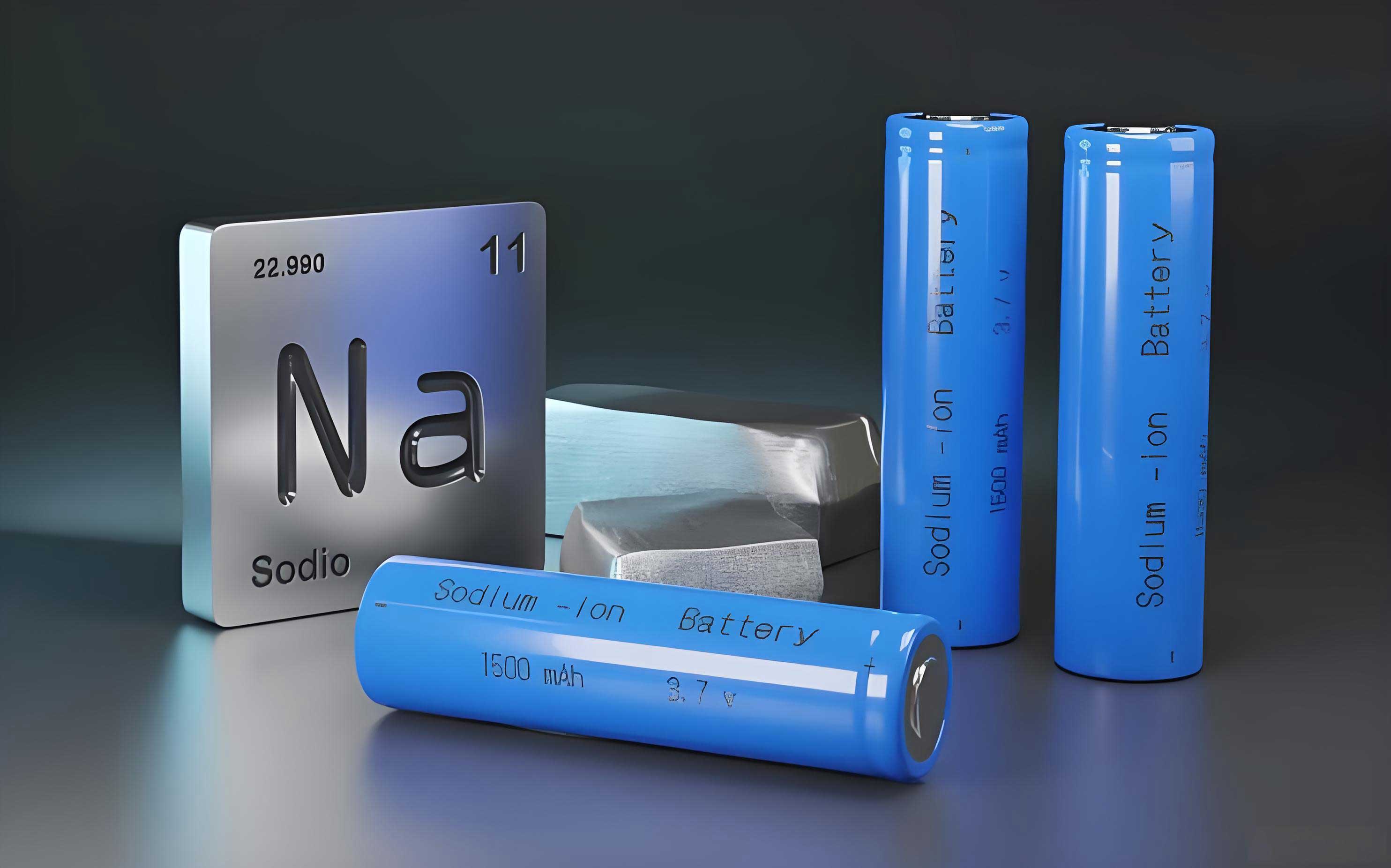
Despite sharing similar charge-discharge mechanisms (i.e., ion insertion/extraction) with their non-aqueous counterparts, the operation of an aqueous sodium-ion battery involves more complex electrochemical reactions, imposing stricter requirements on electrode materials. The primary constraints stem from the narrow electrochemical stability window of water (~1.23 V thermodynamically). Cathode materials must operate within or very close to this window to avoid water electrolysis and gas evolution. Additionally, parasitic side reactions between the electrode material and water or dissolved oxygen can severely degrade cycle life. Issues such as co-insertion of protons (H+) competing with Na+, dissolution of active materials, and phase instability in aqueous media further limit the selection of viable cathode materials. Consequently, only a few families of cathode materials have demonstrated promise for aqueous sodium-ion batteries, primarily including transition metal oxides, polyanionic compounds, and Prussian blue analogues (PBAs). This article provides a comprehensive review of the structural characteristics, electrochemical performance, modification strategies, and future perspectives for these key cathode material classes.
1. Transition Metal Oxides
Sodium transition metal oxides (NaxMO2, where M = Mn, Co, Ni, Fe, etc., often in combination) are a major class of cathode materials. Their crystal structure is primarily dictated by the sodium content (x) and the stacking sequence of oxygen layers, leading to tunnel-type, layered P2-type, and layered O3-type structures, among others. The stability of these structures in aqueous electrolytes varies significantly, influencing their practical applicability.
1.1 Tunnel-Type Structures (e.g., Na0.44MnO2)
The tunnel-type structure, exemplified by Na0.44MnO2 (or Na4Mn9O18), features S-shaped tunnels that provide robust pathways for Na+ diffusion. This material was among the first transition metal oxides investigated for aqueous sodium-ion batteries. Its electrochemical profile typically shows multiple voltage plateaus, indicative of multi-phase reactions during sodium (de)insertion. The relatively open and stable framework offers better resistance against structural collapse in water compared to some layered counterparts. However, challenges remain, including manganese dissolution and competitive H+ insertion.
Modification Strategies:
Improvements are achieved through cationic doping and surface coating. Doping with elements like Ca (e.g., Ca0.07Na0.26MnO2) has been shown to stabilize the structure and enhance Na+ diffusion kinetics, leading to superior rate capability and cycle life. The diffusion coefficient (DNa+) can be estimated using the galvanostatic intermittent titration technique (GITT), with an equation of the form:
$$ D_{Na^+} = \frac{4}{\pi \tau} \left( \frac{n_m V_m}{A} \right)^2 \left( \frac{\Delta E_s}{\Delta E_\tau} \right)^2 $$
where $\tau$ is the pulse duration, $n_m$ and $V_m$ are the molar amount and volume, $A$ is the electrode area, and $\Delta E_s$ and $\Delta E_\tau$ are voltage changes. Surface coating with conductive materials like carbon nanotubes (CNTs) significantly improves electronic conductivity and buffers against direct contact with the electrolyte, mitigating dissolution. For instance, a Na0.44MnO2/CNT composite demonstrated a capacity retention of approximately 63.4% after 300 cycles.
Electrolyte Engineering:
The choice of electrolyte profoundly impacts performance. Using concentrated NaOH solutions instead of neutral salts like Na2SO4 can suppress H+ competition and Mn dissolution. A Zn/Na0.44MnO2 battery in 6 M NaOH electrolyte achieved a capacity retention of 73% after 1000 cycles at 10C rate.
1.2 Layered P2-Type Structures
P2-type NaxMO2 phases are characterized by a hexagonal layered structure where Na+ ions occupy trigonal prismatic sites (denoted by ‘P’) between edge-shared MO6 octahedra. The ‘2’ indicates an ABBA oxygen stacking sequence. This structure typically offers fast two-dimensional Na+ transport. However, in aqueous electrolytes, many P2 phases suffer from chemical instability. The extraction of Na+ during charging can trigger the incorporation of water molecules and/or protons into the vacant layers, leading to structural expansion, phase transformation, and metal ion dissolution.
Research has focused on developing more air- and water-stable compositions through multi-metal substitution. For example, materials like Na0.61Ni0.22Mn0.66Co0.1O2 have shown promise, exhibiting a reversible capacity of around 40 mAh g-1 in 1 M Na2SO4. The general formula for capacity in such intercalation materials is:
$$ Q = \frac{nF}{3.6M} $$
where $Q$ is the specific capacity (mAh g-1), $n$ is the number of electrons transferred per formula unit, $F$ is Faraday’s constant, and $M$ is the molar mass (g mol-1). The cycle life ($N$) often follows an empirical relationship with capacity fade per cycle ($\Delta C$): $C_N = C_0 (1 – \Delta C)^N$, where $C_0$ is the initial capacity.
1.3 Layered O3-Type Structures
O3-type phases (ABC oxygen stacking) have Na+ in octahedral sites. These materials generally exhibit higher initial sodium content and capacity but are notoriously unstable in ambient air and water. They readily react with H2O and CO2, forming surface layers of Na2CO3 that increase impedance and cause irreversible capacity loss. This inherent instability has severely limited their application in aqueous sodium-ion batteries. Few studies have reported success; one example is the use of a mixed O3/P3 phase NaMnO2 in sodium acetate electrolyte, which showed reduced Mn dissolution and reasonable cyclability.
| Material Type | Example Composition | Crystal Structure | Key Challenges in Aqueous Electrolytes | Modification Approaches | Typical Performance (Approx.) |
|---|---|---|---|---|---|
| Tunnel-Type | Na0.44MnO2 | Orthorhombic (tunnel) | H+ co-insertion, Mn dissolution | Doping (Ca, Mg), Conductive coating (CNT, carbon), Alkaline electrolyte | ~50-70 mAh g-1, >1000 cycles with coating |
| Layered P2-Type | Na0.61Ni0.22Mn0.66Co0.1O2 | Hexagonal (P2) | Water/proton co-intercalation, Structural degradation | Multi-metal doping to enhance stability | ~40 mAh g-1, Moderate cycle life |
| Layered O3-Type | NaMnO2 (mixed phase) | Hexagonal (O3/P3) | Extreme air/water sensitivity, Surface carbonate formation | Use of organic salt electrolytes (e.g., CH3COONa) | ~55 mAh g-1, Limited cycle data |
2. Polyanionic Compounds
Polyanionic compounds constitute another important family of cathode materials, characterized by frameworks built from MOx polyhedra (M = transition metal) linked through polyanion groups (XO4)n- (X = P, S, Si, etc.). This class includes phosphates like NaFePO4 (olivine), pyrophosphates Na2M2P2O7, and particularly NASICON-type structures Na3M2(PO4)3. The strong covalent bonding within the polyanionic framework provides exceptional structural and thermal stability, which translates to long cycle life and safety. A key advantage is the “inductive effect,” where the polyanion group modulates the redox potential of the transition metal, often leading to higher operating voltages. Furthermore, their open three-dimensional framework facilitates rapid Na+ diffusion.
2.1 Phosphate-Based Materials
NaFePO4: The aqueous electrochemistry of maricite NaFePO4 (the stable polymorph in sodium systems) has been investigated. Performance is strongly temperature-dependent; at 55°C, a capacity of 110 mAh g-1 at C/5 rate has been reported, surpassing its performance in some organic electrolytes under similar conditions.
NASICON-type Na3V2(PO4)3 (NVP): This is one of the most studied polyanionic cathodes. It offers a moderate operating voltage (~3.4 V vs. Na+/Na in organic electrolytes, but lower in aqueous systems) and a theoretical capacity of 117 mAh g-1. However, its application in aqueous sodium-ion batteries is hampered by vanadium dissolution in water and relatively low electronic conductivity.
Modification Strategies: The primary strategies involve nanostructuring to shorten ion diffusion paths and carbon coating to enhance electronic conductivity. A more advanced approach is bimetallic doping to stabilize the NASICON framework. For example, Na3V1.3Fe0.5W0.2(PO4)3 was designed to suppress proton attack on sodium sites. The enhanced structural stability was confirmed by density functional theory (DFT) calculations, which can assess formation energies ($E_f$):
$$ E_f = E_{total} – \sum_i n_i \mu_i $$
where $E_{total}$ is the total energy of the compound, and $n_i$ and $\mu_i$ are the number and chemical potential of constituent atoms i. This material demonstrated 95% capacity retention after 50 cycles. In a full aqueous sodium-ion battery with a NaTi2(PO4)3 anode, it delivered a specific capacity of 64 mAh g-1 at 1 A g-1.
| Material Class | Example Composition | Structure Type | Advantages | Disadvantages & Challenges | Typical Capacity (Aqueous) |
|---|---|---|---|---|---|
| Phosphate Olivine | NaFePO4 | Maricite | Low cost, Safe, Stable | Low conductivity, Moderate capacity | ~100-110 mAh g-1 |
| NASICON Phosphate | Na3V2(PO4)3 | NASICON (3D) | Fast Na+ diffusion, Good stability | V dissolution in H2O, Low electronic conductivity | ~40-60 mAh g-1 (unmodified) |
| Doped NASICON | Na3V1.3Fe0.5W0.2(PO4)3 | NASICON (3D) | Enhanced stability, Suppressed dissolution | Complex synthesis | ~60-70 mAh g-1 (improved) |
3. Prussian Blue Analogues (PBAs)
Prussian blue analogues (PBAs), with a general formula AxMa[Mb(CN)6]y·nH2O (where A = Na, K; Ma and Mb are transition metals), represent a highly promising class of cathode materials for aqueous sodium-ion batteries. Their open framework structure, consisting of MaN6 and MbC6 octahedra linked by cyanide (CN–) bridges, features large interstitial sites and wide channels (~3.2 Å) that allow for rapid insertion and extraction of various alkali ions, including Na+. They offer high theoretical capacity (up to ~170 mAh g-1 for two Na+ insertion), low cost, and facile synthesis. However, their practical performance is often limited by intrinsic structural defects (e.g., [Fe(CN)6] vacancies occupied by water), low electronic conductivity, and framework instability during cycling, leading to capacity fade.
3.1 Composition and Structural Tuning
The electrochemical properties of PBAs can be finely tuned by selecting the transition metal pair (Ma/Mb) and controlling the sodium content. For instance, Na-rich phases like rhombohedral Na2Fe[Fe(CN)6] (or dehydrated Na1.92Fe[Fe(CN)6]) are sought after for higher capacity. Materials like Na2Co[Fe(CN)6] have shown excellent cyclability in aqueous media, with a reversible capacity of 106.7 mAh g-1 at 100 mA g-1 and negligible capacity loss over 2000 cycles in specific electrolytes.
3.2 The Critical Role of Electrolyte
The stability of PBA cathodes is exceptionally sensitive to the aqueous electrolyte’s composition. The anion type in the sodium salt significantly influences degradation rates. Studies have established a stability trend: ClO4– > NO3– > Cl– > SO42-. Perchlorate-based electrolytes (e.g., concentrated NaClO4) show the best performance, likely due to minimized specific anion adsorption and reduced catalytic activity for side reactions at the electrode surface. In highly concentrated “water-in-salt” electrolytes (WiSE), the suppressed water activity further widens the electrochemical window and enhances cycle life.
3.3 Ligand Substitution and Framework Stabilization
A sophisticated strategy to improve cyclability involves ligand substitution, where coordinated water molecules in the framework are replaced with organic ligands. For example, modifying the framework to create NaxCu[Fe(CN)5(L)] (where L is an organic ligand like pyrazine or p-toluidine) can dramatically improve stability. In neutral 1 M Na2SO4 electrolyte, such ligand-modified PBAs retained ~50% capacity after 2000 cycles, while the unmodified NaCuHCF failed completely. This improvement is attributed to the stronger bonding and reduced susceptibility of the CN groups to hydrolysis in the presence of OH– ions. The energy density ($E_d$) of a full cell can be calculated as:
$$ E_d = \frac{\int Q \cdot V \, dt}{m} $$
where $Q$ is capacity, $V$ is voltage, $t$ is time, and $m$ is the total mass of active materials in both electrodes. Full cells using ligand-modified PBA cathodes have demonstrated promising energy densities.
| PBA Composition | Key Modification/Electrolyte | Electrochemical Performance | Stabilization Mechanism | Major Challenge Addressed |
|---|---|---|---|---|
| Na2Co[Fe(CN)6] | Common-ion effect in tailored electrolyte | 106.7 mAh g-1, ~100% retention over 2000 cycles | Optimized electrolyte reduces side reactions | Framework dissolution |
| Na2Ni[Fe(CN)6] | Concentrated NaClO4 electrolyte | Minimal capacity loss after 1000 cycles | WiSE environment suppresses water activity | Anion-specific degradation |
| NaxCu[Fe(CN)5(L)] (L=organic ligand) | Ligand substitution in neutral Na2SO4 | ~50% capacity retention after 2000 cycles | Organic ligands protect CN bridges from hydrolysis | Structural degradation in neutral/alkaline pH |
4. Conclusion and Perspectives
Aqueous sodium-ion batteries represent a vital direction for developing safe, low-cost, and sustainable energy storage systems. The search for high-performance cathode materials is central to this endeavor. Transition metal oxides offer diverse structures, with tunnel-type Na0.44MnO2 being the most water-stable, while layered P2 and O3 types require significant compositional engineering to mitigate dissolution and phase changes. Polyanionic compounds, particularly NASICON-types, provide excellent structural stability and safety due to their robust covalent frameworks, but they often suffer from low electronic conductivity and dissolution issues that necessitate nanostructuring, carbon coating, and ion doping. Prussian blue analogues stand out for their open framework enabling fast kinetics and high capacity, yet their cycle life is critically dependent on electrolyte optimization and innovative strategies like ligand substitution to stabilize the cyanide-bridged structure against aqueous degradation.
Future research for advancing aqueous sodium-ion battery cathodes should focus on several intertwined fronts:
1. Electrolyte Engineering: The development of novel aqueous electrolytes, especially ultra-concentrated “water-in-salt” or “hydrate melt” systems, remains paramount. These electrolytes can expand the practical voltage window beyond the thermodynamic limit of water, thereby enabling the use of higher-voltage cathode materials and significantly boosting energy density. The search for new salts and additives that passivate electrode surfaces and suppress parasitic reactions will be crucial.
2. Atomic-Level Structure and Interface Design: Precise control over crystal structure, defect chemistry (e.g., reducing vacancies in PBAs), and surface states through advanced synthesis and doping is essential. Understanding and tailoring the electrode-electrolyte interphase (EEI) in aqueous media, which differs fundamentally from the solid-electrolyte interphase (SEI) in organic systems, is a key challenge. Designing stable artificial interphases or surface coatings that are impervious to water yet ion-conductive could unlock new material possibilities.
3. Advanced Characterization and Computational Guidance: In-situ and operando techniques (XRD, XAS, NMR, etc.) are vital for elucidating real-time structural evolution, ion transport mechanisms, and degradation pathways in aqueous environments. Coupled with high-throughput computational screening and machine learning, these tools can accelerate the discovery and rational design of next-generation cathode materials with optimal stability, capacity, and voltage for aqueous sodium-ion batteries.
4. Full Cell Integration and Practical Assessment: Research must progress beyond half-cell studies to the development of practical full cells with well-matched anodes (e.g., NaTi2(PO4)3, activated carbon, or organic compounds). Evaluating long-term cycle life, rate capability under realistic conditions, and scaling up synthesis processes are necessary steps toward commercialization.
In conclusion, while significant progress has been made, the field of aqueous sodium-ion batteries continues to offer rich opportunities for innovation in cathode material science. Through continued interdisciplinary efforts in materials chemistry, electrochemistry, and engineering, aqueous sodium-ion batteries have the potential to become a cornerstone technology for grid-scale energy storage and other applications where safety, cost, and sustainability are paramount.