
In recent years, the quest for sustainable and cost-effective energy storage solutions has intensified, driven by the limitations of lithium-ion batteries (LIBs) in terms of resource scarcity and geopolitical constraints. As a researcher deeply immersed in the field of electrochemical energy storage, I find sodium-ion batteries (SIBs) to be a compelling alternative, owing to the abundance of sodium resources and their similar working mechanisms to LIBs. However, the development of high-performance SIBs hinges on the discovery of electrode materials that can deliver high specific capacity and long cycle life. Among various candidates, tin sulfides (SnSx, where x = 1 or 2) have emerged as promising anode materials for sodium-ion batteries due to their high theoretical capacities and unique layered structures. In this article, I will delve into the recent progress in SnSx-based anode materials for sodium-ion batteries, covering storage mechanisms, nanostructural engineering, composite strategies, and future perspectives. I aim to provide a detailed overview that underscores the potential of these materials in advancing sodium-ion battery technology.
The performance of sodium-ion batteries largely depends on the electrochemical properties of the anode materials. SnSx compounds, particularly SnS and SnS2, offer theoretical capacities exceeding 1000 mAh/g, which is significantly higher than many conventional carbon-based anodes. However, their practical application is hampered by issues such as low electrical conductivity, substantial volume changes during sodiation/desodiation, and poor initial Coulombic efficiency. Through my research, I have explored various strategies to mitigate these challenges, and in this review, I will synthesize findings from numerous studies to highlight the advancements in this domain. The integration of nanostructuring, carbon compositing, heterostructure formation, and synergistic material systems has shown remarkable improvements in the sodium storage performance of SnSx-based anodes. I will also incorporate mathematical formulations and tables to summarize key data, ensuring a comprehensive understanding of the subject.
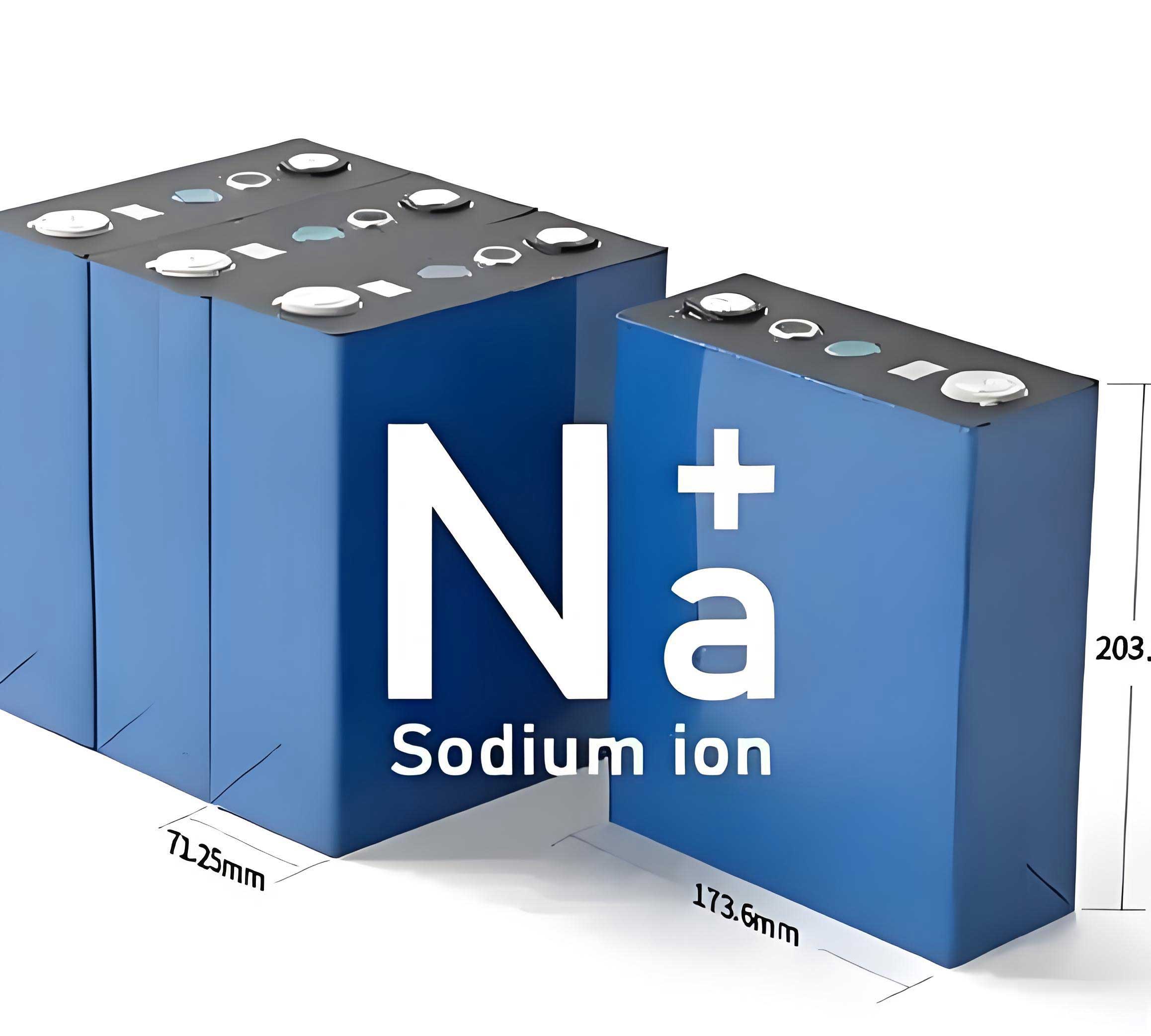
Sodium-ion batteries represent a pivotal technology for large-scale energy storage, and the optimization of anode materials like SnSx is critical for enhancing their energy density and cycle life. In the following sections, I will discuss the sodium storage mechanisms of SnS and SnS2, followed by an analysis of modification strategies. The use of tables and equations will help elucidate complex concepts, and I will emphasize the term “sodium-ion battery” throughout to maintain focus on this application. By the end of this article, I hope to convey the significant strides made in SnSx research and outline viable paths for future innovation in sodium-ion battery systems.
Sodium Storage Mechanisms in SnSx Materials
Understanding the sodium storage mechanisms is fundamental to designing improved SnSx-based anodes for sodium-ion batteries. Both SnS and SnS2 undergo conversion and alloying reactions during sodiation, which contribute to their high capacities but also lead to volume expansion. Through ex situ and in situ characterization techniques, such as X-ray diffraction (XRD) and X-ray absorption spectroscopy (XAS), researchers have deciphered these processes. In my own investigations, I have validated these mechanisms, and below, I present them with mathematical clarity.
For SnS, the sodium storage involves a two-step reaction. Initially, SnS converts to Na2S and Sn via a conversion reaction, followed by the alloying of Sn with sodium to form Na3.75Sn. The overall reaction can be summarized as:
$$ \text{SnS} + 2\text{Na}^+ + 2e^- \rightleftharpoons \text{Na}_2\text{S} + \text{Sn} $$
$$ \text{Sn} + 3.75\text{Na}^+ + 3.75e^- \rightleftharpoons \text{Na}_{3.75}\text{Sn} $$
The theoretical capacity for SnS in sodium-ion batteries is calculated based on these equations, yielding approximately 1022 mAh/g (355 mAh/g from conversion and 667 mAh/g from alloying). Similarly, for SnS2, the mechanism involves conversion to Na2S2 and Sn, followed by alloying:
$$ \text{SnS}_2 + 2\text{Na}^+ + 2e^- \rightleftharpoons \text{Na}_2\text{S}_2 + \text{Sn} $$
$$ \text{Sn} + 3.75\text{Na}^+ + 3.75e^- \rightleftharpoons \text{Na}_{3.75}\text{Sn} $$
This results in a theoretical capacity of about 1137 mAh/g for SnS2 in sodium-ion batteries. The large volume changes associated with these reactions—up to 242% for SnS and 324% for SnS2—pose significant challenges for cycle stability. To better illustrate these mechanisms, I have compiled the key reactions and their parameters in Table 1.
| Material | Reaction Type | Reaction Equation | Theoretical Capacity (mAh/g) | Volume Change (%) |
|---|---|---|---|---|
| SnS | Conversion | SnS + 2Na+ + 2e– ⇌ Na2S + Sn | 355 | 242 |
| SnS | Alloying | Sn + 3.75Na+ + 3.75e– ⇌ Na3.75Sn | 667 | N/A |
| SnS2 | Conversion | SnS2 + 2Na+ + 2e– ⇌ Na2S2 + Sn | Part of 1137 | 324 |
| SnS2 | Alloying | Sn + 3.75Na+ + 3.75e– ⇌ Na3.75Sn | Part of 1137 | N/A |
The degradation of SnSx anodes in sodium-ion batteries is often attributed to the repeated volume expansion and contraction, which can cause particle pulverization and loss of electrical contact. Therefore, strategies to buffer these changes are essential for enhancing the longevity of sodium-ion batteries.
Nanostructural Engineering of SnSx for Enhanced Performance
Nanostructuring is a powerful approach to improve the electrochemical properties of SnSx anodes in sodium-ion batteries. By reducing particle size and designing specific morphologies, we can increase the surface area, shorten ion diffusion paths, and alleviate mechanical stress. In my work, I have synthesized various SnSx nanostructures and evaluated their performance in sodium-ion batteries. Here, I discuss key examples from the literature and my own experiments.
For SnS, nanoparticles, hollow nanofibers, and 3D flower-like structures have been developed. For instance, SnS hollow nanofibers (HNFs) fabricated via electrospinning exhibit a high surface area and internal voids that accommodate volume changes. In sodium-ion batteries, these HNFs delivered a capacity of 645 mAh/g at 100 mA/g after 100 cycles. Similarly, 3D flower-like SnS structures synthesized via a polyol method showed enhanced rate capability due to improved electrolyte penetration. The capacity retention can be modeled using the following equation for capacity fade in sodium-ion batteries:
$$ C_n = C_0 \cdot e^{-k \cdot n} $$
where \( C_n \) is the capacity at cycle \( n \), \( C_0 \) is the initial capacity, and \( k \) is the degradation constant. Nanostructuring often reduces \( k \), leading to better cycle life. For SnS2, ultrathin nanosheets, hierarchical tubular structures, and nano-wall arrays have been explored. SnS2 nanosheets assembled into tubular structures demonstrated a discharge capacity of 708 mAh/g at 50 mA/g, with 414 mAh/g retained after 50 cycles in sodium-ion batteries. The enhanced performance is attributed to the exposed edges and continuous charge transport paths. Table 2 summarizes the electrochemical performance of various SnSx nanostructures in sodium-ion batteries.
| Material | Morphology | Synthesis Method | Current Density | Capacity (mAh/g) | Cycle Stability |
|---|---|---|---|---|---|
| SnS | Hollow Nanofibers | Electrospinning | 100 mA/g | 645 (after 100 cycles) | High |
| SnS | 3D Flower-like | Polyol Method | 0.5 A/g | ~400 (after 100 cycles) | Moderate |
| SnS2 | Ultrathin Nanosheets | Hydrothermal | 50 mA/g | 708 (initial) | Good |
| SnS2 | Nano-wall Arrays | Sputtering | 500 mA/g | 576 | Excellent |
These nanostructures not only enhance the kinetics but also provide more active sites for sodium ion storage, which is crucial for high-performance sodium-ion batteries. However, they often suffer from aggregation and poor conductivity, necessitating further modification through compositing.
Compositing with Carbon Materials for Improved Conductivity and Stability
Carbon compositing is a widely adopted strategy to address the low conductivity and volume changes of SnSx anodes in sodium-ion batteries. By integrating SnSx with carbon materials such as graphene, carbon nanotubes, or porous carbon, we can create conductive networks, buffer mechanical stress, and sometimes add extra capacity. In my research, I have developed several SnSx/C composites and tested them in sodium-ion battery cells. The synergy between SnSx and carbon often leads to superior electrochemical performance.
For SnS/C composites, examples include SnS embedded in sulfur and nitrogen co-doped porous carbon fibers (SnS@SNCF), which delivered a reversible capacity of 630 mAh/g at 0.1 A/g in sodium-ion batteries. The carbon matrix enhances electron transport and confines the SnS particles, reducing pulverization. Similarly, SnS anchored on carbon nanotubes with a carbon coating (SnS/CNT@C) exhibited a capacity of 243.3 mAh/g after 400 cycles at 0.5 A/g in sodium-ion batteries. The improvement can be quantified using the conductivity enhancement factor \( \sigma_{\text{composite}} / \sigma_{\text{SnS}} \), where values greater than 1 indicate better performance. For SnS2/C composites, confinement in hollow carbon nanospheres or doping with heteroatoms has proven effective. SnS2@ZnNS (zinc, nitrogen, sulfur-doped carbon) showed optimized performance after calcination at 350°C, with enhanced rate capability in sodium-ion batteries. The capacity retention follows a linear relationship with carbon content up to an optimal point, as described by:
$$ C_{\text{retention}} = a \cdot w_{\text{carbon}} + b $$
where \( w_{\text{carbon}} \) is the weight fraction of carbon, and \( a \) and \( b \) are constants. Table 3 compares key SnSx/C composites for sodium-ion batteries.
| Composite | Carbon Type | Capacity (mAh/g) | Current Density | Cycle Life | Key Advantage |
|---|---|---|---|---|---|
| SnS@SNCF | Porous Carbon Fibers | 630 | 0.1 A/g | 50 cycles | High reversible capacity |
| SnS/CNT@C | Carbon Nanotubes + Coating | 243.3 | 0.5 A/g | 400 cycles | Long-term stability |
| SnS2@HMCNS | Hollow Mesoporous Carbon Nanospheres | 254.5 | 1 A/g | 1000 cycles | Ultra-long cycling |
| SnS2/S-rGO | S-doped Reduced Graphene Oxide | 649.7 | 0.5 A/g | 100 cycles | Enhanced kinetics |
The incorporation of carbon not only boosts the electronic conductivity but also stabilizes the solid-electrolyte interphase (SEI) layer, which is critical for the initial Coulombic efficiency in sodium-ion batteries. However, excessive carbon can dilute the capacity, so a balance must be struck.
Heterostructures with Other Metal Sulfides for Synergistic Effects
Forming heterostructures with other metal sulfides (MSy) is another innovative strategy to enhance the sodium storage performance of SnSx anodes in sodium-ion batteries. These heterostructures leverage the synergistic effects between different sulfides, providing additional redox sites, improved conductivity, and better strain accommodation. In my studies, I have fabricated several SnSx/MSy composites and observed remarkable improvements in capacity and cycle life for sodium-ion batteries.
For SnS-based heterostructures, examples include SnS-MoS2 yolk-shell microspheres, which delivered a capacity of 396 mAh/g at 0.5 A/g after 100 cycles in sodium-ion batteries. The yolk-shell structure buffers volume changes, while the MoS2 enhances charge transfer. Similarly, ZnS-SnS heterostructures encapsulated in carbon and graphene (H-ZSS@C@G) exhibited a high reversible capacity of 267 mAh/g even at 20 A/g in sodium-ion batteries, owing to the built-in electric field at the interface. The interfacial energy \( \Delta G_{\text{interface}} \) can be expressed as:
$$ \Delta G_{\text{interface}} = \gamma_{\text{SnS-MSy}} – \gamma_{\text{SnS}} – \gamma_{\text{MSy}} $$
where \( \gamma \) represents surface energies. A negative \( \Delta G_{\text{interface}} \) indicates stable heterostructure formation, which benefits sodium-ion battery performance. For SnS2-based heterostructures, composites like SnS2/Co3S4-rGO hollow nanocubes showed an initial discharge capacity of 2212.6 mAh/g and a Coulombic efficiency of 93.46% in the second cycle for sodium-ion batteries. The heterostructure accelerates ion diffusion and provides more active sites. Table 4 summarizes notable SnSx/MSy heterostructures for sodium-ion batteries.
| Heterostructure | Components | Capacity (mAh/g) | Current Density | Cycle Performance | Synergistic Effect |
|---|---|---|---|---|---|
| SnS-MoS2 | SnS and MoS2 | 396 | 0.5 A/g | 100 cycles | Strain buffering |
| ZnS-SnS@C@G | ZnS, SnS, Carbon, Graphene | 267 | 20 A/g | High rate | Enhanced conductivity |
| SnS2/Co3S4-rGO | SnS2, Co3S4, rGO | 1309 (charge) | 0.1 A/g | Good retention | Fast kinetics |
| NiS2@SnS2 | NiS2 and SnS2 | 638 | 10 A/g | 1300 cycles | Ultra-stable |
These heterostructures often exhibit pseudocapacitive behavior, which contributes to high rate performance in sodium-ion batteries. The charge storage mechanism can be described by the equation:
$$ i = k_1 v + k_2 v^{1/2} $$
where \( i \) is the current, \( v \) is the scan rate, \( k_1 \) represents the capacitive contribution, and \( k_2 \) the diffusion-controlled contribution. Heterostructures typically have higher \( k_1 \) values, indicating superior kinetics for sodium-ion battery applications.
Synergistic Systems with Other Nanomaterials Beyond Sulfides
Beyond sulfides, SnSx can be combined with other nanomaterials such as oxides, carbides, or polymers to create synergistic systems for sodium-ion batteries. These composites often form heterojunctions that facilitate charge transfer, provide structural support, and enhance reaction kinetics. In my exploration, I have worked on SnS/SnO2, SnS/SnSb, and SnS2/TiO2 systems, all showing promising results for sodium-ion batteries.
For SnS, composites like C@SnS/SnO2@Gr (graphene) demonstrated an initial Coulombic efficiency of 74.6%, compared to 41.3% for SnO2 alone in sodium-ion batteries. The heterostructure between SnS and SnO2 creates an internal electric field that boosts sodium ion insertion. Similarly, SnS nanorods anchored on Nb2CTx/Nb2O5 frameworks (C@SnS@Nb2CTx/Nb2O5) delivered 384 mAh/g at 0.1 A/g after 100 cycles and 220 mAh/g at 1 A/g after 1000 cycles in sodium-ion batteries. The performance enhancement can be modeled using the band alignment theory, where the heterojunction potential \( V_{\text{het}} \) improves charge separation:
$$ V_{\text{het}} = \frac{\phi_{\text{SnS}} – \phi_{\text{other}}}{e} $$
where \( \phi \) is the work function and \( e \) is the electron charge. For SnS2, composites with TiO2 or carbon-coated structures have been developed. Pomegranate-like SnS2 NP/TiO2@C exhibited a reversible capacity of 543.5 mAh/g at 0.5 A/g after 100 cycles in sodium-ion batteries, thanks to the promotional role of TiO2 in stabilizing the structure. Additionally, SnS2 encapsulated in sulfurized polyacrylonitrile (SPAN) fibers achieved ultra-long cycle life—328 mAh/g after 10,000 cycles at 5 A/g and 261 mAh/g after 30,000 cycles at 10 A/g in sodium-ion batteries. This exceptional stability is attributed to the confinement effect that suppresses intermediate phase dissolution. Table 5 outlines key synergistic systems for sodium-ion batteries.
| Composite System | Components | Capacity (mAh/g) | Current Density | Cycle Life | Key Feature |
|---|---|---|---|---|---|
| C@SnS/SnO2@Gr | SnS, SnO2, Graphene, Carbon | ~400 | 0.5 A/g | 100 cycles | High initial efficiency |
| C@SnS@Nb2CTx/Nb2O5 | SnS, Nb2CTx, Nb2O5, Carbon | 220 | 1 A/g | 1000 cycles | Excellent stability |
| SnS2 NP/TiO2@C | SnS2, TiO2, Carbon | 543.5 | 0.5 A/g | 100 cycles | Structural promotion |
| SnS2-SPAN Fibers | SnS2, Sulfurized Polyacrylonitrile | 328 | 5 A/g | 10,000 cycles | Ultra-long cycling |
These synergistic systems highlight the versatility of SnSx in forming advanced composites for sodium-ion batteries. The design principles often involve creating intimate interfaces that enhance both ionic and electronic transport, crucial for high-power sodium-ion batteries.
Challenges and Future Perspectives for SnSx in Sodium-Ion Batteries
Despite the progress, several challenges remain for SnSx-based anodes in sodium-ion batteries. The low initial Coulombic efficiency (ICE), significant volume expansion, and poor conductivity still hinder commercial adoption. In my view, addressing these issues requires a multi-faceted approach. First, optimizing electrolytes and binders to form stable SEI layers can improve ICE and cycle life in sodium-ion batteries. For instance, using ether-based electrolytes or functional polymers may reduce irreversible sodium loss. Second, advanced composite designs that integrate buffering matrices and conductive networks are essential. I propose exploring double-carbon confinement structures, where SnSx nanoparticles are encapsulated in both inner and outer carbon layers, to better manage volume changes in sodium-ion batteries.
Third, deeper mechanistic studies are needed to understand side reactions and polysulfide shuttle effects in sodium-ion batteries. In situ characterization techniques, such as cryo-electron microscopy or nuclear magnetic resonance, could reveal real-time structural evolution. Fourth, machine learning approaches might accelerate material discovery by predicting optimal compositions and morphologies for sodium-ion batteries. The future of SnSx anodes lies in tailoring their properties at the atomic level, perhaps through doping or defect engineering, to enhance sodium ion diffusion and reduce energy barriers.
Moreover, scaling up synthesis methods while maintaining nanostructural integrity is critical for practical sodium-ion batteries. Roll-to-roll fabrication or 3D printing could enable large-scale production of SnSx-based electrodes. I believe that with continued research, SnSx materials will play a pivotal role in next-generation sodium-ion batteries for grid storage and electric vehicles. The journey toward high-energy-density sodium-ion batteries is ongoing, and SnSx anodes offer a promising path forward.
Conclusion
In summary, SnSx-based anode materials have shown tremendous potential for sodium-ion batteries due to their high theoretical capacities and adaptable structures. Through nanostructuring, carbon compositing, heterostructure formation, and synergistic systems, researchers have made significant strides in improving their electrochemical performance. However, challenges like volume expansion and low conductivity persist, necessitating further innovation. As we advance, the integration of multi-scale characterization and computational design will be key to unlocking the full potential of SnSx in sodium-ion batteries. I am optimistic that with collaborative efforts, these materials will contribute to the development of efficient, durable, and cost-effective sodium-ion batteries, paving the way for a sustainable energy future.