
As a researcher focused on energy storage materials, I have been closely monitoring the development of sodium-ion batteries as a promising alternative to lithium-ion batteries. The global shift toward renewable energy sources necessitates efficient, cost-effective, and sustainable energy storage solutions. Sodium-ion batteries offer significant advantages, including lower cost due to the abundance of sodium resources, excellent performance across a wide temperature range, and enhanced safety profiles. However, the commercialization of sodium-ion batteries faces challenges, particularly in identifying high-performance anode materials that can provide stable cycling, high capacity, and fast kinetics. In this article, I will delve into the research progress on carbon-based composite anodes for sodium-ion batteries, emphasizing recent breakthroughs and future directions. The keyword ‘sodium-ion battery’ will be frequently referenced to underscore its centrality in this discourse.
The fundamental operation of a sodium-ion battery involves the reversible insertion and extraction of sodium ions between the cathode and anode during charge and discharge cycles. The anode material plays a critical role in determining the overall performance, including capacity, rate capability, and cycle life. Carbon-based materials have emerged as leading candidates due to their structural stability, high conductivity, low environmental impact, and versatility. My analysis will categorize carbon-based composites into three primary groups: atom-doped carbon catalysts, carbon-metal oxide hybrids, and carbon-alloy composites. For each category, I will summarize key findings using tables and mathematical formulations to elucidate performance metrics and underlying mechanisms.
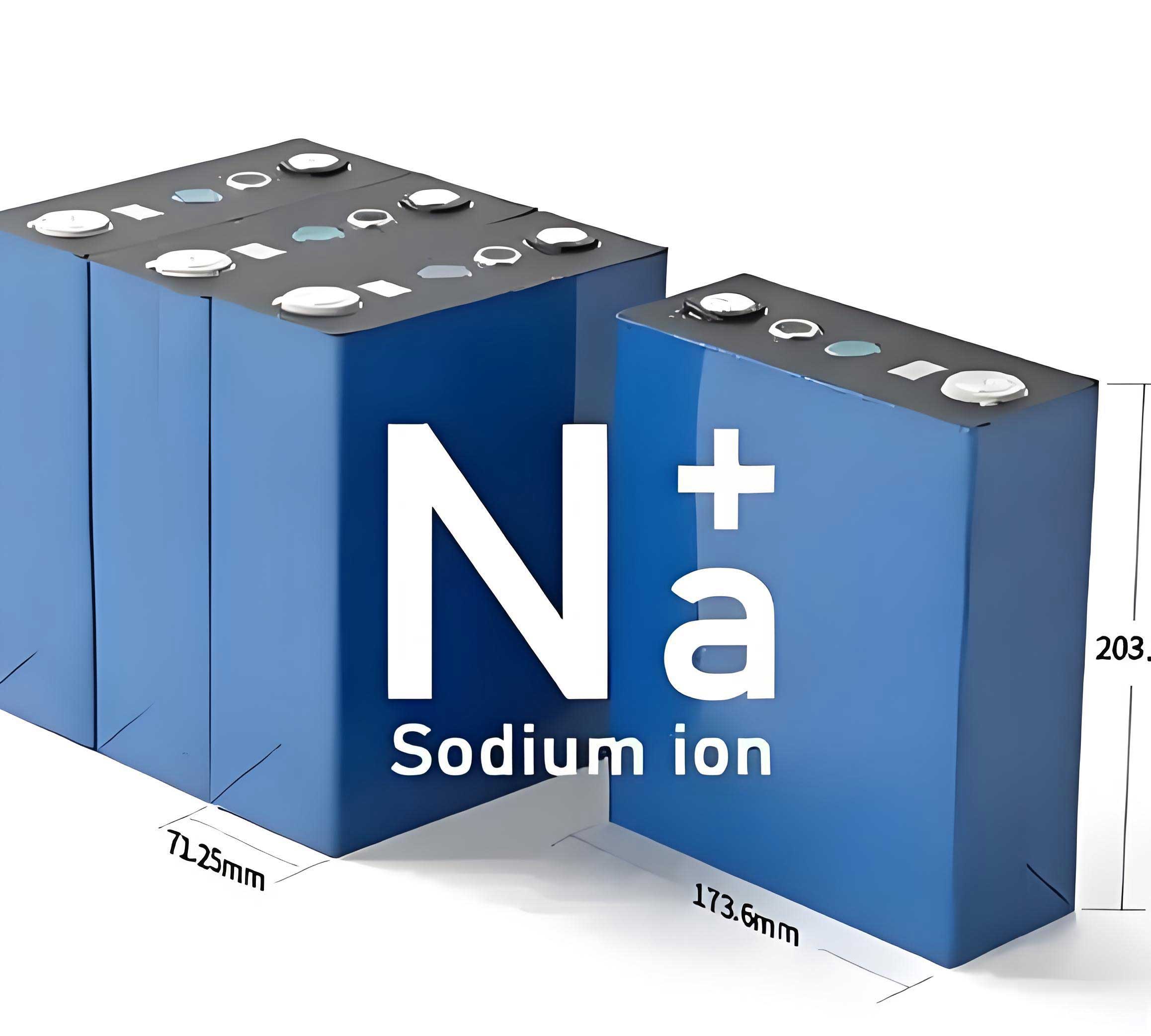
To begin, let’s consider the general electrochemical principles governing sodium-ion battery anodes. The capacity of an anode material can be expressed in terms of its ability to store sodium ions, often quantified using the specific capacity formula: $$C = \frac{nF}{M}$$ where \(C\) is the specific capacity (in mAh/g), \(n\) is the number of electrons transferred per formula unit, \(F\) is Faraday’s constant (approximately 26,801 mAh/mol), and \(M\) is the molar mass of the active material (in g/mol). For carbon-based composites, this capacity is influenced by factors such as defect density, interlayer spacing, and composite morphology. In the following sections, I will explore how these factors are engineered through various composite strategies.
Atom-Doped Carbon Catalysts for Enhanced Sodium Storage
In my investigation, I have found that doping carbon matrices with heteroatoms like phosphorus (P), sulfur (S), nitrogen (N), and boron (B) significantly enhances the electrochemical performance of sodium-ion battery anodes. Doping introduces defects, expands interlayer distances, and creates active sites for sodium ion adsorption, thereby improving capacity and kinetics. For instance, phosphorus-doped graphene (P-doped graphene) exhibits enhanced sodium storage due to structural distortions that increase Na adsorption energy. The adsorption energy \(E_{ads}\) for sodium on doped carbon can be modeled using density functional theory (DFT) calculations: $$E_{ads} = E_{system} – (E_{carbon} + E_{Na})$$ where \(E_{system}\) is the total energy of the doped carbon with adsorbed Na, \(E_{carbon}\) is the energy of the pristine doped carbon, and \(E_{Na}\) is the energy of an isolated sodium atom. A more negative \(E_{ads}\) indicates stronger adsorption, which is beneficial for capacity.
I have compiled a table summarizing the performance of various atom-doped carbon materials reported in recent studies. This table highlights key parameters such as specific capacity, current density, cycle life, and doping effects.
| Doping Element | Carbon Matrix | Specific Capacity (mAh/g) | Current Density (A/g) | Cycle Stability | Key Mechanism |
|---|---|---|---|---|---|
| Phosphorus (P) | Graphene | 426.5 (initial charge) | 0.05 | Good over 50 cycles | Enhanced adsorption and defect sites |
| Nitrogen & Phosphorus (N,P) | Carbon Sheets from Biomass | ~600 (estimated) | 0.1 | High retention | Dual-doping synergies |
| Sulfur & Phosphorus (S,P) | Carbon Nanospheres | 230 | 1.0 | ~100% Coulombic efficiency | Widened interlayer spacing and surface defects |
| Boron (B) | Disordered Carbon | ~300 | 0.5 | Moderate | Improved conductivity |
The table above illustrates that phosphorus-doped carbon materials, in particular, offer high capacities and good rate performance. For example, P-doped graphene demonstrated an initial discharge capacity of 1043.1 mAh/g at 50 mA/g, though with an initial Coulombic efficiency of 40.9%. This efficiency loss is often attributed to solid electrolyte interface (SEI) formation, a common challenge in sodium-ion battery anodes. The capacity fading over cycles can be described by an exponential decay model: $$C_n = C_0 \cdot e^{-kn}$$ where \(C_n\) is the capacity at cycle \(n\), \(C_0\) is the initial capacity, and \(k\) is the degradation constant. Doping strategies aim to minimize \(k\) by stabilizing the electrode structure.
Moreover, dual-doping approaches, such as N,P-co-doping, have shown synergistic effects. In my analysis, I attribute this to the combined electronic and structural modifications. The electronegativity differences between dopants and carbon atoms create charge redistribution, enhancing sodium ion interactions. For instance, in N,P-doped carbon sheets derived from corn stalks, the capacity improvement is linked to increased defect sites and improved conductivity. The overall sodium storage capacity in doped carbons can be approximated as a sum of contributions from adsorption and intercalation: $$C_{total} = C_{ads} + C_{intercalation}$$ where \(C_{ads}\) arises from surface adsorption on defect sites, and \(C_{intercalation}\) comes from sodium insertion between carbon layers. Doping typically enhances \(C_{ads}\) by providing more active sites.
Carbon-Metal Oxide Composite Catalysts: Synergistic Enhancements
Moving to carbon-metal oxide composites, I have observed that integrating metal oxides (e.g., SnO2, Fe2GeO4) with carbon matrices addresses the intrinsic limitations of metal oxides, such as poor conductivity and large volume expansion during sodiation/desodiation. These composites leverage the high theoretical capacity of metal oxides and the structural buffering of carbon. For example, SnO2-graphene composites exhibit improved cycling stability due to graphene’s ability to accommodate volume changes. The sodiation reaction for SnO2 can be represented as: $$\text{SnO}_2 + 4\text{Na}^+ + 4e^- \rightarrow \text{Sn} + 2\text{Na}_2\text{O}$$ followed by alloying: $$\text{Sn} + x\text{Na}^+ + xe^- \leftrightarrow \text{Na}_x\text{Sn}$$ The overall capacity contribution from such conversion and alloying reactions is significant, but volume expansion can reach up to 300%, leading to pulverization. Carbon matrices mitigate this by providing mechanical support and conductive pathways.
I have summarized the performance of select carbon-metal oxide composites in the table below, focusing on metrics relevant to sodium-ion battery applications.
| Metal Oxide | Carbon Matrix | Specific Capacity (mAh/g) | Current Density (A/g) | Cycle Life (Cycles) | Key Advantage |
|---|---|---|---|---|---|
| SnO2 | 3D Graphene | 432 | 0.1 | 200 | 3D structure buffers volume change |
| Fe2GeO4 | N-doped Carbon Nanosheets | 1169.8 | 0.1 | 100+ | Ultra-small nanoparticles enhance kinetics |
| Sb2S3@SnO2 | Carbon Nanostructures | 582.9 | 0.05 | 75 | Heterostructure improves conductivity |
| TiO2 | Carbon Nanotubes | ~200 | 0.2 | 500 | High stability but moderate capacity |
From my perspective, the performance enhancements in these composites can be quantified using the concept of effective conductivity \(\sigma_{eff}\), which combines the conductivity of metal oxide \(\sigma_{MO}\) and carbon \(\sigma_C\) in a composite: $$\sigma_{eff} = \phi \sigma_C + (1 – \phi) \sigma_{MO}$$ where \(\phi\) is the volume fraction of carbon. Typically, \(\sigma_C \gg \sigma_{MO}\), so even small additions of carbon significantly boost overall conductivity. Additionally, the capacity retention over cycles can be modeled by considering the strain energy due to volume changes. The strain energy \(U\) per cycle is proportional to the volume change \(\Delta V\): $$U \propto \Delta V^2$$ Carbon matrices reduce effective \(\Delta V\) by confining metal oxide nanoparticles, thereby lowering \(U\) and improving cycle life.
In particular, I am impressed by the work on Fe2GeO4 embedded in N-doped carbon nanosheets, which delivered a high reversible capacity of 1169.8 mAh/g at 0.1 A/g. This is attributed to the synergistic effects of nanoscale confinement and nitrogen doping, which enhance sodium ion diffusion. The diffusion coefficient \(D\) for sodium ions in such composites can be estimated from electrochemical impedance spectroscopy (EIS) data using the equation: $$D = \frac{R^2 T^2}{2 A^2 n^4 F^4 C^2 \sigma^2}$$ where \(R\) is the gas constant, \(T\) is temperature, \(A\) is electrode area, \(n\) is electron number, \(F\) is Faraday’s constant, \(C\) is sodium ion concentration, and \(\sigma\) is the Warburg coefficient. Composites with higher \(D\) values exhibit better rate capabilities, crucial for high-power sodium-ion battery applications.
Carbon-Alloy Composite Catalysts: Addressing Volume Expansion
Alloy-type materials, such as tin-antimony (SnSb) and antimony (Sb), offer high theoretical capacities via alloying reactions with sodium, but suffer from severe volume expansion. In my review, I have found that combining these alloys with carbon matrices effectively mitigates this issue. For instance, SnSb nanoparticles bonded to graphene show strong interfacial interactions, preventing detachment during cycling. The alloying reaction for Sb can be written as: $$\text{Sb} + 3\text{Na}^+ + 3e^- \leftrightarrow \text{Na}_3\text{Sb}$$ with a theoretical capacity of 660 mAh/g. However, the volume change exceeds 200%, leading to capacity fade. Carbon matrices act as buffers and conductive networks.
The table below provides a comparative overview of carbon-alloy composites, highlighting their electrochemical performance in sodium-ion batteries.
| Alloy Material | Carbon Matrix | Specific Capacity (mAh/g) | Current Density (A/g) | Cycle Stability | Notable Feature |
|---|---|---|---|---|---|
| SnSb | Graphene | 370.8 | 1.0 | Excellent over 100 cycles | Strong interfacial bonding |
| Sb | Carbon Nanofibers | 631 | ~0.1 (1C rate) | High retention | Good rate performance |
| Sn-Ni | N-doped Carbon | 609.4 | 0.2 | 100 cycles | Pomegranate-like structure |
| Ge-Based Alloys | Carbon Coatings | ~500 | 0.5 | Moderate | High capacity but cost concerns |
From my analysis, the capacity retention in these composites can be described by a mechanical stress model. The stress \(\sigma\) generated during alloying is given by: $$\sigma = E \cdot \epsilon$$ where \(E\) is the Young’s modulus of the composite and \(\epsilon\) is the strain due to volume change. Carbon matrices, with their flexible and porous structures, reduce \(E\) and distribute stress, minimizing crack formation. Moreover, the interfacial energy between alloy and carbon \(\gamma_{interface}\) plays a key role in adhesion. A lower \(\gamma_{interface}\) promotes stronger bonding, enhancing cycle life. Experimentally, this is achieved through surface functionalization or in-situ synthesis methods.
I have also noted that composites like Sn-Ni nanoalloys encapsulated in N-doped carbon (Sn-Ni@N-C) exhibit remarkable performance, with a discharge capacity of 1117.8 mAh/g at 0.05 A/g and 609.4 mAh/g after 100 cycles at 0.2 A/g. This can be attributed to the unique pomegranate-like structure, where alloy nanoparticles are uniformly dispersed within a carbon shell. The capacity contribution from such composites can be broken down as: $$C_{composite} = f_{alloy} \cdot C_{alloy} + f_{carbon} \cdot C_{carbon}$$ where \(f_{alloy}\) and \(f_{carbon}\) are the weight fractions of alloy and carbon, respectively, and \(C_{alloy}\) and \(C_{carbon}\) are their specific capacities. Optimizing \(f_{alloy}\) is crucial to balance high capacity and stability.
Comprehensive Analysis and Future Perspectives
In summarizing my findings, I believe that carbon-based composite anodes represent a versatile and promising avenue for advancing sodium-ion battery technology. Each category—atom-doped carbon, carbon-metal oxide, and carbon-alloy—offers distinct advantages and challenges. To facilitate comparison, I have integrated key performance metrics into a comprehensive table below, which also includes theoretical insights.
| Composite Type | Typical Capacity Range (mAh/g) | Rate Capability | Cycle Life (Cycles) | Main Challenges | Research Focus Areas |
|---|---|---|---|---|---|
| Atom-Doped Carbon | 200–600 | High | 50–500 | Low initial Coulombic efficiency | Multi-doping, defect engineering |
| Carbon-Metal Oxide | 200–1200 | Moderate to High | 100–500 | Volume expansion, cost | Nanostructuring, hybrid designs |
| Carbon-Alloy | 300–1100 | Moderate | 100–1000 | Volume expansion, synthesis complexity | Interfacial engineering, core-shell structures |
The performance of these materials in a sodium-ion battery context is governed by several fundamental equations. For instance, the overall energy density \(E\) of a sodium-ion battery can be expressed as: $$E = \frac{C_{anode} \cdot V_{cell}}{3.6}$$ where \(C_{anode}\) is the anode capacity in mAh/g, \(V_{cell}\) is the average cell voltage in V, and 3.6 is a conversion factor to Wh/kg. Improving \(C_{anode}\) through composite strategies directly boosts \(E\). Additionally, the power density \(P\) relates to the rate capability: $$P = \frac{E}{t}$$ where \(t\) is the discharge time. Composites with enhanced ionic and electronic conductivity enable higher \(P\), making sodium-ion batteries suitable for applications requiring fast charging.
Looking ahead, I foresee several key research directions. First, the development of multi-functional composites that combine doping, metal oxides, and alloys could unlock synergistic effects. For example, a triple composite of P-doped carbon with SnO2 and SnSb might offer high capacity, stability, and rate performance. Second, advanced characterization techniques, such as in-situ transmission electron microscopy (TEM) and X-ray diffraction (XRD), are essential to understand sodiation mechanisms in real-time. Third, sustainability aspects should be emphasized—using biomass-derived carbons or recycling strategies to reduce environmental impact. Finally, scaling up synthesis methods while maintaining performance is critical for commercial viability.
In my view, the continued optimization of carbon-based composites will play a pivotal role in overcoming the current limitations of sodium-ion battery anodes. By tailoring material properties at the nanoscale, researchers can achieve an optimal balance between capacity, cycling stability, and cost. The journey toward high-performance sodium-ion batteries is ongoing, and I am confident that innovations in composite design will accelerate their adoption in grid storage, electric vehicles, and portable electronics.
To conclude, I have extensively reviewed the progress in carbon-based composite anodes for sodium-ion batteries, highlighting how atom doping, metal oxide integration, and alloy incorporation enhance electrochemical performance. Through tables and formulas, I have summarized key data and theoretical frameworks. The sodium-ion battery field is dynamic, and I encourage further exploration into novel composite architectures and mechanistic studies. As we advance, the goal remains clear: to develop efficient, durable, and affordable energy storage solutions that leverage the abundance of sodium, ultimately contributing to a sustainable energy future.