
My journey into the world of energy storage began with a focus on hydrometallurgy, specifically the extraction and separation of metal ions. During my doctoral studies, I delved into this field, and later, as a postdoctoral researcher, I expanded my expertise to ligand design and reaction mechanisms for metal ions. After gaining experience in inorganic non-metallic materials design and characterization in an industrial setting, I returned to academic research with a clear vision: to bridge the gap between separation processes and the functionalization of materials for advanced energy applications. This led me to the realm of sodium-ion batteries, a promising alternative to lithium-ion batteries due to the abundance and low cost of sodium resources. My team and I have since dedicated our efforts to developing high-performance, cost-effective cathode materials for sodium-ion batteries, particularly focusing on vanadium-based sodium phosphates.
The sodium-ion battery is emerging as a key technology for large-scale energy storage, complementing lithium-ion batteries. Its working principle is similar, relying on the reversible insertion and extraction of sodium ions between cathode and anode. The cathode material is crucial for determining the performance, cost, and lifespan of a sodium-ion battery. Among the various cathode candidates, polyanionic compounds, especially vanadium-based phosphates, stand out due to their stable three-dimensional framework structure, fast sodium-ion transport, and excellent cycle life. However, traditional synthesis methods, such as high-temperature solid-state reactions, often result in impurities, uncontrolled particle sizes, and high energy consumption, limiting their practical application. Our research aims to overcome these challenges by developing innovative synthesis strategies that lower costs and enhance electrochemical properties.
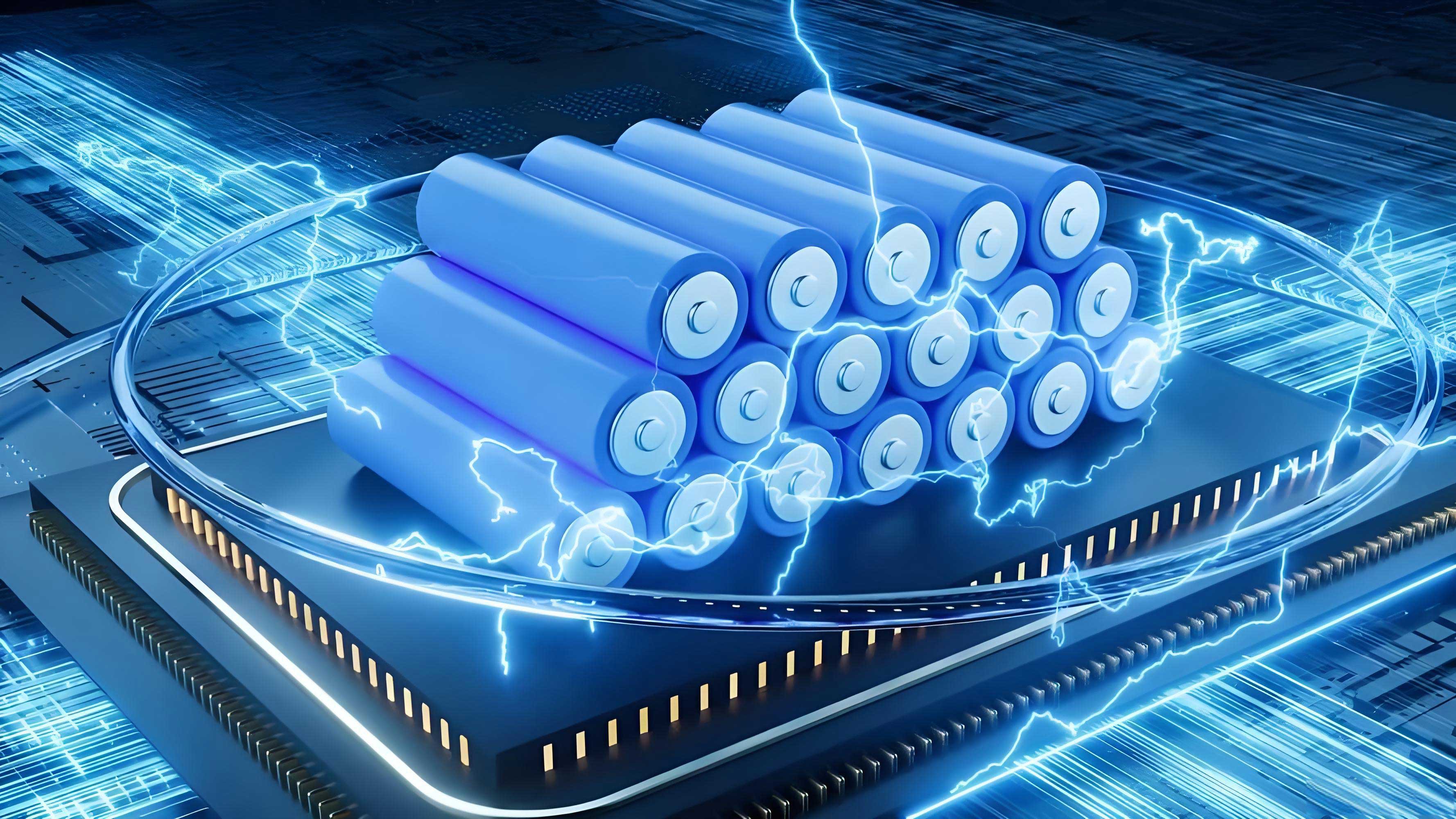
One of our primary focuses is sodium vanadium phosphate (Na3V2(PO4)3), a prominent cathode material for sodium-ion batteries. Its structure consists of VO6 octahedra and PO4 tetrahedra sharing corners, forming open channels for sodium-ion diffusion. The theoretical energy density is attractive, but achieving it in practice requires precise control over synthesis. We explored low-temperature solution-based methods, such as co-precipitation and solvothermal processes, to produce pure-phase materials with tailored morphologies. For instance, room-temperature co-precipitation allowed us to synthesize multi-shelled microspheres of sodium vanadium fluorophosphate (Na3V2(PO4)2F3), which exhibited improved rate capability and cycle stability compared to materials from solid-state routes. The electrochemical reaction for sodium insertion can be represented as:
$$ \text{Na}_3\text{V}_2(\text{PO}_4)_3 \leftrightarrow \text{Na}_{3-x}\text{V}_2(\text{PO}_4)_3 + x\text{Na}^+ + x e^- $$
where \( x \) denotes the number of sodium ions extracted. The voltage profile is influenced by the vanadium redox couples (V3+/V4+), and the stable framework minimizes volume changes during cycling. To summarize the advantages and challenges of major sodium-ion battery cathode materials, we have compiled the following table:
| Material Type | Examples | Advantages | Challenges |
|---|---|---|---|
| Layered Oxides | NaxMO2 (M = transition metals) | High energy density, good rate performance | Air sensitivity, phase transitions, cost |
| Polyanionic Compounds | Na3V2(PO4)3, NaFePO4 | Long cycle life, thermal stability, safety | Lower conductivity, synthesis complexity |
| Prussian Blue Analogues | NaxFe[Fe(CN)6] | Low cost, high capacity, easy synthesis | Crystal water issues, cycling stability |
Our work on vanadium-based phosphates for sodium-ion batteries has evolved to address cost and performance simultaneously. By collaborating with vanadium extraction industries, we utilized intermediate products like sodium metavanadate solutions or ammonium polyvanadate as low-cost vanadium sources. This integrated approach aligns separation and material preparation, reducing overall energy consumption. Moreover, we designed novel phosphate structures with reduced vanadium content to lower raw material costs. For example, we developed compounds like Na4VFe0.5Mn0.5(PO4)3@C and Na4V0.8MnAl0.2(PO4)3@C, where partial substitution of vanadium with other transition metals (e.g., Fe, Mn, Al) maintains electrochemical activity while enhancing sodium-ion kinetics and reducing cost. The general formula for these materials can be expressed as:
$$ \text{Na}_{n}\text{V}_{2-y}\text{M}_y(\text{PO}_4)_3 \quad \text{where } \text{M} = \text{Fe, Mn, Al, etc.}, n \geq 3 $$
The sodium-ion diffusion in these frameworks follows a hopping mechanism, described by the Arrhenius equation for ionic conductivity:
$$ \sigma = A \exp\left(-\frac{E_a}{kT}\right) $$
where \( \sigma \) is the conductivity, \( E_a \) is the activation energy, \( k \) is Boltzmann’s constant, and \( T \) is temperature. By doping and carbon coating, we reduced \( E_a \), leading to better rate performance. The following table compares the electrochemical properties of some vanadium-based phosphate cathodes we developed:
| Material | Synthesis Method | Specific Capacity (mAh/g) | Cycle Life (cycles) | Rate Capability |
|---|---|---|---|---|
| Na3V2(PO4)3@C | Solid-state (traditional) | ~110 | 1000 at 1C | Moderate |
| Na3V2(PO4)2F3 microspheres | Room-temperature co-precipitation | ~120 | 2000 at 5C | High |
| Na4VFe0.5Mn0.5(PO4)3@C | Sol-gel method | ~100 | 1500 at 2C | Good |
| Na3V2(PO4)2F3 nanocomposite | Mechanochemical ball milling | ~130 (exceeding theoretical) | Excellent |
A breakthrough in our sodium-ion battery research came with the development of a solvent-free mechanochemical method for rapid synthesis of sodium vanadium fluorophosphate (Na3V2(PO4)2F3). Traditional methods required days of reaction time and high temperatures, but our approach involves ball-milling raw materials directly in a jar for just 30 minutes, yielding a pure-phase product with integrated carbon nano-skeletons for enhanced conductivity. This process not only slashes energy consumption but also improves electrochemical performance significantly. The mechanochemical reaction can be modeled as a top-down transformation, where mechanical energy induces chemical bonding without solvents. The product exhibited a specific capacity exceeding its theoretical value, attributed to additional interfacial storage mechanisms. When paired with a commercial hard carbon anode, the full sodium-ion battery cell demonstrated high power density and long cycle life, paving the way for scalable production. The reaction efficiency is quantified by the yield \( Y \):
$$ Y = \frac{m_{\text{product}}}{m_{\text{theoretical}}} \times 100\% $$
In our case, \( Y \) approaches 98% with minimal impurities. This advancement underscores the potential of mechanochemistry for industrial manufacturing of sodium-ion battery materials.
Looking ahead, the future of sodium-ion batteries is bright, driven by the global push for sustainable energy storage. Sodium-ion battery technology is poised to play a pivotal role in applications such as low-speed electric vehicles, grid-scale energy storage, backup power for data centers, and residential储能 systems. Our team continues to innovate in vanadium-based polyanionic cathodes, focusing on further reducing vanadium usage, optimizing synthesis protocols, and enhancing performance metrics like energy density and safety. We are also exploring solid-state sodium-ion batteries to address safety concerns and increase energy density. The roadmap for sodium-ion battery development involves several key areas: material innovation, manufacturing process optimization, battery management systems, and standardization. Governments worldwide, including in China, have issued policies supporting sodium-ion battery research and industrialization, recognizing its strategic importance for carbon neutrality goals.
In conclusion, sodium-ion batteries represent a viable and economical solution for the growing energy storage demands. Our research on vanadium phosphate cathodes has contributed to lowering costs and improving performance through novel synthesis methods like mechanochemistry. As sodium-ion battery technology matures, it will likely complement lithium-ion batteries in the market, especially for large-scale applications. With continued collaboration across academia and industry, sodium-ion batteries can achieve widespread adoption, reinforcing energy security and sustainability. The journey from impossible to possible in material synthesis mirrors the broader trajectory of sodium-ion battery advancement—a testament to innovation and perseverance in the face of challenges.
To delve deeper into the electrochemical characteristics, we can model the sodium-ion diffusion using the Cottrell equation for transient current in cyclic voltammetry:
$$ I = nFAC\sqrt{\frac{D}{\pi t}} $$
where \( I \) is current, \( n \) is number of electrons, \( F \) is Faraday’s constant, \( A \) is electrode area, \( C \) is concentration, \( D \) is diffusion coefficient, and \( t \) is time. Our materials show high \( D \) values, indicating fast kinetics. Additionally, the stability of these cathodes is assessed through capacity retention \( R \) over \( N \) cycles:
$$ R = \frac{C_N}{C_1} \times 100\% $$
where \( C_1 \) and \( C_N \) are capacities at first and Nth cycle, respectively. For our best-performing sodium-ion battery cathodes, \( R \) exceeds 90% after 5000 cycles, highlighting their durability. The following table summarizes key parameters for sodium-ion battery systems compared to lithium-ion batteries:
| Parameter | Sodium-Ion Battery | Lithium-Ion Battery |
|---|---|---|
| Resource Abundance | High (sodium is widespread) | Limited (lithium is concentrated) |
| Cost | Lower raw material cost | Higher, especially for lithium |
| Energy Density | 100-150 Wh/kg (current) | 150-250 Wh/kg (typical) |
| Cycle Life | Long (up to thousands of cycles) | Long, but degradation issues |
| Safety | Good, less prone to thermal runaway | Moderate, requires management |
| Environmental Impact | Lower due to abundant materials | Higher mining impact |
The evolution of sodium-ion battery technology is accelerating, with global companies and research institutions actively pursuing commercialization. Our team remains committed to advancing cathode materials, and we believe that vanadium-based phosphates, through continuous optimization, will be instrumental in realizing the full potential of sodium-ion batteries. The integration of smart manufacturing techniques, such as artificial intelligence for process control, could further enhance quality and reduce costs. As we move forward, interdisciplinary collaboration will be essential to tackle remaining hurdles, such as electrolyte compatibility and pack integration. The sodium-ion battery landscape is dynamic, and our contributions aim to ensure that this technology becomes a cornerstone of the future energy infrastructure.