
The global push towards carbon neutrality, epitomized by ambitious goals like China’s “Dual Carbon” targets, has placed unprecedented demand on energy storage and electrified transportation. While lithium-ion batteries have been the cornerstone of this transition, concerns regarding the cost volatility, geographical concentration, and long-term supply security of lithium resources are driving the search for complementary and alternative chemistries. Among these, the sodium-ion battery stands out as a particularly promising candidate, poised for rapid industrialization and large-scale application.
The fundamental appeal of the sodium-ion battery lies in its compelling combination of resource abundance, cost potential, inherent safety, and operational versatility. Sodium is one of the most abundant elements on Earth, with a crustal abundance of approximately 2.75%, which is over 400 times that of lithium. This translates into raw material stability and significantly lower cost. For instance, the price of sodium carbonate (soda ash) consistently remains between $150-$600 per ton, whereas lithium carbonate, despite recent corrections, often trades above $10,000 per ton. This foundational cost advantage is a powerful driver for the sodium-ion battery sector.
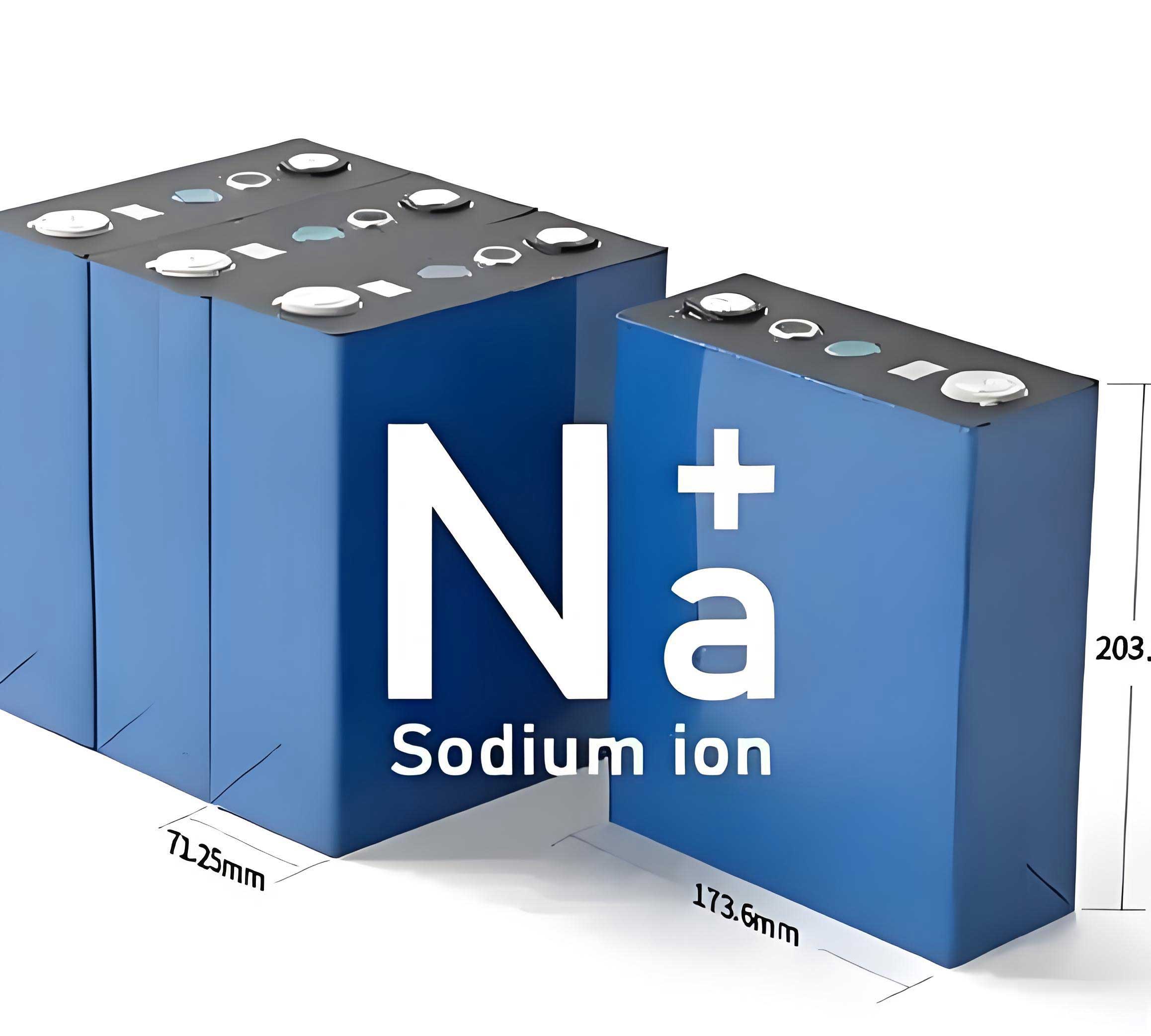
Technologically, the sodium-ion battery shares a similar “rocking-chair” principle and cell architecture with its lithium-ion counterpart. A typical cell consists of a cathode (positive electrode), an anode (negative electrode), an electrolyte, a separator, current collectors, and a casing. This compatibility is a critical accelerant for its industrialization. Key supply chain segments, including aluminum foil current collectors (replacing costly copper foil), electrolyte solvents, separators, and cell assembly processes, can leverage the existing, mature lithium-ion battery manufacturing ecosystem, enabling faster scale-up and reducing initial capital expenditure.
The performance profile of the sodium-ion battery offers distinct benefits for specific applications. While its gravimetric energy density typically ranges between 100-160 Wh/kg, which is currently lower than that of advanced lithium-ion batteries, it surpasses traditional lead-acid batteries and offers other crucial advantages. It demonstrates excellent safety characteristics with a very low probability of thermal runaway, a wide operational temperature window from -40°C to 80°C, superior rate capability, and high round-trip efficiency. Furthermore, it is environmentally benign and easier to recycle. These traits make sodium-ion battery technology exceptionally suitable for large-scale stationary energy storage and specific mobility segments.
| Parameter | Lead-Acid | Li-ion (LFP) | Na-ion (Typical) | Vanadium Redox Flow |
|---|---|---|---|---|
| Energy Density (Wh/kg) | 30-50 | 120-180 | 100-160 | 15-30 (system) |
| Cycle Life (to 80% DoD) | 300-500 | 2000-6000 | 2000-4500+ | >10,000 |
| Material Cost Potential | Low | Medium-High | Very Low | High |
| Resource Abundance | Limited (Pb) | Concentrated (Li, Co, Ni) | Ubiquitous (Na, Fe, Mn) | Limited (V) |
| Safety | Good | Requires BMS | Excellent | Excellent |
| Operating Temp. Range | -20°C to 50°C | -20°C to 60°C | -40°C to 80°C | 10°C to 40°C |
Market Drivers and the Path to Commercialization
The momentum behind sodium-ion battery adoption is fueled by several powerful, concurrent trends. First, the explosive growth of intermittent renewable energy sources like wind and solar necessitates cost-effective, large-scale storage solutions to ensure grid stability and eliminate curtailment. While pumped hydro dominates today, geographical and environmental constraints limit its growth, opening a vast opportunity for electrochemical storage. Sodium-ion batteries, with their low cost, safety, and long cycle life, are ideal candidates for this role.
Second, the geopolitical and supply chain risks associated with lithium and other critical minerals (like cobalt and nickel) present a strategic imperative for diversification. Many countries, including China, import a significant majority of their lithium, creating vulnerabilities. The sodium-ion battery, which primarily uses abundant elements like iron, manganese, and sodium, offers a path to greater energy storage independence and supply chain security.
Third, supportive policy frameworks are emerging globally. The U.S. Department of Energy has recognized sodium-ion battery technology within its energy storage development framework. The European Union’s “Battery 2030” initiative lists sodium-ion batteries first among non-lithium technologies. In China, sodium-ion batteries are explicitly mentioned and supported in national-level plans such as the “14th Five-Year Plan for Renewable Energy Development” and the “Technology Support for Carbon Peaking and Carbon Neutrality Implementation Plan (2022–2030),” with dedicated industry standards already promulgated.
Commercialization is accelerating rapidly. Pioneering companies worldwide have demonstrated the viability of sodium-ion battery technology. For example, the world’s first large-scale commercial application of sodium-ion battery energy storage, a 200 MWh project, was connected to the grid in China in 2024, with 100% domestic core technology. Industry forecasts project immense market potential. Sodium-ion batteries are expected to penetrate three core markets initially: large-scale energy storage, low-speed electric vehicles (including micro-cars and electric two-wheelers), and engineering machinery. Conservative estimates suggest the total addressable market in China alone could exceed 100 GWh by 2025, representing a multi-billion-dollar industry.
Strategic Advantages and Industrial Considerations for Regional Development
For regions aiming to cultivate a sodium-ion battery industry, a strategic assessment of inherent advantages is crucial. Key factors include:
- Raw Material Endowment: Access to sodium salts (e.g., rock salt, brine), iron, manganese, and aluminum is a significant cost and supply advantage. Regions with established chemical and aluminum processing industries can seamlessly integrate into the upstream material supply chain for sodium-ion batteries.
- Green Energy Resources: The production of battery cells is energy-intensive. Regions with abundant, low-cost renewable electricity (“green power”) can significantly lower the carbon footprint and operational costs of battery manufacturing, enhancing the competitiveness of the final product. This is becoming a critical factor with impending “carbon footprint” regulations for batteries in markets like the EU.
- Existing Battery Ecosystem: A pre-existing lithium-ion battery manufacturing cluster is a powerful launchpad. The high degree of supply chain and production line compatibility allows for faster pivoting and scaling of sodium-ion battery production, leveraging existing infrastructure, skilled labor, and supplier networks.
- Domestic Market Demand: Strong local demand for energy storage (e.g., to manage renewable energy curtailment, provide grid services) and electric mobility creates a ready market to absorb initial production, de-risking investments and fostering a virtuous cycle of improvement and cost reduction.
The sodium-ion battery industry chain can be summarized as follows:
| Segment | Key Components/Materials | Characteristics & Compatibility |
|---|---|---|
| Upstream | Sodium salts, Iron/Manganese precursors, Aluminum, Hard Carbon precursors (e.g., biomass, pitch) | Material processing; distinct from Li-ion upstream. |
| Midstream | Cathode (Layered Oxide, Polyanionic, Prussian Blue), Anode (Hard Carbon, Soft Carbon), Electrolyte (NaPF6, etc.), Separator, Aluminum Foil | Core value segment. Cathode/Anode are unique; Separator/Al foil are compatible with Li-ion. |
| Downstream | Cell Manufacturing, Battery Pack & System Integration (BMS, PACK) | High process compatibility with Li-ion cell & pack manufacturing. |
| Application | Stationary Energy Storage, Low-speed EVs, Electric 2-Wheelers, Start-Stop, Backup Power | Initial markets defined by cost, safety, and performance needs. |
A critical focus for industry development is the cost structure. Breaking down the bill of materials (BOM) for a typical sodium-ion battery cell reveals the key areas for technological innovation and cost optimization:
- Cathode Material: ~26%
- Anode Material (Hard Carbon): ~16%
- Electrolyte: ~26%
- Separator: ~18%
- Current Collectors (Al foil): ~4%
- Other (Binders, casing, etc.): ~10%
This cost distribution highlights why cathode, anode, and electrolyte development are primary R&D battlegrounds. The performance of a sodium-ion battery can be evaluated through key metrics such as energy density and cycle life, which are functions of its materials’ properties:
Gravimetric Energy Density (ED): $$ED \ (Wh/kg) = \frac{Q_{cell} \times V_{avg}}{m_{cell}}$$ where $Q_{cell}$ is the cell capacity (Ah), $V_{avg}$ is the average discharge voltage (V), and $m_{cell}$ is the cell mass (kg). Improving $Q_{cell}$ through higher-capacity cathode/anode materials and increasing $V_{avg}$ are central goals.
Cycle Life (N): Often defined as the number of charge-discharge cycles before capacity decays to 80% of initial capacity ($C_0$). The retained capacity $C_{retained}$ after $n$ cycles can be modeled as: $$C_{retained} = C_0 \times (1 – d)^n$$ where $d$ is the average decay rate per cycle. Minimizing $d$ through stable electrode/electrolyte interfaces is crucial for long-life applications like grid storage.
Overcoming Challenges and a Strategic Roadmap
Despite the promise, the sodium-ion battery industry faces hurdles on its path to maturity. The current energy density, while sufficient for many applications, needs further improvement to compete with lithium-ion batteries in mainstream electric vehicles. The cycle life of some material systems requires enhancement to meet the stringent 15-20 year lifespan expectations of grid storage. Perhaps most importantly, the initial manufacturing cost at limited scale remains higher than the long-term theoretical potential, necessitating optimization of production methods for key materials like hard carbon anode and specific cathode compounds.
A coherent regional strategy to foster a competitive sodium-ion battery cluster should encompass several pillars:
1. Fostering Innovation through Dual Pathways:
Support both fundamental research and applied, market-driven development. This involves establishing specialized research centers focused on “neck-breaking” challenges like energy density and cycle life, utilizing mechanisms like “challenge grants.” Concurrently, promote industry-academia-research-application alliances, leveraging state-owned enterprises with application scenarios to pilot and validate new technologies, accelerating the lab-to-fab pipeline.
2. Catalyzing Investment with Targeted Capital:
Deploy public capital strategically to de-risk private investment. A dedicated Research and Development Fund can support early-stage material and process innovation. A larger, market-oriented Industrial Guidance Fund, structured as a public-private partnership, can invest in scaling up production, building out the supply chain, and supporting promising startups, creating a robust industrial ecosystem.
3. Building a Supportive Policy and Ecosystem Framework:
- Integrated Governance: Establish clear leadership and a cross-departmental coordination mechanism to guide industry development, potentially integrating it into existing “chain master” systems for related industries like lithium-ion batteries.
- Strategic Clarity: Publish detailed industrial roadmaps and “opportunity lists” that clearly outline development priorities, key enterprise targets, major projects, and technology攻关 direction.
- Aggressive Policy Advocacy: Proactively seek to host national-level R&D projects, major demonstration projects, and common technology platforms, securing top-level support and funding.
- Comprehensive Factor Support: Formally recognize the sodium-ion battery industry as a strategic emerging sector, ensuring prioritized access to land, green energy, environmental capacity, and skilled talent.
4. Cultivating a Dynamic Market of Players: Implement a three-pronged enterprise strategy:
- Incumbent Expansion: Encourage and assist existing lithium-ion battery giants with sodium-ion R&D to convert or add sodium-ion battery production lines locally, leveraging their scale and expertise.
- Strategic Recruitment: Actively target and attract leading pure-play sodium-ion battery cell and material manufacturers, offering competitive packages to secure their next-generation production facilities.
- Local Champion Nurturing: Provide targeted support to homegrown startups and specialized SMEs within the sodium-ion battery value chain, helping them scale and integrate into the local ecosystem, building indigenous innovation capacity.
In conclusion, the sodium-ion battery represents more than just an alternative chemistry; it is a strategic enabler for a more sustainable, secure, and diversified energy future. Its convergence of material abundance, inherent safety, and manufacturing compatibility creates a unique window of opportunity. For regions with the right combination of resources, industrial base, and vision, proactive investment in the sodium-ion battery ecosystem today can yield significant economic and strategic dividends tomorrow, positioning them at the forefront of the next wave of energy storage and electrification. The race is not merely about building a battery, but about securing a pivotal role in the future energy landscape.