
The escalating global energy demand, coupled with the depletion of fossil fuels and their detrimental environmental impact, has spurred intensive research into sustainable energy alternatives. Among energy storage technologies, lithium-ion batteries (LIBs) have dominated markets from consumer electronics to electric vehicles due to their high energy density and long cycle life. However, the scarcity of lithium resources (approximately 0.0017% in the Earth’s crust) and the challenges associated with its recycling pose significant constraints on the sustainable, large-scale deployment of LIBs. In this context, the sodium-ion battery (SIB) has re-emerged as a compelling complementary technology. While SIBs typically exhibit lower voltage platforms and energy densities compared to their lithium counterparts, the abundance, low cost, and uniform geographical distribution of sodium resources present a substantial advantage for large-scale stationary energy storage and cost-sensitive transportation applications. The cathode material is a critical component that governs key performance metrics of a sodium-ion battery, including capacity, voltage, cycle life, and cost. Consequently, understanding the global research and patent landscape for SIB cathode materials is essential for strategic innovation. This article provides a comprehensive patent analysis, based on a global dataset from databases including CNABS and WPI up to March 31, 2021, to elucidate trends in application volume, geographical distribution, key applicants, and technological focus areas for sodium-ion battery cathode materials.
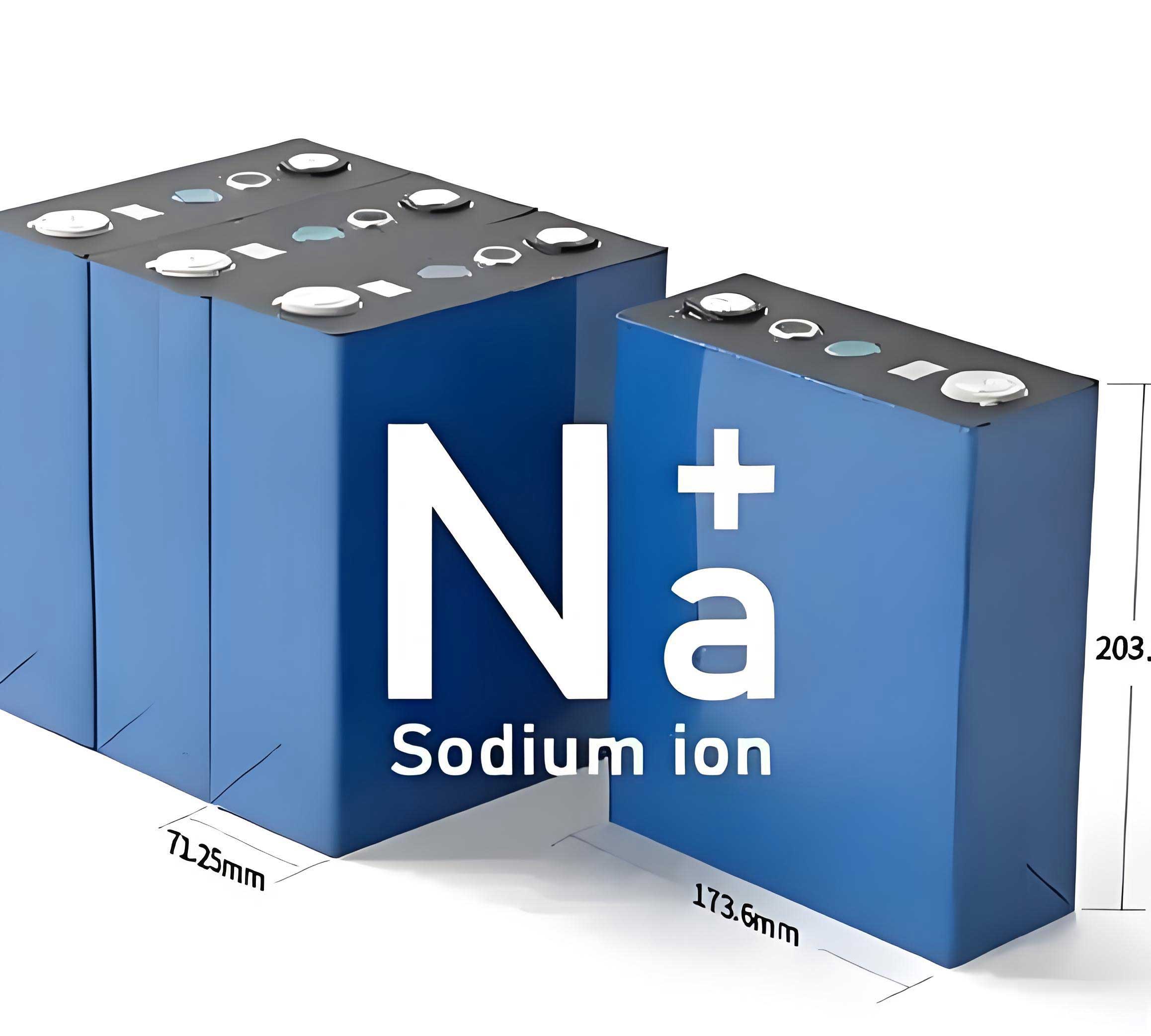
The evolution of patent applications for sodium-ion battery cathode materials reveals distinct phases of development, as summarized in the table below.
| Period | Annual Application Volume | Key Characteristics & Drivers |
|---|---|---|
| 2002-2011 | < 10 | Incipient stage. Dominated by foreign corporate applicants. Initial Chinese applications from academia. Focus on polyanion-type materials like fluorophosphates. |
| 2012-2016 | Gradual increase | Growing interest triggered by global focus on grid-scale storage. Chinese applications rise to ~58%. Rise of transition metal oxides and polyanions. Emergence of Prussian blue analogues. |
| 2017-2021* | > 100 annually | Rapid growth phase, primarily driven by China (~90% of filings). Global filings from US, JP, KR, EU remain stable. Strengthened IP awareness and innovation capability in China. |
*Note: Data for 2019 onward is incomplete due to publication lag.
The geographical distribution of patent filings underscores China’s dominant role in the sodium-ion battery cathode material landscape. Chinese applications constitute over three-quarters of the global total. Within China, approximately 96.1% of applications are filed by Chinese entities, with universities and research institutes accounting for about three-quarters of these. In contrast, foreign applicants’ filings make up 23.5% of the global total, with corporate entities responsible for 50.6% of these foreign-origin applications. The patent filing strategy of foreign applicants reveals a focus on key markets: besides their home jurisdictions, 15.7% of their applications are filed in the United States, 12.9% in China, 10.1% in South Korea, 9.6% in Japan, and 6.2% at the European Patent Office. This indicates that the United States and China are primary targets for international patent protection in the field of sodium-ion battery technology.
An analysis of major applicants provides further insight into the competitive dynamics. Applicants with 10 or more filings are predominantly Chinese, though largely from academia. Chinese universities and research institutes collectively account for 22.1% of global filings, exceeding the combined total from the US, Japan, Korea, and Europe. Chinese corporate entities began filing later, with significant growth only after 2017. Contemporary Amperex Technology Co. Limited (CATL) is a notable exception, with a growing portfolio and strategic international filings in the US and Europe. Key foreign applicants are primarily corporations, such as 3M Company, Faradion Limited, and Nippon Electric Glass Co., Ltd., who generally maintain broader international patent portfolios. The patent strategies differ significantly: most major Chinese academic applicants file exclusively in China, while leading foreign corporate applicants pursue protection across major global markets. The table below contrasts the focus of key applicants.
| Applicant Type / Region | Representative Entities | Filing Focus & Strategy |
|---|---|---|
| Chinese Academia | Multiple Universities & Research Institutes | High volume of domestic (CN) filings. Early starters (from 2006). Limited international filing. |
| Chinese Corporate | CATL, Liaoning Xingkong Sodium Battery Co. | Later entrants (significant growth post-2017). Beginning to file internationally (US, EP). |
| Foreign Corporate | 3M, Faradion, Nippon Electric Glass, Williams Tech. | Broad global portfolios (US, CN, EP, JP, KR). Early starters in some cases (e.g., Williams, 2002). Sustained R&D. |
From a technological perspective, research and patenting activity for sodium-ion battery cathode materials are concentrated on three main families: Transition Metal Oxides (TMOs), Polyanionic Compounds, and Prussian Blue Analogues (PBAs). Their relative share of patent filings is shown below, along with minor categories including metal fluorides, organic polymers, and composite materials.
| Material Family | Approx. Share of SIB Cathode Patents | Primary Technical Sub-categories & Focus |
|---|---|---|
| Transition Metal Oxides (TMOs) | ~High | Layered Oxides (NaxMO2), Tunnel-type Oxides. Focus on multi-metal element selection, doping, carbon compositing. |
| Polyanionic Compounds | ~High | Phosphates (e.g., Na3V2(PO4)3), Fluorophosphates, Pyrophosphates, Sulfates. Focus on structure, carbon coating, ionic conductivity. |
| Prussian Blue Analogues (PBAs) | ~Significant | NaxM[Fe(CN)6]. Focus on transition metal (M) selection, defect control, carbon hybridization. |
| Others (Fluorides, Organics, Composites) | ~3.5% | Metal fluorides (conductivity enhancement); Organic polymers (flexible structure); Multi-material composites. |
The chemical and structural formulas for these primary sodium-ion battery cathode materials are fundamental to understanding their properties. Layered oxides are generally represented as $$Na_x MO_2$$, where M is one or more transition metals (e.g., Mn, Ni, Co, Fe, Cu). The value of x determines the specific phase (e.g., O3, P2). Polyanionic compounds offer stable frameworks and higher operating voltages, often described by the general formula $$Na_x M_y (XO_z)_w$$, where X can be P, S, Si, etc., as in $$Na_3V_2(PO_4)_3$$ (NVP) or $$Na_2FeP_2O_7$$. Prussian blue analogues have an open framework structure ideal for sodium-ion diffusion, with a formula of $$Na_x M[M'(CN)_6]_y \cdot nH_2O$$, where M and M’ are transition metals.
The core electrochemical reaction governing the charge/discharge of a sodium-ion battery cathode material involves the reversible extraction and insertion of sodium ions, coupled with electron transfer. This can be generically represented for a host material ‘Host’:
$$ \text{Na}_x \text{Host} \rightleftharpoons \text{Na}_{x-\Delta} \text{Host} + \Delta \text{Na}^+ + \Delta e^- $$
During charging, sodium ions are extracted from the cathode (deintercalation), releasing electrons to the external circuit. The reverse occurs during discharge. The theoretical specific capacity (C, in mAh/g) of a cathode material is a crucial metric, calculated from the number of electrons transferred per formula unit (n), Faraday’s constant (F = 96485 C/mol), and the molar mass of the charged/discharged material (M_w, in g/mol):
$$ C = \frac{nF}{3.6 M_w} $$
Patent analysis reveals that innovation within each material family follows specific vectors. For layered oxide cathodes in sodium-ion batteries, the primary strategy is through multi-metal cation substitution (e.g., Mn-rich systems doped with Ni, Fe, Cu, Mg, Ti) to stabilize structure, mitigate phase transitions, and enhance air stability. A significant portion of patents also focuses on surface modifications, such as coatings with inert oxides (e.g., $$ZrO_2$$, $$Al_2O_3$$) or carbon, to suppress side reactions with the electrolyte. For tunnel-type oxides like $$Na_{0.44}MnO_2$$, patents often target synthesis methods to control morphology and compositing with conductive carbons.
Within the polyanion family for sodium-ion battery cathodes, phosphates and fluorophosphates have attracted the most patent activity. For $$Na_3V_2(PO_4)_3$$, innovations are heavily centered on carbon compositing (to address low electronic conductivity) and ion doping (e.g., Mg, Ca, Mn, Fe, Co, Ti, rare-earth elements) at the V or Na sites to improve ionic conductivity and cycle life. The preparation method, especially various sol-gel and hydrothermal routes, is another key patent focus. Fluorophosphate patents, like those for $$Na_3V_2(PO_4)_2F_3$$, similarly emphasize synthesis and doping. Other polyanions like pyrophosphates ($$Na_2MP_2O_7$$) and sulfates (e.g., $$Na_2Fe_2(SO_4)_3$$) are patented primarily for their novel high-voltage properties, with efforts again directed at carbon hybridization.
Prussian blue analogue patents for sodium-ion battery cathodes mainly address two challenges: reducing crystal water content and improving electronic conductivity. Patent claims frequently cover methods for controlled crystallization to minimize vacancies and water. The other major focus is on compositing PBAs with conductive substrates like carbon nanotubes, graphene, or MXenes, or forming core-shell structures with conductive polymers. Elemental substitution of the transition metal sites (e.g., Fe, Mn, Ni, Cu) is also a common theme to tune the operating voltage and capacity.
Emerging materials, though with lower patent volumes, indicate future directions for sodium-ion battery cathode research. Organic cathode materials, such as derivatives of quinones, imides, or conducting polymers, are explored for their sustainability, structural flexibility, and fast kinetics. Their redox reaction often involves enolate or carbonyl groups. Metal fluorides (e.g., $$FeF_3$$) are investigated for conversion reactions offering high capacity, with patents focusing on nanocomposite designs with carbon to manage large volume changes. Finally, a growing trend is the patenting of composite or hybrid cathodes, such as mixtures of a TMO with a polyanion material or the integration of nanoscale $$Na_3P$$, aiming to synergistically combine the advantages of different material classes within a single sodium-ion battery electrode.
In conclusion, the patent landscape for sodium-ion battery cathode materials is dynamic and rapidly evolving, largely propelled by Chinese innovation. The development trajectory shows a clear acceleration post-2012, with China now serving as the primary engine for global patent growth in this sector. While Chinese academia has been prolific in generating domestic patents, Chinese corporations are beginning to expand their IP portfolios internationally. Foreign players, typically corporations, maintain strategically broad global patent filings, with significant attention on the US and Chinese markets. Technologically, the field remains centered on optimizing established families—layered oxides, polyanionic phosphates, and Prussian blue analogues—through doping, coating, and nanostructuring. The exploration of organic materials, fluorides, and sophisticated composites represents the innovative frontier for next-generation sodium-ion battery cathodes. For stakeholders, continued investment in fundamental research to develop low-cost, high-performance, and long-cycle-life materials is paramount. Equally critical is the transition from laboratory patents to commercial-scale manufacturing and the pursuit of robust, global intellectual property strategies. This dual approach will be essential to solidify competitive advantage and capture value in the burgeoning market for sodium-ion battery technology.