
The global push for decarbonization and the integration of renewable energy sources have dramatically escalated the demand for efficient, large-scale, and cost-effective electrochemical energy storage systems. For decades, lithium-ion batteries (LIBs) have been the undisputed leader, powering everything from portable electronics to electric vehicles. However, the geopolitical concentration and finite nature of lithium resources, coupled with soaring extraction costs, pose significant risks to the long-term sustainability and affordability of LIB technology. This pressing reality has catalyzed intensive research into alternative battery chemistries that utilize more abundant elements. Among these, the sodium-ion battery stands out as the most promising and practical successor. Sodium shares similar physicochemical properties with lithium, enabling the transfer of knowledge and manufacturing paradigms from LIBs. Crucially, sodium is one of the most abundant elements on Earth, ensuring material security and potentially much lower costs.
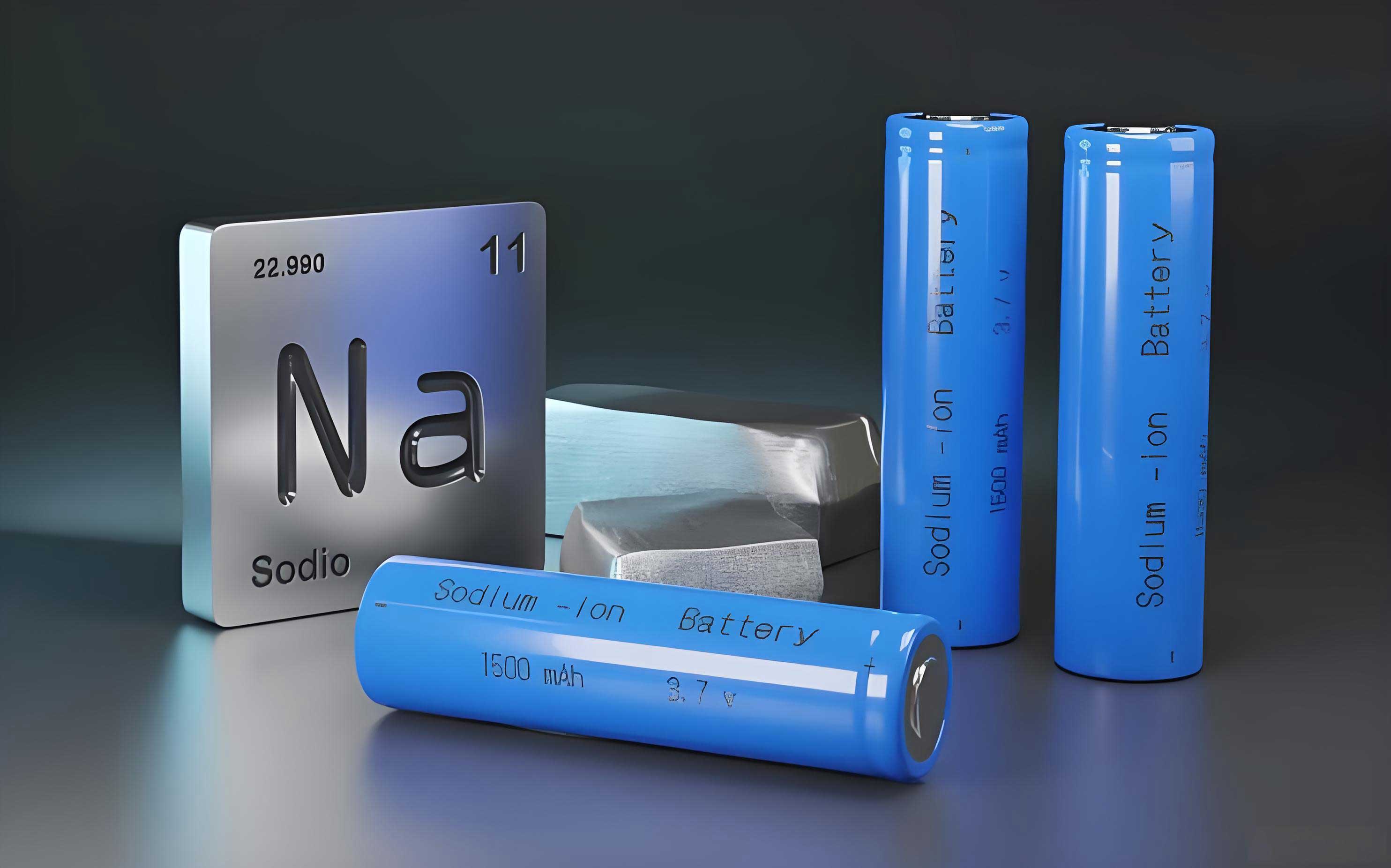
The performance of a sodium-ion battery is intrinsically tied to its electrode materials. The cathode, in particular, is paramount as it largely dictates the operating voltage, capacity, cycle life, and ultimately the cost of the entire system. A highly promising class of cathode materials for sodium-ion batteries is Prussian Blue Analogues (PBAs). These materials possess an open, three-dimensional framework structure with large interstitial sites, ideally suited for the rapid and reversible insertion/extraction of larger sodium ions. Their general formula can be written as $A_x M [M'(CN)_6]_{1-y} \square_y \cdot nH_2O$, where A is an alkali metal (Na, K), M and M’ are transition metals, $\square$ represents a [Fe(CN)6] vacancy, and nH2O is the coordinated water. Within this family, manganese-based PBAs (Mn-PBAs) have garnered exceptional attention. Manganese is not only abundant and inexpensive but also enables high theoretical capacity through a two-electron redox process ($Mn^{2+}/Mn^{3+}$ and $Fe^{2+}/Fe^{3+}$), offering a compelling balance between performance and cost for practical sodium-ion battery applications.
Crystal Structure, Electrochemical Mechanisms, and Inherent Challenges
The archetypal Mn-based PBA for sodium-ion battery cathodes is often represented as $Na_2Mn[Fe(CN)_6]$. Its ideal crystal structure is a face-centered cubic (FCC) lattice, where high-spin $Mn^{2+}$ ions are octahedrally coordinated to the nitrogen atoms of the cyanide ($-C\equiv N-$) bridges, and low-spin $Fe^{2+}$ ions are coordinated to the carbon atoms. This $-Mn^{II}-N\equiv C-Fe^{II}-$ linkage creates a rigid yet open framework with large channels along the <100> directions, facilitating easy diffusion of sodium ions. The sodium ions reside in two distinct interstitial sites within this framework: the 8c site (corner position) and the 24d site (face-center position). The electrochemical activity stems from the reversible redox couples of the transition metals: $Fe^{2+}/Fe^{3+}$ and $Mn^{2+}/Mn^{3+}$.
The electrochemical reaction in a sodium-ion battery using this cathode can be summarized as:
$$ Na_2Mn^{II}[Fe^{II}(CN)_6] \rightleftharpoons 2Na^+ + 2e^- + Mn^{III}[Fe^{III}(CN)_6] $$
During charging, sodium ions are extracted from the lattice, oxidizing $Fe^{II}$ to $Fe^{III}$ and subsequently $Mn^{II}$ to $Mn^{III}$. The process reverses during discharge. The theoretical capacity is calculated based on the two-electron transfer and the molecular weight. For $Na_2Mn[Fe(CN)_6]$ with a molar mass of ~285 g/mol (anhydrous), the two-electron capacity is:
$$ C_{theo} = \frac{nF}{3.6 \times M} = \frac{2 \times 96485}{3.6 \times 285} \approx 170 \text{ mAh g}^{-1} $$
where $n$ is the number of electrons transferred, $F$ is Faraday’s constant, and $M$ is the molar mass.
However, the practical realization of this high capacity is hindered by several intrinsic challenges related to the material’s composition and structure:
- Framework Vacancies and Coordinated Water: Materials synthesized via conventional rapid precipitation often have a non-stoichiometric formula $Na_xMn[Fe(CN)_6]_{1-y}\square_y \cdot nH_2O$, where $y>0$. These [Fe(CN)6] vacancies are typically charge-compensated by coordinated water molecules ($Mn-OH_2$), which occupy the empty sites. This water is detrimental as it blocks sodium-ion diffusion paths, reduces the number of active redox sites, and can participate in detrimental side reactions with the electrolyte.
- The Jahn-Teller Distortion of $Mn^{3+}$: The $Mn^{3+}$ ion (high-spin $d^4$ configuration) is a strong Jahn-Teller ion. Upon oxidation of $Mn^{2+}$ to $Mn^{3+}$ during charging, the local $[MnO_6]$ octahedron undergoes a tetragonal distortion. This distortion can propagate through the crystal lattice, causing significant structural strain, anisotropic volume changes, and even phase transitions (e.g., from cubic to tetragonal or monoclinic), leading to particle cracking and rapid capacity fade.
- Manganese Dissolution: $Mn^{2+}$ ions, especially those exposed on the particle surface or generated during cycling, can dissolve into the organic electrolyte. This loss of active material degrades capacity and the dissolved $Mn^{2+}$ can migrate to the anode, disrupting the solid electrolyte interphase (SEI).
- Low Electronic Conductivity: PBAs are generally wide-bandgap semiconductors, leading to poor intrinsic electronic conductivity. This limits rate capability and necessitates the use of large amounts of conductive additives in the electrode.
Therefore, the central research thrust for Mn-PBAs in sodium-ion batteries revolves around developing synthesis and modification strategies to minimize defects and water content, stabilize the structure against Jahn-Teller distortion, and enhance conductivity.
Synthesis Methodologies: Controlling Crystallinity and Morphology
The electrochemical performance of Mn-PBAs is profoundly sensitive to their synthesis conditions. The goal is to achieve high crystallinity, low defect concentration, controlled morphology, and reduced water content.
1. Co-Precipitation Method: This is the most common and scalable method. It involves the simultaneous mixing of a manganese salt (e.g., $MnCl_2$, $MnSO_4$) and a hexacyanoferrate source (e.g., $Na_4Fe(CN)_6$ or $K_4Fe(CN)_6$) in an aqueous solution. The rapid reaction instantly forms a precipitate. Key parameters are meticulously controlled:
$$ Mn^{2+}_{(aq)} + [Fe(CN)_6]^{4-}_{(aq)} \rightarrow Mn[Fe(CN)_6]^{2-}_{(s)} $$
The reaction rate, which governs nucleation and growth, is critical. A very fast rate leads to numerous small nuclei with high defect and water content. Slowing down the rate allows for the growth of larger, more perfect crystals.
2. Chelator-Assisted Co-Precipitation: This is a refined version where chelating agents like sodium citrate ($Na_3C_6H_5O_7$) or EDTA are introduced. These agents form stable complexes with $Mn^{2+}$ ions ($[Mn(Citrate)]^-$, $[Mn(EDTA)]^{2-}$), effectively reducing the free $Mn^{2+}$ concentration in solution. This dramatically slows the release of $Mn^{2+}$ for reaction, enabling a more controlled, layer-by-layer crystal growth. The result is larger cubic particles with smoother surfaces, significantly fewer [Fe(CN)6] vacancies, and lower water content, directly translating to higher capacity and better stability in sodium-ion batteries.
3. “Water-in-Salt” and Ionothermal Synthesis: These advanced methods aim to drastically reduce coordinated water. The “water-in-salt” strategy uses a highly concentrated electrolyte solution (e.g., saturated sodium perchlorate) as the reaction medium. The extremely low activity of water molecules in this environment suppresses their coordination into the PBA framework. Ionothermal synthesis uses ionic liquids as the solvent, which also provides a non-aqueous or water-poor environment for crystallization, yielding materials with minimal hydration.
4. Hydrothermal/Solvothermal Method: This technique involves conducting the precipitation reaction in a sealed autoclave at elevated temperature and pressure. The high-energy environment promotes Ostwald ripening (dissolution of small, defective crystals and re-deposition onto larger, more stable ones), resulting in highly crystalline products with well-defined morphologies. The prolonged reaction time and controlled conditions often yield materials with improved stoichiometry.
| Method | Key Principle | Advantages | Typical Outcome |
|---|---|---|---|
| Simple Co-precipitation | Rapid mixing of precursor solutions. | Simple, fast, scalable. | Small nanoparticles, high defects/water content. |
| Chelator-Assisted Co-precipitation | Use of chelators (citrate, EDTA) to control $Mn^{2+}$ release. | Produces large, low-defect single crystals. Most effective for quality improvement. | Micron-sized cubes, high crystallinity, low water content. |
| “Water-in-Salt” / Ionothermal | Reaction in water-poor media (conc. salts, ionic liquids). | Minimizes lattice water incorporation. | Highly anhydrous materials, often with unique morphologies. |
| Hydrothermal/Solvothermal | Crystallization under elevated T and P. | High crystallinity, controlled morphology via Ostwald ripening. | Well-faceted crystals, improved phase purity. |
Performance Enhancement Strategies
Beyond synthesis optimization, post-synthesis modification and composite engineering are essential to tackle the inherent challenges of Mn-PBAs and unlock their full potential for sodium-ion batteries.
1. Cation Doping and Substitution: This is a fundamental strategy to enhance structural stability. The principle is to partially substitute the Jahn-Teller active $Mn$ with other inert transition metals (like $Ni$, $Cu$, $Co$, $Zn$) or electrochemically active ones (like $Fe$).
- Inert Metal Doping (e.g., Ni, Cu): Substituting a portion of Mn with $Ni^{2+}$ or $Cu^{2+}$, which do not undergo detrimental distortions in their common oxidation states, dilutes the concentration of Jahn-Teller centers. This effectively “pinches” the framework, suppressing long-range distortion and improving structural reversibility during cycling of the sodium-ion battery.
- Concentration-Gradient Design: An advanced form of doping involves creating a particle where the dopant concentration varies from core to shell. For example, a $Mn$-rich core can provide high capacity, while a $Ni$-rich or $Fe$-rich shell provides a stable, protective surface layer that mitigates manganese dissolution and surface degradation. The composition can follow a profile like $Ni_xMn_{1-x}[Fe(CN)_6]$, with $x$ increasing from the core to the surface.
- High-Entropy Strategy: A recent innovative approach involves creating a high-entropy PBA by incorporating four or more different transition metals (e.g., $Mn$, $Fe$, $Ni$, $Co$, $Cu$) in near-equimolar ratios into the N-coordinated site. The severe lattice distortion and configurational entropy effect can stabilize the structure and suppress phase transitions, leading to exceptional cycling stability.
2. Surface Coating and Encapsulation: Applying a thin, conformal layer on the surface of Mn-PBA particles serves multiple purposes: 1) Physically blocking direct contact with the electrolyte to suppress manganese dissolution and side reactions. 2) Enhancing surface electronic conductivity. 3) Providing mechanical constraint to buffer volume changes.
- Carbon Coating: Coating with carbon (e.g., via glucose pyrolysis) or compositing with graphene/carbon nanotubes is standard. Carbon layers provide excellent electronic conduction and form a protective barrier.
- Conductive Polymer Coating: Polymers like PEDOT or polypyrrole (PPy) can be polymerized in situ on the PBA surface. These coatings are both conductive and elastic, accommodating strain while facilitating charge transfer. Doped polymers like $ClO_4^-$-doped PPy can also contribute additional pseudo-capacitance.
- Fast-Ion Conductor Coating: Coatings made of materials with high sodium-ion conductivity (e.g., $Na_3(VOPO_4)_2F$) can create a favorable interface for rapid $Na^+$ transport, improving rate performance and protecting the core.
3. Composite Engineering: Creating intimate composites with various functional materials can address several limitations simultaneously.
- With Conductive Matrices: Embedding Mn-PBA nanoparticles into a 3D conductive matrix like reduced graphene oxide (rGO) foam prevents particle aggregation, ensures continuous electron pathways, and may accommodate volume expansion. The synergy often results in superior rate capability and cycle life for the sodium-ion battery.
- Core-Shell Structures: Constructing epitaxial or coherent core-shell particles, such as a $Mn$-PBA core with a thin, stable $Ni$-PBA shell, is highly effective. The shell structurally stabilizes the core against distortion and dissolution while maintaining good ionic conductivity.
| Strategy | Primary Mechanism | Key Benefit | Typical Performance Improvement |
|---|---|---|---|
| Ni/Cu Doping | Dilution/suppression of Jahn-Teller active sites. | Enhanced structural stability, reduced strain. | Cycling stability >1000 cycles with >80% capacity retention. |
| Concentration Gradient | Stable shell protects high-capacity core. | Combines high capacity with excellent surface stability. | High capacity (~140 mAh/g) with minimal capacity fade over 500 cycles. |
| Carbon/Graphene Composite | Enhances electron transport & provides physical barrier. | Superior rate capability and cycle life. | High capacity retention at high C-rates (e.g., 10C). |
| PEDOT/PPy Coating | Provides conductive, elastic encapsulation. | Suppresses Mn dissolution, improves kinetics. | Excellent long-term cycling (>1000 cycles), high rate performance. |
| Fast-Ion Conductor Coating | Creates a $Na^+$-conductive interface layer. | Improves rate capability and high-temperature stability. | Stable cycling at elevated temperatures (e.g., 55°C). |
Application Perspectives and Remaining Challenges
Thanks to the aforementioned advancements, Mn-PBA cathodes now demonstrate performance metrics that make them serious candidates for next-generation sodium-ion batteries. Laboratory-scale cells regularly report reversible capacities approaching 160 mAh/g, excellent rate capability (retaining over 100 mAh/g at 5C-10C rates), and promising cycle life exceeding 1000 cycles. Their low-cost, abundant raw materials and potentially simple manufacturing process align perfectly with the needs for grid-scale energy storage and low-cost electric vehicles, where energy density requirements are slightly less stringent than in premium consumer electronics.
However, bridging the gap from promising lab results to commercial viability requires overcoming several persistent challenges:
- Scalable Synthesis of “Perfect” Material: Reproducibly synthesizing tons of low-defect, low-water content Mn-PBA with tight quality control remains a significant engineering challenge. The chelator-assisted and ionothermal methods, while effective, add complexity and cost.
- Voltage Hysteresis and Energy Efficiency: Some Mn-PBA cathodes exhibit a noticeable voltage gap between charge and discharge curves, reducing the round-trip energy efficiency of the sodium-ion battery. This is often linked to structural phase transitions and kinetic barriers.
- Full Cell Engineering: Most reports focus on half-cell performance vs. Na metal. Practical application requires pairing with a suitable, stable anode (e.g., hard carbon) and a compatible electrolyte to form a reliable full cell. Optimizing the electrode balance (N/P ratio), pre-sodiation strategies, and electrolyte formulation for the full cell system is critical.
- Long-Term Calendar Life and Safety: Data on ultra-long-term cycling (e.g., >5000 cycles) and calendar aging under various environmental conditions (temperature, state-of-charge) is still limited. Furthermore, the thermal and chemical stability of PBAs, especially under abuse conditions, requires thorough evaluation for large-scale deployment.
Future Outlook and Concluding Remarks
The development of manganese-based Prussian Blue Analogues represents a vibrant and crucial frontier in the quest for sustainable and economical sodium-ion battery technology. The path forward will likely involve a multi-pronged approach:
- Deepened Fundamental Understanding: Utilizing advanced in-situ/operando characterization techniques (XRD, XAS, Raman, NMR) to gain atomic-level insights into the structural evolution, $Na^+$ migration pathways, and the true nature of the solid-electrolyte interface on these materials.
- Machine Learning-Accelerated Discovery: Screening vast compositional spaces (multi-metal doping, mixed anions) to identify novel PBA derivatives with optimized voltage, capacity, and stability profiles.
- Focus on Practical Metrics: Shifting research focus more towards metrics critical for commercialization, such as tap density, electrode loading, areal capacity (>3 mAh cm-2), and performance in pouch-type full cells.
- Green and Sustainable Manufacturing: Developing synthesis routes that minimize waste, use benign solvents, and are energy-efficient to further reduce the environmental footprint and cost.
In conclusion, Mn-based PBAs, with their unique open framework, high theoretical capacity, and material abundance, hold exceptional promise as cathodes for the impending era of sodium-ion batteries. While challenges related to structural stability and material perfection persist, continuous innovation in synthesis control, lattice engineering, and interface design is rapidly turning these challenges into opportunities. Through sustained interdisciplinary research and development, Mn-PBA cathodes are poised to play a pivotal role in enabling safe, low-cost, and large-scale energy storage solutions, accelerating the global transition to a renewable energy future.