
The pursuit of sustainable and cost-effective energy storage solutions has positioned sodium-ion batteries (SIBs) as a compelling alternative to lithium-ion batteries (LIBs), owing to the natural abundance of sodium, lower projected costs, inherent safety advantages, and compatibility with existing LIB manufacturing infrastructure. The development of high-performance anode materials remains a critical challenge for the commercialization of SIBs. Among various candidates, hard carbon stands out due to its relatively high reversible capacity, excellent cycling stability, and the wide availability of precursor materials. However, the cost and performance of the final hard carbon material are intrinsically linked to the choice of precursor.
Asphalt, a by-product of petroleum refining or coal processing, is an attractive precursor due to its low cost, high carbon content, and widespread availability. It primarily consists of complex polycyclic aromatic hydrocarbons. However, its thermoplastic nature during pyrolysis leads to extensive molecular rearrangement and condensation, resulting in a highly ordered, graphitic-like carbon structure with narrow interlayer spacing. This structure offers limited active sites for sodium ion storage, typically yielding a low reversible capacity of around 100-120 mAh g-1, which is insufficient for practical applications in sodium-ion battery systems. Furthermore, the dense, blocky morphology of directly carbonized asphalt leads to poor electrochemical kinetics.
Pre-oxidation is a widely adopted strategy to inhibit graphitization and modify the microstructure of carbon precursors. Liquid-phase acid oxidation, particularly using nitric acid, has been shown to introduce oxygen-containing functional groups (OFGs) into the carbon framework. These OFGs can act as cross-linking points during pyrolysis, suppressing the fusion and rearrangement of aromatic molecules, thereby increasing disorder, expanding interlayer spacing, and creating more porous structures. Nevertheless, achieving deep and homogeneous oxidation within the tightly packed asphalt molecules is difficult with single-acid treatment, often resulting in a gradient of oxidation from the surface to the bulk.
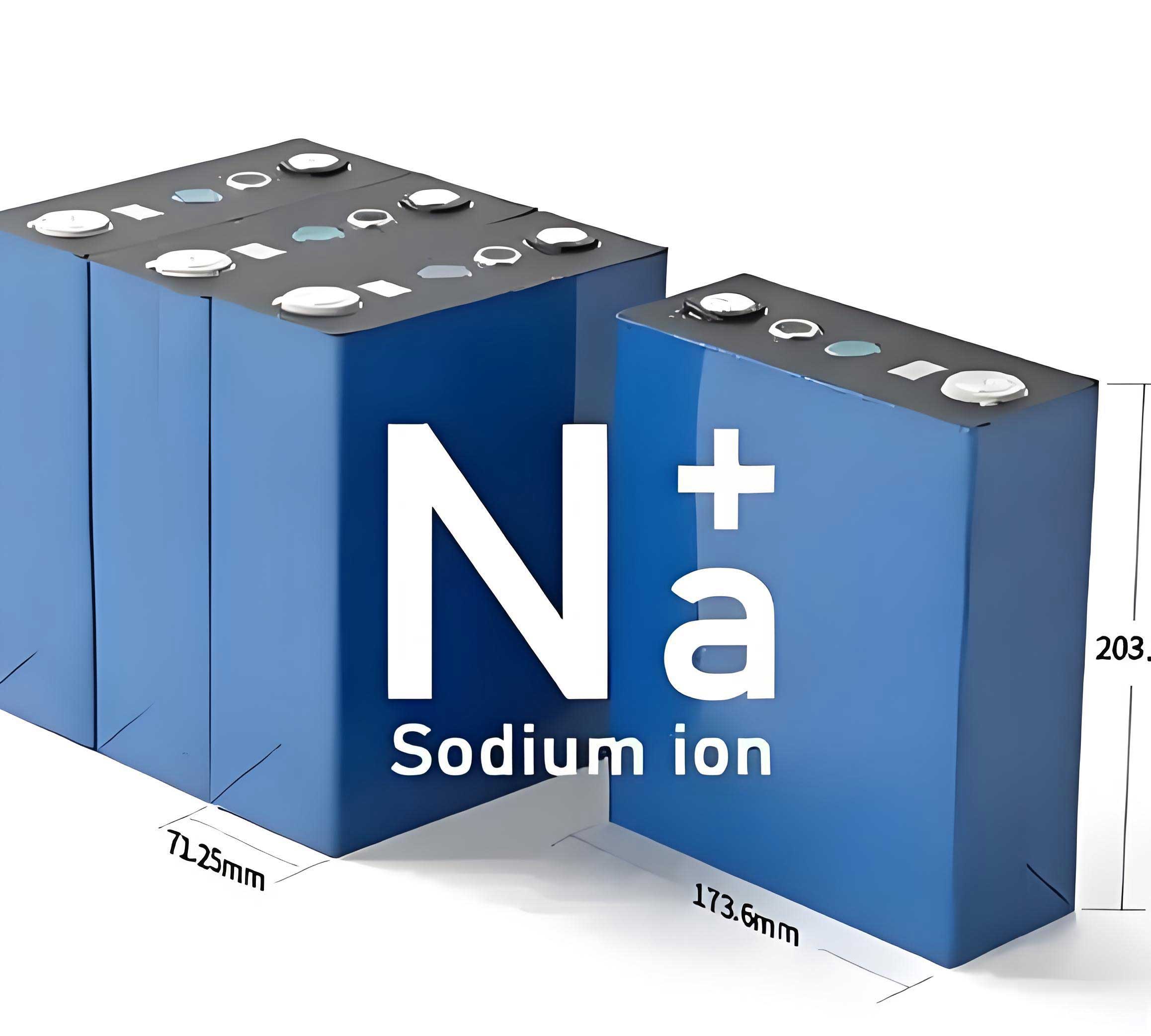
In this work, we present a novel and effective intramolecular oxidation strategy for asphalt using a synergistic mixed-acid system (HNO3/H2SO4). The sulfuric acid plays a crucial role in swelling and exfoliating the densely stacked asphalt molecular layers. This expansion provides pathways for nitric acid to penetrate and oxidize the asphalt molecules more uniformly and deeply from the inside out. This process, which we term “intramolecular oxidation,” leads to the efficient incorporation of beneficial OFGs, particularly cross-linking –C(O)–O– type groups. The resulting pre-oxidized asphalt, after high-temperature carbonization, transforms into hard carbon nanosheets with significantly enlarged interlayer spacing, a tailored nanoporous structure, and a highly disordered carbon matrix. When evaluated as an anode for sodium-ion battery applications, this optimized hard carbon delivers a markedly enhanced reversible capacity and superior rate capability compared to materials derived from raw or single-acid treated asphalt. This study provides profound insights into the mechanism of liquid-phase acid oxidation on hard carbon structure and offers a practical route for producing low-cost, high-performance hard carbon anodes for sodium-ion battery technology.
Experimental Methodology and Material Synthesis
The synthesis pathway for asphalt-derived hard carbons via different acid oxidation routes is systematically outlined below. The specific experimental conditions and the nomenclature for all precursor and carbonized samples are summarized in Table 1.
| Precursor Name | Oxidation Acid | Oxidation Time (h) | Carbonized Sample Name |
|---|---|---|---|
| Asphalt (Raw) | None | 0 | HC-A |
| APN-4 | HNO3 only | 4 | HC-APN4 |
| APS-4 | H2SO4 only | 4 | HC-APS4 |
| APM-2 | Mixed Acid (HNO3/H2SO4) | 2 | HC-APM2 |
| APM-4 | Mixed Acid (HNO3/H2SO4) | 4 | HC-APM4 |
| APM-6 | Mixed Acid (HNO3/H2SO4) | 6 | HC-APM6 |
Synthesis of Pre-oxidized Asphalt Precursors: In a typical procedure for mixed-acid oxidation, 1 g of raw coal asphalt was gradually added into 10 mL of a mixed acid solution (HNO3 : H2SO4 volume ratio = 3:7) at a controlled feeding rate of 50 mg min-1. The oxidation reaction was allowed to proceed under constant stirring for a predetermined duration (2, 4, or 6 hours). The resulting mixture was then carefully neutralized to pH 7 using a NaOH solution. The solid product was collected by filtration, thoroughly washed with deionized water, and dried at 60 °C overnight to obtain the pre-oxidized asphalt precursors (APM-2, APM-4, APM-6). For comparison, single-acid oxidation was performed under identical conditions using either concentrated HNO3 or H2SO4 for 4 hours, yielding precursors APN-4 and APS-4, respectively.
Carbonization Process: The raw asphalt and all pre-oxidized precursors were subjected to carbonization in a tubular furnace under a continuous argon flow. The temperature was raised to 1200 °C at a heating rate of 5 °C min-1, held at this temperature for 2 hours, and then allowed to cool naturally to room temperature. The resulting hard carbon materials were obtained as black powders.
Material Characterization: The chemical structure of precursors was analyzed by Fourier Transform Infrared Spectroscopy (FT-IR). The elemental composition and chemical states were investigated using X-ray Photoelectron Spectroscopy (XPS), including depth profiling to assess oxidation homogeneity. The crystalline structure of hard carbons was examined by X-ray Diffraction (XRD) and Raman spectroscopy. The specific surface area and pore size distribution were determined by N2 adsorption-desorption isotherms using the Brunauer-Emmett-Teller (BET) and Barrett-Joyner-Halenda (BJH) methods, respectively. Closed pore structures were analyzed by Small-Angle X-ray Scattering (SAXS) and true density measurements. The morphology and microstructure were observed by Scanning Electron Microscopy (SEM) and High-Resolution Transmission Electron Microscopy (HRTEM), coupled with Energy-Dispersive X-ray Spectroscopy (EDS) for elemental mapping.
Electrochemical Measurements: The electrochemical performance of the hard carbons as anodes for sodium-ion battery was evaluated using CR2032 coin cells assembled in an argon-filled glovebox. The working electrode was fabricated by coating a slurry of active material (hard carbon), conductive carbon (Super P), and polyvinylidene fluoride (PVDF) binder in a weight ratio of 85:5:10 onto a copper foil current collector. Sodium metal was used as the counter/reference electrode, and a glass fiber membrane served as the separator. The electrolyte was 1.0 M NaClO4 in a mixture of ethylene carbonate (EC) and propylene carbonate (PC) (1:1 by volume). Galvanostatic charge-discharge (GCD) tests were conducted within a voltage window of 0.01-3.0 V vs. Na+/Na. Cyclic voltammetry (CV) and electrochemical impedance spectroscopy (EIS) were performed on an electrochemical workstation. The sodium-ion diffusion coefficient (DNa+) was calculated from Galvanostatic Intermittent Titration Technique (GITT) data.
Results and Discussion: Material Characterization
Chemical and Structural Evolution via Acid Oxidation
The chemical changes induced by different acid treatments on the asphalt precursor were first investigated. FT-IR spectra revealed distinct functional groups. Sulfuric acid treatment (APS-4) primarily introduced sulfonic acid groups (–SO3H), while nitric acid treatment (APN-4) led to the formation of nitro groups (–NO2) and carbonyl groups (C=O). The mixed-acid treated sample (APM-4) exhibited signatures of all these groups, with a notably higher intensity of the C=O stretching vibration, suggesting a synergistic enhancement in oxidation depth and the promotion of condensation reactions forming –C(O)–O– type linkages (e.g., esters, anhydrides).
XPS analysis provided quantitative insights into the elemental composition and the nature of OFGs. The survey scans confirmed the introduction of N and S elements in the acid-treated samples. The most striking result was the dramatic increase in total oxygen content, as summarized in Table 2. The mixed-acid oxidation was overwhelmingly more effective, raising the oxygen content to 28.59 at.% compared to 10.88 at.% for HNO3 and 10.55 at.% for H2SO4 alone.
| Precursor Sample | O Content (at.%) | Carbonized Sample | d002 (nm) | ID/IG | SBET (m² g-1) |
|---|---|---|---|---|---|
| Asphalt | 5.19 | HC-A | 0.370 | 0.502 | 1.68 |
| APN-4 | 10.88 | HC-APN4 | 0.377 | 0.789 | 109.76 |
| APS-4 | 10.55 | HC-APS4 | 0.379 | 0.571 | 8.80 |
| APM-4 | 28.59 | HC-APM4 | 0.386 | 0.556 | 287.00 |
High-resolution O 1s spectra were deconvoluted to quantify specific OFGs: –C(O)–O– (531.2 eV), C=O (532.4 eV), C–O (533.4 eV), and –OH (534.4 eV). Crucially, the content of cross-linking –C(O)–O– groups increased significantly from 0.062% in raw asphalt to 0.11% in the APM-4 precursor. These groups are thermally stable and are pivotal in creating a rigid, cross-linked network that resists melt-flow and graphitic ordering during carbonization.
The concept of “intramolecular oxidation” was convincingly demonstrated by XPS depth profiling. For the HNO3-treated sample (APN-4), the oxygen content dropped sharply from 10.88% at the surface to 2.2% in the bulk, indicating superficial oxidation. In contrast, the mixed-acid treated sample (APM-4) maintained a high and relatively uniform oxygen content from the surface (28.59%) into the bulk (23.65%). This homogeneity confirms that sulfuric acid swells the asphalt aggregates, allowing nitric acid to oxidize the molecules throughout their volume, thereby achieving true intramolecular modification. The distribution of –C(O)–O– and C=O groups followed a similar trend, being far more uniform in APM-4.
The profound impact of pre-oxidation on the final hard carbon structure was evident from XRD and Raman analysis. The (002) diffraction peak of all acid-oxidized samples shifted to lower angles compared to HC-A, indicating an expanded interlayer spacing (d002). HC-APM4 exhibited the largest d002 of 0.386 nm. Peak fitting of the (002) region revealed that acid oxidation, especially mixed-acid treatment, significantly increased the proportion of turbostratic nanodomains (graphite-like sub-peak) relative to completely disordered domains. The Raman ID/IG ratio, a measure of disorder, increased for all acid-treated samples, with HC-APN4 showing the highest value. The mixed-acid sample (HC-APM4) showed a balanced structure with high disorder and expanded spacing.
Nitrogen sorption analysis revealed dramatic differences in porosity. While HC-A and HC-APS4 were essentially non-porous, HC-APN4 and HC-APM4 displayed type-IV isotherms with significant microporosity. HC-APM4 possessed the highest specific surface area (287 m² g-1) and a pronounced pore volume in the ultramicropore range (0.6-1.2 nm). SAXS analysis and true density measurements provided direct evidence for the presence of closed pores. The true density of HC-APM4 (1.99 g cm-3) was lower than that of HC-A (2.09 g cm-3), and its SAXS profile showed a distinct “hump” in the q range of 1-5 nm-1, both characteristic of closed porosity. The closed pore volume increased from 0.036 cm³ g-1 in HC-A to 0.061 cm³ g-1 in HC-APM4. Pore model fitting indicated an average closed pore diameter of ~0.38 nm for HC-APM4, ideal for sodium cluster formation while excluding electrolyte solvent co-intercalation.
Morphological and Microstructural Analysis
The morphological transformation was striking. SEM images showed that HC-A consisted of dense, fused carbon blocks, a consequence of the thermoplastic behavior of raw asphalt. HNO3 oxidation (HC-APN4) produced fragmented particles due to aggressive oxidative etching. H2SO4 treatment (HC-APS4) resulted in an expanded, bubble-like structure but retained a bulky form. In stark contrast, the mixed-acid derived HC-APM4 exhibited a unique three-dimensional network composed of interconnected carbon nanosheets. This structure originates from the sulfuric-acid-enabled swelling and exfoliation, followed by deep oxidative cutting and cross-linking by nitric acid, which prevents re-stacking during carbonization.
HRTEM images provided nanoscale evidence. HC-A showed long-range, parallel graphitic fringes. Acid-oxidized samples displayed more disordered microstructures. The measured lattice fringes confirmed the expanded interlayer distances, consistent with XRD results. HC-APM4 exhibited a highly disordered carbon matrix with abundant short-range fringes and the presence of closed pores, contrasting with the more open pore structure in HC-APN4. EDS mapping confirmed the homogeneous distribution of C, O, N, and S elements within the HC-APM4 nanosheets, corroborating the success of uniform intramolecular functionalization.
Electrochemical Performance in Sodium-Ion Batteries
The electrochemical properties of all hard carbon anodes were systematically evaluated in half-cell configurations versus sodium metal. The galvanostatic charge-discharge profiles at 0.03 A g-1 exhibited the typical two-region behavior of hard carbons: a sloping region above 0.1 V (attributed to sodium adsorption on defect sites, pores, and surfaces) and a low-voltage plateau region below 0.1 V (associated with sodium insertion into graphitic interlayers and pore filling). The quantitative performance metrics are compiled in Table 3.
| Sample | Reversible Capacity @ 0.03 A g-1 (mAh g-1) | Initial Coulombic Efficiency, ICE (%) | Plateau Capacity Contribution (mAh g-1) | Capacity Retention after 100 cycles @ 0.03 A g-1 (%) |
|---|---|---|---|---|
| HC-A | 115.0 | 65.1 | ~25 | 94.1 |
| HC-APN4 | 241.2 | 71.2 | ~105 | 16.7 |
| HC-APS4 | 187.7 | 63.5 | ~65 | ~100 |
| HC-APM2 | 226.2 | 68.9 | ~90 | 93.0 |
| HC-APM4 | 304.4 | 70.4 | ~138 | 90.8 |
| HC-APM6 | < 200 | < 60 | Low | Poor |
The performance enhancement was remarkable. HC-APM4 delivered the highest reversible capacity of 304.4 mAh g-1, which is 2.6 times that of unmodified HC-A (115.0 mAh g-1). Notably, the plateau capacity, crucial for high energy density, increased by approximately 5.5 times. This significant boost is directly correlated with the structural advantages of HC-APM4: the expanded interlayer spacing facilitates easier Na+ intercalation, the abundant ultramicropores and closed pores provide additional Na cluster storage sites, and the nanosheet morphology ensures good electrical connectivity and electrolyte access. Although HC-APN4 also showed improved capacity, its cycling stability was poor, likely due to excessive surface defects and open pores leading to continuous solid electrolyte interphase (SEI) formation and degradation. HC-APM4 maintained 90.8% of its capacity after 100 cycles, demonstrating the stability conferred by the cross-linked, robust carbon framework.
The rate capability of HC-APM4 was outstanding. At current densities of 0.03, 0.05, 0.1, 0.2, 0.5, and 1 A g-1, it delivered capacities of 304.4, 293.5, 271.3, 191.1, 127.0, and 105.2 mAh g-1, respectively, significantly outperforming all other samples. This excellent rate performance is attributed to the fast ion transport pathways provided by the nanosheet architecture and the surface-driven charge storage contributions.
To deconvolute the charge storage mechanism, CV analysis at various scan rates (v) was performed. The current response (i) at a fixed potential can be expressed as a combination of capacitive (k1v) and diffusion-controlled (k2v1/2) processes:
$$ i(v) = k_{1}v + k_{2}v^{1/2} $$
By determining k1 and k2, the capacitive contribution ratio can be quantified. For HC-APM4, the capacitive contribution was 35.32% at 0.1 mV s-1 and increased to 89.53% at 2 mV s-1. This analysis confirms that at high rates, surface-controlled processes (including pseudocapacitance from OFGs and double-layer charging) dominate, explaining the excellent rate performance. The sodium-ion diffusion coefficient (DNa+) was calculated from GITT data using the following equation:
$$ D_{Na^+} = \frac{4}{\pi \tau} \left( \frac{m_B V_M}{M_B S} \right)^2 \left( \frac{\Delta E_S}{\Delta E_\tau} \right)^2 $$
where τ is the current pulse duration, mB, MB, and VM are the mass, molar mass, and molar volume of the active material, S is the electrode/electrolyte contact area, ΔEτ is the voltage change during the pulse, and ΔES is the steady-state voltage change over the pulse step. HC-APM4 exhibited higher DNa+ values than other samples in both the sloping and plateau regions, indicating faster sodium-ion kinetics, which is consistent with its structural advantages. EIS measurements further supported this, showing that HC-APM4 had the lowest charge-transfer resistance (Rct) and Warburg impedance (ZW).
Mechanistic Insights into Sodium Storage
The superior performance of the mixed-acid derived hard carbon stems from a fundamental improvement in its structure-property relationship, orchestrated by the intramolecular oxidation process. The mechanism can be summarized as follows:
1. Synergistic Acid Oxidation: Sulfuric acid (H2SO4) intercalates into and swells the π-π stacked layers of asphalt molecules. This expansion disrupts the dense packing and exposes internal reactive sites. Nitric acid (HNO3), a strong oxidizing agent, then attacks these accessible sites, leading to nitration, oxidation, and the formation of various OFGs. The proton-rich environment from H2SO4 catalyzes condensation reactions between these newly formed functional groups (e.g., carboxylic acids and hydroxyls), creating stable –C(O)–O– cross-links within and between molecules. This process is far more efficient and homogeneous than single-acid treatment.
2. Structural Tailoring during Carbonization: During high-temperature pyrolysis, the introduced OFGs, especially the cross-linking –C(O)–O– groups, decompose in a controlled manner. They release gases (CO, CO2), creating micropores. More importantly, they create a rigid, three-dimensional carbon network that prevents the thermoplastic flow and extensive graphitization seen in raw asphalt. This results in:
- Expanded and Disordered Carbon Layers: The cross-linking inhibits the parallel alignment and close packing of graphene-like sheets, leading to larger d002 spacing and a turbostratic structure.
- Nanosheet Morphology: The oxidative cutting and cross-linking prevent the re-fusion of molecules, leading to the formation of two-dimensional nanosheets that assemble into an open 3D network.
- Optimized Pore Structure: The process generates a hierarchy of pores, including abundant ultramicropores (0.6-1.2 nm) and closed micropores (~0.38 nm). These pores are essential for high-capacity sodium storage via the pore-filling mechanism.
3. Multi-Mechanism Sodium Storage: The sodium storage in the optimized HC-APM4 involves a combination of mechanisms, as validated by in situ Raman and electrochemical analysis:
- Sloping Region (> 0.1 V): Dominated by pseudocapacitive adsorption of Na+ on defect sites, heteroatoms (O, N, S), and the surfaces of nanosheets and open micropores. This process is fast and contributes significantly to rate capability.
- Low Plateau Region (< 0.1 V): Governed by two main processes:
- Intercalation into Expanded Graphitic Interlayers: Na+ inserts into the enlarged interlayer spaces (d002 ~ 0.386 nm) of the turbostratic nanodomains.
- Pore Filling, primarily in Closed Micropores: Na ions form quasi-metallic clusters within sub-nanometer-sized pores, particularly the closed pores. This is evidenced by the reaction of discharged electrodes with ethanol/phenolphthalein and the analysis of SAXS/true density data. The plateau capacity is significantly enhanced by this mechanism.
The overall reversible capacity (Ctotal) can thus be conceptually described as:
$$ C_{total} = C_{sloping} + C_{plateau} \approx C_{adsorption} + C_{intercalation} + C_{pore\ filling} $$
In HC-APM4, all three components (Cadsorption, Cintercalation, Cpore filling) are maximized due to its uniquely tailored structure, resulting in the observed high capacity and excellent performance in sodium-ion battery applications.
Conclusion
In summary, we have successfully developed a highly effective intramolecular oxidation strategy using a HNO3/H2SO4 mixed-acid system to transform low-cost asphalt into a high-performance hard carbon anode for sodium-ion battery applications. The synergistic action of the acids, where sulfuric acid swells the molecular structure and nitric acid performs deep, uniform oxidation, is the key innovation. This process efficiently incorporates cross-linking oxygen-containing functional groups, leading to a fundamental restructuring during carbonization. The resulting material, HC-APM4, exhibits a unique architecture of interconnected carbon nanosheets with expanded interlayer spacing, a highly disordered carbon matrix, and an optimized pore system rich in ultramicropores and closed pores.
This structural superiority translates directly into exceptional electrochemical performance: a high reversible capacity of 304.4 mAh g-1, a plateau capacity increased by 5.5 times, excellent rate capability, and good cycling stability. The storage mechanism is shown to be a combination of surface-controlled adsorption, intercalation into expanded layers, and pore filling, with the latter two being significantly enhanced in the mixed-acid derived material. This work not only provides a deep understanding of how liquid-phase acid oxidation dictates the structure and properties of hard carbons but also presents a simple, scalable, and cost-effective route to produce high-capacity carbon anodes from abundant asphalt. This advancement represents a significant step toward the commercialization of sodium-ion battery technology by addressing the critical need for low-cost, high-performance anode materials.