
The escalating global demand for efficient, scalable, and cost-effective energy storage solutions has placed electrochemical energy storage at the forefront of technological innovation. Among various technologies, sodium-ion batteries (SIBs) have emerged as a highly promising alternative to the ubiquitous lithium-ion batteries (LIBs). This promise stems from the natural abundance, low cost, and widespread geographical distribution of sodium resources. However, the practical implementation of SIBs faces significant challenges, primarily centered on the development of suitable electrode materials that can reversibly and efficiently host the larger Na+ ions (1.06 Å) compared to Li+ ions (0.76 Å). Graphite, the workhorse anode for commercial LIBs, offers a meager capacity in SIBs due to thermodynamic limitations, necessitating the exploration of new anode chemistries.
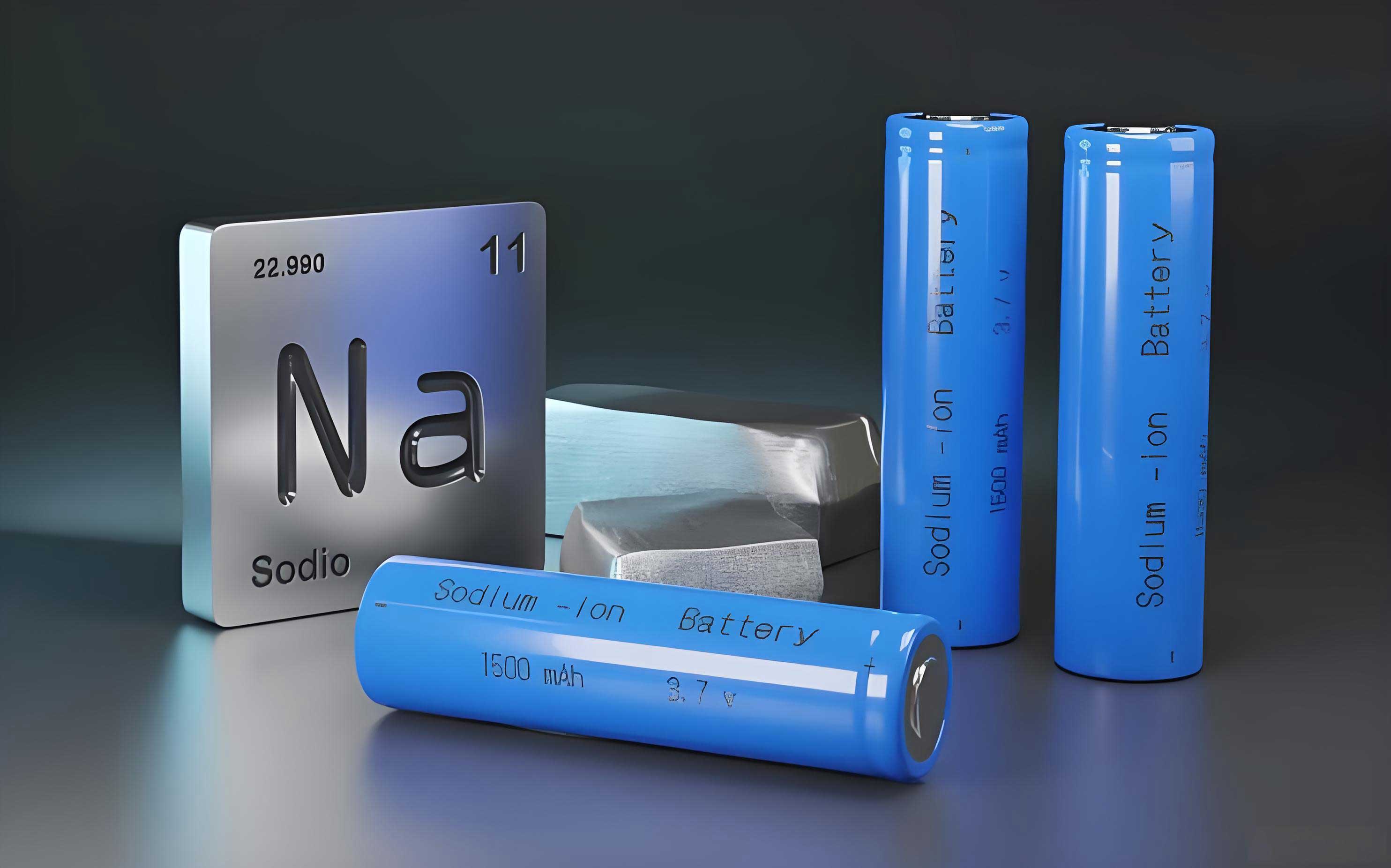
Within the realm of potential anode materials for sodium-ion batteries, transition metal selenides (TMSes) have garnered substantial attention. Their appeal lies in their high theoretical capacities, which arise from conversion-type reaction mechanisms. Cobalt diselenide (CoSe2), in particular, stands out with a high theoretical capacity of approximately 494 mAh g-1, making it a prime candidate for high-energy-density sodium-ion batteries. Despite this advantage, unmodified CoSe2 anodes suffer from severe intrinsic issues that hinder their practical application. These include substantial volume expansion during sodiation/desodiation, leading to mechanical pulverization and rapid capacity fade, as well as poor inherent electronic conductivity and sluggish Na+ diffusion kinetics, which result in unsatisfactory rate capability.
In this review, I aim to provide a comprehensive overview of the recent progress in designing and engineering CoSe2-based anodes for sodium-ion batteries. I will delve into the fundamental crystal structures and sodium storage mechanisms, systematically categorize and evaluate various synthesis techniques, and critically analyze the mainstream modification strategies—namely nanostructure engineering, carbon hybridization, and elemental doping. The discussion will be reinforced with comparative tables and relevant electrochemical formulas to offer a clear and quantitative perspective on the structure-property-performance relationships.
1. Fundamental Aspects: Crystal Structure and Sodium Storage Mechanism
Understanding the baseline properties of CoSe2 is crucial for rational material design. CoSe2 is a non-layered metal selenide that crystallizes in two primary polymorphs:
- Orthorhombic CoSe2 (o-CoSe2, marcasite-type): This phase belongs to the space group Pnnm. Its structure features Co2+ ions occupying the centers of Se22- dumbbell octahedra. The lattice parameters are typically a = 4.850 Å, b = 5.827 Å, c = 3.628 Å.
- Cubic CoSe2 (c-CoSe2, pyrite-type): This phase crystallizes in the space group Pa$\bar{3}$ with a lattice constant of a ≈ 5.859 Å. In this structure, Co2+ is also octahedrally coordinated by Se atoms, but the Se atoms form discrete pairs.
The electrochemical sodium storage in CoSe2 proceeds via a combined conversion and alloying mechanism, which is responsible for its high capacity. Based on ex-situ X-ray diffraction (XRD) and Raman spectroscopy studies, the reaction pathway during discharge (sodiation) can be summarized as follows:
Initially, sodium ions intercalate into the CoSe2 structure, forming an intermediate phase:
$$ \text{CoSe}_2 + x\text{Na}^+ + x\text{e}^- \rightarrow \text{Na}_x\text{CoSe}_2 $$
Upon further sodiation, the conversion reaction occurs, breaking down the selenide into metallic cobalt and sodium selenide:
$$ \text{Na}_x\text{CoSe}_2 + (4-x)\text{Na}^+ + (4-x)\text{e}^- \rightarrow \text{Co} + 2\text{Na}_2\text{Se} $$
This process is generally considered reversible upon charging (desodiation):
$$ \text{Co} + 2\text{Na}_2\text{Se} \rightleftharpoons \text{CoSe}_2 + 4\text{Na}^+ + 4\text{e}^- $$
The theoretical capacity can be calculated from this conversion reaction, where 1 mole of CoSe2 exchanges 4 moles of electrons. Using the formula weight of CoSe2 (≈137.9 + 2*79.0 = 295.9 g mol-1), the capacity is:
$$ C_{\text{theo}} = \frac{nF}{3.6 \times M} = \frac{4 \times 96485}{3.6 \times 295.9} \approx 494 \text{ mAh g}^{-1} $$
where n is the number of electrons transferred (4), F is Faraday’s constant (96485 C mol-1), and M is the molar mass of CoSe2 (g mol-1). The factor 3.6 converts Coulombs to mAh.
2. Synthesis Techniques for CoSe2 Anode Materials
The synthesis method plays a pivotal role in determining the final morphology, particle size, crystallinity, and, consequently, the electrochemical performance of CoSe2 in sodium-ion batteries. The following table summarizes the key preparation techniques, their principles, advantages, and typical outcomes.
| Synthesis Method | Principle & Process | Key Advantages | Typical Morphology & Remarks |
|---|---|---|---|
| Solvothermal/Hydrothermal | Precursors are dissolved in a solvent (water or organic) and reacted in a sealed autoclave at elevated temperature and autogenous pressure. | Simple, scalable, excellent control over morphology (nanospheres, rods, sheets), can produce hierarchical structures. | Hollow microflowers, porous microspheres. High crystallinity. Performance example: Hollow CoSe2 microflowers delivered 410 mAh g-1 after 1690 cycles at 1 A g-1. |
| Electrospinning | A polymer solution containing cobalt and selenium precursors is ejected through a needle under high voltage to form nanofibers, followed by calcination and selenization. | Direct fabrication of self-standing, binder-free electrodes; creates interconnected conductive networks; ideal for forming carbon/CoSe2 composites. | CoSe2 nanoparticles embedded in 1D carbon nanofibers (CNFs). Performance example: CoSe2/N-doped CNFs showed 371.8 mAh g-1 at 0.2 A g-1 after 500 cycles. |
| Template-Assisted | A sacrificial template (e.g., SiO2, ZIF-67 MOF) defines the morphology. CoSe2 is formed on/in the template, which is later removed. | Precise control over nanoarchitecture (yolk-shell, hollow, porous); inherits template’s geometry. | Hollow polyhedra, yolk-shell spheres, N-doped carbon-coated nanoparticles from MOFs. Performance example: CoSe2/NC@NCNTs delivered 386.3 mAh g-1 at 10 A g-1. |
| Spray Pyrolysis | A precursor mist is sprayed into a high-temperature furnace, where droplets undergo rapid solvent evaporation, precursor decomposition, and reaction. | Ultra-fast, continuous production; good for forming microspheres with composite structures. | Porous microspheres, CNT-supported nanorod microspheres. Performance example: CoSe2@NC microspheres showed 555 mAh g-1 at 0.2 A g-1 after 100 cycles. |
3. Modification Strategies to Enhance Electrochemical Performance
To overcome the intrinsic limitations of CoSe2 for use in sodium-ion batteries, researchers have developed sophisticated modification strategies. These approaches primarily aim to: (i) alleviate mechanical stress from volume changes, (ii) enhance electronic conductivity, and (iii) improve Na+ diffusion kinetics.
3.1 Nanostructure Engineering
Constructing CoSe2 with tailored nano- and micro-architectures is a foundational strategy. Reducing the diffusion path for both electrons and ions and providing ample space to accommodate volume expansion are the key goals.
| Nanostructure Type | Key Features & Benefits | Representative Performance in SIBs |
|---|---|---|
| Nanoparticles/Clusters | Ultra-small size shortens ion diffusion paths; high surface area offers numerous active sites. Often confined within a carbon matrix to prevent aggregation. | N-doped carbon-coated ultrasmall CoSe2 nanoparticles: ~438 mAh g-1 at 0.1 A g-1 after 100 cycles. |
| Nanowires/Nanorods | 1D structure facilitates directional electron transport; provides a robust framework. Often assembled into 3D hierarchical structures (e.g., urchin-like). | Urchin-like CoSe2 nanorods: 410 mAh g-1 at 1 A g-1 after 1800 cycles (98.6% retention). |
| Nanosheets/ Nanoflakes | 2D morphology exposes a large active surface; ultrathin nature reduces diffusion barriers. Ideal for interface engineering and hybridization. | CoSe2 nanosheets on carbon sheets: 352 mAh g-1 at an ultra-high rate of 10 A g-1. |
| 3D Hierarchical Structures (Hollow, Yolk-Shell, Porous) | Internal voids buffer volume expansion; porous channels facilitate electrolyte infiltration; interconnected networks ensure structural integrity. | Yolk-shell N-CoSe2 spheres: ~530 mAh g-1 at 1 A g-1 after 300 cycles; ~500 mAh g-1 at 10 A g-1 after 1000 cycles. |
3.2 Carbon Hybridization and Composite Design
Integrating CoSe2 with conductive carbon materials is arguably the most effective strategy to boost conductivity and structural stability simultaneously. The carbon matrix acts as both a conductive highway and a mechanical buffer.
| Carbon Matrix Type | Role and Synergy | Impact on SIB Performance |
|---|---|---|
| Graphene/Graphene Oxide | 2D conductive substrate prevents stacking of CoSe2; flexible sheets accommodate strain; enhances overall electrode conductivity. Forms 3D conductive networks. | CoSe2/Graphene nanoscrolls: 455 mAh g-1 at 1 A g-1 after 5000 cycles. V-CoSe2@GR: 327.7 mAh g-1 at 2 A g-1 after 1500 cycles. |
| Carbon Nanotubes (CNTs) | 1D conductive filaments create a percolating network; high mechanical strength; can act as a backbone for growing CoSe2. | CoSe2/CNT composites: ~606 mAh g-1 at 0.1 A g-1. CoSe2@BCN nanotubes: Near 98% capacity retention after 4000 cycles at 8 A g-1. |
| Carbon Nanofibers (CNFs) / N-doped Carbon | 3D interconnected web from electrospinning offers excellent structural integrity and direct electron pathways. N-doping introduces defects and active sites, enhancing wettability and pseudocapacitance. | CoSe2/N-CNFs: 413 mAh g-1 at 0.2 A g-1 after 150 cycles. CoSe2 nanocrystals in N-CNT/GF: 264 mAh g-1 at 10 A g-1 after 10,000 cycles. |
The enhanced kinetics in such composites can be quantitatively analyzed. The contribution of capacitive behavior (surface-controlled) versus diffusion-controlled processes can be determined by analyzing cyclic voltammetry (CV) data at different scan rates (v). The current (i) obeys the power-law relationship:
$$ i = a v^{b} $$
where a and b are adjustable parameters. A b-value of 0.5 indicates a diffusion-controlled process, while a b-value of 1.0 signifies a capacitive process. For well-designed CoSe2/carbon composites, the b-value for redox peaks often approaches 1, indicating a significant pseudocapacitive contribution that enables high-rate performance in sodium-ion batteries.
Furthermore, the apparent Na+ diffusion coefficient (DNa) can be estimated from galvanostatic intermittent titration technique (GITT) data using Fick’s second law:
$$ D_{\text{Na}} = \frac{4}{\pi \tau} \left( \frac{m_B V_M}{M_B S} \right)^2 \left( \frac{\Delta E_s}{\Delta E_\tau} \right)^2 $$
where τ is the constant current pulse time, mB, MB, and VM are the mass, molar mass, and molar volume of the active material, S is the electrode/electrolyte contact area, and ΔEs and ΔEτ are the steady-state voltage change and the voltage change during the pulse, respectively. Carbon hybridization typically leads to a higher calculated DNa value compared to bare CoSe2.
3.3 Elemental Doping
Introducing heteroatoms into the CoSe2 lattice or the surrounding carbon matrix is a powerful technique to modify electronic structure, create additional active sites, and improve intrinsic conductivity and structural stability.
| Dopant Element | Proposed Function and Effect | Electrochemical Outcome in SIB Anodes |
|---|---|---|
| Copper (Cu) | Partial substitution of Co. Modifies electronic structure, enhances overall conductivity, and may stabilize the lattice. | Cu-doped CoSe2 showed 450 mAh g-1 at 0.1 A g-1 and 185 mAh g-1 at a high rate of 3 A g-1. |
| Nickel (Ni) | Dual-metal synergy. Tunes the electronic environment, potentially improves reaction kinetics and structural stability of the selenide. | Ni-CoSe2/C nanospheres delivered 316.1 mAh g-1 at 10 A g-1 after 8000 cycles. |
| Phosphorus (P) | Anion doping. Introduces stronger P-Co and P-Se bonds, significantly enhancing the structural integrity of CoSe2 during cycling. | P-CoSe2 nanoparticles maintained 206.9 mAh g-1 at 2 A g-1 after 1000 cycles. |
| Nitrogen (N) in Carbon Matrix | Enhances electronic conductivity of carbon, creates defects for Na+ adsorption, and improves electrolyte wettability. | Almost all high-performance CoSe2/C composites utilize N-doping, contributing to superior rate and cycle life. |
4. Conclusions and Future Perspectives
In summary, CoSe2 holds considerable promise as a high-capacity anode material for next-generation sodium-ion batteries. Through concerted research efforts focused on sophisticated synthesis and strategic modifications, significant strides have been made in mitigating its drawbacks. The integration of nanostructural design (e.g., hollow, yolk-shell, 1D/2D morphologies) with conductive carbon matrices (graphene, CNTs, CNFs) and targeted elemental doping has proven highly effective in enhancing sodium storage performance. These strategies collectively improve electronic conduction, accelerate Na+ ion diffusion, provide robust mechanical support to withstand volume changes, and in some cases, introduce beneficial pseudocapacitive contributions.
However, despite the impressive progress documented in half-cell configurations, several critical challenges remain before CoSe2-based anodes can be considered for practical sodium-ion battery applications:
- Full-Cell Evaluation and Energy Density: The vast majority of studies report performance in half-cells versus Na metal. Rigorous evaluation in full-cell assemblies with realistic cathode materials (e.g., layered oxides, polyanionic compounds) and limited sodium inventory is essential to assess practical energy density, cycle life, and Coulombic efficiency.
- Electrolyte Optimization and Interphase Control: The solid electrolyte interphase (SEI) formed on conversion anodes in SIBs is complex and often unstable. Dedicated research on electrolyte formulations (e.g., concentrated electrolytes, novel solvents/salts, functional additives) is needed to form a stable, ionically conductive, and mechanically resilient SEI on CoSe2 surfaces.
- Advanced In-Operando Characterization: While ex-situ studies have outlined the general conversion mechanism, a precise, real-time understanding of the phase evolution, interfacial dynamics, and degradation pathways is lacking. Widespread application of in-situ or operando techniques such as XRD, transmission electron microscopy (TEM), and X-ray absorption spectroscopy (XAS) will be invaluable for guiding material design at the atomic level.
- Scalability and Cost: Many of the reported synthesis methods involve multiple steps, templates, or expensive carbon sources. Developing simpler, scalable, and cost-effective production routes without compromising performance is crucial for commercialization.
- Understanding the Role of Polymorphs: A systematic comparative study on the intrinsic sodium storage behavior and stability of the orthorhombic versus cubic phases of CoSe2 is still somewhat limited. Understanding which phase, or a mixture thereof, is more beneficial under different conditions could provide new design insights.
Future research should pivot towards these practical and fundamental questions. The ultimate goal is to translate the promising laboratory-scale performance of engineered CoSe2 anodes into reliable, high-energy-density sodium-ion batteries that can contribute meaningfully to large-scale energy storage systems. The journey involves a deeper marriage of materials synthesis, advanced characterization, and electrochemical engineering, pushing the boundaries of what is possible for sodium-based energy storage.