
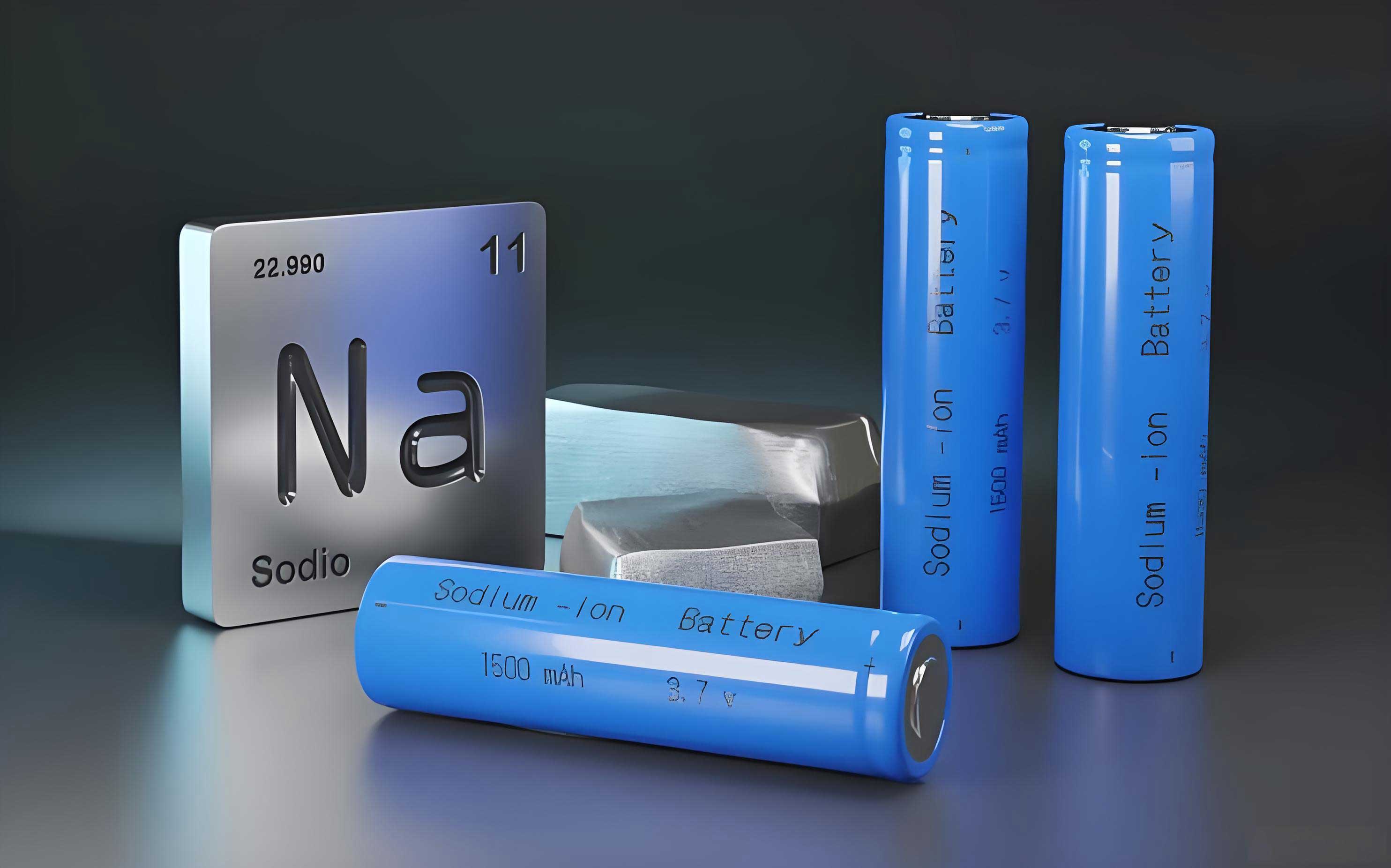
The pursuit of sustainable and high-performance energy storage systems has never been more critical. While lithium-ion batteries (LIBs) have dominated the market for portable electronics and electric vehicles, concerns regarding the limited geographical distribution, rising cost, and long-term supply of lithium resources have spurred intense research into viable alternatives. In this context, the sodium-ion battery (SIB) emerges as a compelling candidate due to the natural abundance, low cost, and similar electrochemistry of sodium compared to lithium. However, conventional SIBs employing liquid organic electrolytes inherit significant safety risks, including flammability, leakage, and the uncontrollable growth of sodium dendrites which can lead to internal short circuits and capacity fade.
The concept of the all-solid-state sodium-ion battery (ASS-SIB) presents a paradigm shift, promising to overcome these fundamental limitations. By replacing the liquid electrolyte with a solid-state electrolyte (SSE), ASS-SIBs inherently eliminate leakage and combustion hazards. Furthermore, SSEs often possess superior mechanical strength and wider electrochemical stability windows, which can suppress dendrite penetration and enable the use of high-capacity electrodes like metallic sodium, thereby unlocking significantly higher energy densities. The simplified cell architecture, devoid of separators and liquid containment, further contributes to enhanced volumetric energy density and design flexibility. The development of ASS-SIBs, therefore, represents a strategic pathway towards safer, more energy-dense, and cost-effective large-scale energy storage solutions.
The core of this technology lies in the solid-state electrolyte. An ideal SSE for a high-performance sodium-ion battery must satisfy a stringent set of requirements: high ionic conductivity (preferably > 10-3 S cm-1 at room temperature), negligible electronic conductivity, excellent electrochemical stability against both the anode and cathode materials, superior mechanical properties to block dendrites, good interfacial contact and compatibility with electrodes, and environmental/thermal stability. The journey of ASS-SIB development is fundamentally a quest for materials and interfaces that can meet these demanding criteria.
Landscape of Solid-State Electrolytes for Sodium-Ion Batteries
SSEs can be broadly classified into inorganic ceramic/glass electrolytes, solid polymer electrolytes (SPEs), and hybrid/composite electrolytes. Each class possesses distinct advantages and faces unique challenges in the context of the sodium-ion battery.
Inorganic Solid Electrolytes
Inorganic SSEs are renowned for their high ionic conductivity, excellent mechanical modulus, and good thermal stability. The search for fast sodium-ion conductors has led to the discovery of several prominent structural families.
1. β/β″-Alumina Electrolytes: These are classical fast ionic conductors with a layered structure consisting of close-packed spinel blocks (Al11O16)+ separated by loosely packed conduction planes containing mobile Na+ ions and stabilizing ions (e.g., Mg2+, Li+). The conduction pathway is two-dimensional within these planes. β″-Alumina typically exhibits higher ionic conductivity than β-alumina due to a higher concentration of mobile sodium ions and a more favorable crystal structure. While high conductivities (~0.2 S cm-1) can be achieved at elevated temperatures (~300°C), their application at room temperature is hampered by high grain boundary resistance, brittleness, and sensitivity to moisture. Their high-temperature operation also imposes significant system complexity.
2. NASICON-type Electrolytes: Sodium (Na) Super Ionic CONductor (NASICON) materials with the general formula Na1+xZr2SixP3-xO12 (0 ≤ x ≤ 3) represent one of the most promising oxide-based SSEs. Their structure is based on a three-dimensional framework of ZrO6 octahedra and (Si/P)O4 tetrahedra, creating interconnected channels for Na+ migration. The composition Na3Zr2Si2PO12 (x=2) is particularly notable, offering a balance between high ionic conductivity (10-4 to 10-3 S cm-1 at room temperature) and good stability in air. The ionic conductivity is governed by the bottleneck size in the migration pathway, which can be tuned by elemental substitution (e.g., doping Zr4+ sites with larger cations like Sc3+ or Y3+). However, high sintering temperatures and significant grain boundary resistance remain challenges for practical application in sodium-ion battery cells.
3. Sulfide-based Electrolytes: Sulfide SSEs have garnered tremendous attention due to their exceptionally high ionic conductivity, which often surpasses that of oxide counterparts. The larger size and higher polarizability of the S2- anion compared to O2- lead to a softer lattice and lower activation energy for Na+ hopping. Materials like Na3PS4 (crystalline or glass-ceramic), Na3SbS4, and complex phases like Na11Sn2PS12 can achieve room-temperature conductivities exceeding 10-3 S cm-1. Their mechanical softness also allows for better cold-pressing into dense pellets and improved interfacial contact with electrodes. The primary Achilles’ heel of sulfide electrolytes is their poor (electro)chemical stability. They readily react with moisture to release toxic H2S gas and often have narrow electrochemical stability windows, leading to decomposition at low potentials against metallic Na anodes. Strategies like anion (Se2-, Cl–) or cation (Sn4+, Ge4+) doping are actively pursued to enhance their stability for use in sodium-ion battery systems.
4. Other Inorganic Families: Emerging families include borohydrides (e.g., Na2B12H12, Na2B10H10 and their solid solutions) which offer high ionic conductivity and excellent stability against Na metal, and anti-perovskites (e.g., Na3OCl) which exhibit intriguing ionic transport properties. These materials are at an earlier stage of exploration for sodium-ion battery applications.
The temperature-dependent ionic conductivity of various inorganic SSEs can often be described by the Arrhenius equation:
$$ \sigma T = A \exp\left(-\frac{E_a}{k_B T}\right) $$
where \(\sigma\) is the ionic conductivity, \(T\) is the absolute temperature, \(A\) is the pre-exponential factor, \(E_a\) is the activation energy for ion migration, and \(k_B\) is the Boltzmann constant. A lower \(E_a\) and higher \(\sigma\) at room temperature are desired.
| Electrolyte Type | Example Materials | RT Ionic Conductivity (S cm-1) | Key Advantages | Major Challenges for Na-ion Battery |
|---|---|---|---|---|
| Oxide (NASICON) | Na3Zr2Si2PO12 | ~10-4 – 10-3 | Air stable, good thermal/chemical stability | High grain boundary resistance, brittle, poor interfacial contact |
| Sulfide | Na3PS4, Na3SbS4 | ~10-4 – 10-2 | Very high ionic conductivity, good sinterability | Air/moisture sensitive, narrow stability window vs. Na |
| Hydride (Borohydride) | Na2B12H12 | ~10-3 (upon heating) | Stable vs. Na metal, soft | Stability issues, synthesis complexity |
| β/β″-Alumina | Na-β″-Al2O3 | ~10-3 (at ~300°C) | Very high conductivity at high T, mature technology | High-temp operation, brittle, sensitive to moisture |
Solid Polymer Electrolytes (SPEs)
SPEs consist of a sodium salt (e.g., NaClO4, NaTFSI) dissolved in a polymer matrix such as poly(ethylene oxide) (PEO), poly(vinylidene fluoride) (PVDF), or poly(acrylonitrile) (PAN). Ion transport occurs primarily in the amorphous regions of the polymer via segmental motion of the polymer chains, following a mechanism described by the Vogel-Tammann-Fulcher (VTF) equation:
$$ \sigma = \frac{A}{\sqrt{T}} \exp\left(-\frac{B}{T – T_0}\right) $$
where \(A\) and \(B\) are constants, and \(T_0\) is the ideal glass transition temperature. The key advantages of SPEs are their excellent flexibility, good adhesion to electrode surfaces (forming “soft” contacts), and ease of processing into thin films. These properties are highly beneficial for accommodating volume changes in the sodium-ion battery during cycling. However, the most significant drawback is their relatively low room-temperature ionic conductivity (typically 10-7 to 10-5 S cm-1), which is intrinsically linked to the slow polymer chain dynamics at lower temperatures. They also suffer from limited mechanical strength and poor oxidative stability at high voltages.
Composite and Hybrid Electrolytes
To bridge the gap between the high conductivity of inorganic SSEs and the good processability/interfacial properties of SPEs, composite/hybrid electrolytes have been developed. These typically involve dispersing inorganic fillers (e.g., NASICON, sulfide, or inert oxide particles like Al2O3, SiO2) into a polymer matrix. The fillers can serve multiple roles: (i) they can act as plasticizers to reduce the crystallinity of the polymer, thereby enhancing ionic mobility; (ii) they can provide additional percolating pathways for Na+ transport if they are active ionic conductors; (iii) they can improve the mechanical modulus of the composite, aiding in dendrite suppression; and (iv) they can improve thermal stability. The ionic conductivity of such composites often follows a percolation theory model near the critical filler volume fraction \(\phi_c\):
$$ \sigma_{composite} \propto (\phi – \phi_c)^t \quad \text{for } \phi > \phi_c $$
where \(\phi\) is the filler volume fraction and \(t\) is a critical exponent. Another advanced concept is the “polymer-in-ceramic” or “ceramic-in-polymer” asymmetric bilayer electrolyte, where one layer is optimized for stability against the Na anode (e.g., a polymer or stable ceramic), and another layer is optimized for stability with the high-voltage cathode (e.g., a NASICON ceramic). This design elegantly addresses the mismatch in electrochemical stability windows of single-component electrolytes within the sodium-ion battery.
Fundamental Challenges at Interfaces in All-Solid-State Sodium-Ion Batteries
While the bulk properties of SSEs are crucial, the interfaces between the SSE and the electrodes (both anode and cathode) are often the determining factor for the overall performance, cycle life, and safety of an ASS-SIB. These solid-solid interfaces present a set of complex, intertwined challenges that do not exist in liquid-electrolyte batteries.
1. Interfacial Contact and Stability: Unlike liquids, solids cannot perfectly wet rough electrode surfaces. This results in poor physical contact, significantly increasing the interfacial resistance. Furthermore, many SSEs are thermodynamically unstable when in direct contact with electrode materials. For instance, most sulfide electrolytes reduce when in contact with metallic sodium, forming a resistive interphase. Similarly, many oxide SSEs may oxidize at high-voltage cathodes. These (electro)chemical reactions create unstable, high-resistance interphases (like a solid electrolyte interphase, SEI, or cathode electrolyte interphase, CEI) that grow during cycling, continuously increasing impedance and consuming active sodium.
2. Space-Charge Layer Effects: When two different ionic conductors (e.g., an electrode material and an SSE) are brought into contact, a difference in chemical potential for mobile ions (Na+) leads to ion redistribution near the interface to equilibrate the electrochemical potential. This creates a space-charge layer—a region with a net charge and an associated internal electric field. This field can either deplete or accumulate charge carriers (Na+ vacancies or interstitials) at the interface, creating an additional energy barrier for ion transport across the junction. The width of the space-charge layer \( \lambda \) is given by:
$$ \lambda = \sqrt{\frac{\epsilon \epsilon_0 k_B T}{2e^2 C_0}} $$
where \(\epsilon\) is the dielectric constant, \(\epsilon_0\) is the vacuum permittivity, \(e\) is the elementary charge, and \(C_0\) is the bulk defect concentration. This effect can dominate the interfacial kinetics in ceramic-based sodium-ion battery cells.
3. Mechanical Stress and Volume Changes: Electrode materials in a sodium-ion battery undergo substantial volume expansion and contraction during sodium insertion/extraction (e.g., ~400% for phosphorus anodes). In a rigid all-solid-state cell, this generates immense mechanical stress at the interfaces. This stress can lead to crack formation in brittle ceramic electrolytes, loss of contact between electrode particles and the electrolyte, and delamination of interfacial layers. Each new crack or void creates a fresh, unstable interface, accelerating degradation. The stress \(\sigma_s\) generated can be related to the volume change \(\Delta V/V\) and the elastic moduli of the materials.
4. Dendrite Formation and Growth: The initiation and propagation of sodium dendrites through the SSE is a major failure mode that leads to short circuits. Dendrites can nucleate at interfacial defects, grain boundaries, or regions of locally high current density. Their growth is influenced by factors including the SSE’s mechanical properties (shear modulus), electronic conductivity (which promotes Na plating inside the electrolyte), and the presence of flaws. A classical criterion for dendrite suppression is that the shear modulus \(G\) of the SSE should be at least twice that of sodium metal (~2 GPa), i.e., \(G_{SSE} > 2G_{Na}\). However, this is a simplified view, and factors like interfacial morphology and kinetics play critical roles. Preventing dendrite penetration is paramount for enabling safe, long-cycling sodium-metal based all-solid-state sodium-ion batteries.
Interface Engineering Strategies for High-Performance ASS-SIBs
Overcoming the aforementioned interface challenges requires deliberate “interface engineering.” The goal is to construct interfaces that are: (i) physically intimate and conformal, (ii) chemically and electrochemically stable, (iii) highly conductive for Na+ but blocking for electrons, and (iv) mechanically robust to accommodate stress. Numerous strategies have been developed for both the cathode and anode sides of the sodium-ion battery.
Cathode/SSE Interface Engineering
The cathode composite typically contains active material particles, conductive carbon, and the SSE itself, all bound together. The interfaces here are multifaceted.
• Surface Coating/Modification of Cathode Particles: Applying a thin, ion-conducting, and electrochemically stable coating on cathode particles (e.g., Na3V2(PO4)3, NaNi1/3Mn1/3Co1/3O2) can prevent direct contact with the bulk SSE, thereby inhibiting detrimental side reactions. Common coatings include inert oxides (Al2O3, ZrO2) applied via atomic layer deposition (ALD) or sol-gel methods, or ion-conducting layers like Na3PO4 or even a thin polymer layer.
• Use of Interfacial Wetting Agents: Introducing a small amount of a secondary phase that is fluidic or soft at operating temperature can drastically improve contact. Examples include adding ionic liquids, plastic crystals (e.g., succinonitrile), or low-melting-point sodium salts into the cathode composite. These materials fill the voids between solid particles, creating a percolating network for Na+ transport and reducing interfacial impedance.
• Composite Cathode Design: Designing the cathode as a homogenous mixture of nanosized active material, nanosized SSE particles, and conductive carbon creates a large number of grain boundaries and a continuous ion/electron transport network. This “3D interpenetrating network” approach maximizes the contact area and reduces the diffusion distance for Na+, which is crucial for high-rate performance in a sodium-ion battery.
Anode/SSE Interface Engineering
The anode interface, especially with metallic sodium, is particularly challenging due to reactivity and dendrite growth.
• Artificial SEI Layers on Na Anode: Pre-treating the sodium metal surface to form a protective layer before cell assembly can enhance stability. This can be done chemically (e.g., reacting Na with FEC vapor to form a NaF-rich layer) or by physical deposition of stable materials (e.g., Al2O3 via ALD, SnS2 that reacts to form a Na-Sn alloy/Na2S layer). The ideal artificial SEI should be ionically conductive, electronically insulating, and mechanically tough.
• Buffer/Interlayer at the Interface: Placing a ductile and stable interlayer between the Na metal and a rigid ceramic SSE (like NASICON) is highly effective. This interlayer, often a polymer or composite electrolyte (e.g., PEO-NaTFSI), accommodates the volume change of Na plating/stripping, ensures continuous contact, and can act as a physical barrier to dendrite propagation. The symmetric cell resistance, \(R_{interface}\), often shows a dramatic drop after introducing such an interlayer.
• Alternative Anodes and Composite Anodes: Avoiding pure Na metal altogether is a viable route. Using alloy anodes (e.g., Sn, Sb, P), carbonaceous materials, or TiO2-based anodes reduces reactivity and volume change stress. Composite anodes, where active material is embedded in a matrix (e.g., carbon or polymer), can further improve interfacial stability and cycle life in the sodium-ion battery.
• Asymmetric/Janus Electrolyte Design: As mentioned earlier, using a bilayer or gradient electrolyte structure is a sophisticated solution. The anode-facing layer is designed to be stable against Na reduction (e.g., a polymer or a specific stable ceramic), while the cathode-facing layer is stable against oxidation (e.g., a NASICON ceramic). This decouples the stability requirements and optimizes each interface independently.
Advanced Structural Design
Moving beyond material-level modifications, novel cell architectures can fundamentally improve interfacial properties.
• Integrated Electrode-Electrolyte Structures: Fabricating the electrolyte and electrode as a monolithic, integrated structure (e.g., via co-sintering or in-situ polymerization) can achieve atomic-level intimacy and eliminate many grain boundary issues. For example, a porous ceramic SSE scaffold can be infiltrated with cathode precursor materials and then consolidated.
• 3D Architectures: Designing the current collector or electrolyte with 3D microstructures (e.g., pillars, channels) increases the surface area for Na deposition, effectively lowering the local current density. This promotes uniform Na plating and significantly delays dendrite initiation, a critical advancement for the sodium-metal based sodium-ion battery.
Conclusion and Future Perspectives
The development of all-solid-state sodium-ion batteries represents a formidable but highly rewarding scientific and engineering endeavor. Significant progress has been made in discovering new solid electrolytes with high ionic conductivity, particularly among sulfides and tailored NASICON-type oxides. The understanding of the complex interfacial phenomena—chemical instability, space-charge effects, mechanical degradation, and dendrite growth—has deepened considerably. In response, a rich toolbox of interface engineering strategies, from atomic-scale coatings and interlayers to macroscopic cell design, has been developed and has yielded promising laboratory-scale devices with improved cycling stability and safety.
However, for ASS-SIBs to transition from the laboratory to large-scale applications such as grid storage or electric vehicles, several key directions must be pursued. First, the search for an “ideal” SSE that combines ultra-high ionic conductivity (>10-2 S cm-1 at 25°C), excellent oxidative/reductive stability, and mechanical resilience must continue, guided by advanced computational screening and fundamental understanding of ion transport mechanisms. Second, interface engineering must evolve from trial-and-error approaches to precise, scalable, and cost-effective manufacturing processes. Techniques like roll-to-roll deposition of uniform interfacial layers or the fabrication of robust 3D composite electrodes are crucial. Third, in-situ and operando characterization techniques (e.g., spectroscopy, microscopy, diffraction) are needed to dynamically probe the evolution of interfaces during cycling, providing direct feedback for rational design. Finally
In conclusion, while challenges remain substantial, the path forward for the all-solid-state sodium-ion battery is clear. It lies in the synergistic optimization of bulk solid electrolyte properties and the meticulous engineering of stable, low-resistance interfaces. Through continued interdisciplinary efforts spanning materials science, electrochemistry, and mechanical engineering, ASS-SIBs hold the genuine potential to become a cornerstone technology for a safer and more sustainable energy future, fully leveraging the economic and geographic advantages of sodium.