
The global transition towards sustainable energy solutions has fundamentally shifted the paradigm of energy storage technology. As we confront the challenges of climate change and strive to move away from fossil fuels, the importance of integrating renewable energy sources like solar and wind power into the grid has become paramount. However, the intermittent nature of these sources necessitates the development of highly efficient and reliable energy storage systems (ESS) to ensure a stable and continuous power supply. For decades, lithium-ion batteries (LIBs) have dominated the landscape of electrochemical energy storage, powering everything from portable electronics to electric vehicles (EVs) due to their superior energy density and long cycle life. Yet, the rapid expansion of the LIB market has exposed critical vulnerabilities, primarily concerning the geopolitical and economic risks associated with lithium resources. With a significant portion of lithium reserves concentrated in specific regions and a supply chain susceptible to fluctuations, the search for complementary or alternative battery chemistries has intensified. In this context, the sodium-ion battery (SIB) has emerged as a highly compelling candidate.
The fundamental appeal of the sodium-ion battery lies in its striking similarities to the LIB in terms of working principle and cell construction, which allows for leveraging existing manufacturing infrastructure. More importantly, sodium is one of the most abundant elements on Earth, with a nearly unlimited and geographically widespread supply in the form of seawater and salt deposits, leading to significantly lower raw material costs. Consequently, SIBs are widely regarded as one of the most promising alternatives to LIBs for large-scale stationary energy storage, low-speed electric vehicles, and other cost-sensitive applications. The performance of any battery is critically determined by its electrode materials. Among the key components, the cathode material is particularly crucial as it governs the cell’s operating voltage, specific capacity, cycle life, and safety. Therefore, the quest for high-performance, low-cost, and safe cathode materials has become the central theme in SIB research and development.
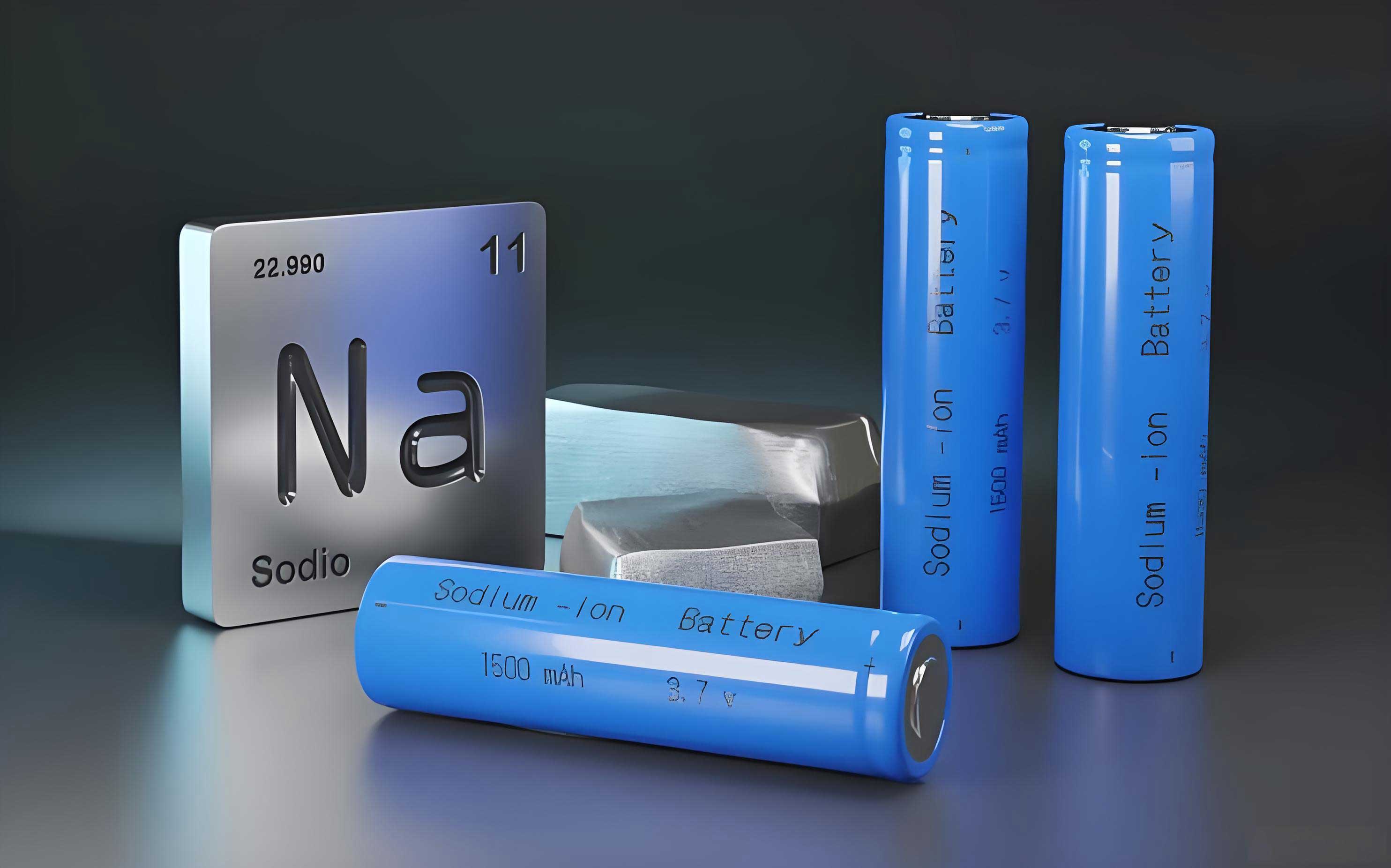
Cathode materials for sodium-ion battery systems are broadly categorized into layered transition metal oxides, polyanionic compounds, Prussian blue analogues, and organic compounds. Among these, polyanionic compounds, characterized by their three-dimensional frameworks built from corner- and edge-sharing MO6 octahedra (M = transition metal) and XO4 tetrahedra (X = P, S, Si, etc.), offer distinct advantages. Their robust covalent bonding provides exceptional structural and thermal stability, leading to superior safety and long cycle life. The inductive effect of the polyanion groups allows for tunable operating voltages. Within this family, iron-based polyanionic materials are especially attractive due to the low cost, natural abundance, and environmental benignity of iron. Inspired by the tremendous commercial success of olivine LiFePO₄ in LIBs, its sodium analogue, olivine-type NaFePO₄, has garnered significant research interest for use in sodium-ion battery technology.
This article provides a comprehensive, first-person perspective review of olivine-type NaFePO₄ as a cathode material for sodium-ion battery applications. We will delve into its intrinsic material properties, critically evaluate the various synthesis strategies developed to overcome its challenging preparation, and discuss the ongoing debates surrounding its electrochemical reaction mechanisms. Finally, we will offer perspectives on future research directions to unlock the full potential of this promising material. To facilitate clear understanding, key information is summarized in tables, and relevant theoretical principles are expressed through formulas.
1. Material Characteristics: Structure, Stability, and Electrochemistry
1.1 Crystallography and Phase Stability
NaFePO₄ exists in two primary polymorphs: the maricite phase and the olivine phase. The maricite structure (space group Pnma) is thermodynamically stable and can be directly synthesized via conventional high-temperature solid-state reactions. However, in the maricite structure, the NaO6 and FeO6 octahedra share edges, creating a dense packing with no interconnected channels for facile Na⁺ diffusion. This renders the maricite phase electrochemically inactive or poorly active. In stark contrast, the olivine structure (isostructural to LiFePO₄, space group Pnma) features a more open framework. In this structure, one-dimensional tunnels run along the b-axis, formed by FeO6 octahedra sharing corners with PO4 tetrahedra. Na⁺ ions reside within these tunnels, enabling their reversible extraction and insertion. This structural feature is the cornerstone of its electrochemical activity. The crystal structure comparison is conceptually summarized below.
| Polymorph | Space Group | Synthetic Accessibility | Na⁺ Diffusion Pathways | Electrochemical Activity |
|---|---|---|---|---|
| Maricite NaFePO₄ | Pnma | Easily synthesized by direct high-temperature (>480°C) solid-state reaction. | None; isolated Na sites. | Very low or inactive. |
| Olivine NaFePO₄ | Pnma | Cannot be synthesized directly; requires ion-exchange from olivine FePO₄ or LiFePO₄. | One-dimensional open channels along the b-axis. | Highly active, reversible Na⁺ (de)insertion. |
A critical challenge is that the olivine polymorph of NaFePO₄ is not thermodynamically stable at temperatures required for conventional ceramic synthesis. It undergoes an irreversible phase transition to the maricite structure above approximately 480°C. This fundamental limitation is the root cause of the unique and often complex synthesis routes developed for olivine NaFePO₄, which will be discussed in detail in Section 2.
1.2 Intrinsic Electrochemical Properties
The electrochemical activity of olivine NaFePO₄ stems from the Fe²⁺/Fe³⁺ redox couple. During charging, Na⁺ ions are extracted from the structure, oxidizing Fe²⁺ to Fe³⁺ and generating an electron that travels through the external circuit. The process is reversed during discharge. The theoretical specific capacity (Ctheo) is calculated based on the one-electron transfer per formula unit:
$$
C_{\text{theo}} = \frac{nF}{3.6 \times M_{\text{NaFePO}_4}} \quad \text{(mAh g}^{-1}\text{)}
$$
where \( n = 1 \) (number of electrons transferred), \( F \) is the Faraday constant (96485 C mol⁻¹), and \( M_{\text{NaFePO₄}} \) is the molar mass (≈ 156.8 g mol⁻¹). This yields a theoretical capacity of approximately 154 mAh g⁻¹. The average operating voltage vs. Na⁺/Na is around 2.7-3.0 V, leading to a theoretical energy density competitive with other iron-based polyanion cathodes.
Beyond capacity and voltage, the material exhibits excellent thermal stability inherent to the strong Fe-O-P covalent bonds, a crucial factor for battery safety. Furthermore, the olivine framework demonstrates remarkable structural resilience during cycling, contributing to a potentially long cycle life—a vital parameter for practical sodium-ion battery applications.
2. Synthesis Strategies: Navigating the Thermodynamic Constraint
The inability to synthesize olivine NaFePO₄ via direct high-temperature methods has driven researchers to develop innovative, often indirect, synthesis routes. These strategies universally start from a precursor with the olivine structure, typically olivine FePO₄ or LiFePO₄, and involve a subsequent ion-exchange step to introduce Na⁺ into the framework while preserving the olivine topology.
2.1 Electrochemical Synthesis Methods
Electrochemical methods involve constructing an electrochemical cell where Na⁺ is driven into an olivine FePO₄ host under an applied potential or current.
2.1.1 Galvanostatic Discharge in Coin Cells: This is the most straightforward electrochemical approach. A cathode is fabricated using pre-synthesized olivine FePO₄ (often obtained by chemically or electrochemically delithiating commercial LiFePO₄), an electrolyte containing Na⁺ ions, and a sodium metal anode. When the cell is discharged, Na⁺ ions from the electrolyte and electrons from the external circuit insert into the FePO₄ framework, reducing Fe³⁺ to Fe²⁺ and forming NaFePO₄ in situ within the electrode composite. While conceptually simple, this method has significant drawbacks for material synthesis: the product is intimately mixed with conductive additives and polymer binders, making its isolation in pure form difficult; the scale is limited to the electrode level; and the process is inherently batch-based and energy-intensive.
2.1.2 Aqueous Electrochemical Ion-Exchange: This method employs a three-electrode setup (working, counter, reference) in an aqueous Na⁺-containing electrolyte (e.g., Na₂SO₄ solution). An electrode made of olivine LiFePO₄ or FePO₄ is used as the working electrode. By applying a cathodic (reductive) potential, Na⁺ from the aqueous electrolyte inserts into the host structure. This approach offers advantages over non-aqueous coin cells: it is a binder-free process for the active material, the aqueous electrolyte is safer and cheaper, and studies have suggested faster Na⁺ diffusion kinetics in aqueous media compared to organic electrolytes for this system. The overall transformation from LiFePO₄ can be viewed as a two-step process:
1. Delithiation (in Li⁺ electrolyte): LiFePO₄ → FePO₄ + Li⁺ + e⁻
2. Sodiation (in Na⁺ electrolyte): FePO₄ + Na⁺ + e⁻ → NaFePO₄
While more elegant, this method still faces challenges in scaling up for the dedicated synthesis of powder materials, as it remains an electrode-bound process.
2.2 Chemical Synthesis Methods
Chemical methods aim to perform the ion-exchange reaction in a beaker, offering better potential for scalable powder synthesis. These methods use chemical reducing agents to donate electrons for the Fe³⁺ to Fe²⁺ reduction, while Na⁺ is supplied from a sodium salt.
2.2.1 Reduction by Sodium Iodide (NaI): This is a prevalent chemical route. Olivine FePO₄ is dispersed in an anhydrous organic solvent like acetonitrile, and an excess of NaI is added. The iodide ion (I⁻) acts as a reducing agent, oxidizing to I₂ (or I₃⁻) while reducing Fe³⁺ and allowing Na⁺ insertion. The general reaction can be simplified as:
$$
2\text{FePO}_4 + 2\text{NaI} \rightarrow 2\text{NaFePO}_4 + \text{I}_2
$$
To drive the reaction closer to completion, heating (e.g., 80°C) is often required. A major drawback is the need for a large excess of NaI and the generation of iodine as a by-product, which complicates purification and raises environmental concerns.
2.2.2 Reduction by Sodium Thiosulfate (Na₂S₂O₃): An alternative aqueous chemical route uses Na₂S₂O₃ as the reducing agent in water. The thiosulfate ion (S₂O₃²⁻) oxidizes to tetrathionate (S₄O₆²⁻). This method is more environmentally friendly than the NaI route as it operates in water and avoids halogen byproducts. However, it also typically requires an excess of reagents and elevated temperatures to achieve high sodiation degrees.
The table below summarizes the key synthesis methods, their principles, and associated challenges.
| Method Category | Specific Method | Principle | Key Advantages | Key Limitations / Challenges |
|---|---|---|---|---|
| Electrochemical | Coin Cell Discharge | Galvanostatic Na⁺ insertion into FePO₄ electrode. | Simple setup, directly proves electroactivity. | Product not isolated; contains binders/carbon; not scalable for material synthesis. |
| Aqueous Ion-Exchange | Potentiostatic/galvanostatic Na⁺ insertion in aqueous electrolyte. | Binder-free material processing; faster kinetics; safer electrolyte. | Scale-up difficulty; process optimized for electrodes, not bulk powder. | |
| Chemical | NaI Reduction (organic) | Chemical reduction of Fe³⁺ by I⁻, coupled with Na⁺ insertion. | Can produce isolated powder; scalable in principle. | Requires excess reagent; generates I₂ byproduct; needs organic solvent and heating. |
| Na₂S₂O₃ Reduction (aqueous) | Chemical reduction of Fe³⁺ by S₂O₃²⁻ in water. | Greener (aqueous); avoids halogen byproducts. | Requires excess reagent and heating; sodiation efficiency can be limited. |
A critical analysis reveals a common theme: while chemical methods move towards scalable powder production, they suffer from inefficient use of reagents (large excess needed) and often require energy input (heating). There is a clear need for a more efficient, atom-economic, and continuous synthesis strategy.
3. Electrochemical Mechanism: A Landscape of Phase Transitions
The mechanism of Na⁺ (de)insertion in olivine NaFePO₄ is more complex than the classic two-phase reaction observed in its lithium counterpart, LiFePO₄. Extensive research using in situ X-ray diffraction (XRD), density functional theory (DFT) calculations, and electrochemical analysis has revealed a rich phase evolution landscape.
During the initial charge (Na⁺ extraction from NaFePO₄), the consensus points to a solid-solution reaction at the beginning, where Na⁺ is removed without a drastic change in the crystal lattice, leading to a Na1-xFePO₄ phase. This is followed by a two-phase reaction between an intermediate phase, often identified as Na2/3FePO₄ or Na5/6FePO₄, and the fully desodiated FePO₄ endpoint. The discharge (Na⁺ insertion into FePO₄) process is not perfectly symmetric. It often proceeds through the formation of multiple intermediate phases. A proposed sequence involves:
$$
\text{FePO}_4 \xrightarrow{\text{Na}^+ + e^-} \text{Na}_{2/3}\text{FePO}_4 \xrightarrow{\text{Na}^+ + e^-} \text{Na}_{5/6}\text{FePO}_4 \xrightarrow{\text{Na}^+ + e^-} \text{NaFePO}_4
$$
At certain states of charge, three phases (e.g., FePO₄, Na2/3FePO₄, and NaFePO₄) may coexist. The existence and stability of these intermediate phases are influenced by factors such as particle size, carbon coating, and cycling rate. This complex mechanism, involving metastable intermediates, impacts the voltage profile (which may show slope regions instead of flat plateaus) and the kinetics of the system. The sodium ion diffusion coefficient (\( D_{\text{Na}^+} \)) within the olivine framework, a key kinetic parameter, is generally found to be lower than the lithium ion diffusion coefficient (\( D_{\text{Li}^+} \)) in LiFePO₄, partly explaining the relatively poorer rate capability of NaFePO₄-based electrodes. This coefficient can be estimated from electrochemical impedance spectroscopy (EIS) or potentiostatic intermittent titration technique (PITT) using equations like the Warburg impedance relation:
$$
Z’ = R_\text{s} + R_\text{ct} + \sigma_\text{w} \omega^{-1/2}
$$
where \( \sigma_\text{w} \) is the Warburg coefficient related to \( D_{\text{Na}^+} \).
4. Performance Optimization and Composite Engineering
To overcome the intrinsic low electronic conductivity of NaFePO₄, similar strategies to those used for LiFePO₄ are employed. The most critical and universal approach is carbon coating. Incorporating a conductive carbon layer (e.g., from sucrose, citric acid, or graphene) on the particle surface drastically improves electron transfer, enhancing rate capability and cycling stability. Another effective strategy is particle size minimization. Reducing the particle size to the nanoscale shortens the diffusion path length for both Na⁺ and electrons, improving kinetics and enabling better tolerance to strain from phase transitions. Doping with alien cations (e.g., Mg²⁺, Mn²⁺, Ti⁴⁺) at the Fe site has also been explored to potentially improve electronic conductivity and stabilize the crystal structure. The performance of optimized NaFePO₄/C composites can be summarized as follows:
| Optimization Strategy | Reversible Capacity (mAh g⁻¹) | Rate Capability | Cycle Life (Capacity Retention) | Key Notes |
|---|---|---|---|---|
| Carbon Coating (from various precursors) | 120 – 142 | Moderate (~50% capacity at 1C vs. 0.1C) | Good (>80% after 200 cycles at low rate) | Fundamental requirement for functionality. |
| Nanosizing + Carbon Coating | ~130 – 140 | Improved | Enhanced due to better strain accommodation. | Synthesis must prevent particle agglomeration. |
| Conductive Polymer Wrapping (e.g., Polythiophene) | Up to ~141 | Significantly improved | Excellent | Provides a highly conductive and flexible network. |
5. Perspectives and Future Directions
The development of olivine NaFePO₄ as a viable cathode for sodium-ion battery technology has come a long way, yet significant challenges and opportunities remain.
5.1 The Synthesis Imperative: The most pressing need is the development of a scalable, cost-effective, and green synthesis method. Current chemical routes are wasteful in reagents. A promising future direction could involve the integration of electrochemical principles into a continuous flow process. For instance, an electrochemical ion-exchange flow system could be envisioned. In such a system, a suspension of olivine FePO₄ particles flows through an electrochemical cell where they are reduced and sodiated. The key advantage is the regeneration of the reducing agent at the anode, creating a closed-loop for the electron donor and drastically reducing chemical waste. This “redox-targeting” inspired approach could marry the purity and scalability goals of chemical synthesis with the efficiency and controllability of electrochemistry.
5.2 Deepened Mechanistic Understanding: While the broad outlines of the phase evolution are known, the precise atomic-scale rearrangements, the role of defects, and the kinetics of transformation between the various intermediate phases (Na2/3FePO₄, Na5/6FePO₄) require further elucidation. Advanced in situ/operando characterization techniques (TEM, NMR, XAS) coupled with high-fidelity computational modeling will be crucial.
5.3 Interface and Full-Cell Engineering: Research must move beyond half-cell tests against sodium metal. Stable interfacial compatibility with non-flammable electrolytes, suppression of side reactions, and engineering of full cells with compatible anode materials (e.g., hard carbon) are essential steps toward practical application. Pre-sodiation techniques for NaFePO₄ to compensate for initial sodium loss in a full cell also need exploration.
5.4 Sustainability Loop: An intriguing and economically valuable direction is the direct recycling of spent LiFePO₄ from retired LIBs into high-performance NaFePO₄ for SIBs. This aligns perfectly with a circular economy model, adding value to waste streams and reducing dependency on virgin materials for the growing sodium-ion battery sector.
In conclusion, olivine-type NaFePO₄ stands as a testament to the innovative adaptation of successful LIB chemistry for the SIB platform. Its strengths—safety, stability, cost, and reasonable capacity—are compelling. The primary hurdles are synthetic rather than fundamental. Overcoming the synthesis challenge through innovative electrochemical or flow-chemical processes is the key that will unlock the door to its practical implementation. As the global demand for inexpensive, large-scale energy storage escalates, continued research into optimized NaFePO₄ and its integration into reliable sodium-ion battery systems will undoubtedly play a significant role in our sustainable energy future.