
In the pursuit of sustainable energy storage solutions, I have observed a growing interest in sodium-ion batteries as a promising alternative to lithium-ion batteries. This shift is driven by the abundance of sodium resources and cost advantages in manufacturing. While carbon-based materials like hard carbon are commonly used anodes in sodium-ion batteries, their limited theoretical capacity restricts energy density improvements. Therefore, I focus on alloy-based anodes, particularly antimony (Sb) and bismuth (Bi), which offer high theoretical capacities, stability, and conductivity through reversible alloying reactions with sodium ions. However, these materials suffer from significant volume expansion during sodiation/desodiation, leading to structural instability, solid electrolyte interface (SEI) degradation, and continuous electrolyte consumption. In this article, I review the sodium storage mechanisms, modification strategies, and recent advances in Sb- and Bi-based anode materials for sodium-ion batteries, incorporating tables and formulas to summarize key findings. My goal is to provide a comprehensive perspective on how nanostructuring and composite design can overcome these challenges, paving the way for practical applications in sodium-ion battery technology.
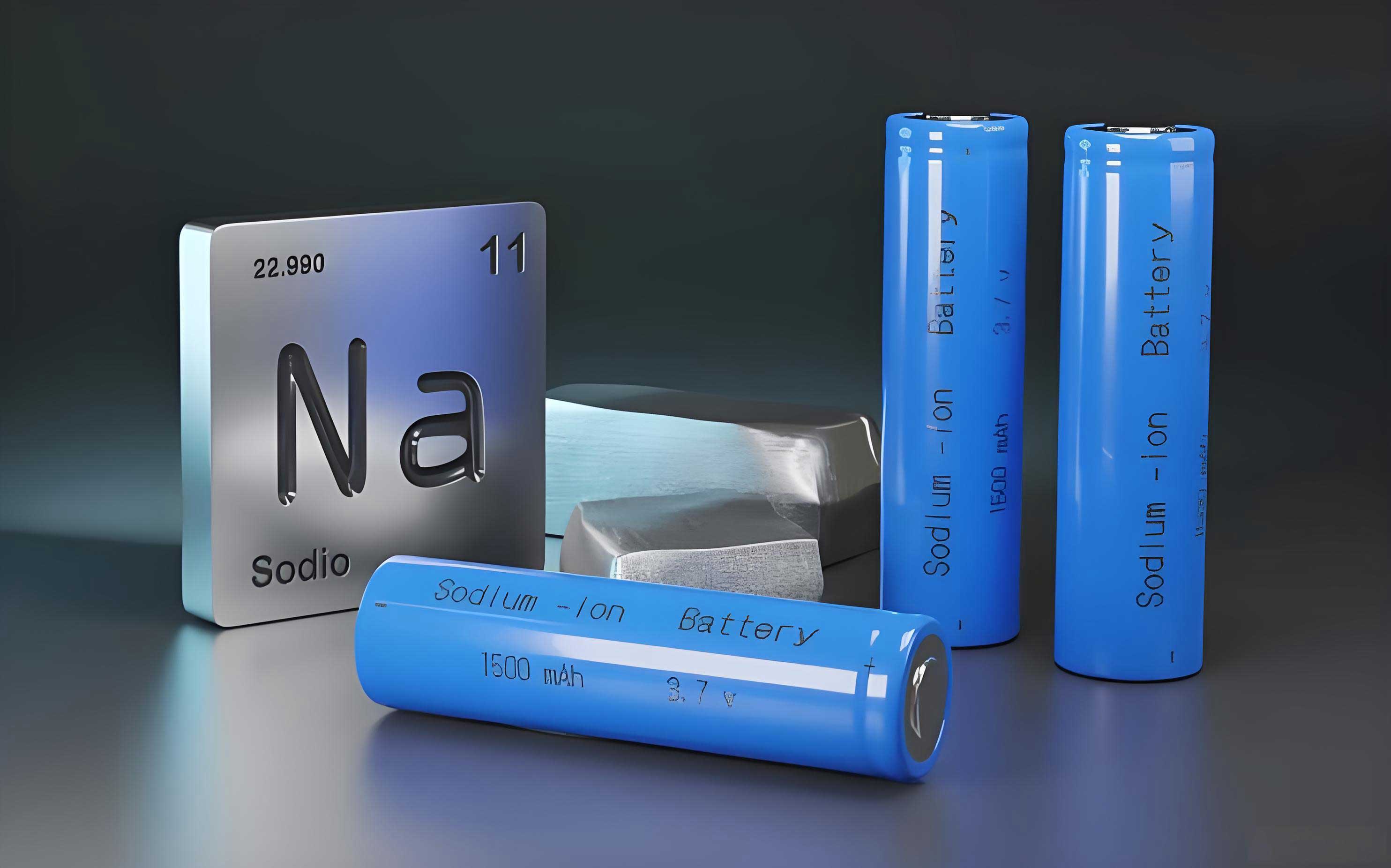
The fundamental working principle of a sodium-ion battery involves the intercalation or alloying of sodium ions into anode materials. For alloy anodes like Sb and Bi, the reaction follows a general equation: $$xNa^+ + xe^- + M \leftrightarrow Na_xM$$ where M represents Sb or Bi. The theoretical capacity can be calculated using the formula: $$C_{theoretical} = \frac{nF}{M_{mol}}$$ where \(n\) is the number of electrons transferred per formula unit, \(F\) is Faraday’s constant (96485 C/mol), and \(M_{mol}\) is the molar mass (g/mol). For Sb, the alloying process typically forms NaSb and Na₃Sb phases, with a theoretical capacity of approximately 660 mAh/g, while Bi forms NaBi and Na₃Bi, offering around 385 mAh/g. However, the volume expansion during these phase transformations is substantial, often exceeding 300%, which I will analyze in detail through modification strategies.
To quantify the performance metrics of various Sb- and Bi-based anodes in sodium-ion batteries, I present Table 1, which summarizes key parameters such as theoretical capacity, volume expansion, and electrochemical outcomes from recent studies. This table highlights how nanostructuring and composite approaches enhance cycling stability and rate capability.
| Material Type | Theoretical Capacity (mAh/g) | Volume Expansion (%) | Modification Strategy | Cycle Performance (Capacity Retention) | Reference Insights |
|---|---|---|---|---|---|
| Pure Sb (bulk) | ~660 | ~390 | None | Rapid decay due to pulverization | High conductivity but poor stability |
| Sb Nanorods | ~620 | Reduced via nano-effects | Array structure for ion diffusion | Stable over 100 cycles at 0.2 A/g | Ordered channels improve kinetics |
| Sb@Carbon Composite | ~600 | Buffered by carbon shell | Core-shell design | >90% after 500 cycles at 1 A/g | Carbon matrix limits SEI growth |
| Pure Bi (bulk) | ~385 | ~250 | None | Moderate cycling with fade | Layered structure aids Na⁺ insertion |
| Bi Nanosheets | ~400 | Anisotropic expansion control | 2D morphology | High areal capacity, stable | Short diffusion paths enhance rate |
| Bi@MXene Composite | ~350 | Minimized by MXene support | Hybrid with conductive framework | Long cycle life >7000 cycles | Synergistic effects boost durability |
| Bi-Sb Alloy (e.g., Bi₀.₅Sb₀.₅) | ~500 | ~200 | Solid solution strengthening | Enhanced mechanical properties | Alloying reduces phase separation |
From this table, I deduce that the integration of Sb and Bi into nanocomposites significantly mitigates volume expansion issues, a critical aspect for advancing sodium-ion battery technology. The sodium storage mechanism in Sb involves a two-step alloying process, as evidenced by in-situ studies: $$Sb \rightarrow NaSb \rightarrow Na_3Sb$$ during sodiation, and the reverse during desodiation. The intermediate phases, such as NaSb, exhibit lower atomic interaction, reducing mechanical stress. For Bi, the mechanism is debated, but alloying is widely accepted: $$Bi \rightarrow NaBi \rightarrow Na_3Bi$$ with potential intercalation-like behavior in some nanostructures. The volume change (\(\Delta V\)) can be approximated by: $$\Delta V = \frac{V_{Na_xM} – V_M}{V_M} \times 100\%$$ where \(V\) represents the molar volume of phases. For Sb, \(\Delta V\) reaches ~390%, while for Bi, it is ~250%, explaining the structural challenges in sodium-ion battery anodes.
To address these challenges, I explore modification strategies in two main categories: nanostructuring and composite construction. Nanostructuring involves reducing particle size to the nanoscale, which leverages nano-effects to alleviate strain. For instance, Sb quantum dots or Bi nanosheets provide high surface area, facilitating faster sodium ion diffusion and reducing absolute volume changes. The diffusion coefficient (\(D\)) of Na⁺ in these nanomaterials can be estimated using the Arrhenius equation: $$D = D_0 \exp\left(-\frac{E_a}{RT}\right)$$ where \(E_a\) is the activation energy, \(R\) is the gas constant, and \(T\) is temperature. Studies show that \(E_a\) decreases in nanostructures, e.g., from ~0.5 eV in bulk Sb to ~0.14 eV in few-layer antimonene, enhancing rate performance in sodium-ion batteries.
Composite construction focuses on embedding Sb or Bi in conductive matrices like carbon, polymers, or MXenes. This approach not only buffers volume expansion but also improves electronic conductivity. A common design is the core-shell structure, where active material cores are coated with carbon shells. The stress (\(\sigma\)) during cycling can be modeled by: $$\sigma = E \cdot \epsilon$$ where \(E\) is the elastic modulus and \(\epsilon\) is the strain. By using a compliant carbon shell with \(E\) lower than the active material, stress is dissipated, preventing crack propagation. I summarize various composite types in Table 2, detailing their synthesis methods and electrochemical benefits for sodium-ion battery applications.
| Composite Type | Matrix Material | Synthesis Method | Key Advantages | Performance in Sodium-Ion Battery |
|---|---|---|---|---|
| Sb@Carbon Core-Shell | Carbon (e.g., from polymers) | Pyrolysis of coated precursors | Limits SEI growth, enhances conductivity | ~600 mAh/g, stable for 1000 cycles |
| Bi@Graphene Hybrid | Graphene nanosheets | Vacuum filtration or CVD | High mechanical strength, fast ion transport | High areal capacity, good rate capability |
| Sb/MXene Composite | Ti₃C₂Tx MXene | Solvothermal or adsorption | Rich functional groups, synergistic storage | Ultrafast charging, long cycle life |
| Bi@MOF-Derived Carbon | Carbon from metal-organic frameworks | Thermal reduction in inert atmosphere | Porous structure, uniform dispersion | High capacity retention at high rates |
| Sb-Bi Alloy in Carbon | Carbon nanofibers | Electrospinning and annealing | Combined benefits of both elements | Improved initial coulombic efficiency |
In my analysis, I find that composite materials often exhibit pseudocapacitive behavior, contributing to high rate performance. The charge storage contribution can be separated using the formula: $$i = a v^b$$ where \(i\) is current, \(v\) is scan rate, and \(b\) is an exponent. A \(b\) value of 0.5 indicates diffusion-controlled processes, while 1.0 signifies capacitive effects. For Sb-carbon composites, \(b\) values approach 0.8, showing mixed mechanisms beneficial for sodium-ion battery anodes. Additionally, heteroatom doping (e.g., N, P) in carbon matrices introduces defects that enhance Na⁺ adsorption, as described by the binding energy (\(E_b\)) calculated from density functional theory: $$E_b = E_{total} – (E_{matrix} + E_{Na})$$ where lower \(E_b\) values facilitate faster ion insertion.
Moving to bismuth-based materials, I note that Bi has a layered structure with a interlayer spacing of ~3.94 Å, conducive to sodium ion intercalation. However, the alloying mechanism dominates, leading to volume expansion. Nanostructuring Bi into hollow spheres or nanotubes reduces strain, as the void space accommodates expansion. The capacity fading in Bi anodes can be modeled by a first-order decay equation: $$C(t) = C_0 e^{-kt}$$ where \(C(t)\) is capacity at cycle \(t\), \(C_0\) is initial capacity, and \(k\) is the decay constant. Composite designs, such as Bi embedded in nitrogen-doped carbon, lower \(k\) by stabilizing the SEI, crucial for long-term sodium-ion battery operation.
For bismuth-antimony alloys, I observe that they form solid solutions with tunable compositions, offering a balance between capacity and stability. The alloying reaction can be expressed as: $$Bi_{1-x}Sb_x + yNa^+ + ye^- \leftrightarrow Na_y(Bi_{1-x}Sb_x)$$ The volume expansion is intermediate, e.g., ~200% for Bi₀.₅Sb₀.₅, due to solid solution strengthening. The elastic modulus (\(G\)) of these alloys follows the rule of mixtures: $$G_{alloy} = x G_{Sb} + (1-x) G_{Bi}$$ where higher Sb content increases \(G\), improving mechanical resilience in sodium-ion battery anodes. Moreover, Bi-rich alloys exhibit higher pseudocapacitive contributions, enhancing rate capability.
In terms of scalability, I emphasize that methods like electrostatic spinning, molten salt reduction, and laser-induced deposition enable large-scale production of Sb- and Bi-based composites. For instance, the mass production of Sb@C via spray pyrolysis can yield materials with consistent performance, vital for commercial sodium-ion battery development. The cost-effectiveness of these methods is assessed by the formula: $$Cost = \frac{Material + Energy}{Yield}$$ where lower costs favor adoption in sodium-ion battery manufacturing.
To further illustrate the electrochemical kinetics, I derive the sodium ion diffusion coefficient (\(D_{Na^+}\)) from galvanostatic intermittent titration technique (GITT) data: $$D_{Na^+} = \frac{4}{\pi \tau} \left( \frac{m_B V_M}{M_B A} \right)^2 \left( \frac{\Delta E_s}{\Delta E_\tau} \right)^2$$ where \(\tau\) is pulse time, \(m_B\) is active mass, \(V_M\) is molar volume, \(M_B\) is molar mass, \(A\) is electrode area, and \(\Delta E\) are voltage changes. For nanostructured Sb, \(D_{Na^+}\) values range from 10⁻¹⁰ to 10⁻⁸ cm²/s, higher than bulk, supporting fast charging in sodium-ion batteries.
Looking ahead, I identify several research directions for Sb- and Bi-based anodes in sodium-ion batteries. First, the design of multifunctional composites with self-healing SEI properties could mitigate electrolyte consumption. Second, developing in-situ characterization techniques, such as operando transmission electron microscopy, will deepen understanding of phase transformations. Third, exploring hybrid electrolytes, like ether-based systems, may enhance interfacial stability. Fourth, integrating these anodes with high-voltage cathodes in full-cell configurations is essential for practical energy density. Finally, life-cycle assessment and recycling strategies must be considered to ensure sustainability of sodium-ion battery technology.
In conclusion, my review underscores that antimony and bismuth are promising anode materials for sodium-ion batteries, offering high capacities and good conductivities. Through nanostructuring and composite engineering, volume expansion issues can be effectively managed, leading to improved cycling stability and rate performance. The continuous innovation in material design and scalable synthesis will accelerate the commercialization of sodium-ion batteries, contributing to a diverse energy storage landscape. I believe that with focused efforts on interface optimization and cost reduction, Sb- and Bi-based anodes will play a pivotal role in next-generation sodium-ion battery systems.