
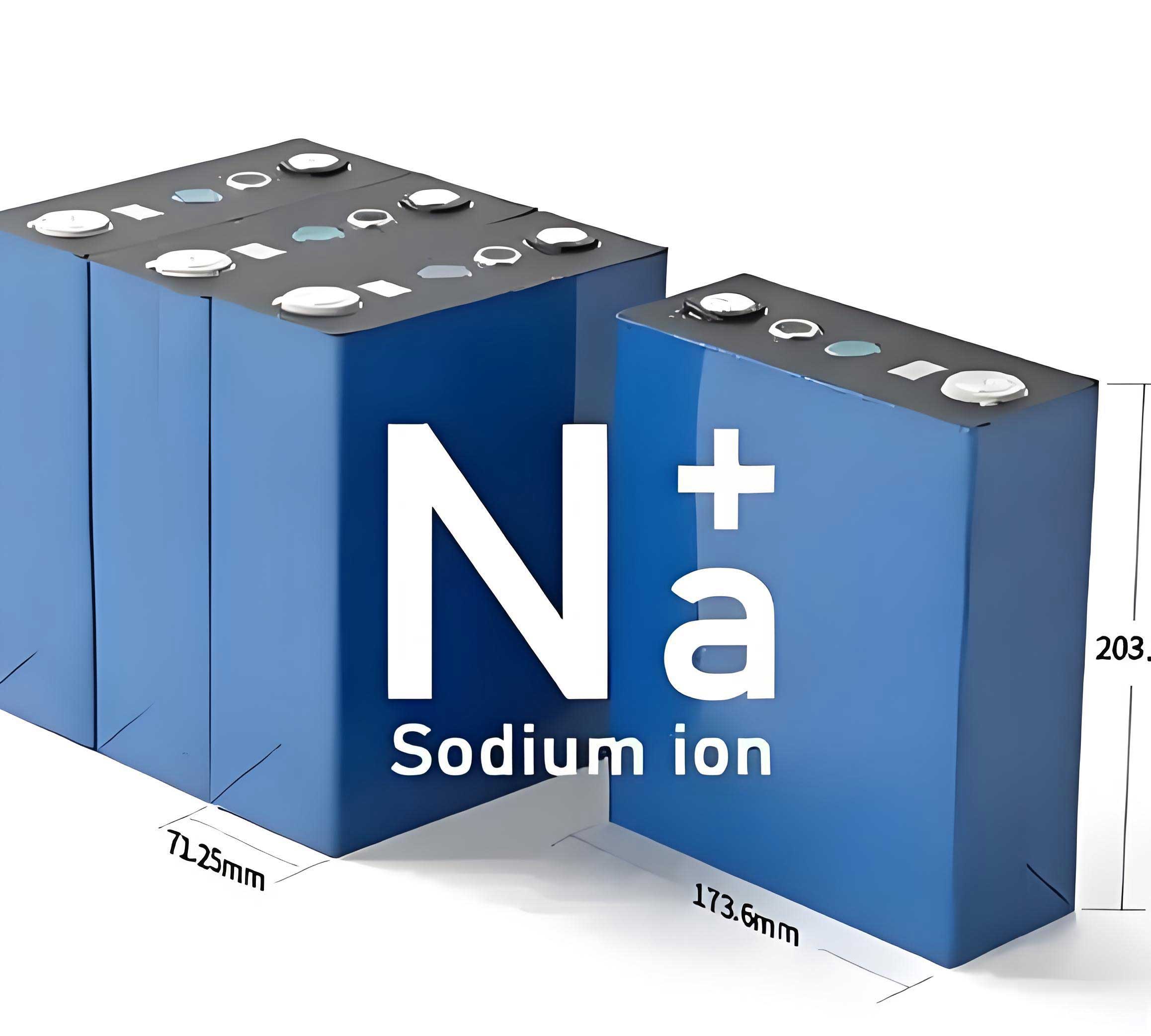
The ever-growing demand for sustainable and cost-effective energy storage solutions has positioned the sodium-ion battery as a frontrunner, particularly for large-scale grid storage and renewable energy integration. While sharing a similar “rocking-chair” working principle with the ubiquitous lithium-ion battery, the sodium-ion battery leverages the natural abundance and lower cost of sodium. However, the larger ionic radius (1.02 Å for Na⁺ vs. 0.76 Å for Li⁺) and heavier mass of sodium ions pose significant kinetic and thermodynamic challenges for electrode materials. These challenges manifest as sluggish ion diffusion, substantial volume expansion during (de)sodiation, and consequent rapid capacity fading, hindering the development of high-performance, long-lasting electrodes.
Among the myriad of anode candidates explored for the sodium-ion battery, tin selenide (SnSe) has garnered considerable attention. It offers a compelling combination of a high theoretical specific capacity (approximately 780 mAh g⁻¹), facilitated by a dual mechanism of conversion and alloying reactions, and a narrow bandgap (~0.9 eV) that endows it with superior intrinsic electronic conductivity compared to its sulfide counterpart (SnS). The sodiation/desodiation mechanism of SnSe in a sodium-ion battery can be described by the following equations:
$$ \text{SnSe} + 2\text{Na}^+ + 2e^- \rightleftharpoons \text{Na}_2\text{Se} + \text{Sn} $$
$$ \text{Sn} + x\text{Na}^+ + xe^- \rightleftharpoons \text{Na}_x\text{Sn} \quad (0 \leq x \leq 3.75) $$
Despite these advantages, the practical application of bulk SnSe is severely hampered by its dramatic volume changes (often exceeding 300%) during the alloying/de-alloying process with sodium. This leads to particle pulverization, loss of electrical contact, continuous reformation of the solid-electrolyte interphase (SEI), and ultimately, catastrophic capacity decay. To unlock the full potential of SnSe for the sodium-ion battery, sophisticated nanostructuring and composite engineering strategies have been extensively pursued. This review systematically consolidates recent progress in modifying SnSe anodes, focusing on synthesis methodologies, composite architectures with various carbon matrices and heterostructures, and their resulting electrochemical performance enhancements in the sodium-ion battery.
Fundamental Characteristics and Synthesis of SnSe Nanostructures
The performance of SnSe in a sodium-ion battery is intrinsically linked to its morphology and size. Nanostructuring is a fundamental strategy to mitigate the aforementioned issues. Reducing the material dimensions to the nanoscale shortens the diffusion path for both Na⁺ ions and electrons, enhances the electrode/electrolyte contact area, and more effectively accommodates mechanical strain from volume changes. Synthesis methods for SnSe nanostructures are broadly categorized into top-down and bottom-up approaches.
| Approach | Method | Key Characteristics | Typical Morphology |
|---|---|---|---|
| Bottom-Up | Solvothermal/Hydrothermal | Facile, scalable, good control over crystal size and shape via temperature, time, and precursor concentration. | Nanoplates, nanosheets, quantum dots, nanospheres. |
| Chemical Vapor Deposition (CVD) | High-quality, crystalline films or nanostructures; often used for precise growth on substrates. | Thin films, oriented nanosheets. | |
| Top-Down | Mechanical Exfoliation / Ball Milling | Exfoliates bulk crystals; can be combined with other materials (e.g., graphene) for composite formation. | Few-layer nanosheets, nanoparticles. |
For instance, two-dimensional (2D) ultrathin SnSe nanoplates synthesized via solvothermal methods have demonstrated a high capacity of 463.6 mAh g⁻¹ at 0.05 A g⁻¹. Similarly, doping strategies, such as incorporating copper (Cu) into SnSe nanoclusters, have been shown to significantly enhance electronic conductivity and structural stability, yielding a stable capacity of 375 mAh g⁻¹ after 270 cycles. These foundational nanostructures serve as the primary active components for further composite engineering aimed at building high-performance anodes for the sodium-ion battery.
Carbon-Engineered SnSe Composites for Enhanced Sodium Storage
Integrating SnSe with conductive carbon matrices is the most prevalent and effective strategy to boost the performance of the sodium-ion battery. Carbon materials provide a robust, conductive network that facilitates rapid electron transport, buffers volume expansion, prevents nanoparticle aggregation, and can contribute to a more stable SEI layer. The design of the carbon scaffold—its dimensionality, porosity, and doping—plays a critical role.
SnSe Embedded in One-Dimensional Carbon Nanofibers (CNFs)
Electrospinning is a versatile technique to fabricate self-standing, flexible mats of carbon nanofibers embedded with active materials. This architecture is highly desirable for bendable energy storage devices. SnSe/CNF composites leverage the 1D conductive pathways and the mechanical flexibility of the fibrous network.
| Composite Architecture | Synthesis Key Point | Electrochemical Performance | Advantages |
|---|---|---|---|
| SnSe nanoparticles in CNFs | Electrospinning of precursor polymer with Sn salt, followed by selenization/carbonization. | ~2900 mAh g⁻¹ at 0.2 A g⁻¹ after 200 cycles (based on total composite mass, value may require verification). | 3D conductive network, effective strain relief. |
| SnSe nanoplates encapsulated in CNF (SnSe@CNF) | Similar process, resulting in plate-like SnSe confined within fibers. | Used as binder-free electrode; high reversible capacity and good stability. | Direct electrode fabrication, enhanced structural integrity. |
| N-doped CNF cross-linked with SnSe (SnSe/NCF) | Electrospinning with N-containing polymer, followed by selenization. | 576.7 mAh g⁻¹ at 0.2 A g⁻¹; 254.5 mAh g⁻¹ at 2 A g⁻¹ after 2100 cycles. | N-doping improves conductivity and surface affinity; cross-linking enhances stability. |
| SnSe Quantum Dots in CNFs (E-SnSe) | Electrospinning and high-temperature selenization to form ultra-small QDs. | 268 mAh g⁻¹ at 2 A g⁻¹ after 750 cycles; excellent rate capability up to 5 A g⁻¹. | Quantum dots maximize active sites; CNF prevents aggregation; ultra-short ion paths. |
The general formula for the capacity contribution from a well-designed SnSe/CNF composite in a sodium-ion battery can be considered as a sum: $$ C_{\text{total}} = C_{\text{SnSe}} + C_{\text{capacitive, C}} $$ where the capacitive contribution from the high-surface-area carbon aids rate performance.
SnSe Confined in Amorphous Carbon and Graphene Matrices
Coating SnSe nanoparticles with a uniform layer of amorphous carbon or embedding them in graphene-based matrices offers precise confinement and superior conductivity.
| Composite | Structure | Key Performance Metric | Function of Carbon |
|---|---|---|---|
| SnSe/N-doped Carbon (SnSe/NC) | Nanoparticles within N-doped carbon. | 348 mAh g⁻¹ at 0.2 A g⁻¹ after 100 cycles (vs. 100 mAh g⁻¹ for bare SnSe). | N-doping enhances Na⁺ adsorption and electronic conductivity. |
| SnSe/NC Hollow Nanospheres | SnSe inside hollow N-doped carbon spheres. | Outstanding long-term cycling over 900 cycles; capacity retention >80%. | Hollow structure accommodates volume change; carbon shell ensures integrity. |
| SnSe@N-doped Graphene Cage (NG@SnSe/C) | CVD-grown SnSe/C nanosheets wrapped in N-doped graphene cage. | 650 mAh g⁻¹ at 0.05 A g⁻¹; 287.8 mAh g⁻¹ at 5 A g⁻¹. | Graphene cage provides mechanical strength and conductive encapsulation. |
| SnSe/Reduced Graphene Oxide (SnSe/rGO) | SnSe nanoparticles anchored on rGO sheets via ball-milling. | Superior capacity retention compared to bare SnSe after 120 cycles at 1 A g⁻¹. | rGO sheets prevent stacking, provide conductive support, and buffer volume expansion. |
| Amorphous SnSe QDs on N-doped Graphene (a-SnSe/rGO) | ~2 nm amorphous SnSe QDs on N-rGO. | 397 mAh g⁻¹ at 1 A g⁻¹ after 1400 cycles; high pseudocapacitive contribution. | Amorphous structure offers more active sites; graphene enables fast electron transfer. |
The synergy in these composites is paramount. The carbon host not only conducts electrons but also physically constrains the SnSe, preventing detachment and coalescence. The interfacial storage and pseudo-capacitive behavior, often described by the equation: $$ i = k_1 v + k_2 v^{1/2} $$ where \(i\) is the current, \(v\) is the scan rate, and \(k_1\) and \(k_2\) represent the capacitive and diffusion-controlled contributions, respectively, is significantly enhanced in these nanostructured composites, leading to the high rate capability observed in the sodium-ion battery.
SnSe-Based Heterostructures: Synergistic Interface Engineering
Constructing heterostructures by intimately coupling SnSe with a second functional phase (another metal selenide, oxide, or MXene) represents an advanced strategy beyond simple carbon compositing. The built-in electric field at the heterointerface can dramatically accelerate charge transfer kinetics and improve structural stability.
SnSe/MXene (Ti₃C₂) Composites
MXenes, such as Ti₃C₂, are 2D transition metal carbides/nitrides with metallic conductivity and hydrophilic surfaces. They serve as excellent conductive and mechanical buffers.
- SnSe@Ti₃C₂ 3D Network: Electrostatic self-assembly creates a robust 3D network where SnSe nanosheets anchor on Ti₃C₂. This composite demonstrated exceptional long-term cycling, retaining 240.1 mAh g⁻¹ at 0.1 A g⁻¹ after 1350 cycles (108.7% capacity retention) and 73.8% retention after 10,000 cycles at 1 A g⁻¹.
- 0D/2D SnSe@f-Ti₃C₂: SnSe quantum dots (0D) supported on few-layered Ti₃C₂ (2D). This structure exposed abundant active sites and prevented MXene restacking, delivering 540 mAh g⁻¹ at 0.5 A g⁻¹ with 97.79% capacity retention after 100 cycles.
SnSe/Other Metal Selenide Heterostructures
Coupling SnSe with other selenides creates multifunctional interfaces that optimize sodiation thermodynamics and kinetics.
| Heterostructure | Architecture | Performance Highlight | Proposed Mechanism |
|---|---|---|---|
| MnSe/SnSe@C | Carbon-encapsulated nanoboxes. | 557 mAh g⁻¹ at 0.5 A g⁻¹ after 900 cycles. | Strong Sn-C/Se-C coupling for fast e⁻ transport; void space in nanobox buffers expansion. |
| SnSe/ZnSe@C | Pomegranate-like porous structure with carbon shell. | 211.7 mAh g⁻¹ at 1 A g⁻¹ after 7000 cycles; excellent rate performance. | Internal porous structure relieves stress; heterointerface enhances ion/electron transport. |
| SnSe/SnTe@N-CNFs | Heterostructural nanoparticles embedded in N-doped CNFs. | 479 mAh g⁻¹ at 0.1 A g⁻¹; 247 mAh g⁻¹ at 1 A g⁻¹ after 1000 cycles. | Built-in electric field at SnSe/SnTe interface accelerates charge transfer; N-CNFs provide confinement. |
| CoSe₂-SnSe@CNF | Heterostructured nanoparticles anchored on CNFs. | 356.4 mAh g⁻¹ at 0.1 A g⁻¹; 248.7 mAh g⁻¹ at 1 A g⁻¹ after 1000 cycles. | Strong ion interaction and built-in field at CoSe₂-SnSe interface boost charge transfer kinetics. |
The performance enhancement in heterostructures can be partially attributed to the modulated electronic structure and reduced energy barrier for sodium ion adsorption and migration at the interface, a concept critical for advancing the sodium-ion battery.
Challenges, Future Perspectives, and Concluding Remarks
Significant strides have been made in engineering SnSe-based anodes for the sodium-ion battery. However, several critical challenges must be addressed to bridge the gap between laboratory research and commercial application.
1. Initial Coulombic Efficiency (ICE): The low ICE, often caused by irreversible SEI formation and side reactions with the electrolyte, remains a major hurdle. Future work must focus on pre-sodiation techniques, electrolyte formulation (e.g., using FEC additives), and precise surface engineering of SnSe to minimize irreversible capacity loss in the initial cycle of the sodium-ion battery.
2. Understanding of Degradation Mechanisms: While composite strategies improve longevity, a deeper fundamental understanding of the failure mechanisms—especially at the heterointerfaces and within the SEI layer during long-term cycling—is needed. In situ and operando characterization techniques will be vital.
3. Full-Cell Performance and Practical Metrics: Most studies report half-cell data vs. Na/Na⁺. Rigorous evaluation in full-cell configurations with practical cathode materials, limited sodium inventory, and optimized electrolyte volumes is essential. Metrics such as volumetric energy density, cycling under realistic load profiles, and performance across a wide temperature range must be emphasized for the sodium-ion battery.
4. Scalable and Sustainable Synthesis: Many synthesis routes involve complex steps or hazardous precursors. Developing simple, scalable, environmentally benign, and cost-effective manufacturing processes is crucial for commercialization. Methods like spray drying, mechanochemical synthesis, and low-temperature routes should be further explored.
5. Exploration of New Compositions and Architectures: The design space is vast. Future research could explore:
- Multi-anion engineering (e.g., S/Se or O/Se).
- Triple-phase heterostructures combining SnSe with conductive polymers and carbons.
- Advanced computational screening to predict optimal dopants and composite partners for SnSe in the sodium-ion battery.
In conclusion, SnSe stands as a highly promising anode material for the next-generation sodium-ion battery. Through rational nanostructuring, intelligent compositing with carbon matrices, and sophisticated construction of heterostructures, its inherent limitations of volume expansion and poor conductivity can be effectively mitigated. The resulting materials exhibit dramatically enhanced reversible capacity, exceptional cycling stability, and superior rate capability. While challenges in ICE, full-cell integration, and scalable production persist, the ongoing research trajectory is highly encouraging. Continued interdisciplinary efforts in materials science, electrochemistry, and engineering will undoubtedly pave the way for SnSe-based anodes to play a pivotal role in the future landscape of affordable and sustainable energy storage via the sodium-ion battery.